Food history in Madrid, on foot. This 2 to 3 hour Historic Centre tour ties classic flavors to the city’s most central sights, with stops near Plaza Mayor and the Km 0 area. I love the small group pace (max 15) and how the menu stacks Madrid staples like squid sandwiches, patatas bravas, and vermouth.
You’ll spend real time walking between older bakeries and long-running bars, so plan on standing and eating at a relaxed speed. Also note the menu can shift based on availability, and they ask you to contact them in advance for dietary needs, so it pays to flag anything important early.
If you want a fast, well-fed introduction to Madrid food culture, this tour is a strong pick. It starts and ends on Calle Mayor 10, so after the last tasting you’re basically dropped back in the middle of everything.
In This Review
- Key takeaways before you go
- Why this Madrid Historic Centre food walk works
- Meeting at Calle Mayor 10 and getting your bearings fast
- Stop 1: From seasonal pastries to an 18th-century finale
- Historic pastry shop: start with something seasonal
- The 180-year deli: ham, manchego, olive oil
- The classic hit: a deep fried squid sandwich
- One outstanding tapa, plus cider and vermouth
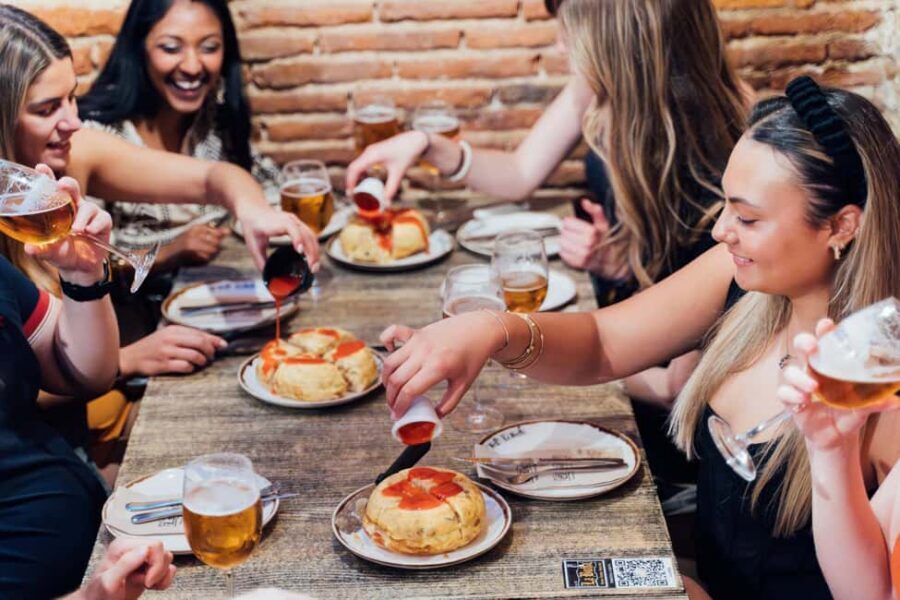
- The 18th-century restaurant finish: tortilla and the Secret Dish
- Plaza Mayor, Km 0, and the central market walk-by
- What you eat and drink: the included list and the 3-hour upgrade
- Included on the standard tour
- What the 3-hour full tour adds
- The guide matters: how Jorge, Jo, Ignacio, Diego, and Maria make it click
- Walking and practical tips so you enjoy every stop
- Should you book this Madrid Historic Centre tapas and wine tour?
Key takeaways before you go
- Small-group size (max 15) keeps the pace comfortable and the guide’s attention focused
- Historic-to-historic dining flow: pastry shop, 180-year deli, then an 18th-century restaurant
- Signature Madrid plates are baked into the route: squid sandwich, tortilla, patatas bravas, padrón peppers
- Drinks are part of the tour, not an add-on: local wine or Spanish vermouth, plus cider and more
- The Secret Dish changes daily, so you’re not just repeating the same tapas script
Why this Madrid Historic Centre food walk works
Madrid is one of Europe’s easiest cities to eat your way through, but it can also be overwhelming if you do it solo. This tour solves that problem by giving you a route through the old center and the food rules locals actually follow: order small, share often, and drink with your meal.
The headline value is what’s included. You’re not paying a tapas tour price just to hear stories while you snack on something optional. The tasting list includes classic items like olives, patatas bravas, Spanish tortilla, padrón peppers, manchego cheese, and a crispy fried squid sandwich, plus local wine, Spanish vermouth, or soft drinks. On the 3-hour version, the tasting expands further with more ham and an extra tapa, plus a drink upgrade (sangria or local beer).
One smart bonus: you’re not stuck far out in a random neighborhood. The route centers you near big landmarks, but the food stops are the kind of places you’d have to work to find on your own.
Meeting at Calle Mayor 10 and getting your bearings fast
You meet at Calle Mayor 10 in Centro, right in the old core of Madrid, and the tour ends at Calle Mayor 10 again, about 200 meters away. That matters because you can treat this as your anchor activity. Do it earlier in your trip, and you’ll leave with a better sense of where you want to wander next for lunch or dinner.
It’s also near public transportation, which helps if your timing gets messy. Madrid streets can be a patchwork of detours, and the guide may adjust the path if something affects access. In real life, that flexibility is a relief.
Since the group stays capped at 15, you’ll generally be able to move through narrow streets without turning the whole block into a bottleneck. I like tours that feel easy to manage, not tours where you spend half the time stopping to regroup.
Stop 1: From seasonal pastries to an 18th-century finale
This is where the tour earns its name, because it’s not one quick stop. Stop 1 builds like a mini food story, starting sweet and finishing savory and surprising.
Historic pastry shop: start with something seasonal
You begin in a historic pastry shop with a seasonal pastry. It’s a good warm-up because it sets the tone: Madrid snacks aren’t just salty. They’re layered. One early bite also helps you pace yourself before the heavier plates.
If you’re the type who needs a foothold before walking, this start is practical. You get seated or settled, you meet the group, and then you move with energy instead of hunger panic.
The 180-year deli: ham, manchego, olive oil
Next comes a deli that’s been around for over 180 years. You sample two types of Iberian ham, plus manchego cheese and extra virgin olive oil. This part is valuable because it teaches you what to look for later when you’re ordering on your own.
Ham in Spain is a spectrum. Even without a lecture that lasts ten minutes, you’ll taste the difference between types, then pair it with cheese and olive oil so you understand the logic of the combination.
One consideration: if you don’t eat pork, you’ll want to talk to the tour ahead of time about what they can substitute. The tour explicitly asks for dietary requests in advance so they can cater appropriately.
The classic hit: a deep fried squid sandwich
Then you get the deep fried squid sandwich, a local favorite. This is one of the most memorable things on the menu because it’s both street-food friendly and serious enough to feel like a real local specialty.
It’s also a useful test for first-time visitors. If you like it, you’ll feel confident chasing other Madrid seafood bites later. If you don’t, you’ll still have learned how adventurous Madrid can be with familiar ingredients.
One outstanding tapa, plus cider and vermouth
After that, you get one outstanding tapa and a bottle of Spanish cider, then a vermouth tasting tied to the tapa of the day. Vermouth is a Madrid habit, not a tourist trend, and it helps you taste the city’s rhythm: the aperitif culture that turns time between meals into a real experience.
This sequence is a smart build. Sweet pastry to savory bites to a drink-based palate shift. If you’re someone who wants to learn the order of operations for a good tapas night, you’ll leave with a clearer sense of how locals drink and eat together.
The 18th-century restaurant finish: tortilla and the Secret Dish
You wrap the tour inside a restaurant located in an 18th-century building. You’ll have Spanish omelette and the Secret Dish, which changes every day.
Two things make this finish work:
- It feels like a destination, not just a stop.
- The Secret Dish keeps you from feeling like you repeated the same tasting set you might find elsewhere.
The main drawback here is timing. The end is meant to satisfy, so if you’re meeting someone right after the tour, give yourself a small buffer. You’ll be full, and you might want to stick around for an extra drink or two.
Plaza Mayor, Km 0, and the central market walk-by
You don’t only eat in the tour; you also move through the city’s center. Along the way, you pass by Plaza Mayor, the iconic heart of old Madrid where locals and tourists shop, walk around, eat, and hang out.
You also pass through the public square that’s the start point of the radial Spanish road network (Km 0). Even if you don’t care about roads, it’s a neat way to understand how Madrid links itself to the rest of Spain.
Finally, you pass by a major central market that’s especially popular with tourists and sits within walking distance of Plaza Mayor. Markets are often where first-time visitors feel the most Madrid energy, but they can also be overwhelming to navigate. A quick, guided pass helps you see it without losing your appetite or your bearings.
If you hate crowds, this part is something to keep in mind. You won’t necessarily stop for long, but you will be near one of the busiest areas in the center.
What you eat and drink: the included list and the 3-hour upgrade
This tour is built around lots of small bites and drinks. The exact lineup can shift, but the core set is consistent enough to plan your day.
Included on the standard tour
You’ll get:
- Marinated olives
- Crispy fried squid sandwich
- Patatas bravas
- Classic Spanish tortilla
- Padrón peppers
- Manchego cheese
- A pastry from a historic bakery
- The Secret Dish (changes daily)
- Local wine, Spanish vermouth, or soft drinks
And you’ll also experience the Stop 1 sequence elements like Iberian ham sampling and the cider and vermouth tastings described in the itinerary.
What the 3-hour full tour adds
If you upgrade to the 3-hour option, you can expect additional structure and more volume:
- Selection of Iberian ham, chorizo, salchichón, and lomo
- Olive oil tasting
- An additional tapa at a local bar
- An extra drink option: sangria or local beer
This matters if you’re the type who wants your food tour to feel like a full meal, not just a preview. The 3-hour version gives you more chances to compare flavors and try more of the Spanish cured-meat lineup.
Also, the tour is designed for group conversations. With the tastings spaced out and seated moments built in, you’ll have enough time to ask questions instead of just “eat and run.”
The guide matters: how Jorge, Jo, Ignacio, Diego, and Maria make it click
The best part of this kind of tour isn’t just the food. It’s the person coordinating it so you get value, not chaos.
From the guide experiences shared in feedback, you may meet guides such as Jorge, Jo, Ignacio, Diego, or Maria. Across those different names, a common theme shows up: the guide’s job is to connect food with Madrid, keep the group comfortable, and handle day-to-day curveballs.
One practical example: there can be days when streets are closed due to events. The guide can reroute so you don’t lose the tour flow. That kind of problem solving is invisible when it works, but it’s exactly what you want on a walking food tour.
Another value piece is access and pacing. Some guides have built relationships with vendors over time, which can mean smooth entry and good service at stops locals actually use. For you, that translates into less waiting and more eating.
Walking and practical tips so you enjoy every stop
Plan for a fair amount of walking. Comfortable shoes are strongly worth it. You’ll move between historic buildings and likely stand during parts of the tasting. If your feet are already angry, you’ll feel the tour more in your calves than in your palate.
A few practical tips that help:
- Eat lightly beforehand. Even with small bites, the tour adds up, and the end includes omelette plus the Secret Dish.
- Pace your drinks. With wine, vermouth, cider, and optional beer or sangria on the longer tour, you’ll want to slow down between tastings.
- Bring a light layer. Madrid weather can shift, and you’ll be outside between stops.
- If you have dietary restrictions, contact the tour in advance so they can cater. Don’t wait for day-of.
Who should book:
- First-time visitors who want an easy introduction to Madrid food culture
- Food lovers who want classic dishes like tortilla, bravas, padrón peppers, and squid sandwiches without guessing where to go
- People who like a small group and don’t want to feel lost in the crowd
Who might skip or choose a private tour instead:
- If you dislike walking or standing for long stretches
- If you need very specific dietary accommodations and want a more tailored approach, a private upgrade could be worth it
Should you book this Madrid Historic Centre tapas and wine tour?
I think this is a strong yes if you want value, variety, and a route that makes the center of Madrid easy to understand. For the price, you’re getting a real tasting program, not just a couple of bites, and drinks are included in the plan. The mix of stops also keeps it interesting: pastry to cured meats to squid sandwich to vermouth, then a finishing meal-style set with tortilla and the changing Secret Dish.
Book it if:
- You’ll be in Madrid for only a few days and want fast grounding
- You like classic tapas and want to learn what pairs with what
- You want a small-group experience where the guide can actually talk to you
Maybe pass if:
- You want a very quiet tour with minimal walking
- You plan to keep strict control over alcohol intake and don’t want vermouth/wine/cider in the flow
- You hate any chance of menu changes, since the tour notes the menu and itinerary can shift with availability and weather
If you book, do it hungry, wear comfortable shoes, and be ready for Madrid to taste like history in real time.