REVIEW · 3-HOUR EXPERIENCES
Private 3-hour Walking Tour of Avila with official tour guide
Book on Viator →Bookable on Viator
Ávila rewards slow steps. This private 3-hour walk gives you the lay of the land fast, with an official tour guide to translate the city wall logic, the church-landmarks, and the stories behind the stone. I especially like the hotel or central pickup, because it saves you time on a day when you’ll want to be outside and walking.
The second big win is flexibility. Your guide can tailor the pace and even your themes, and the best examples are guides like Lucia (who can focus on Jewish history) or Blanca (who handled crowds well during the Feast of St Teresa). One possible drawback: you’re walking on medieval streets and wall-adjacent paths for about three hours, and the tour entrance fees aren’t included, so you’ll want to decide ahead of time what you actually want to go inside.
In This Review
- Key Highlights at a Glance
- Why This Private Walk Works in Ávila
- The Episcopal Seat: Fortress-Temple in One View
- The Walls of Ávila: Your Main Storyline
- Real Monasterio de Santo Tomás: Gothic Outside Looks
- Plaza Mercado Chico: The City’s Inner Square
- Puerta del Alcázar: The Photo-Perfect Gate Moment
- Cathedral and Historic Sites: What You’ll See, and How to Prep
- Jewish History Focus with Lucia: Markers, Gates, and Meaningful Stops
- St Teresa Moments and Crowd Strategy with Blanca
- Pace, Timing, and What 3 Hours Feels Like on Foot
- Price and Value: What $153.28 Buys You
- Meeting Point and Getting Started Smoothly
- What to Bring (So You Don’t Waste Time)
- Should You Book This Private Walking Tour?
- FAQ
- Is this tour private or shared?
- How long is the walking tour of Ávila?
- What language is the tour offered in?
- Is hotel pickup included?
- Where is the meeting point?
- Are entrance fees included?
- Are food and drinks included?
- Is there a minimum number of people to book?
- Can I cancel for a full refund?
- Is a mobile ticket provided?
Key Highlights at a Glance
- Private official guide for 3 hours, so you’re not stuck in a one-size-fits-all loop
- Pickup from central locations (or a designated meeting point) to cut the stress of finding your start
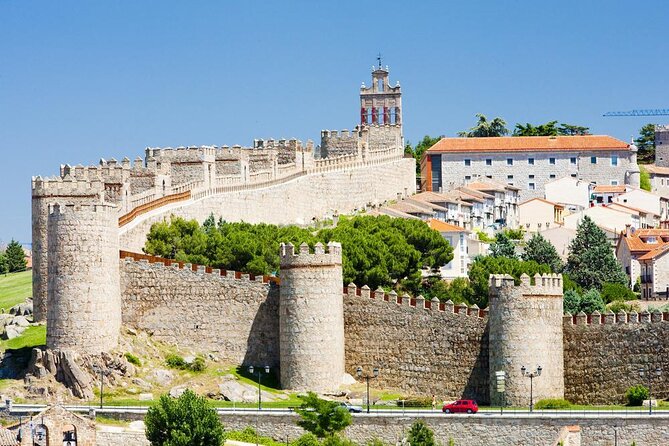
- The 12th-century city walls, among the best preserved medieval wall circuits in Spain and Europe
- Plaza Mercado Chico and Puerta del Alcázar photo stops, easy, central, and scenic
- Guide specialization options, including Jewish-history storytelling and special markers to watch for on the ground
Why This Private Walk Works in Ávila
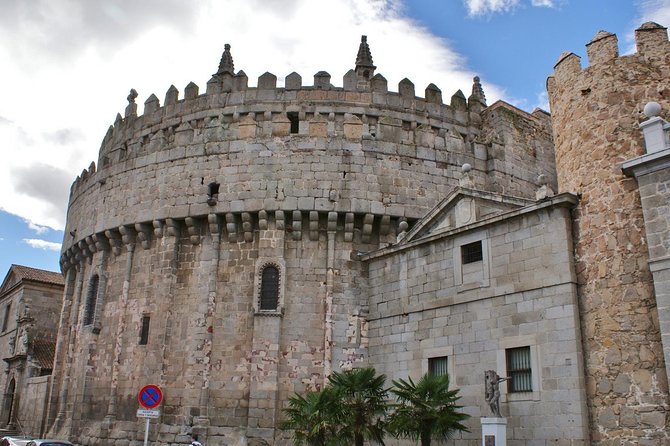
Ávila is not the kind of place where you just want to check boxes. The city is built around its defenses, so you’ll get the most out of it when someone explains what you’re seeing and why it’s shaped the way it is. That’s the core value here: an official guide turns the walk into a route with meaning.
You’ll also like that it’s private. Only your group participates, so your questions don’t get rushed. That matters in a place where small details can completely change how you interpret a gate, a wall section, or a religious building. And because it’s about three hours, the tour keeps moving at a friendly pace instead of becoming a long slog.
One more practical point: this tour includes local taxes and uses a mobile ticket, so you’re not juggling paper confirmations. If your schedule is tight, the pickup option helps you spend your time on Avila’s stone streets rather than on logistics.
The Episcopal Seat: Fortress-Temple in One View
Early on, you’ll meet the Episcopal seat of the diocese of Ávila. The idea is simple but fascinating: it was designed as a temple and fortress at the same time. In this city, the boundary between sacred and defensive wasn’t a hard line.
You’ll hear how the building’s apse ties into the city wall itself, described as one of the cubes of the city wall. That detail is exactly the kind of thing that makes a guided walk worth paying for. Without a guide, you might walk past and think it’s just another historic churchy structure. With the explanation, it becomes a piece of the wider “how this city defended itself” story.
Possible downside: this is primarily a sightseeing stop, not an all-access building visit (the tour data doesn’t list an entrance ticket here). If you’re hoping for lots of indoor time at every stop, manage expectations and treat the early segment as interpretation and viewpoint work.
The Walls of Ávila: Your Main Storyline
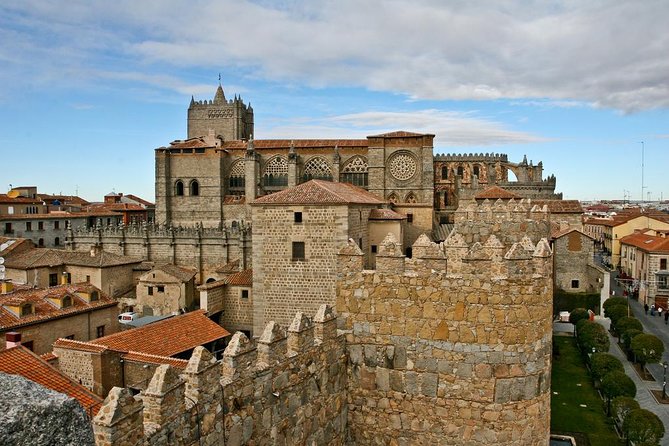
Then comes the star: the wall of Ávila, built in the 12th century. You’ll see it described as a Romanesque military fence that surrounds the old town, and that’s a good way to keep your mind on what matters here: these walls were meant to protect, not to decorate.
What makes this stop especially valuable is scale and survival. The wall’s importance is tied to how well it’s preserved. In a lot of European cities, you can find wall remains, but you can’t always read them as a complete defensive circuit. Here, you’re walking in a place where the medieval enclosure still feels like a coherent system.
You can also think of the walls as a time machine. They’re a reference point for everything else you see. When you later spot gates or plazas inside the walled center, you’ll understand how movement in and out shaped the city’s daily life.
Tip: even if you’re not a “walls person,” treat this segment like your orientation layer. It’ll make the rest of your time in Ávila click into place.
Real Monasterio de Santo Tomás: Gothic Outside Looks
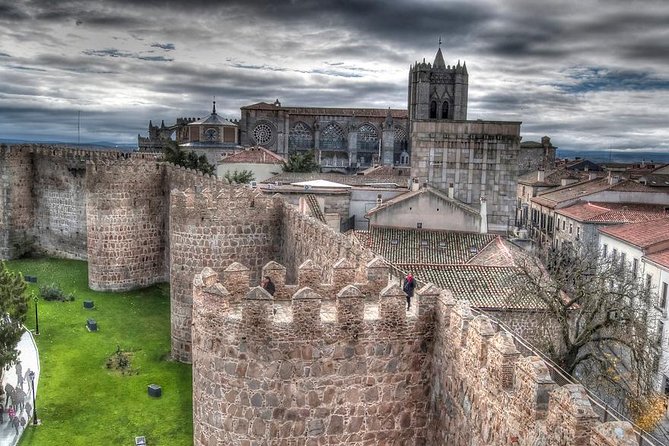
Next, you’ll get to the Royal Monastery of Santo Tomás. This is listed as a view from outside, and it’s described as Gothic-style. That means you’ll focus on the building’s exterior character rather than interior details.
Even as an outside stop, it’s useful. Monasteries in older towns weren’t just isolated religious spaces; they belonged to the whole urban fabric. Seeing it at walking speed helps you understand why these buildings dominate skylines and anchor neighborhoods.
One thing to flag: admission tickets are not included. So if you’re hoping to go inside here, you’d need to plan that separately. The tour is designed as a guided walking experience, not a “buy every ticket for you” package.
Plaza Mercado Chico: The City’s Inner Square
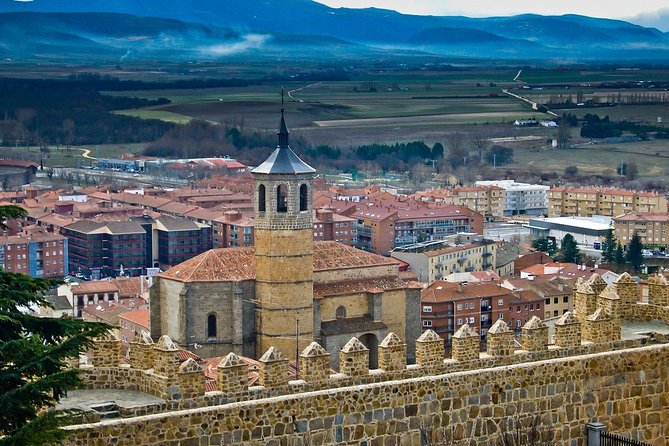
Then you’ll pass by Plaza Mercado Chico, Ávila’s main square inside the walls. It’s rectangular, with arcades on three sides. That geometry matters. Squares like this were designed for movement, trade, and social life, and the arcades provided shelter when the weather turned.
This is a pass-by stop with about 20 minutes. That’s long enough to orient yourself, take a few photos, and look up at the façades. It’s also a good rest point, because you’ll soon head toward gates and viewpoints again.
If you like the practical side of travel, this is where you’ll start noticing how the street network funnels people between landmarks. The square is basically a hinge in the urban layout.
Puerta del Alcázar: The Photo-Perfect Gate Moment
You’ll also make a photo stop at Puerta del Alcázar de Ávila. The tour data calls it a beautiful location, and honestly, gates are where Ávila’s story becomes visual. A gate isn’t just a passage. It’s a checkpoint, a boundary, a place where the city says, this is where you enter my world.
At about 10 minutes, it’s not a long hang. Think of it as a snapshot moment and a chance to ask your guide how this gate relates to the walls and nearby routes.
If you’re traveling with kids, this is often a hit. Gates feel like forts. Adults like them too, but the excitement is different—more “how does this work” and less “we found the secret entrance.”
Cathedral and Historic Sites: What You’ll See, and How to Prep
The tour summary notes that you’ll visit Ávila’s cathedral and historic sites. The detailed stop list you have emphasizes the walls and major squares, so treat the cathedral portion as part of the guided walking circuit rather than a guarantee of a deep, timed-entry visit.
Here’s how to get the most out of it: decide what you want from the cathedral segment. If you care about architecture, focus on how the guide connects the cathedral to the city’s defensive identity. If you care about art or religious practices, ask your guide what’s worth catching from the outside versus what you’d need to book for later.
Also remember: entrance fees aren’t included in the tour price. If you want cathedral interior time, plan for that separately so you don’t have to scramble mid-walk.
Jewish History Focus with Lucia: Markers, Gates, and Meaningful Stops
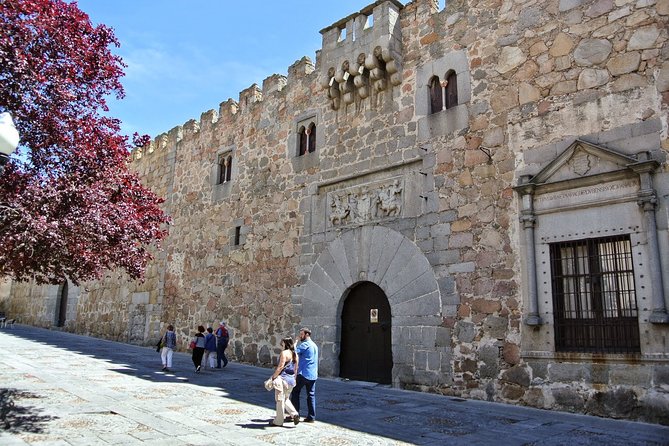
One of the most praised parts of this tour is how some guides can tailor the story to your interests. With Lucia, the experience takes a sharper historical direction, especially for Jewish history in Ávila.
What makes that valuable for you is that it’s not just general facts. Lucia is known for guiding you to the Malaventura gate, right next to her base area, and then connecting it to the larger history of Jews in Spain and Ávila. She’s also described as pointing out special markers on the ground that indicate Jewish historic locations.
Even more, the tour can include time in special buildings that were once synagogues. That kind of stop changes the walk from “scenery + dates” into something more personal and grounded. You start seeing the city as layers: medieval life, later memory, and physical traces that still exist.
If Jewish history is your priority, I’d treat this as your go-to tour type. The city wall loop makes an ideal framework for exploring how minority communities lived within (and alongside) the walled environment.
St Teresa Moments and Crowd Strategy with Blanca
Another strongly positive highlight is handling crowds without losing the thread of the tour. Blanca is noted for navigating the busy day of the Feast of St Teresa of Ávila with humor and good route sense.
That matters because the same event that makes Ávila feel alive can also slow walking tours down. If you’re booking during festival season, this is where a guide’s local thinking becomes part of the value, not a bonus. You don’t just pay for stories—you pay for pacing, detours when needed, and keeping the tour coherent when foot traffic surges.
Blanca also did a good job balancing what you see with what you understand, so you still get the main historical flavor even on a day when the city feels busy.
Pace, Timing, and What 3 Hours Feels Like on Foot
This is approximately a 3-hour walking tour, and that time is realistic for Ávila’s compact old-town scale. You’ll have several short stops—often around 10 to 20 minutes—plus walking time between them. That structure is good if you’re not trying to endure “all-day” touring.
Here’s the practical way to think about it:
- You’ll move often, so wear shoes you trust on uneven stone.
- You’ll get photo windows at gates and squares.
- You’ll get interpretation at the walls and key buildings.
If you’re sensitive to crowds, plan to keep your energy steady. The Feast of St Teresa example shows the tour can handle busy days, but you’ll still feel the city’s human pulse.
Price and Value: What $153.28 Buys You
At $153.28 per person, this isn’t a budget group deal. It’s a private, official-guided experience with a built-in walking route and pickup from central locations (or a designated meeting point if you’re already close).
So what are you really paying for?
- Time with an official guide for three hours
- Pickup help, which saves you from the awkward 20-minute hunt around old streets
- A private format, meaning your interests matter and your questions don’t get squeezed
- A route built around the wall circuit and key historic anchors
Entrance fees and food aren’t included, so your extra costs depend on what you choose to go inside. But that can be a good thing. It lets you tailor rather than forcing every guest into the same ticket choices.
Also note the minimum of 2 people per booking. If you’re traveling solo, you’ll need to check whether you’ll be paired with another booking or whether you’ll need to add another person to meet the minimum.
Meeting Point and Getting Started Smoothly
The start is Parking El Rastro, Cl. Sta. Teresa de Jesús Jornet, s/n, 05002 Ávila, Spain. The tour also offers hotel pickup from central locations, or you might meet in a central place if your hotel is within walking distance.
This matters because Avila streets can be confusing at first glance. Having pickup option reduces your “where am I” stress. It’s also easier for timing: you meet, you head out, and you start reading the city without delay.
The tour is near public transportation, which is helpful if you’re arriving from outside town and want a simple plan for the start time.
What to Bring (So You Don’t Waste Time)
Because this is a walking tour centered on walls and old-town streets, keep your kit practical:
- Comfortable shoes for stone surfaces
- A small water bottle (food and drinks aren’t included)
- Sun or rain protection, since you’ll be outdoors between stops
Since the tour includes photo stops, bring what you need for quick shots. You’ll hit gates like Puerta del Alcázar and you’ll want to capture the wall lines while you still have energy for it.
If you’re planning on adding cathedral or monastery interior time, budget for entrance fees not included and consider checking those priorities before your tour day so you don’t end up deciding on the fly.
Should You Book This Private Walking Tour?
Book this tour if you want Ávila to make sense in a short window. The private official guide format plus the wall-and-gate route is exactly how you understand a walled city without getting lost in random landmark hopping.
You should especially consider it if:
- You care about personalization, and want your guide to steer toward your interests
- You’re the type who enjoys markers, architectural logic, and how history shows up in physical space
- You’re visiting during busier periods like the Feast of St Teresa, when local navigation matters
Skip or adjust your plan if:
- You want lots of long indoor visits at every stop (the tour data suggests several exterior/view pass-by moments)
- You’re hoping the price includes all entrance fees and meals (it doesn’t)
If you want a solid starting point for your first day, this is a strong choice. It gives you the city framework so your later wanderings feel smart, not random—and that’s when Ávila becomes fun.
FAQ
Is this tour private or shared?
This is a private tour/activity. Only your group will participate.
How long is the walking tour of Ávila?
The tour lasts about 3 hours.
What language is the tour offered in?
The tour is offered in English.
Is hotel pickup included?
Pickup is offered from designated meeting points, and hotel pickup is included from central locations (or if your hotel is walking distance from the center).
Where is the meeting point?
The start is Parking El Rastro, Cl. Sta. Teresa de Jesús Jornet, s/n, 05002 Ávila, Spain. The tour ends back at the meeting point.
Are entrance fees included?
No. Entrance fees are not included, though some stops you pass by are free (like Plaza Mercado Chico and Puerta del Alcázar photo stop).
Are food and drinks included?
No. Food and drinks are not included.
Is there a minimum number of people to book?
Yes. A minimum of 2 people per booking is required.
Can I cancel for a full refund?
Yes. You can cancel up to 24 hours in advance for a full refund.
Is a mobile ticket provided?
Yes. A mobile ticket is offered.