REVIEW · MADRID
Paseo del Arte: Prado, Reina Sofía and Thyssen Museum
Book on Viator →Operated by De Paseo · Bookable on Viator
Three Madrid museums, one focused plan.
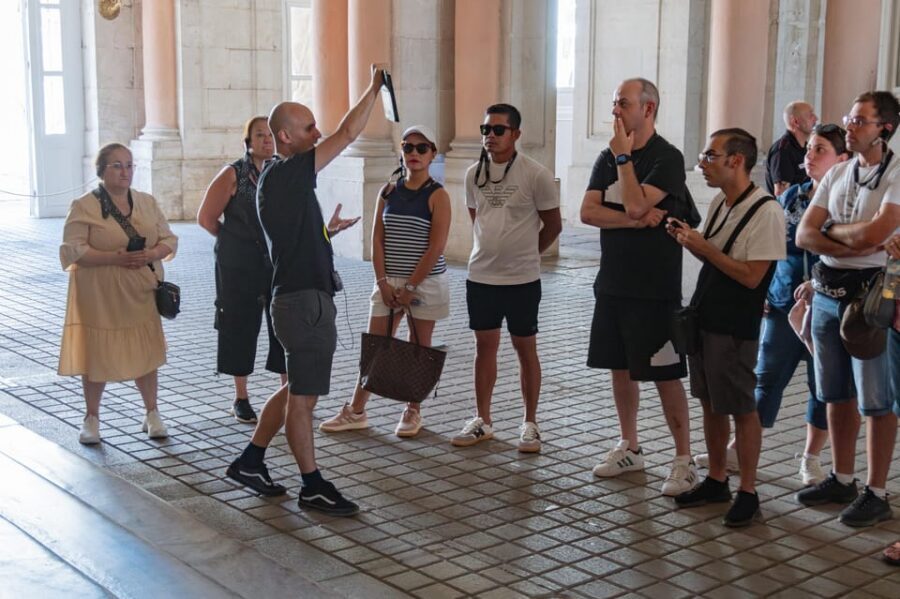
This is a well-paced way to see the Prado, Reina Sofía, and Thyssen without getting lost in labels and long galleries. I like that it stays small (up to 7) and uses an expert guide plus high-quality radio guides, so you can actually hear the story while you walk. One thing to consider: each museum time slot is about 1 hour 30 minutes, so you’ll see key works and guided highlights, not everything in the building.
I especially like how the guide links art to meaning: technique and perspective at the Prado, political context at Reina Sofía, and an easy “then and now” flow at the Thyssen. In my view, that mix is the value move because it turns a checklist into a single art-history lesson you can remember. The one possible drawback is simple: if you want to linger for an hour in one chapel-like room, this schedule may feel a bit tight.
In This Review
- Key highlights
- Why this Prado–Reina Sofía–Thyssen day makes sense
- The small-group setup: what changes once you’re not alone
- Stop 1: Museo Nacional del Prado and Las Meninas’ perspective trick
- Stop 2: Reina Sofía, Guernica, and the symbols behind the shock
- Stop 3: Thyssen-Bornemisza and the art timeline from 13th to 20th century
- The Madrid break: lunch time that doesn’t derail the schedule
- Who the guides are for: the difference between seeing and understanding
- Price and value: why tickets + radio guides can pay off
- Who should book this tour, and who might want another option
- Should you book Paseo del Arte for Prado, Reina Sofía, and Thyssen?
- FAQ
- How long is the tour?
- What museums are included?
- Is admission included?
- Is the tour offered in English?
- What group size should I expect?
- What are the meeting and ending points?
Key highlights
- Small group size (up to 7) keeps the pace human and the Q&A possible.
- Radio guides make the walking parts and inside-gallery commentary easier to follow.
- Las Meninas at the Prado gets the perspective explanation most people miss.
- Guernica at Reina Sofía comes with the full 1937 bombing context and symbol decoding.
- A smooth art timeline from 13th- to 20th-century works at the Thyssen.
- Lunch time built in so you can plan a break without hunting for a spot at the last minute.
Why this Prado–Reina Sofía–Thyssen day makes sense
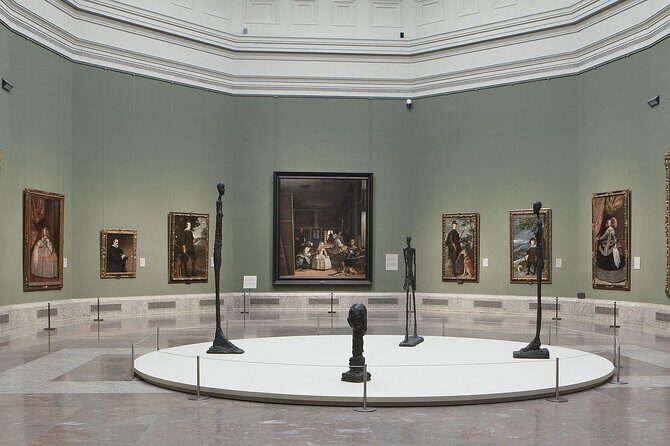
Madrid’s three big-name art museums can feel like three separate trips. This format fixes that. You’re grouped by time period and theme—old masters and craft at the Prado, modern shock and political meaning at Reina Sofía, then a long sweep through European art at the Thyssen.
I also like the practical rhythm. You start in the morning, you move museum to museum with a guide, and you get a scheduled lunch window. It helps when you don’t want to spend part of your vacation figuring out what to skip.
And the guide matters. The tour is built around turning what you see into something you can interpret—why it was painted, how it was made, and what the symbols are trying to say.
You can also read our reviews of more museum experiences in Madrid
The small-group setup: what changes once you’re not alone
This tour runs as a semi-private group with a maximum of 7 people, which is a big deal in museums. Small groups don’t just feel calmer. They also make it easier for the guide to slow down, repeat key points, or help you focus on the right details.
You’ll have an expert guide throughout, plus high-quality radio guides. That means you’re not playing the classic game of leaning in, squinting at a distance, and hoping you heard the important part. Instead, you can keep walking and listening at the same time.
Timing is also part of the value. The day is about 8 hours (approx.), starting at 10:00 am. Each museum stop is roughly 1 hour 30 minutes, so you get depth through guidance rather than by sheer staying power.
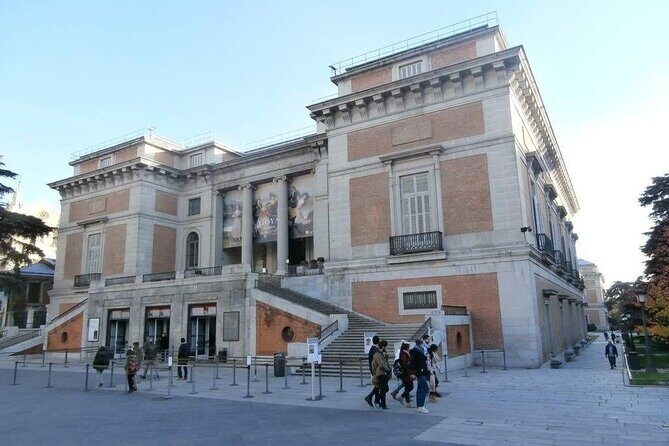
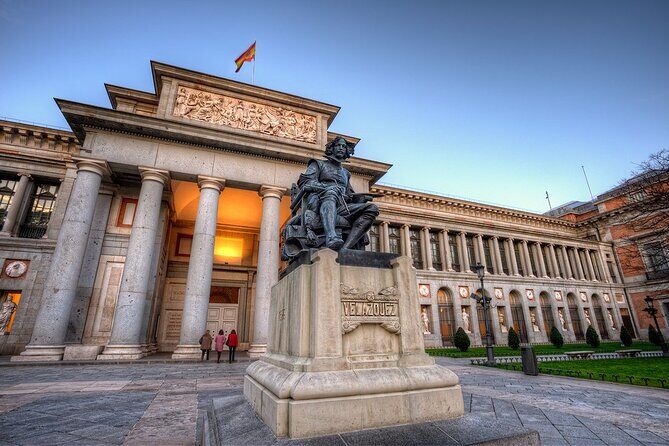
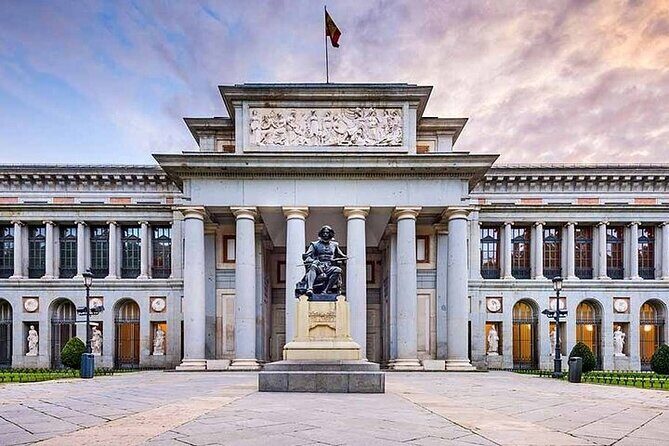
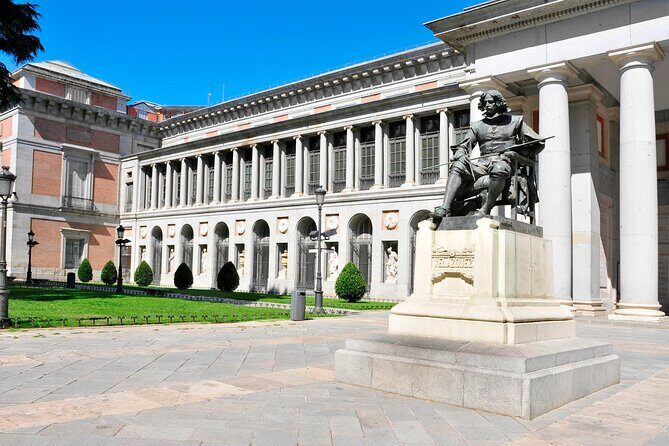
Stop 1: Museo Nacional del Prado and Las Meninas’ perspective trick
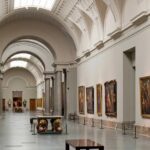
The Prado is the kind of museum where you can spend a week and still feel like you missed the point. With a guided plan, you don’t try to conquer it all—you learn how to look.
Expect a strong focus on major Spanish masters first, especially works by Goya and Velázquez. You’ll also get a guided explanation of pictorial techniques, and how artists captured the customs and social world of their time. That framing helps you move past the “pretty painting” stage and into the “why this is built this way” stage.
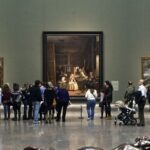
One standout highlight is Las Meninas. The guide doesn’t treat it like a photo-op. You’ll learn what makes it famous, especially the way the painting plays with perspective and the roles of the figures. When someone points out the structure, it stops being confusing and starts feeling clever.
The Prado part of the day also includes Northern European painting, so you’re not stuck only on Spain. You’ll have time to see examples tied to Flemish art, plus artists such as Van Dyck, and you’ll encounter the enigmatic imagination of El Bosco. On top of that, you’ll see Italian names like Fra Angelico, Raphael, and Titian, including equestrian portrait styles and religious painting that later artists studied.
What to watch for: the way the guide teaches you to spot details you might otherwise miss—faces, symbols, and technique choices that explain the scene. It’s one of those tours where you leave with a better “reading” method, not just memories of famous titles.
Stop 2: Reina Sofía, Guernica, and the symbols behind the shock
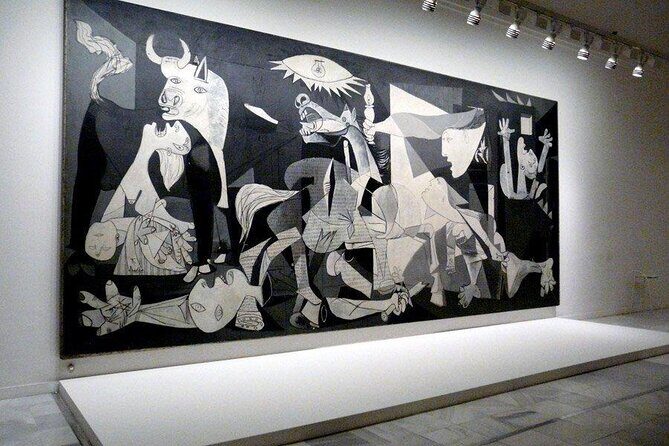
If the Prado teaches craft and viewpoint, Reina Sofía teaches impact. This stop centers on Pablo Picasso and one painting above all: Guernica.
You’ll spend about 1 hour 30 minutes here, and the guide’s job is to help you understand why Guernica became an international icon. That means not only looking, but getting context: it was painted in Paris between May and June 1937, and the title ties directly to the bombing of Guernica on April 26, 1937, during the Spanish Civil War.
You’ll also hear what happened to the painting afterward. In 1981, it finally reached Spain, first exhibited at the Casón del Buen Retiro. Then, since 1992, it has been on permanent display at the Reina Sofía Museum in Madrid.
That timeline matters because it changes the emotional temperature. It’s not just a war image; it’s also a work that travelled, was re-framed, and then took on a new role in Spain’s cultural memory.
What I love about this stop: the guide is focused on the “how” of the artwork. You’ll be guided through the process of making it and the secrets and symbols hidden inside it. The painting can look like chaos at first, but with a good explanation it becomes organized grief—figures and gestures that connect to a larger story.
Stop 3: Thyssen-Bornemisza and the art timeline from 13th to 20th century
The Thyssen is the connective tissue of this day. After Spain at the Prado and Picasso’s modern statement at Reina Sofía, the Thyssen gives you a long sweep through European art styles.
You’ll cover around a thousand works spanning roughly the 13th to the 20th centuries in about 1 hour 30 minutes. That might sound like a blur, but the guide keeps it coherent by focusing on representative masterpieces and movements.
You can expect major names across different eras, including Titian, Rubens, Rembrandt, Caravaggio, Manet, Renoir, Van Gogh, Gauguin, Kandinsky, and Hopper. The museum also brings in the kind of European painting you don’t always see together elsewhere—Italian and Flemish primitives, key Renaissance works, and plenty from the Impressionist period.
Then the Thyssen jumps forward into the 20th century. You’ll be able to see examples tied to Fauvism, Expressionism, Surrealism, Abstraction, and Pop Art. And yes, it still stays Spanish-focused where it counts, including works by Picasso and Dalí.
How this stop helps your whole day: it turns your visit into a visual timeline. You start recognizing shifts in color, form, and purpose—why art changes when society changes. Even if you’re not an art expert, you’ll leave with clearer categories you can carry into future museum visits.




The Madrid break: lunch time that doesn’t derail the schedule
After three museums, you get a scheduled break. There’s free time to have lunch, and you can include the lunch option so you don’t have to worry about where to eat.
This is one of those details that makes tours feel good instead of exhausting. When the food plan is built in, you don’t end up rushing, eating something you don’t like, or losing momentum when you should be resting.
Use the break to recharge your eyes. Modern paintings and old masterpieces in the same day can scramble your brain a little. A short reset helps you enjoy the last stretches instead of just trying to finish.
Who the guides are for: the difference between seeing and understanding
The biggest reason this tour earns such high marks is the guide style. In the past, guides like Ana, Ana Cristina, and Laura have been praised for combining wide art knowledge with a relaxed, engaging pace. You can feel the difference immediately when someone explains why a detail matters, not just what the artist name is.
You’ll likely get a mix of techniques and stories rather than a straight lecture. The tour format is designed for art lovers, but it also works if you’re starting from zero. You don’t need to know anything going in, because the guide teaches you how to look.
Also, the pace is a real factor. More than once, the emphasis is on a considerate tempo. That matters in museums where it’s easy to feel pushed through rooms.
And there’s usually a bit of play in the learning. Some people enjoy light guessing games with what they see, and the guide can turn the hardest works—like Cubism or war symbolism—into something you can talk about.
Price and value: why tickets + radio guides can pay off
This tour includes admission tickets to all three museums: the Prado, Reina Sofía, and Thyssen-Bornemisza. It also includes an expert guide, walking transitions with a guide, and high-quality radio guides.
In plain terms, the value is in what’s bundled. Museums like these often involve time and planning energy, and that’s exactly what this day saves you. You’re buying a guided art-history route with entry covered, not just “a person walking you around.”
The small-group size also affects value. With up to 7 people, you’re less likely to get stuck in the back of a big crowd. That improves the odds you’ll actually hear the explanation you paid for.
And with three museums in one day, you’re not stuck choosing between them. If you’ve been staring at your shortlist and thinking it’s impossible to do all three, this itinerary is the practical answer.
Who should book this tour, and who might want another option
This is a strong fit if you want a guided art-history lesson across eras. It’s especially good for people who like structure: Prado highlights, Reina Sofía context, Thyssen timeline.
It’s also a great choice if you’re trying to sort out the difference between Spanish painting and wider European movements. The flow of Spanish masters into modern political art, then across Impressionism and 20th-century styles, gives you a clear mental map.
If you’re the kind of art lover who wants to spend a long time alone with one painting, you might feel limited by the 1 hour 30 minutes per museum. In that case, you could prefer a slower, museum-by-museum approach.
Should you book Paseo del Arte for Prado, Reina Sofía, and Thyssen?
If your goal is to leave Madrid with a better understanding of how art works—technique, symbolism, and history—this tour is a smart booking. The small group, radio guides, and tickets included make it feel efficient without being rushed in a chaotic way.
Book it if you want a guided route through major works like Las Meninas and Guernica, plus a broader survey of European art at the Thyssen. Skip it if you plan to “live” inside museums for long stretches and don’t want any time limits at all.
Either way, if you like your museum days planned, explained, and actually audible, this is the kind of day that can turn three big buildings into one coherent story.
FAQ
How long is the tour?
The tour runs about 8 hours (approx.) total, with around 1 hour 30 minutes at each museum stop.
What museums are included?
You’ll visit the Museo Nacional del Prado, Museo Nacional Centro de Arte Reina Sofía, and Museo Nacional Thyssen-Bornemisza, plus a break in Madrid.
Is admission included?
Yes. Tickets for the Prado, Reina Sofía, and Thyssen-Bornemisza are included.
Is the tour offered in English?
Yes. The tour is offered in English.
What group size should I expect?
It’s a semi-private tour with a maximum of 7 travelers.
What are the meeting and ending points?
The tour starts at Museo Nacional del Prado (Retiro, 28014 Madrid) and ends at the Thyssen-Bornemisza National Museum (P.º del Prado, 8, Centro, 28014 Madrid). The start time is 10:00 am.