REVIEW · MADRID
Prado & Reina Sofia Madrid Exclusive Guided Museum Tour
Book on Viator →Operated by Babylon Tours Madrid · Bookable on Viator
Two museums can feel like one smart walk. This combo tour is built for art lovers who want the Prado classics and the Reina Sofia modern shocks without playing ticket roulette all day. You’ll get an expert guide framing what you’re seeing, from old masters and Italian works to Picasso and the politics behind Spanish modern art.
I especially like the skip-the-line access paired with a private-group style experience, so you spend more time looking and less time waiting. And if you’re lucky enough to have Pedro, you’ll see how much energy a great guide can bring to works like Las Meninas and Guernica.
One possible drawback: you’re moving for about 5.5 hours, and the tour includes walking plus time inside crowded galleries, so plan for a moderate pace and comfortable shoes.
In This Review
- Key highlights worth booking
- Prado and Reina Sofia in one 5.5-hour art plan
- Stop 1: Museo del Prado and the art that trained Spain
- The Prado drawback to plan for
- Stop 2: Reina Sofía, modern art with a Spain storyline
- What “private-style” and skip-the-line really gives you
- Timing, walking, and how to get between museums
- Price and value: is $287.18 worth it?
- The little details that make or break your museum day
- Who this tour fits best
- Should you book the Prado and Reina Sofia exclusive guided combo?
- FAQ
- What is the duration of the Prado and Reina Sofia guided tour?
- What time does the tour start?
- Are entrance fees included?
- Is the tour offered in English?
- Is hotel pickup or drop-off included?
- Where does the tour start and end?
- Are temporary exhibitions included?
- Is this a private tour?
- Do I need a mobile phone number to book?
- What if the museums have unexpected closures?
- What is the cancellation policy?
Key highlights worth booking
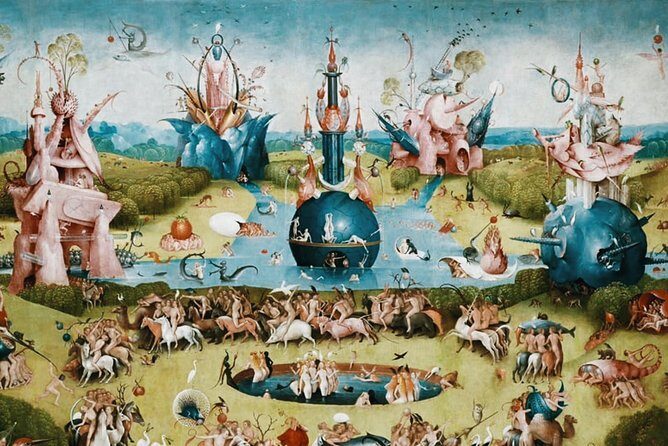
- Prado first, with real star power: Las Meninas and Bosch’s The Garden of Earthly Delights are part of the guided run.
- Italian masterpieces outside Italy: you’ll focus on the Prado’s unusually strong Italian collection.
- Reina Sofia’s 20th-century story: abstractionism, cubism, surrealism, and modernism are tied together with Spain’s social and political shifts.
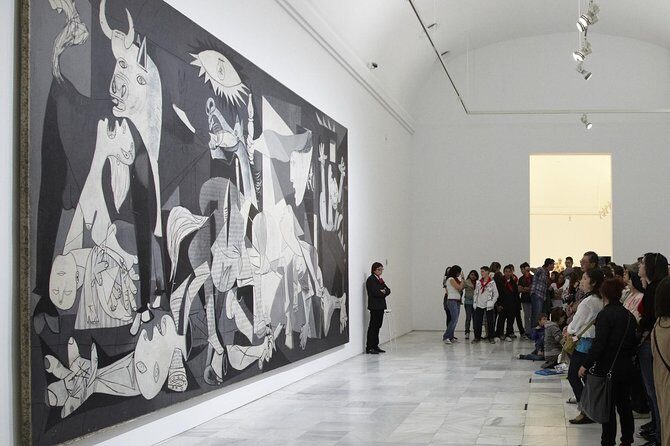
- Picasso to Dali, with context: Guernica, The Man with a Pipe, and Dali’s Face of the Great Masturbator are explained through technique and meaning.
- One guide, two worlds: you get the bridge from the Prado’s classic paint to Reina Sofia’s modern ideas.
Prado and Reina Sofia in one 5.5-hour art plan
If you only have a short window in Madrid, this pairing is practical. The Prado is where the Spanish masters and major European names sit in a single, high-impact building. The Reina Sofia is where you get the jolt of 20th-century art—plus the Spanish Civil War context that helps those paintings and sculptures suddenly make sense.
The timing matters. Starting at 11:00 am, you’ll spend about 2 hours 30 minutes in the Prado, take a break for lunch, then continue for another 2 hours 30 minutes at Reina Sofia. That rhythm keeps the day from dragging, and it also prevents the common mistake of treating these museums like two disconnected lists of famous artworks. Here, you move from classical to contemporary with a guide connecting the dots for you.
It’s also “value per hour” friendly. You’re not just buying entry tickets. You’re paying for guided interpretation at both sites, and admission is included—so the ticket cost part of your day is already handled.
One more thing I like: this is offered in English and uses a mobile ticket, which helps you avoid the last-minute hunt for paper passes.
You can also read our reviews of more guided tours in Madrid


Stop 1: Museo del Prado and the art that trained Spain
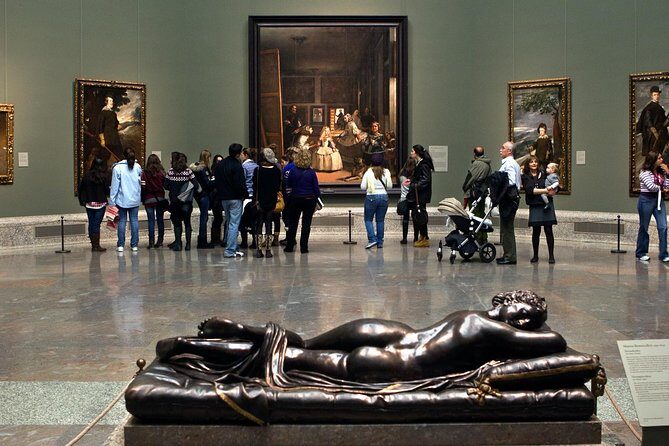
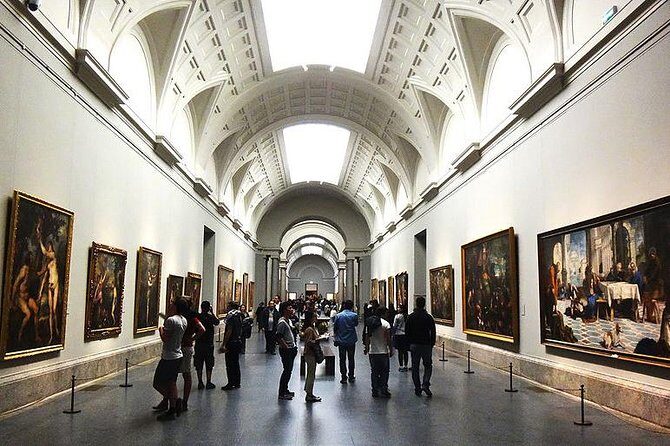
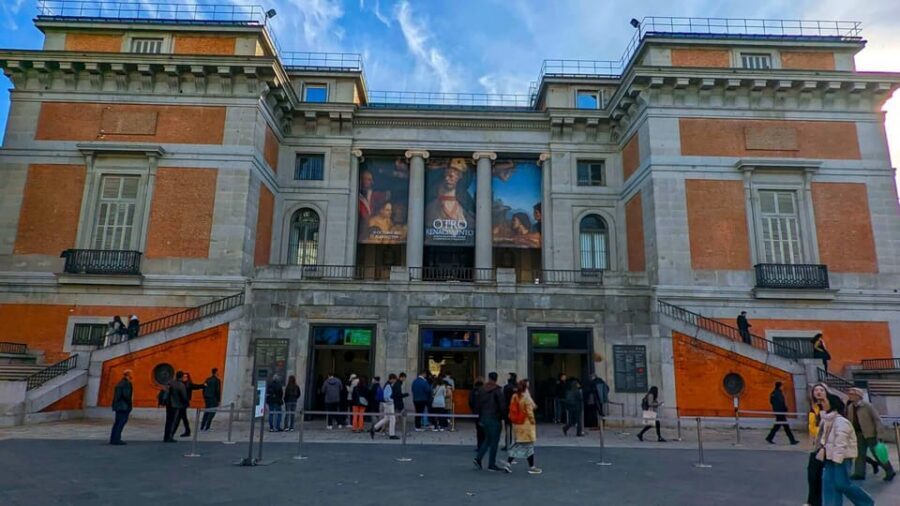
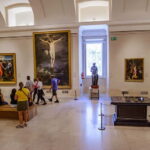
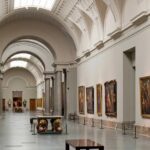
The Prado is often described as Spain’s answer to the Louvre, and it’s easy to see why. It’s housed in an 18th-century neoclassical building, and the collection spans works from the 1200s to the 1900s. That range can be overwhelming on your own. With a guide leading the way, you focus on what’s most important and why it matters.
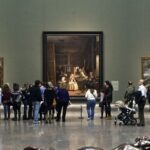
At the center of the Prado stop are the famous anchors your eyes want to find fast. You’ll spend time on works like Las Meninas by Velázquez, the inventive self-portrait that has fooled people into thinking there’s only one scene when the composition is doing something sneakier. You’ll also see Bosch’s The Garden of Earthly Delights, the triptych that’s basically a visual philosophy project—full of symbolism and startling imagination.
The guide’s job here is crucial. Instead of treating the Prado like a museum of isolated masterpieces, the tour connects stories and secrets behind artists and styles you’ll keep hearing about in art history. You’ll get context for works by names like Goya, Fra Angelico, El Greco, and Rembrandt, and that helps you recognize patterns as you walk through the halls.
Another Prado advantage you don’t always get on shorter visits is the Italian emphasis. The Prado holds the largest collection of Italian masterpieces outside Italy, and you’ll see why that matters. If you care about the evolution of painting—composition, use of light, and the shift from religious themes toward broader human focus—this Italian thread gives you a clearer view of what influenced what.
Practical note: the Prado stop is 2 hours 30 minutes with admission included. That’s long enough to feel like you’re actually learning the museum’s logic, but not so long that you’ll collapse in a chair wondering what you’re still doing in Room 4.
The Prado drawback to plan for
Even with skip-the-line access, museums aren’t immune to crowds. The tour notes that security measures at many attractions can still create lines on skip-the-line tours. So if you’re the kind of person who hates any waiting at all, keep expectations realistic.
Also, this is a moderate-fitness day. You’ll be on your feet for a chunk of the morning, then again at Reina Sofia. That doesn’t mean it’s extreme, but it does mean you’ll feel it if you plan poorly. Comfortable shoes are a smart move.
Stop 2: Reina Sofía, modern art with a Spain storyline
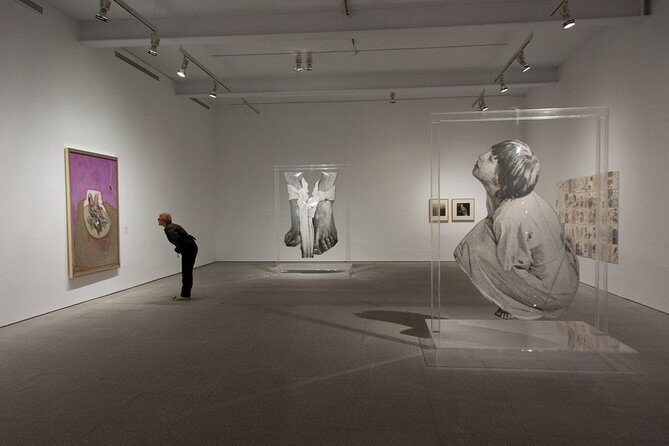
After lunch break, the Reina Sofia changes the tone fast—and that’s the point. This museum is housed in a former hospital, and it became the gallery space for 20th-century art back in the 1990s. The building’s history helps the modern art feel less like a shock to the system and more like part of a longer cultural shift.
The guide leads you through movements you’ll hear about in school and books: abstractionism, cubism, surrealism, and modernism. What you gain on this tour is not just the name of each movement, but how they relate to each other. You’ll come away understanding why artists were breaking rules—politically, emotionally, and technically.
And yes, you’ll see the biggest name in modern Spanish painting: Picasso’s Guernica. Seeing it with context is where tours like this earn their keep. Without background, it can look like a chaotic, powerful image. With the guide framing it, you connect it to the social and political pressure of the Spanish Civil War and the way art can become a public act.
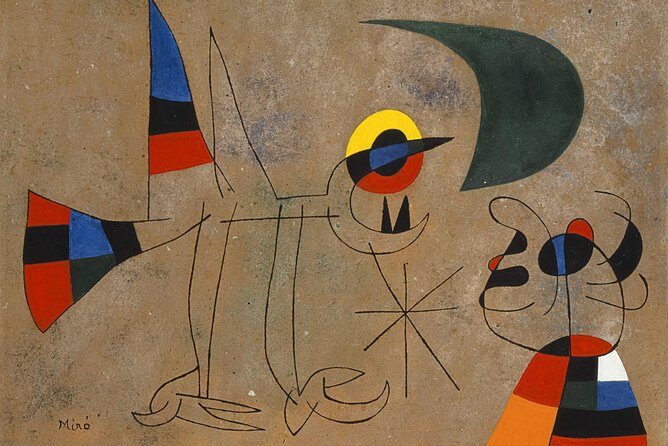
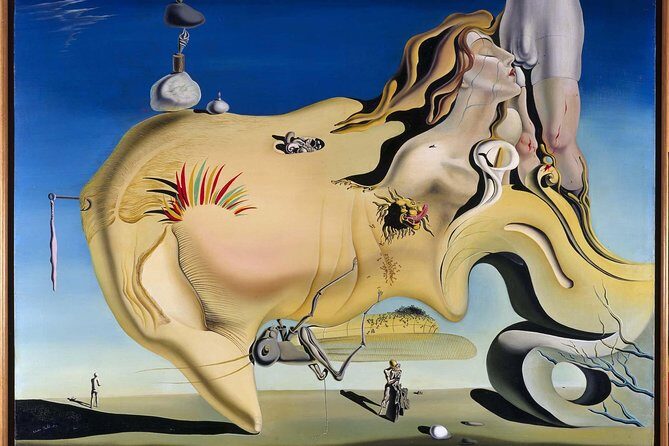
You’ll also spend time with other major figures that anchor Reina Sofia’s identity. You’ll encounter Joan Miró, including The Man with a Pipe, where the playful surface still carries a deeper logic once you understand the choices behind the shape and symbolism. You’ll also see Salvador Dalí’s Face of the Great Masturbator, which is quirky on first glance—but the tour’s explanation of techniques and strategies makes it less random and more deliberate.
One of the smartest parts of the Reina Sofia stop is how the guide ties artworks to the wider world: what Spain was dealing with, what artists were reacting to, and how those pressures shaped what ended up on the wall. When you finish this tour, Reina Sofia stops feeling like a collection of famous names and starts feeling like a readable map of 20th-century Spain.
You’ll leave with enough context to wander confidently through the museum afterward, even beyond the specific guided route.
What “private-style” and skip-the-line really gives you
This experience is listed as private in the sense that it’s only your group participating. That matters more than people expect. In a busy museum, large-group tours can feel like you’re being herded. Here, the pace can feel more responsive to what you’re looking at and what your guide thinks you’ll want explained next.
The tour also offers skip-the-line access. In practice, that means you’re less likely to burn time before you even start looking. Still, the tour warning about security lines is important. Skip-the-line doesn’t mean zero waiting in every security lane. But it does typically mean you’re entering the museum more efficiently than a standard walk-up.
There’s also a key detail about the guide being exclusively for you. The tour notes that the guide is exclusively for you, but it does not apply if you choose the Save option that books as semi-private. So before you buy, check which version you selected. If you want that full attention, choose the option where the guide is exclusively focused on your group.
You can also read our reviews of more museum experiences in Madrid



Timing, walking, and how to get between museums
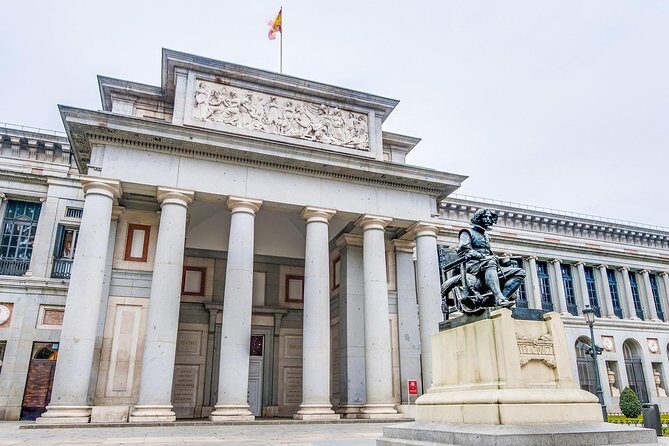
This combo tour doesn’t include hotel pickup or drop-off. You’ll start at the Museo Nacional del Prado (Retiro) area at 28014 Madrid, and you’ll end at the Museo Reina Sofía (Arganzuela) area at 28012 Madrid. The tour also notes it’s near public transportation.
Between the Prado and Reina Sofia you’ll likely be using transit or a quick ride. Since pickup is not included, I suggest planning a simple point-to-point move with Uber or taxi if walking and transit changes feel like effort. That way you stay on schedule and don’t lose your focus right when you’re about to switch from Prado classics to Reina Sofia modern drama.
Dress matters in Madrid museums. The tour notes that appropriate dress is required for entry into some sites. That’s usually things like covering shoulders or avoiding overly casual choices in certain areas, so plan to dress normally for a museum day and you’ll be fine.
Price and value: is $287.18 worth it?
At $287.18 per person, this is not a budget option. But value in Madrid art touring comes from three big levers: time, interpretation, and admissions.
Here, admissions are included at both museums. You’re also getting a guided combo for about 5.5 hours total, with tickets already handled. That means you’re paying mostly for the guide’s ability to help you look smarter, not just look more.
Skip-the-line access is another value piece. If you’ve been to major European museums, you know lines can eat half a morning. Reducing that friction is worth money when your vacation day is already precious.
Finally, the guide focus is part of the price logic. If you choose the option where the guide is exclusively for your group, you’re buying more than facts—you’re buying attention. You can ask questions, and you can get explanations tailored to what you’re actually staring at.
This tour is best value when:
- you care about both classical and modern art, not just one
- you want context so famous works feel less random
- you want a structured day with fewer decisions
It’s less perfect if:
- you’re traveling only for a quick photo hit
- you’re planning to spend most of the time in temporary exhibitions (those are not included)
- you hate any walking and want a mostly seated experience
The little details that make or break your museum day
A smooth museum visit isn’t just about big-name art. It’s also about avoiding the small hassles that derail the day.
This tour uses a mobile ticket, and it requires you to provide a mobile phone number with the country code. That’s not the fun part of travel planning, but it is essential. If you skip it, your timing can get messy.
Security can still slow you down, even with skip-the-line. So keep your day flexible enough that a few minutes of variance won’t stress you out.
Also, some works are so famous that people race through them. Don’t do that. With this kind of guided plan, your best results come from stopping and letting the guide connect details: what you should notice in the composition, what historical pressure is sitting behind the brushstrokes, and why artists were experimenting.
And since temporary exhibitions are not included, don’t plan your day around special shows. Treat this tour as a strong foundation in the permanent collection story at both museums.
Who this tour fits best
I’d point this tour toward you if you want:
- a guided path through two of Madrid’s top art institutions
- a clear connection from Picasso-era ideas back to earlier European painting traditions
- a practical schedule when your time is tight
It also fits well if you’re the kind of person who wants to understand why a work looks the way it does, not just that it’s famous.
If you’re traveling with someone who has zero patience for art lectures, this is still workable. The guide’s job is to make the art readable, and the stop structure gives you momentum: Prado first, then Reina Sofia, instead of two slow trudges across the same museum floors.
If you need wheelchair access, the tour notes it is wheelchair friendly, with the same exception as the semi-private Save option. So confirm the version you’re booking if mobility access matters.
Should you book the Prado and Reina Sofia exclusive guided combo?
Yes, if you want a smart, time-efficient day that turns two major museums into one coherent learning arc. You’re getting expert-guided interpretation in English, admission fees included, and skip-the-line access that helps you spend more time seeing and less time waiting. The payoff is especially strong because the guide doesn’t just list masterpieces. You get movement-by-movement context at Reina Sofia and a focus on major Prado anchors like Las Meninas and The Garden of Earthly Delights.
Book it if:
- you want both classical and modern art in one day
- you’d rather pay for structure than manage it yourself
- you care about context for Picasso and the Spanish Civil War angle
Consider another approach if:
- you’re mainly interested in temporary exhibitions
- you prefer a totally self-paced museum day with no guide
- your group needs minimal walking and maximal sitting
FAQ
What is the duration of the Prado and Reina Sofia guided tour?
The tour lasts about 5 hours 30 minutes, including a lunch break.
What time does the tour start?
The start time is 11:00 am.
Are entrance fees included?
Yes. All entrance fees are included, and admission tickets for both museums are part of the tour.
Is the tour offered in English?
Yes, the tour is offered in English.
Is hotel pickup or drop-off included?
No. Hotel pickup and drop-off are not included, so you’ll need to arrange your own transportation to the meeting point and from the end point.
Where does the tour start and end?
It starts at Museo Nacional del Prado (Retiro), 28014 Madrid, Spain, and ends at Museo Reina Sofía (Arganzuela), 28012 Madrid, Spain.
Are temporary exhibitions included?
No. Temporary exhibitions are not included.
Is this a private tour?
Yes, it’s a private tour/activity, and only your group participates. The guide being exclusively for you does not apply if you choose the Save! Book semi-private option.
Do I need a mobile phone number to book?
Yes. It’s imperative that you provide a mobile phone number, including the country code.
What if the museums have unexpected closures?
The Prado and Reina Sofia might have occasional closures or delayed openings or special events. In those cases, the provider offers a reschedule option or an appropriate alternative. Refunds or discounts are not available for these exceptional situations.
What is the cancellation policy?
You can cancel for a full refund if you cancel at least 24 hours before the experience’s start time. If you cancel less than 24 hours before, the amount paid is not refunded.