REVIEW · EL ESCORIAL
San Lorenzo de El Escorial: Monastery and Site Guided Tour
Book on GetYourGuide →Operated by Todo Tours Gestion SL · Bookable on GetYourGuide
San Lorenzo de El Escorial grabs your attention fast. This guided tour takes you into one of Spain’s most important Spanish Renaissance monuments, tied to the reign of Philip II and the ideals of the Spanish Golden Age. You’ll move through the core rooms that show how faith, politics, and art were built into the same machine.
I especially like how the visit is organized around the building’s big set-pieces. You’ll spend real time on the basilica, the pantheon, and the palatial interiors, then finish with the Royal Library, where you can see the power-biology of a king who collected volumes to grow his humanistic knowledge. Reviews also highlight the guides as a major part of the value, with names like Alejandro, Isabella, and Marta showing up as standout professionals.
One consideration: it’s 2 hours, and there’s a lot packed inside. If you’re the type who wants to linger in every chapel detail or take lots of photos without a schedule, this can feel a bit brisk.
In This Review
- Key things to know before you go
- Why El Escorial still feels like a statement of power
- The building’s logic: a Renaissance “grid” you’ll walk through
- Basilica: where the site’s religious core comes first
- The pantheon: the legacy angle you can’t skip
- Battle Hall and palatial rooms: architecture that performs
- Royal Library: the stop that turns into a real story
- How the tour flows: what you’ll do in those 2 hours
- Meeting point and on-site rhythm at the monastery entrance
- Language, dress, and site etiquette you should plan around
- Price and value: is $47 worth it?
- Who should book this guided tour
- Should you book San Lorenzo de El Escorial with this guide?
- FAQ
- How long is the San Lorenzo de El Escorial guided tour?
- What is included in the tour price?
- How much does the tour cost?
- Where do I meet the guide?
- What time should I arrive?
- What language is the tour in?
- What do I need to bring?
- Are there restrictions on bags or luggage?
- What clothing is not allowed?
- Is there a cancellation option?
Key things to know before you go
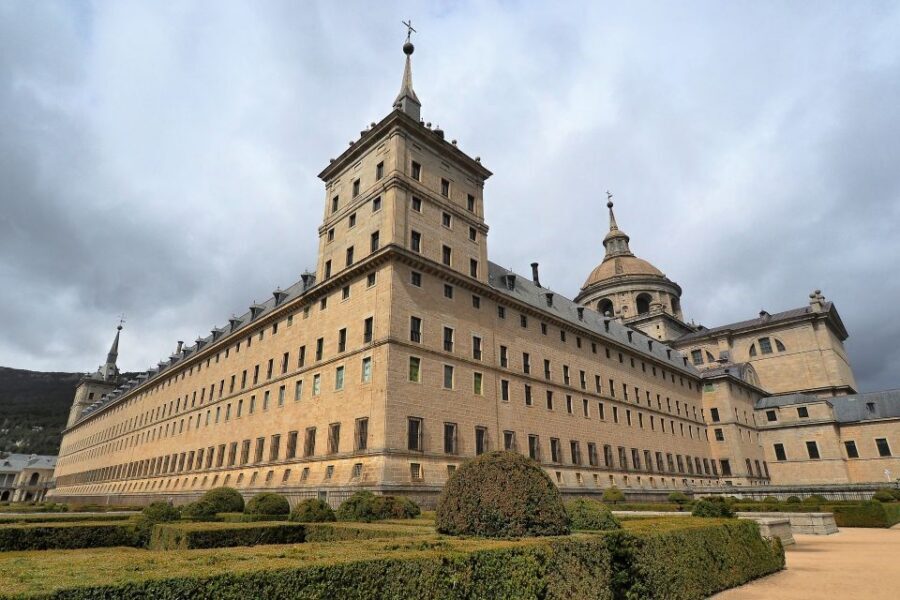
- A UNESCO-level Renaissance complex near Madrid that’s famous for more than its size
- Philip II is the thread that connects the basilica, halls, and the Royal Library
- Royal Library visit where the “power through knowledge” idea becomes tangible
- Basilica, pantheon, and palatial rooms give you a complete sense of the site
- Professional live guide in Spanish who turns architecture into a story you can follow
Why El Escorial still feels like a statement of power
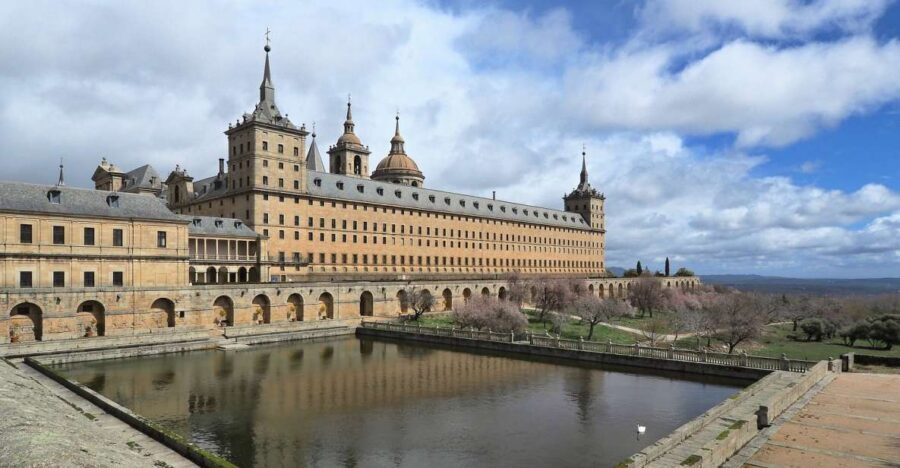
San Lorenzo de El Escorial is not a place you visit because it’s convenient. You visit because it represents an era. The monument was built in the 16th century and is often described as one of Spain’s key Renaissance achievements. What makes it click for me is that the building isn’t trying to be subtle. It’s ideological. It’s meant to communicate authority.
Your guide ties that message to the Spanish Golden Age, and specifically to Philip II. That matters because El Escorial isn’t just a pretty palace-monastery hybrid. It’s a physical argument: Spain’s leadership at the time believed religion and governance should reinforce each other, and they built that idea into rooms, axes, and ceremonial spaces.
If you’ve seen other European royal sites, you’ll notice the tone here is different. You get less of the glossy leisure vibe and more of the disciplined, rule-of-life atmosphere. That contrast is exactly why a guided visit helps. A guide gives you the “why” behind what you’re seeing, not just a list of what’s in front of you.
You can also read our reviews of more tours and experiences in El Escorial.

The building’s logic: a Renaissance “grid” you’ll walk through
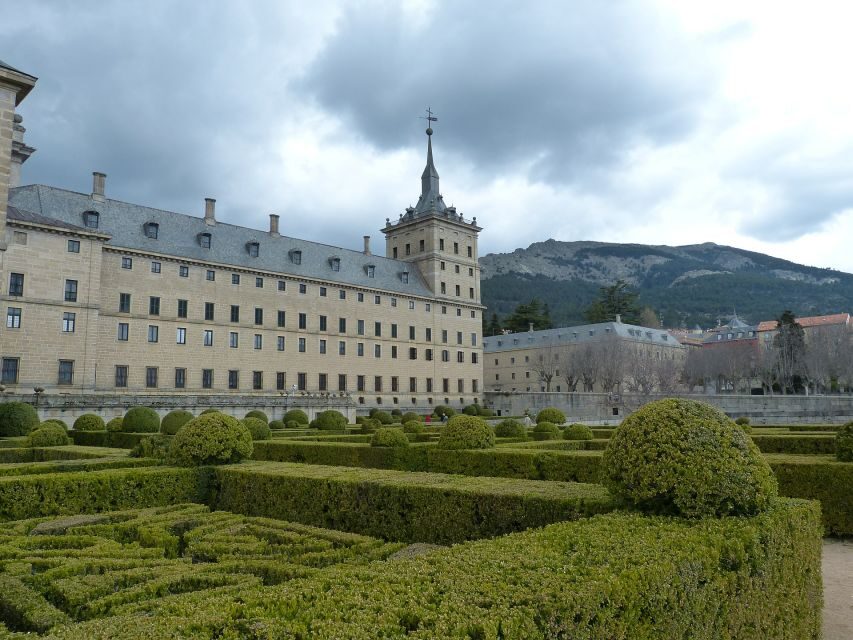
El Escorial is sometimes described with a grill-like plan, and that shape is more than a trivia point. Once you start moving through it, you can feel how the layout organizes the experience. Instead of wandering randomly, you follow a guided route that makes the monument readable.
On this tour, you’ll see the main interior stops that connect the whole composition. You’ll start with the most essential ceremonial spaces, then progress through rooms meant to project prestige and control. This is one of those sites where the order you visit matters. If you go without a plan, it’s easy to end up feeling like you’ve seen walls, but not a story.
What helps here is the tour structure: it’s designed to cover multiple “types” of space in one visit. You’re not only looking at religious architecture. You’re also seeing halls and palatial rooms that functioned like stage sets for status. That mix is part of El Escorial’s identity.
Basilica: where the site’s religious core comes first
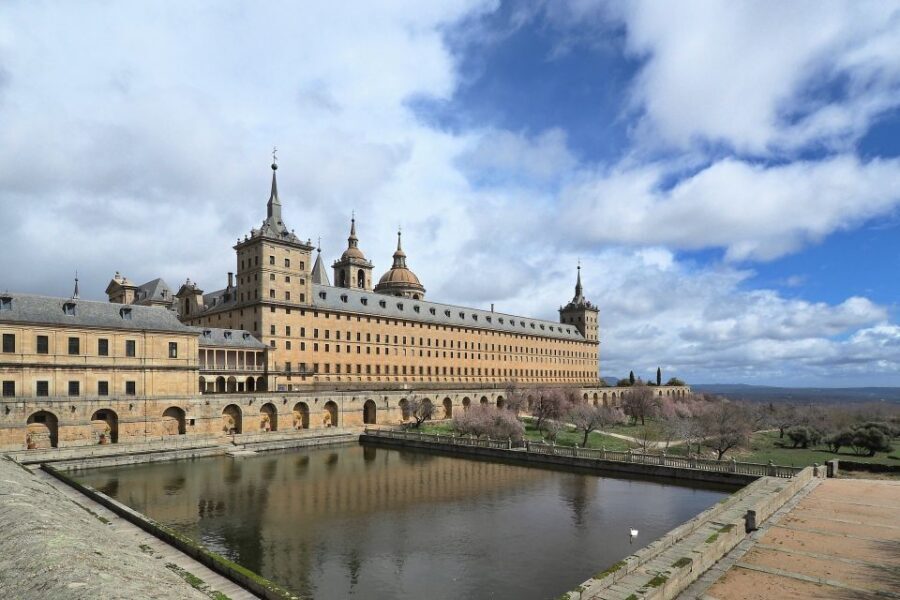
The basilica is one of the stops you should care about most. Even if you’re not a religious-history person, the basilica gives you the emotional baseline of the whole complex. This is where the monument’s spiritual purpose is most visible.
A good guide will point out how the basilica connects to the broader themes of authority and legacy. In a monastery context, those themes aren’t abstract. They’re built into how people move, where focus is directed, and how the space frames the idea of worship. You’ll likely get context on what the Spanish Golden Age expected from rulers and institutions, and how a monastery could carry political meaning.
The practical upside: seeing the basilica on a guided tour helps you avoid getting lost in details. Without help, it can turn into “big room, lots of stone.” With a guide, it becomes “big room, here’s why it’s built this way.”
The pantheon: the legacy angle you can’t skip
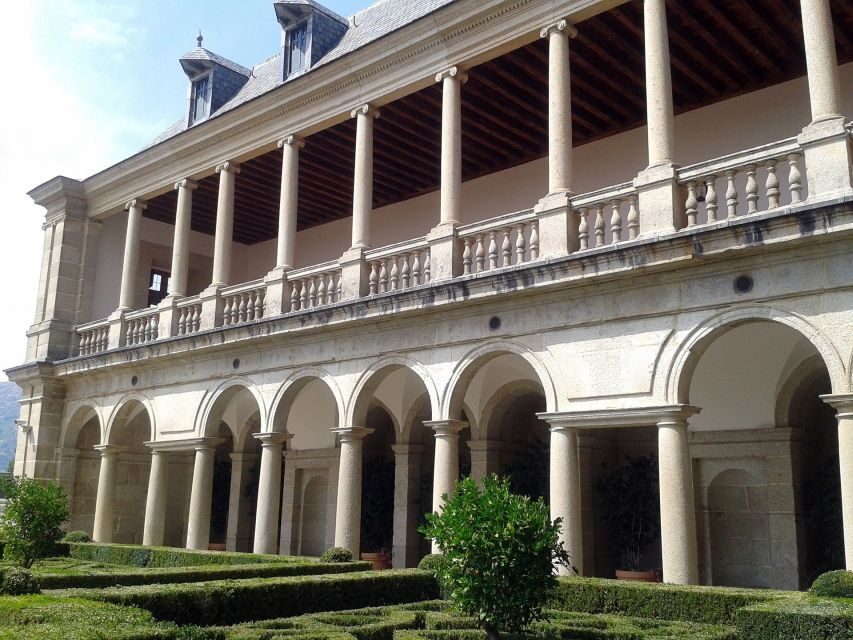
El Escorial is strongly tied to royal burial and dynastic memory, and the pantheon is where that idea lands. This is where you shift from the building as architecture to the building as a long-term memory project.
The tour includes the pantheon area as a key part of the walkthrough. That’s important because it changes how you interpret everything you’ve seen before. Earlier rooms can feel like symbolism. In the pantheon, the symbolism becomes personal and historical. You’re not just admiring a monument; you’re witnessing the space created to hold a lineage.
If you like history that has physical weight, this stop does that. It’s also where the guide’s narrative skill matters. A strong guide can make the pantheon feel like a chapter in Spain’s Golden Age, rather than just another room on a route.
Battle Hall and palatial rooms: architecture that performs
After the basilica and pantheon, the tour moves into spaces that feel more openly like power rooms. The Battle Hall is one of the listed highlights, and it’s included for a reason. It’s not just another interior chamber; it’s meant to reinforce Spain’s self-image during the reign of Philip II.
Then you’ll continue through palatial rooms, which help you understand that El Escorial wasn’t only about monastic discipline. It also served as a stage for prestige. You’ll see how design choices reinforce hierarchy and how ceremony would have worked inside these walls.
One practical benefit of covering the Battle Hall and palatial interiors as part of a single guided loop: you’ll notice connections. Details you might otherwise ignore start to make sense when you hear how the site was intended to communicate. Even if you’re not an architecture student, the tour gives you tools to read what you see.
Royal Library: the stop that turns into a real story
If you’re choosing what to prioritize inside the time limit, make the Royal Library a top bet. The tour highlight is the library’s role as a Renaissance statement of power, and that concept isn’t just marketing language. A library is control. It’s access to ideas. It’s the idea of a ruler steering knowledge.
Philip II is the key figure here, and the tour explains how he collected volumes to expand his humanistic knowledge. That line matters because it connects the library to the bigger political worldview of the era. You’re not only seeing a room with books. You’re seeing a symbol of how leadership wanted to shape thought.
In reviews, guests consistently praise guides for making this kind of context feel clear and engaging. That’s what you want at El Escorial. The library is one of those places where, without context, you can end up staring at shelves and guessing. With the guide’s framing, it becomes part of the same story as the basilica and halls.
How the tour flows: what you’ll do in those 2 hours
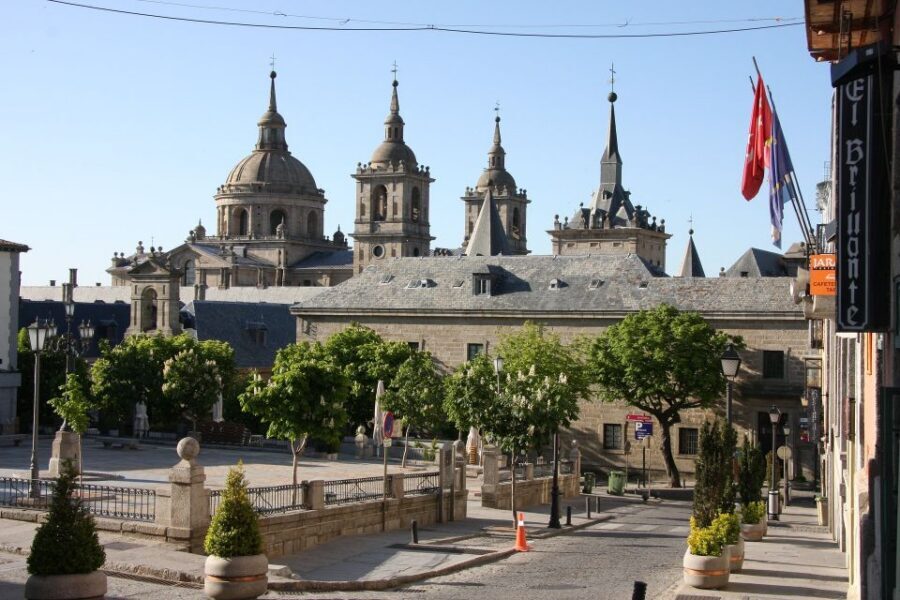
This is a 2-hour guided tour, and the itinerary is built to move through major areas without dragging. You’ll start at the entrance and work through the main interior sequence: basilica, Battle Hall, pantheon, palatial rooms, and other essential spaces, then the Royal Library as the big finale.
You’ll finish near the entrance after the guided segment. That matters because some major monuments can leave you with a dead end where you don’t know what to do next. Here, you end where you can reorient quickly.
I’d also plan your mindset for pacing. A review noted the experience can feel a little rushed on the second visit. That’s not shocking given the short duration and the number of stops. If you want slow tourism, you might consider spending extra time afterward on your own in any specific area that clicked with you.
Meeting point and on-site rhythm at the monastery entrance
Logistics are straightforward, but do them right and you’ll start smoothly. Arrive about 15 minutes early. You’ll need to exchange your voucher at the meeting point.
The guide meets you with a blue umbrella from Todo Tour at the monastery access door, the main entrance with the Spain flag at the top. It’s a small detail, but it reduces stress fast. When you’re dealing with a big monument complex, finding the right entrance without delay is half the battle.
Also plan your start time around a real-world museum rhythm: some doors can be busy, and you’ll want everyone gathered before the guide begins the route.
Language, dress, and site etiquette you should plan around
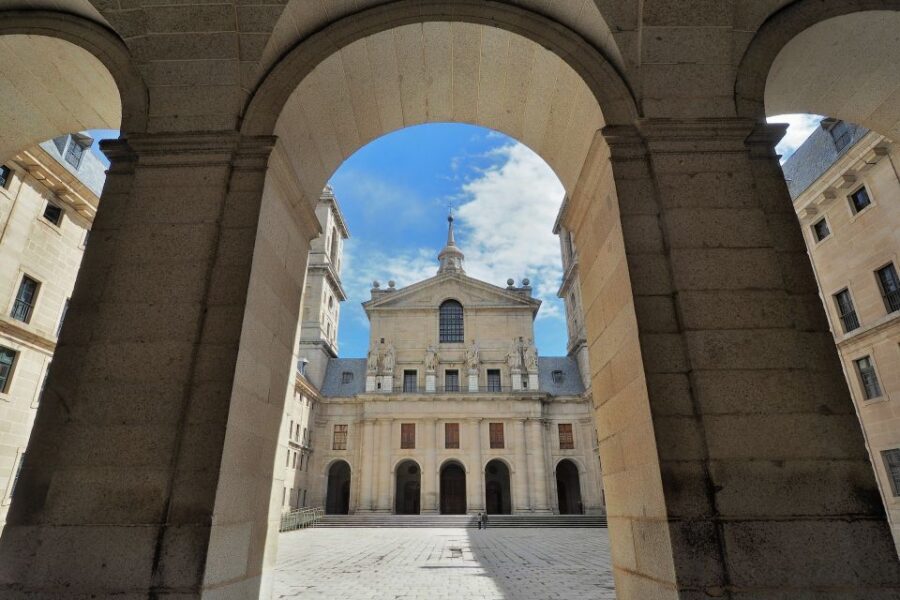
This tour is in Spanish, and that affects how much you’ll enjoy the narration. If you read and speak basic Spanish, you’ll probably be fine. If you don’t, you may still appreciate the architecture, but your ability to follow the story will be limited.
You also need to follow site rules on what to wear and bring:
- Bring a passport or ID card
- Avoid luggage or large bags
- Follow the dress guidance: short skirts and sleeveless shirts are not allowed
- Swimwear is not allowed
- Keep noise down and don’t make a scene inside
These rules are worth treating as part of the experience. They help keep the spaces respectful, and you’ll avoid awkward moments at the door.
If you’re traveling with kids, focus on choosing this tour when you’re okay with a focused 2-hour walkthrough rather than a free-roaming play session.
Price and value: is $47 worth it?
At about $47 per person for a 2-hour guided visit with entry included, you’re paying for two things: a professional guide and access to the Royal Monastery. El Escorial is one of those places where a self-guided visit can turn into a maze of impressive rooms, but not a coherent story.
This tour’s value comes from the way it connects themes. The guide links architectural stops to the Spanish Golden Age and the reign of Philip II. That framing is what makes the interior feel purposeful instead of exhausting. Reviews specifically mention guides as a big reason people felt they got more insight than they would have without a structured tour. Names like Alejandro, Isabella, and Marta show up as examples of guides who were professional, engaged, and able to explain details in an easy-to-follow way.
Also, you’re not paying extra for entry. Included admission matters at monuments where ticket lines and access rules can add friction.
Could it feel pricey if you’re only chasing photos? Sure. If you want to spend most of your time snapping pictures and moving on, you might decide to visit independently. But if you want the story behind the basilica, the pantheon, the Battle Hall, and the Royal Library, this price is easier to justify.
Who should book this guided tour
Book this if you:
- Want the Spanish Golden Age explained through real spaces
- Care about Philip II and how power expressed itself through architecture
- Prefer a structured route in a big complex
- Appreciate seeing the Royal Library with context, not just as a stop
Consider an alternative plan if:
- You dislike tours that follow a schedule
- You need an unscripted pace with lots of time for wandering
- You’re not comfortable with Spanish narration
One review also highlighted how a smaller group can make the experience feel personal, which is a good sign. This isn’t a guarantee of small numbers every time, but the format is designed for a guided circuit where the guide can manage questions and movement.
Should you book San Lorenzo de El Escorial with this guide?
If you’re visiting Madrid and you want a major day-trip-level monument without the hassle of figuring everything out alone, I’d say this tour is a smart move. The reason is simple: El Escorial only becomes truly satisfying when you understand what you’re looking at—and this tour is built to give you that understanding quickly.
Go for it if you want the basilica, pantheon, Battle Hall, palatial rooms, and the Royal Library all connected into one coherent visit. Skip it (or at least adjust expectations) if you’re expecting endless free time or you need English narration.
If El Escorial is on your must-see list, this is one of the easiest ways to make it feel worth your travel time.
FAQ
How long is the San Lorenzo de El Escorial guided tour?
The tour lasts 2 hours.
What is included in the tour price?
You get a tour guide and an entry ticket to the Monastery.
How much does the tour cost?
The price is $47 per person.
Where do I meet the guide?
Meet at the monastery main entrance with the Spain flag at the top. The guide will be waiting with a blue umbrella from Todo Tour.
What time should I arrive?
Arrive 15 minutes before the activity starts. You will need to exchange your voucher at the meeting point.
What language is the tour in?
The live tour guide language is Spanish.
What do I need to bring?
Bring a passport or ID card.
Are there restrictions on bags or luggage?
Yes. Luggage or large bags are not allowed.
What clothing is not allowed?
Short skirts and sleeveless shirts are not allowed.
Is there a cancellation option?
Yes, free cancellation is available up to 24 hours in advance for a full refund.