Madrid has secrets in plain sight. This 2.5-hour walk strings together 17 stops in old Madrid, from the oldest squares to unmarked convent doors. You’ll spend short moments in places you’d usually skip on your own—then leave with a clearer sense of how Madrid changed under Mudéjar, Habsburg, and Bourbon rule. Most stops are free to see from outside, so you’re not constantly paying to move.
I love the small group size (max 10). It makes it easy to ask questions and keep the pace human, and the tour works without the usual headset setup. I also like how the narration connects big power stories (kings, courts, religion) to tiny details like street bends, coats of arms, and a fountain tied to a house-tax trick.
One drawback: it’s a walking tour with lots of stone streets and some stairs. If you need frequent breaks, go slow, or have mobility limits, plan carefully and wear good shoes.
In This Review
- Key highlights you’ll feel during the walk
- Price and what you actually get for $32.53
- Start at Puerta Cerrada and settle into old Madrid
- Plaza de la Villa to Calle de Codo: the city’s power in stone
- Corpus Christi’s unmarked door and the galletas ritual
- Basilica de San Miguel: the Baroque that feels theatrical
- El Huerto de las Monjas and the peace you only find by detour
- The Casa a la Malicia story at Calle de Rollo Fountain
- Plaza de la Cruz Verde: the green cross and fear replaced by calm
- Jardin del Principe de Anglona: jasmine and romance behind brick walls
- Iglesia de San Pedro El Viejo: Mudéjar surviving in plain sight
- Plaza de la Paja and Vargas Palace: power that stretched overseas
- Calle de Madrid and the legend of two youths
- Jardines de Las Vistillas: the view that resets the day
- Palacio de Consejos at Calle Mayor: Counter-Reformation discipline
- Museo de la Catedral de la Almudena: neo-Habsburg in a 20th-century finish
- Royal Palace viewpoints and Monumento a Filippo IV’s math problem in bronze
- Ending at Plaza de Isabel II: where old Madrid meets the present
- What to do during the walk (so you get more out of it)
- Who this tour fits best
- Should you book the Secrets of Madrid Small Group Tour?
- FAQ
- Is the tour offered in English?
- How long is the Secrets of Madrid Small Group Tour?
- What is the meeting point for the tour?
- Where does the tour end?
- How many people are on the tour at most?
- What does the price include?
- What is not included in the tour price?
- Do I need to bring a paper ticket?
- Does the tour run in bad weather?
- Is free cancellation available?
Key highlights you’ll feel during the walk
- A tight 2.5-hour route that hits major eras without dragging
- Short, meaningful stops from Plaza de la Villa to Plaza de Isabel II
- Convent stories you can’t “self-tour” easily, like the Corpus Christi galletas ritual
- Street-level Madrid, including Elbow Street (Calle de Codo) and the medieval wall leftovers
- Baroque surprises such as Basilica de San Miguel and Philip IV’s bronze statue
- A payoff view at Jardines de Las Vistillas after hours of narrow streets
Price and what you actually get for $32.53
At about $32.53 per person for roughly 2 hours 30 minutes, this is priced like an efficient orientation tour, not a museum day. The value comes from the mix: you get guided interpretation of many distinct historical layers while spending your money on the walk itself rather than on admissions.
Here’s the catch to keep in mind: Royal Palace entry isn’t included. That said, you still see the palace from viewpoints around the center of power. If you want to go inside, you’ll need to budget for that separate ticket.
Also, the tour is in English and uses a mobile ticket, which tends to make day-of start times smoother. It’s booked about 43 days in advance on average, so if you’re traveling in peak season, don’t leave it to the last minute.
You can also read our reviews of more tours and experiences in Madrid.

Start at Puerta Cerrada and settle into old Madrid
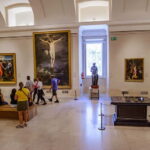
Your tour begins at Plaza de Puerta Cerrada (Centro), then loops back to the same meeting point at the end. This choice matters because you’re not constantly zig-zagging across town. You’re walking through a compact pocket where the city’s “old layers” are still readable on foot.
Expect the guide to keep each stop crisp. Many stops are brief—often just minutes—so you’re not stuck waiting outside a closed building. The tour is designed like a story you can walk through: each location is a chapter, not a long photo stop.
Because it’s a small group up to 10, you can ask questions as you go. That’s a big deal in Madrid, where a lot of history is hidden in plain sight—inside names, stone carvings, and architectural transitions you’d miss unless someone points them out.
Plaza de la Villa to Calle de Codo: the city’s power in stone
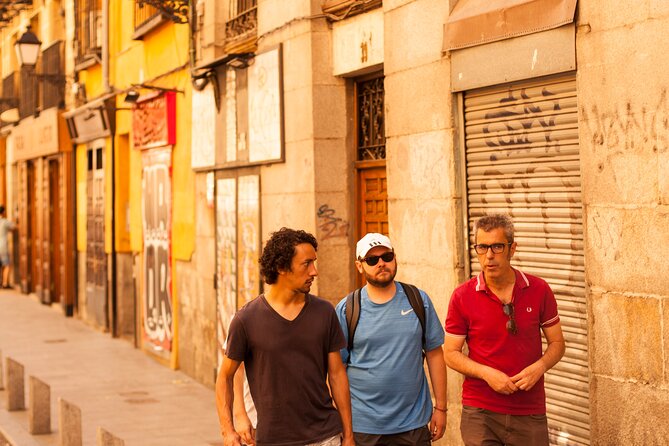
You kick off at Plaza de la Villa, one of Madrid’s older squares where different architectural languages overlap. The façades here act like an open book. You’ll see Mudéjar, Plateresque, and Habsburg influences sitting side by side, and you’ll be encouraged to look at the coat of arms of King Charles II—the last Habsburg monarch carved into the stone. That single detail is a useful anchor: it reminds you that Madrid’s identity has been shaped by rulers who weren’t always local.
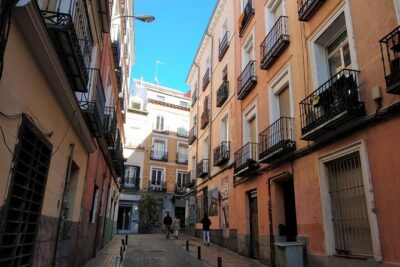
From there, you move to Calle de Codo—also called Elbow Street. This is short, but it’s one of those spots that teaches you how medieval Madrid worked. It’s a narrow curve of irregular stones, and the bend creates a natural hush. It’s not a “monument” stop; it’s a feel-the-place stop, where you start to notice how streets themselves can steer your mood.
Practical note: these lanes can be slippery and uneven. Take your time stepping from one stop to the next. You’ll walk faster if you don’t have to “fight” the street surface.
Corpus Christi’s unmarked door and the galletas ritual
One of the more special segments happens at Monasterio del Corpus Christi. The tour describes it as tucked behind an unmarked door, a 17th-century convent life that still preserves daily routines with surprisingly little change. What you’re really seeing here is how a city can keep a quiet heartbeat inside a busy map.
The story focuses on the cloistered nuns baking galletas de las Carboneras. They sell the biscuits through a small revolving window, and it comes off less like a souvenir stop and more like a working ritual. If you pick up a biscuit, treat it as a symbolic taste of continuity—not as a “snack with history branding.”
A consideration: because access is limited and the routine is part of the place, you’ll be at the mercy of timing and the flow of the day. Your stop is short (about 10 minutes), so if you want to buy something, do it early in your window.
Basilica de San Miguel: the Baroque that feels theatrical
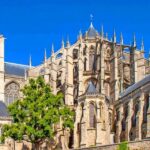
Next you’ll get a contrast at Basilica de San Miguel. The surprise is the church rising unexpectedly among narrow streets. The tour frames it as an 18th-century Baroque-style declaration: faith shown as spectacle, with dramatic proportions that the Bourbon-era builders wanted to project.
This stop is useful even if you’re not a church person. It shows how architectural style can signal political change. When you compare this theater-like façade to the older, more austere feel around it, you start to understand why Madrid’s “look” shifts from era to era.
Tip: take a moment to step back and compare the church’s curves and proportions to the straight, narrow streets around it. That contrast is the point.




El Huerto de las Monjas and the peace you only find by detour
Then you step into a different tempo at El Huerto de Las Monjas. It’s a secluded convent garden behind high walls, an oasis of silence in the middle of the city. The most practical detail here is access timing: Monday to Friday you can step inside, while on weekends the gate stays closed.
So if you’re going on a Saturday or Sunday, you might only see the idea from the outside. If the garden is important to you, check your day of travel before you lock in your plan.
This stop works because it gives you oxygen after stone and history talk. Your brain needs a quiet reset, and the garden does that in a way no photo can.
The Casa a la Malicia story at Calle de Rollo Fountain
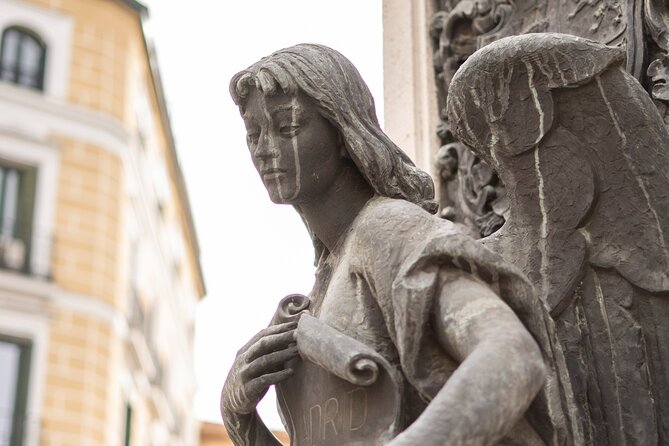
At Calle de Rollo Fountain, the tour connects architecture to street-level resistance. You’ll hear about Casa a la Malicia, tied to a 16th-century census ordered by King Philip II to tax new houses built in Madrid. Locals didn’t want to pay more, so they built houses that looked unfinished from the outside—so inspectors would be less likely to count them the same way.
It’s a fun story because it turns “history” into civic behavior. Madrid isn’t just kings and churches here. It’s also everyday people bending rules with practical tricks.
Don’t rush the look at the site. Even when you can’t see every structural clue, the narrative teaches you what to look for: uneven façades, hints of “unfinished” shapes, and the way street design can hide a clever plan.
Plaza de la Cruz Verde: the green cross and fear replaced by calm
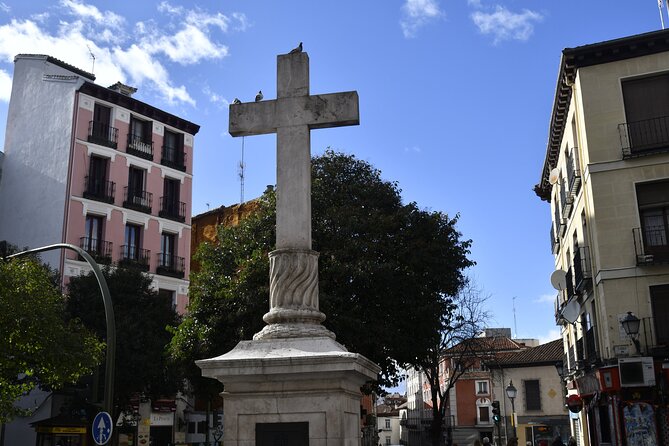
Next comes Plaza de la Cruz Verde, where the tour leans into darker history without turning it into sensationalism. In medieval Madrid, this square is described as a site where the Inquisition held public executions before those actions shifted later toward Plaza Mayor. The square’s green cross is tied to the emblem carried in Inquisition processions.
Then the tour also notes the present-day mood: the scenes of fear are gone, replaced by peace and silence. That shift is a good way to understand Madrid—how the city can move forward while the stones still remember.
This is also a smart place for a short pause. Nearby cafés can give you coffee and a restroom break before you continue through old streets.
Jardin del Principe de Anglona: jasmine and romance behind brick walls
At Jardin del Principe de Anglona, you’re in an 18th-century garden hidden behind high brick walls. The tour points to symmetry, shaded benches, and the scent of jasmine—details that mattered to poets and lovers during the Romantic era, when people started viewing ruins with nostalgia.
This stop is less about “facts” and more about mood. It’s where you get a different side of Madrid: not power, not punishment, but how beauty and time can change how a city feels.
Practical note: gardens often mean more uneven footing and shade. That’s a plus on hot days, but watch where you step when you move back out to the streets.
Iglesia de San Pedro El Viejo: Mudéjar surviving in plain sight
Iglesia de San Pedro El Viejo is one of the oldest buildings in Madrid—dating from the 14th century and described as the second-oldest building in the city. The most important detail is its mudéjar architecture: Christian in purpose, with Islamic influence in the design language.
If you’ve ever walked past Mudéjar buildings thinking they look “just old,” this stop helps you see the features as intentional. The brick tower with delicate arches and simple geometry is easier to appreciate when someone explains what to notice.
This is a short stop, but it’s the kind that improves how you see the city for the rest of the day.
Plaza de la Paja and Vargas Palace: power that stretched overseas
At Plaza De La Paja, you’ll see the Vargas Palace, a 16th-century residence of the Vargas family, described as feudal lords of Madrid before it became a royal capital. The tour also ties the family’s influence to the conquest and administration of the Americas.
That may sound like a huge leap from a city square, but it’s exactly the point. Madrid’s power wasn’t limited to streets within the walls. It traveled outward through governance, wealth, and policy.
The tour adds another contrast: tradition says San Isidro worked there as a humble servant. When you hear a saint story beside a powerful noble family, you start to understand Madrid’s dual identity—worldly ambition alongside spiritual simplicity.
Calle de Madrid and the legend of two youths
Then you’ll walk to Calle de Madrid for Calle de los Mancebos. This narrow street preserves medieval atmosphere with ancient stones. The name refers to “young men,” tied to a tragic story involving two youths accused of killing a prince who died in 1217. Whether they were truly guilty remains uncertain, and the mystery isn’t “solved” in a way you can point to.
This stop is perfect if you like history as story. Madrid’s older areas mix documented facts with legends that became part of local identity. Even if you can’t prove the outcome, the legend still explains why people remember the place.
Jardines de Las Vistillas: the view that resets the day
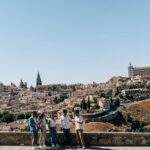
After hours of stone lanes, you finally get air at Jardines de Las Vistillas. This open terrace is described as a place locals use for celebration and festivals, and it’s known for sunsets and views.
From here, Madrid opens toward the Manzanares River and distant mountains. That visual shift is more than pretty. It makes the earlier tight streets feel like a choice, not a trap.
If you’re tired, this is where you’ll feel your energy come back. Use it to drink water, take a breather, and frame photos without the usual scramble.
Palacio de Consejos at Calle Mayor: Counter-Reformation discipline
Back among streets, your route brings you to Calle Mayor to see the Palacio de Consejos. The tour describes it as early 17th-century architecture shaped by the Counter-Reformation, where architecture aimed to project faith and discipline.
You’ll notice brick walls and slate spires that reflect the Habsburg style around you. The point here is that monarchy didn’t just rule with soldiers. It ruled with ideology—through buildings built to communicate seriousness.
This stop works best when you look at it like a message in stone. It’s less about decoration and more about authority.
Museo de la Catedral de la Almudena: neo-Habsburg in a 20th-century finish
Next is the Museo de la Catedral de la Almudena area. The interesting twist is timing: the cathedral’s structure looks ancient, but it was completed only in the late 20th century. The façade is described as neo-Habsburg, designed during the Franco era to imitate 17th-century sobriety and create a sense of continuity.
This is a useful lesson for travelers: cities often “perform” history. Madrid wasn’t just rebuilt once; it’s been curated over time to feel coherent.
If you’re the type who reads façades, spend a moment on this one and ask yourself what era the building wants you to believe you’re standing in.
Royal Palace viewpoints and Monumento a Filippo IV’s math problem in bronze
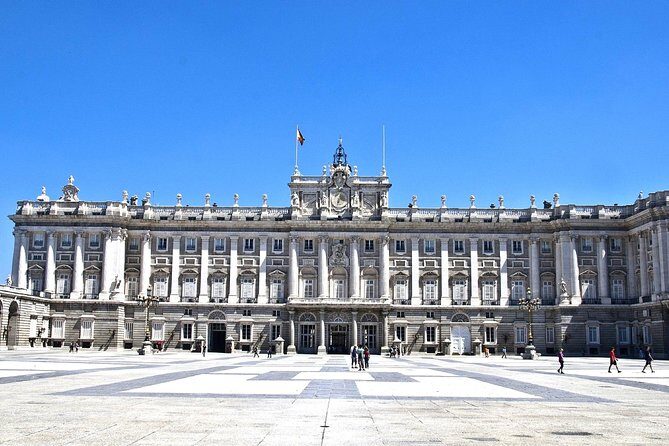
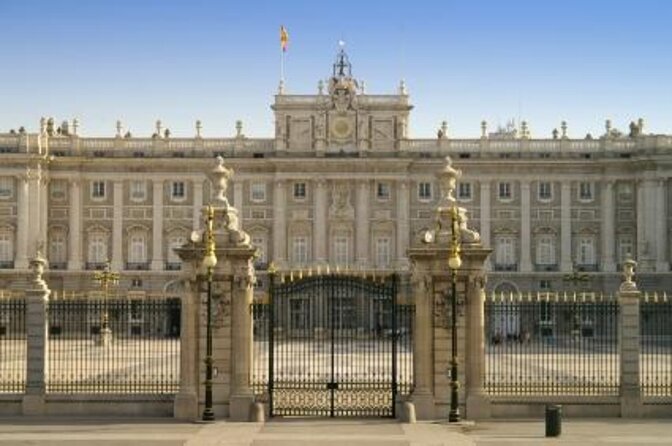
As you reach the Royal Palace of Madrid, the tour emphasizes the setting. The palace sits above the valley of the Manzanares, and the view makes it feel like an emblem of absolute power. You’ll hear it was built in the 18th century by the Bourbons to replace the old Alcázar of the Habsburgs, which burned down in 1734. The tour frames the palace as a statement meant to rival Versailles.
Remember: if you want to go inside, Royal Palace admission is not included. But even outside, the scale and placement teach you something about why Madrid became the center it did.
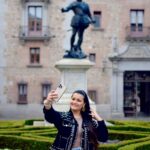
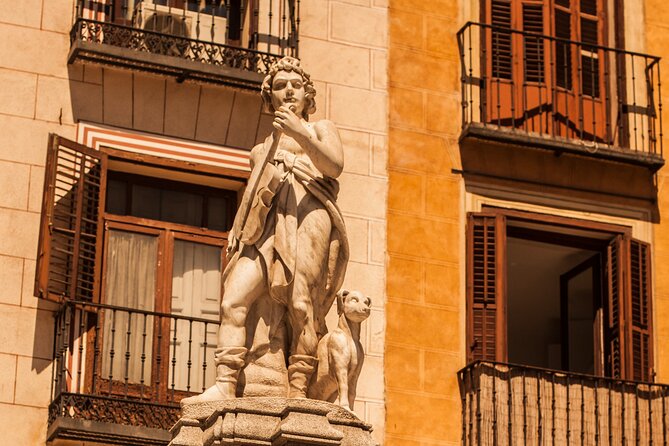
Then you’ll stop at Monumento a Filippo IV in Plaza de Oriente. This is one of those art-and-technology stories: cast in bronze in the 17th century, it’s described as the first equestrian statue in the world balanced on rear legs. The guide ties the technical achievement to Galileo’s calculations.
The statue conveys Baroque power through pose—calm, controlled, almost divine. If you look at it with that lens, it stops being just a photo spot and becomes an image of how authority wanted to look.
Ending at Plaza de Isabel II: where old Madrid meets the present
The final stop is Plaza de Isabel II, between the Royal Theatre and modern streets. The tour ends here because it’s a clean meeting point between old city lanes and the present rhythm of Madrid. After your walk through centuries—faith, power, civic tricks, and everyday legend—you get to stand in a more open space and take it all in at once.
If you’ve been watching patterns in architecture and street names, this is where it clicks. The city stops looking like random buildings and starts looking like a plan made by different eras.
What to do during the walk (so you get more out of it)
A few practical habits will make a difference:
- Wear shoes you trust on uneven stone. This is not a smooth promenade.
- Bring water and use café breaks when offered, especially after the long central stretch.
- Pause at the start of each story. If you listen first, you’ll notice details you would otherwise miss.
- Ask questions during the short stops. The small group setup makes that work.
If you’re the type who likes humor in history, you may also appreciate the guide’s personal style. One guide connected to this experience, Juan, is noted for mixing explanations with a playful delivery, including sharp emphasis on key points and an ability to connect history to other parts of culture. If you want extra angles (including film and Spanish arts), that style can make the tour feel less like a lecture.
Who this tour fits best
This is a great match if you want an intro to old Madrid that goes beyond the big postcard stops. You’ll enjoy it if you like:
- architecture stories (Mudéjar, Habsburg, Bourbon)
- street-level legends and civic anecdotes
- convent and church exteriors with context
- a short, well-organized walking format
It’s less ideal if you’re hoping for long museum time, deep interior access at every stop, or a fully seated experience. This walk is about noticing—and moving.
Should you book the Secrets of Madrid Small Group Tour?
Book it if you want a 2.5-hour, small-group orientation that connects Madrid’s eras through actual streets, not just facts. The price is fair for what you get, especially because so many stops are free to view and the Royal Palace is the only major extra cost if you want interiors.
Skip or rethink it if you can’t handle a lot of walking and stone stairs, or if you only want time inside famous buildings. Otherwise, this tour is a smart way to start your Madrid trip with clearer context and a stronger sense of place.
FAQ
Is the tour offered in English?
Yes. The tour is offered in English.
How long is the Secrets of Madrid Small Group Tour?
It lasts about 2 hours 30 minutes.
What is the meeting point for the tour?
The meeting point is Plaza de Puerta Cerrada, Pl. de Puerta Cerrada, Centro, 28005 Madrid, Spain.
Where does the tour end?
The tour ends back at the meeting point.
How many people are on the tour at most?
The tour has a maximum of 10 travelers.
What does the price include?
The price includes all fees and taxes.
What is not included in the tour price?
Admission ticket to the Royal Palace is not included.
Do I need to bring a paper ticket?
No. You’ll receive a mobile ticket.
Does the tour run in bad weather?
It requires good weather. If it’s canceled due to poor weather, you’ll be offered a different date or a full refund.
Is free cancellation available?
Yes. You can cancel up to 24 hours in advance for a full refund.