REVIEW · ARANDA DE DUERO
Aranda de Duero: Wine Tasting Course with Iberian Tasting
Book on GetYourGuide →Operated by Bodega Histórica Don Carlos SL · Bookable on GetYourGuide
Medieval cellars and wine education go together. This 2.5-hour course at Don Carlos Historical Winery pairs a guided look at Medieval Wineries (in an underground Aranda setting) with an Iberian tasting that ends in a hands-on lesson. I especially like that you get both storytelling and practical tasting guidance, not just a quick sip-and-go.
Two things I really like: the dramatized “past” element led by an 18th-century guide, and the structured tasting of five Ribera del Duero wines with food. One consideration: the tour is Spanish only, so if your Spanish is basic, you’ll want to come ready to follow along and enjoy the vibe.
In This Review
- Key highlights to look for before you go
- Don Carlos Historical Winery inside Aranda de Duero’s underground world
- The 18th-century dramatization and the three-guide team
- The guided tour of the medieval wineries: what you’re actually seeing
- The tasting course: five Ribera del Duero wines, taught step-by-step
- Pairing the wines with Iberian sausages and local cheese
- How the 2.5 hours work (and how to plan your morning)
- Price and value: what $41 really covers
- Who should book this wine course (and who might not)
- Should you book the Aranda de Duero Iberian Tasting course?
- FAQ
- How long is the wine tasting course at Don Carlos Historical Winery?
- What’s included in the tasting course?
- How many wines are tasted?
- What food is paired with the wines?
- Who leads the tasting?
- What language is the tour guide?
- Is transportation included?
Key highlights to look for before you go
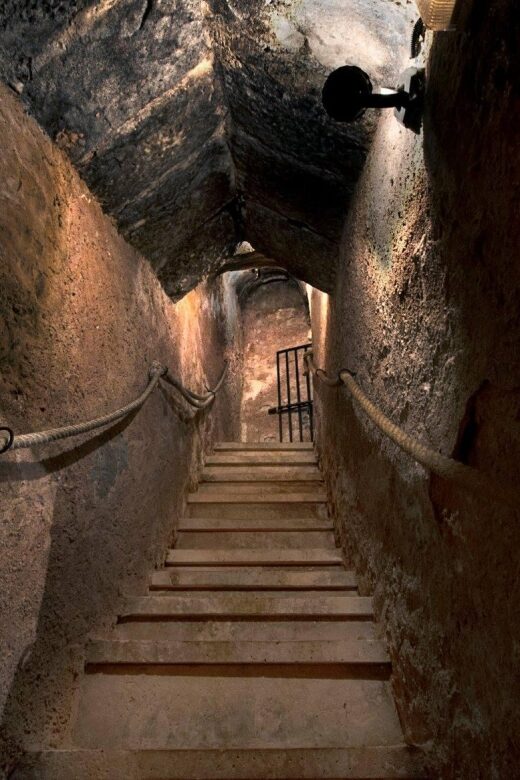
- Underground Medieval Wineries tour at Don Carlos Historical Winery in Aranda de Duero
- 18th-century historical dramatization brought to life by the guide during the walkthrough
- Tasting led by the winemaker, focused on the basics of how to taste wine
- Five Ribera del Duero wines paired with food for a real flavor lesson
- Iberian pairings including Guijuelo (Salamanca) Iberian sausages and local cheese
- Limited capacity to help keep things safe during the 2.5-hour experience
Don Carlos Historical Winery inside Aranda de Duero’s underground world
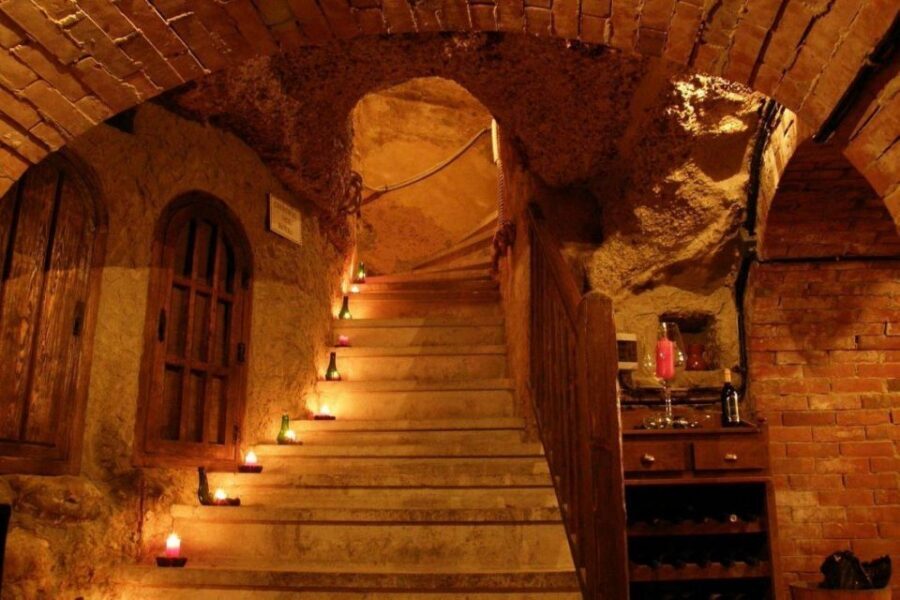
This tour starts where the setting does half the work: at Don Carlos Historical Winery, located in Aranda de Duero. The experience takes you into the medieval winery spaces in what’s described as an underground city setting, so you feel like you’ve stepped into a different temperature and pace.
I like this approach because it makes the “why” of wine making easier to grasp. You’re not just hearing dates and names. You’re seeing the cellar world that helped shape how wine was stored and aged over time.
Also, the layout matters for comfort. Underground spaces can feel cooler and quieter, which is a plus when you’re doing a tasting afterward. It also means the tour flow stays focused: tour, then lesson, then tasting with pairing.
You can also read our reviews of more food & drink experiences in Aranda De Duero

The 18th-century dramatization and the three-guide team
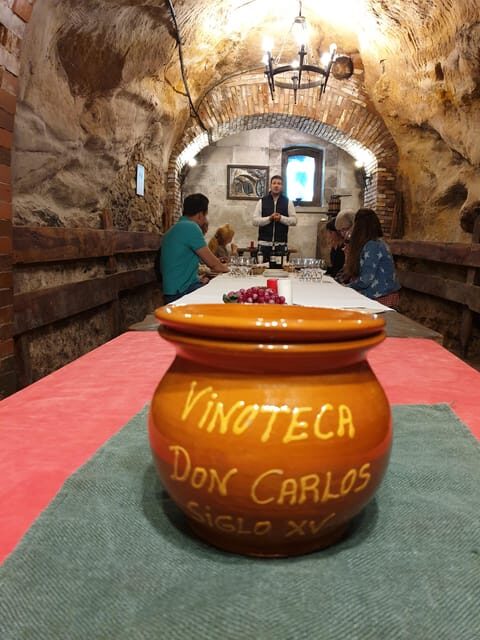
The big personality boost here is the way the history is told. You meet a special 18th-century guide who helps explain the wineries and Aranda de Duero through a dramatized style. It’s not just facts on a signboard. It’s history with presence.
From the way the guides are described, the tour leans on a three-person team that keeps energy and clarity high. Cristina is highlighted for her enthusiasm in the Aranda-and-wineries story, Joaquín for a medieval-style interpretation, and Alberto for being very approachable and clear during the tasting.
I find that format genuinely useful. When one guide handles the story and another handles the tasting lesson, you’re less likely to get lost. You can pay attention instead of wondering who’s supposed to explain what.
And you’ll feel the difference in pacing. The dramatization helps you mentally shift from modern wine tourism mode to “how did this work back then?” mode, which makes the tasting lesson land better afterward.
The guided tour of the medieval wineries: what you’re actually seeing
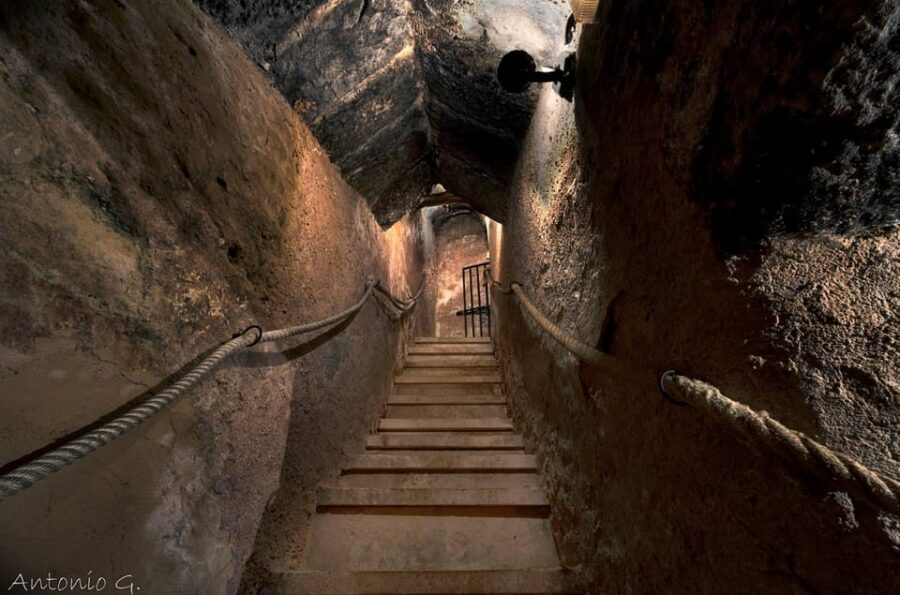
The first major part is a guided tour of the medieval winery spaces. The focus is on the wineries themselves—how they functioned historically and what made the setting important for producing and storing wine.
What I’d watch for (and what you can use as your own mental checklist) is how the guide connects the physical space to wine-making needs. Temperature control, storage habits, and the way these cellars were organized all help explain why Ribera del Duero wines became part of a strong regional identity.
This is also where the underground setting becomes more than scenery. You’ll get a sense of how wine culture can be tied to place, not just grape varieties and marketing. That’s what makes the tour more than a photo stop.
Possible drawback: because the tour is Spanish, you’ll want to stay close to your guide and be ready to catch key words. If you miss a few details, the visuals still carry a lot, but your understanding will be sharper if you follow along.
The tasting course: five Ribera del Duero wines, taught step-by-step
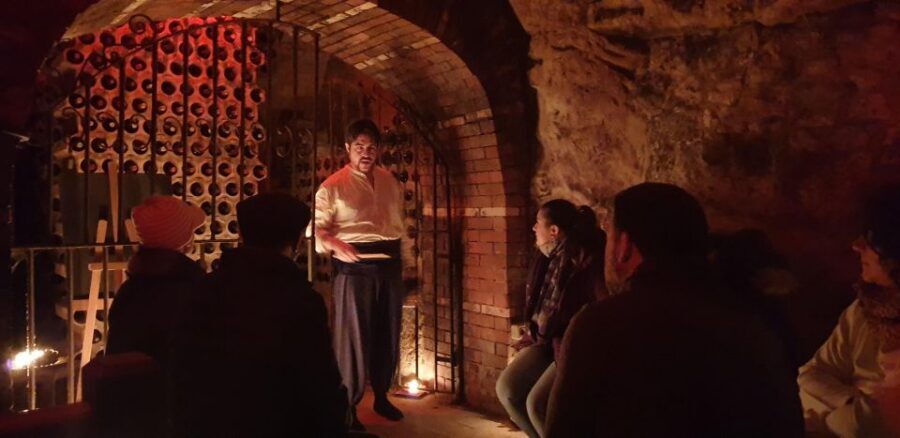
After the tour, you shift into the tasting course. The tasting is led by the winemaker, which matters because it turns the experience into education you can actually use next time you taste wine.
The lesson covers basic principles of wine tasting. Even if you’re not a “wine person,” you’ll likely leave with a clearer method: how to look, how to smell, and how to evaluate what you taste. That’s the kind of knowledge that helps at a restaurant or a shop later, not just inside one winery.
The lineup is five Ribera del Duero wines. That’s a good number for learning without feeling rushed. It also helps you compare differences in a way that a single wine tasting can’t.
I also like that the tasting is paired with food. It keeps your palate active and makes it easier to notice changes as you move through the wines. If you’ve ever had wine on an empty stomach and felt overwhelmed, this structure helps solve that problem.
Pairing the wines with Iberian sausages and local cheese
Food is not an afterthought here. The tasting includes pairings with Iberian sausages from Guijuelo (Salamanca) and local cheese. That combination makes sense for Ribera del Duero reds, since the savory, salty, and fatty notes can interact in interesting ways with wine flavors.
The pairing approach gives you a practical lesson: you’re not just identifying what you like. You’re learning what the wine does when it meets real Iberian flavors. That’s why pairings are valuable for beginners and helpful for experienced tasters too.
I’d take your time with the pairing rhythm. Don’t rush to decide if a wine is good. Instead, focus on how it changes after the sausage or cheese. That’s where the tasting lesson becomes personal.
One consideration: you’ll be tasting multiple wines in a short window. If you’re sensitive to alcohol, go slow, sip water when you can, and pace your food bites.
You can also read our reviews of more wine tours in Aranda De Duero
How the 2.5 hours work (and how to plan your morning)
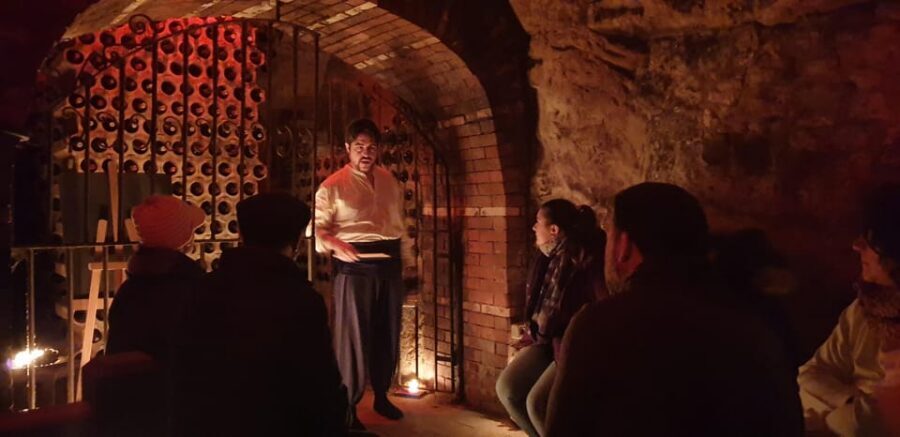
The experience runs on Saturday mornings and select holidays. Duration is 2.5 hours, and starting times vary by availability, so you’ll want to check the schedule when you book.
In practical terms, expect two segments: the medieval wineries tour, then the tasting course. The underground tour style can feel like it moves faster than you’d think because it’s visual and story-driven. Then the tasting part slows down the pace and brings you into a calmer, focused learning mode.
Limited capacity is part of the plan. That’s a good sign if you prefer a more personal experience rather than a large group sprinting through a cellar.
Transport is not included, so plan to reach the meeting point on your own. The meeting location is Don Carlos Historical Winery, C/ Isilla 1, ground floor, 09400, Aranda de Duero (Burgos).
If you’re visiting from elsewhere in the region, consider pairing this with a light morning schedule. You’ll likely want a calm lunch after.
Price and value: what $41 really covers
At $41 per person, the value comes from the full package: guided tour, historical dramatization, and a tasting course with wine education plus pairings. You’re not just paying for five wines. You’re paying for a guided flow that explains what you’re tasting and why the setting matters.
The winemaker-led format also adds weight. Winemakers don’t all teach at this level of structured tasting, so that component can be the difference between a social tasting and a learn-something experience.
Transportation isn’t included, but that’s fairly common for winery experiences in city centers. If you can get to Aranda de Duero easily, the price-to-time ratio is solid for a 2.5-hour educational outing.
Who should book this wine course (and who might not)
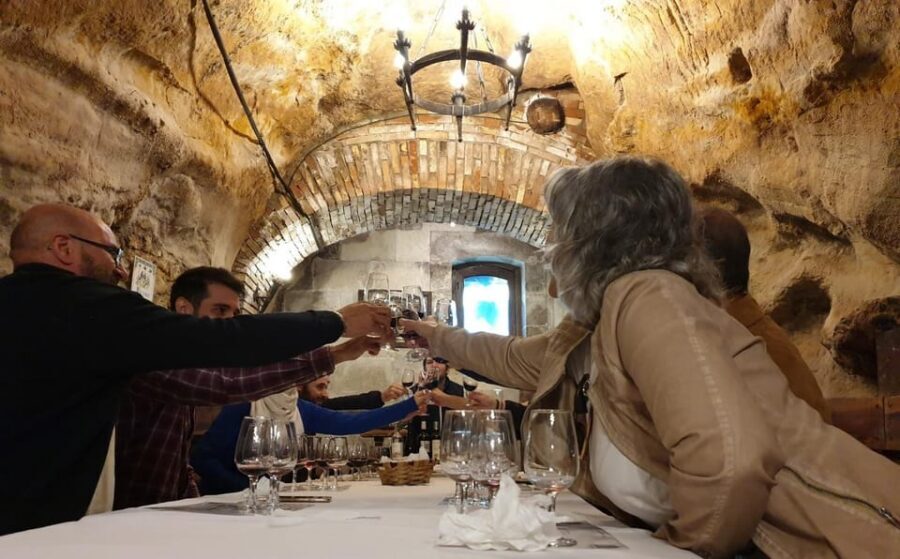
This tour fits best if you want a mix of wine learning and place-based storytelling. If you like guided tours that connect history to what you’re doing today, you’ll likely enjoy it.
It also works well if you’re a beginner. The tasting course is built around basic principles, and the food pairings help keep the tasting understandable.
If you’re only interested in a quick drink without explanation, the educational structure may feel like extra. And if your Spanish is limited, you’ll need to lean on the visuals and keep your expectations realistic about language.
Still, the overall structure makes it easy to follow along even when you miss some words. You can focus on the tasting method and the pairing moments, which don’t require a wine degree to appreciate.
Should you book the Aranda de Duero Iberian Tasting course?
I’d book it if you want an experience that teaches while it entertains, in a setting that’s more memorable than a standard tasting room. The combo of a medieval wineries tour, an 18th-century dramatized guide, and a winemaker-led tasting with five Ribera del Duero wines and Iberian pairings is a strong mix for the time and price.
Skip it only if you want minimal structure, or if you know language will block you from enjoying the explanation part. If Spanish storytelling and wine basics sound like your kind of morning, this one is worth your Saturday slot.
FAQ
How long is the wine tasting course at Don Carlos Historical Winery?
The experience lasts 2.5 hours.
What’s included in the tasting course?
You get a wine tasting plus a guided tour and historical dramatization.
How many wines are tasted?
The course includes a tasting of five Ribera del Duero wines.
What food is paired with the wines?
The wines are paired with Iberian sausages from Guijuelo (Salamanca) and local cheese.
Who leads the tasting?
The tasting course is led by the winemaker.
What language is the tour guide?
The tour is guided in Spanish.
Is transportation included?
No, transportation is not included.