REVIEW · AVILA
Avila: Cathedral Entry Ticket with Audio Guide
Book on GetYourGuide →Operated by Catedral de Ávila · Bookable on GetYourGuide
This cathedral reads like a time machine. The mix of Romanesque red-and-white stones and white Gothic work keeps your eyes moving, and the audio guide lets you go room by room without feeling rushed. I love how the visit naturally leads you from the nave to the chapels, and I love the visual payoff of the star-shaped cupola over the 13th-century sacristy.
One thing to consider: the walking route can feel a little unclear at moments, and the English audio track may be harder to follow when there’s background noise.
You’ll get skip-the-line entry plus an audio guide in Spanish, English, French, and Italian. Plan your timing too: last access is 30 minutes before closing, and liturgical events can shift the schedule.
In This Review
- Key highlights to look for
- Ávila Cathedral: why this Gothic landmark mixes eras
- Starting smart: timing, entry rules, and how to use the audio guide
- From city walls to the nave: the entry moment you’ll remember
- Chapels of piety and conception: where the visit turns personal
- The Chapel of Saint Ildefonso and Saint Teresa
- The star-shaped cupola: the 13th-century sacristy and treasury
- Altarpiece and paintings by Pedro Berruguete and Juan de Borgoña
- The cloister finish: ribbed vaults and big Gothic windows
- Price and value: is $11 for cathedral entry with audio a good deal?
- Who should book this audio-guided cathedral entry?
- Common hiccups to plan for (so nothing steals your time)
- Should you book this Ávila Cathedral audio-guide entry?
- FAQ
- How much is the Ávila Cathedral entry ticket with audio guide?
- How long is the ticket valid?
- What languages are included in the audio guide?
- Do I need to use a guide inside the cathedral?
- What is the last time I can access the cathedral?
- What are the rules for photos and items during the visit?
Key highlights to look for
- Oldest Spanish Gothic cathedral with a visible Romanesque-to-Gothic transition
- Star-shaped cupola above the 13th-century sacristy and the treasury
- Chapels you can’t rush: piety and conception, plus Saint Ildefonso and Saint Teresa
- Art in the chapels by Pedro Berruguete and Juan de Borgoña
- A calm final stop in the cloister with ribbed vaults and large Gothic windows
- Audio guide pacing that works when you want to stop, stare, and read at your own speed
Ávila Cathedral: why this Gothic landmark mixes eras
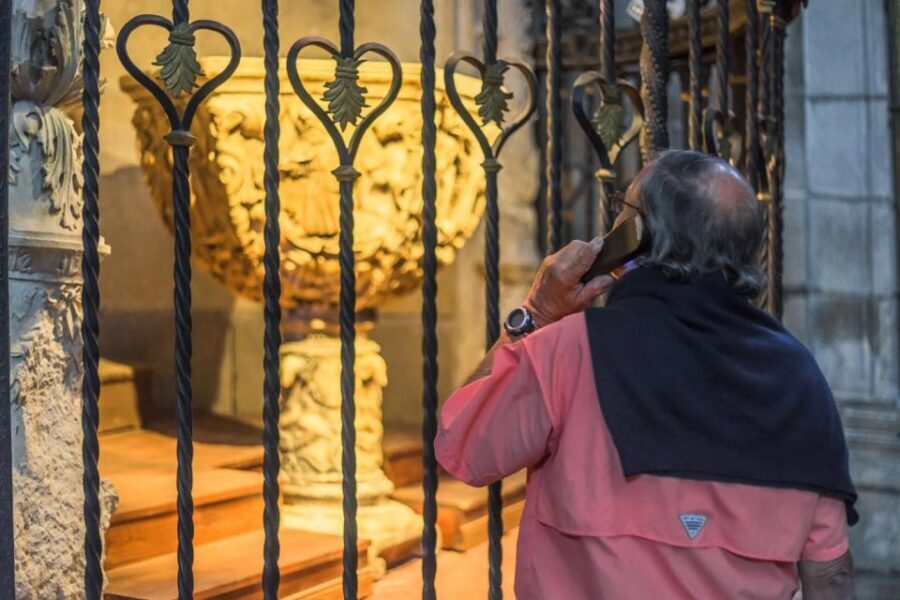
Ávila Cathedral is famous for being the oldest Spanish Gothic cathedral. But the reason it feels so rewarding is that it doesn’t behave like a single-style museum. As you move through the building, you can actually spot the change from older Romanesque character to Gothic structure and light.
Expect to see Romanesque red and white stones giving one kind of texture and rhythm, then white Gothic stones looking sharper and more built for height. That contrast isn’t just decoration. It helps you understand how the cathedral grew into its identity over time, piece by piece.
What makes the audio guide especially useful here is that it encourages you to slow down in the right places. Instead of treating the cathedral like a straight line, you get nudged to connect what you’re seeing—nave, chapels, vaults, windows—with what you’re hearing about the building’s evolution.
You can also read our reviews of more tours and experiences in Avila

Starting smart: timing, entry rules, and how to use the audio guide
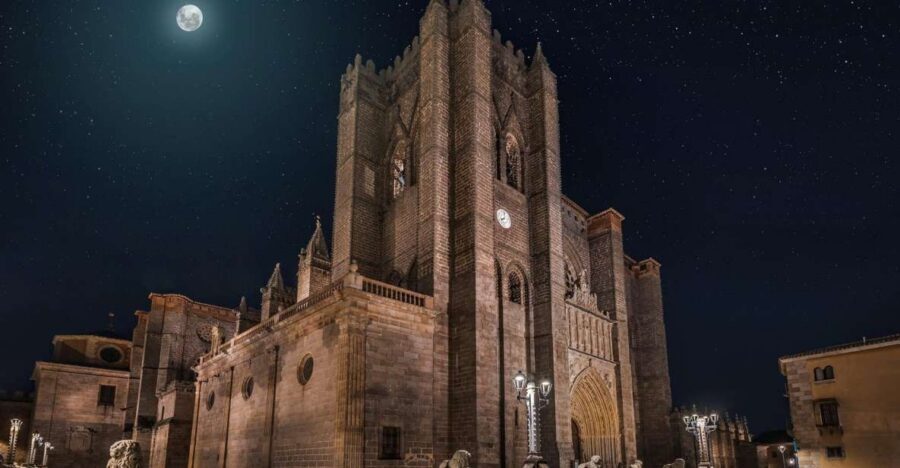
This is a ticketed cathedral entry with an audio guide included. You can count on having access through your scheduled time window, with the visit valid for 1 day (you’ll need to check availability for exact start times).
Two practical things matter for a smooth visit:
- Last access is 30 minutes before closing. If you arrive late, you can end up sprinting through the stops you wanted to savor.
- The cathedral schedule may change due to liturgical events. If you notice certain areas closed or rerouted, don’t panic. Just let the audio guide’s flow do its job.
Also note a rule that’s easy to miss: the cathedral says tourist visits require the obligatory use of a guide. Your booking includes an audio guide, so the key is to confirm on site how that requirement is handled for your specific time slot. If a human guide is needed at entry, you’ll want to be ready to follow instructions rather than purely self-guided.
Once you’re inside, the best way to use the audio guide is simple: let it teach the building before you chase details. If you start by absorbing what the nave is doing architecturally, everything that comes after—chapels, cupola, cloister—lands with more meaning.
From city walls to the nave: the entry moment you’ll remember
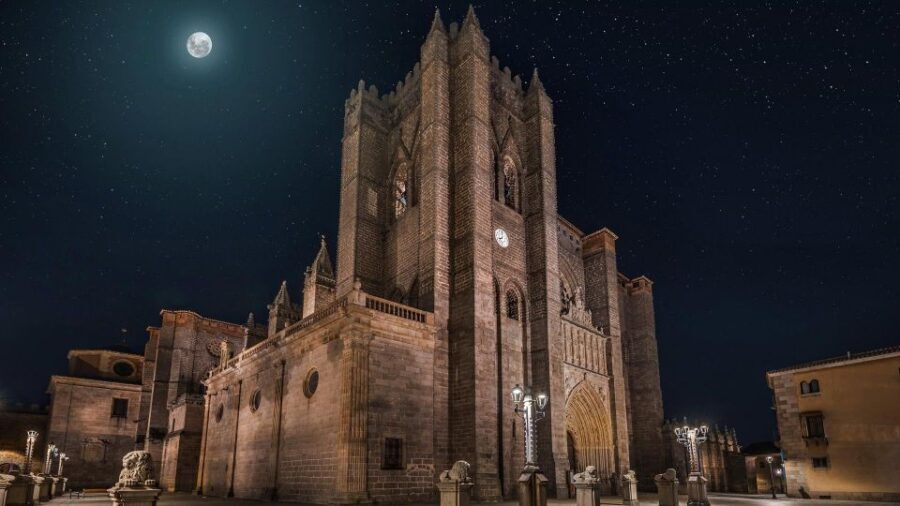
Your visit begins with a sense of place. The cathedral was initially part of the city walls, so the space has a strong “fortified city” feeling, even after you’re inside.
Then you step into the architectural shift. The audio guide helps you notice how the cathedral’s look changes as you walk inward. You’ll see the Romanesque red and white stones first, then move into areas with the white Gothic stone feel—cleaner, more geometric, and visually lighter.
When you reach the nave, focus on direction: look up, then look forward. The nave is where Gothic intentions show themselves—space, structure, and the way the building funnels your attention. Even if you’re not a “church architecture person,” this is still where the cathedral starts to click. You’re not just looking at a hall. You’re reading a plan made of stone.
If you want to keep the visit from feeling like a blur, do it in beats:
- Beat 1: nave and big-picture changes
- Beat 2: chapels
- Beat 3: the special centerpiece areas (like the cupola and treasury)
- Beat 4: finish calmly in the cloister
That rhythm matches how the audio guide is designed to work.
Chapels of piety and conception: where the visit turns personal
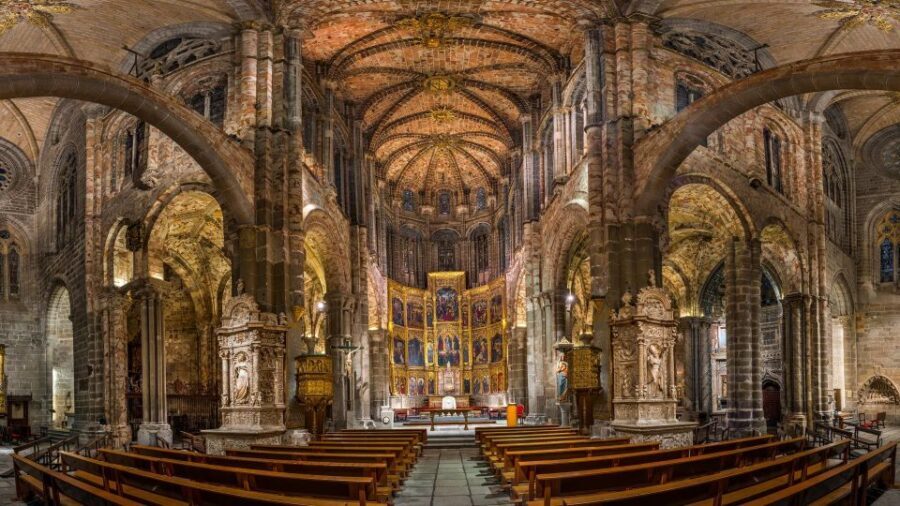
After the nave, you’ll go into the chapels—specifically the chapels of piety and conception. These are the stops that turn the cathedral from “big stone building” into something more intimate. The scale changes, and your attention narrows.
This is a good moment to use the audio guide like a tour script rather than background noise. If the audio tells you what to look for—specific shapes, placement, or artistic themes—pause where the guide asks you to pause. Chapels reward that approach.
Even if you’re not studying religious art, chapels help you understand what mattered to the people using the space. They’re where the cathedral becomes a layered environment: stone structure on one side, spiritual symbolism on the other.
One small consideration: if your route feels confusing, chapels are often where you can re-orient yourself. Treat them as checkpoints. When you finish a chapel, note where you are before moving onward to the next section.
The Chapel of Saint Ildefonso and Saint Teresa
This part of the cathedral visit is a standout. The Chapel of Saint Ildefonso and Saint Teresa is where you’ll spend time not just looking but interpreting—especially with the audio guide doing the heavy lifting.
If your instinct is to rush art because you’re worried you’ll miss something, slow down here. The chapel layout is designed so details feel purposeful, not random. The audio guide can help you connect what you see with why it was placed where it is.
If you have the chance to ask a staff member a question during your entry window, this is also a smart place to do it. One name that comes up in the experience of on-site context is Vanessa, and the best kind of added explanation tends to focus on the cathedral’s more unusual history points—things you might not catch from audio alone.


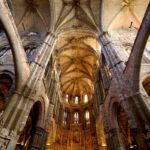
The star-shaped cupola: the 13th-century sacristy and treasury
Then comes one of the most memorable visuals in the whole visit: the star-shaped cupola above the 13th-century sacristy (and you’ll also connect it with the treasury area).
This is exactly the kind of detail that’s hard to appreciate from a quick glance. The cupola isn’t just decorative. It’s a signature feature that makes the roofline feel like it’s part of the story, not just the top of the building.
Here’s how I’d approach it:
- Stand where you can actually see the shape clearly.
- Use the audio guide so you understand what you’re looking at before you decide it’s just “pretty.”
- Take a few extra seconds to look at the surrounding context—the way it sits over the sacristy space.
The treasury connection matters too. Even if you don’t spend forever reading every detail, knowing that this architectural element sits over a key area helps you understand the cathedral as a working complex, not only a sight.
This stop is also a good reset if you’ve been moving quickly. Let your eyes relax. The cupola gives you something to focus on without needing constant directional decisions.
Altarpiece and paintings by Pedro Berruguete and Juan de Borgoña
Art lovers will likely feel the pull here. The cathedral visit includes appreciation of the altarpiece and paintings by Pedro Berruguete and Juan de Borgoña.
This is one of the best uses of an audio guide in a historic building: it helps you look past the “what” and toward the “why.” A good audio track will point out the themes and the setting, so the artwork doesn’t float in isolation.
A practical tip: when you reach artwork, don’t treat it like a photo moment only. If your audio guide offers a structural prompt—where to look, what to compare—do that first. Then take the photo if you want. (And remember there’s no flash photography allowed.)
This section is also where your visit pacing pays off. If you rush through chapels, art can blur together. Give yourself enough time to linger, because the point isn’t to see everything in record time. The point is to see a few key works with understanding.
The cloister finish: ribbed vaults and big Gothic windows
You end the tour in a quieter mood: the cloister. This is a great way to close the visit because the cloister pulls you away from the louder “main church” energy and into a calmer architectural zone.
Look for the ribbed vaults. These vaults show the Gothic approach to structure—lines that guide your eyes and make ceilings feel like drawings made of stone. Then shift your gaze to the large Gothic-style windows, which bring light into the cloister space and make it feel airy even when the surrounding building is heavy.
If you’re tired from walking, the cloister is a smart place to take it slowly. It’s also where you’ll feel the cathedral’s overall effect—the sense that it’s stayed in place for centuries while the world around it changed.
If your route has been confusing earlier, the cloister often helps you confirm that you followed the right path. It acts like a natural conclusion.
Price and value: is $11 for cathedral entry with audio a good deal?
At about $11 per person, this ticket price makes the biggest sense if you want:
- a self-paced way to see a major monument, and
- a built-in explanation system without needing to line up for additional interpretation.
The value improves because you get more than entry. You’re not paying just for access. You’re paying for audio guide content, plus the practical bonus of skip-the-ticket line. That’s the combination that turns a one-visit stop into something you actually remember.
You’ll also benefit if you like flexibility. Your ticket is valid for 1 day, and the audio guide lets you choose when to linger. You’re not boxed into a strict walkthrough tempo.
The only value-risk is if you prefer an ultra-clear, fully guided route without any decision-making. One reported drawback is that the loop route may not always feel obvious, so you might want to arrive a little earlier than you think, just to get your bearings.
Who should book this audio-guided cathedral entry?
This works best if you fall into one of these categories:
- You enjoy architecture details and want help seeing the Romanesque-to-Gothic changes.
- You want art context without paying for a full private art lecture.
- You like controlling your time—pausing in chapels, stepping back at the cupola, and finishing calmly in the cloister.
It’s also a solid pick for visitors who appreciate multilingual support. The audio guide is available in Spanish, English, French, and Italian, so you can match your language comfort level.
It may be less ideal if you strongly need a perfectly clear physical route at every turn. If you get easily turned around in large historic spaces, come with the plan to pause, re-check your place, and let the audio guide help you reset.
Common hiccups to plan for (so nothing steals your time)
A few practical friction points can affect how smooth the visit feels:
- English audio clarity: one experience noted that the English track wasn’t always easy to follow. If you’re using English, don’t be afraid to adjust volume or switch attention when noise is present.
- Route clarity: the loop route may not be obvious everywhere. If you feel uncertain, pause in a chapel area and use the audio to get oriented.
- Liturgical timing changes: schedule may shift. If something’s closed, follow the on-site reroute instructions rather than trying to muscle through.
- Time pressure: because last access is 30 minutes before closing, don’t save the biggest stops for the end.
The upside is that the overall flow is designed to connect the dots: nave to chapels to cupola and treasury to cloister. Once you accept that you’ll move in a sequence, you’ll feel less like you’re navigating blindly and more like you’re following a story.
Should you book this Ávila Cathedral audio-guide entry?
Yes, I’d book it if you want a focused way to see a major landmark without rushing. The combination of cathedral entry, a built-in audio guide, and skip-the-line access makes the $11 price feel fair, especially if you enjoy stopping for details like the star-shaped cupola and the cloister vaults.
Book it also if you want the building’s mixed styles to make sense. The audio guidance is what turns “I saw stones” into “I understood why the stones look that way.”
Skip or reconsider only if you need a totally foolproof route with no navigation moments, or if you know you’ll have trouble with audio clarity in your chosen language. In that case, make sure you’ll get any required on-site guidance so the visit stays smooth.
FAQ
How much is the Ávila Cathedral entry ticket with audio guide?
The price is listed at $11 per person.
How long is the ticket valid?
The ticket is valid for 1 day. You’ll need to check availability to see starting times.
What languages are included in the audio guide?
The audio guide is included in Spanish, English, French, and Italian.
Do I need to use a guide inside the cathedral?
The cathedral notes that tourist visits require the obligatory use of a guide, so confirm how that requirement is handled for your time slot.
What is the last time I can access the cathedral?
Last access is 30 minutes before closing.
What are the rules for photos and items during the visit?
Flash photography is not allowed, and pets, smoking, food and drinks, alcohol and drugs, and video recording are not allowed.