REVIEW · AVILA
Ávila: Tour privado por Murallas y Casco Histórico
Book on GetYourGuide →Operated by ¡Quiero Ávila! · Bookable on GetYourGuide
Medieval walls can make a city feel real fast. This private Ávila walk pairs the best-preserved walls with the medieval sights inside, so the stone story makes sense as you go. You’ll move through the historic center using key monuments and major figures like Santa Teresa and Isabella to connect what you see with why Ávila became so important.
What I like most is the way the tour handles contrast: you start with the hard power of the walls, then shift into Romanesque beauty. You’ll spend meaningful time at the Basilica de San Vicente and the Catedral del Salvador, where the same city feels both spiritual and defensive.
One thing to plan for: it’s a tight 2 hours, and cameras aren’t allowed, so if you’re hoping to photograph everything, you’ll need to adjust your expectations and rely on notes and memory instead. Also, bring comfortable shoes.
In This Review
- Key highlights worth your time
- Walking Ávila’s walls like you mean it
- San Vicente: Romanesque power you feel, not just see
- Catedral del Salvador: where Gothic meets defense
- Santa Teresa’s Ávila: influence you can walk to
- Palacio de Polentinos: 16th-century military life, not just romance
- Santa Teresa Square and the Romanesque finish
- How the guide makes the 2 hours feel longer
- Price and value: $188 for up to 4 people
- Practical tips so you enjoy it more
- Who this tour fits best
- Should you book Ávila: Tour privado por Murallas y Casco Histórico?
- FAQ
- How long is the tour?
- What does the tour cost?
- Where does the tour meet?
- What language is the live guide?
- Is the tour wheelchair accessible?
- What should I bring, and what isn’t allowed?
- What are the cancellation and payment options?
Key highlights worth your time
- Best-preserved city walls in Europe: towers and wall stretches give you the big-picture scale fast.
- Basilica de San Vicente’s Romanesque “light show”: surprising interior beauty after a robust exterior.
- Spain’s first Gothic cathedral built: the tall tower links worship and protection.
- Santa Teresa’s landmarks: the tour connects her influence to Ávila and beyond.
- A military-history palace visit: Palacio de Polentinos ties the city to army logistics and archives.
- A finish in the market nerve center: Santa Teresa Square and Romanesque Church of San Pedro close the loop.
Walking Ávila’s walls like you mean it
Ávila’s walls aren’t just a backdrop. They’re the reason the city feels sealed and self-contained, like you stepped into the Middle Ages with the doors locked behind you. On this private tour, you get the structure first: impressive towers and long stretches of wallwork, enough to understand how the city defended itself and how that defense shaped daily life.
This is also where the tour’s pace makes sense. In a short time, you don’t want to bounce between random stops. Here, the walls set the tone, so when you later reach religious buildings, you understand the city’s dual focus: faith and safety.
A practical note: you’ll be walking through compact historic streets, so comfortable shoes matter. If your feet get cranky quickly, this is still manageable because the group stays small and the guide can keep things moving without rushing.
You can also read our reviews of more tours and experiences in Avila.


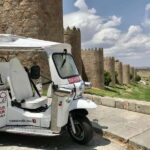
San Vicente: Romanesque power you feel, not just see
The tour’s meeting point is right by the doorway of San Vicente, which is a smart start. It places you near one of Ávila’s most important Romanesque landmarks before you’ve even fully warmed up.
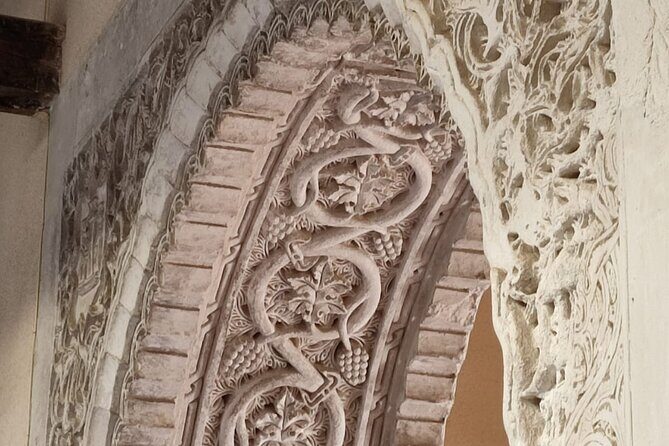
At the Basilica de San Vicente, you’re stepping into a “from the outside vs. the inside” experience. The exterior is robust—more fortress than fantasy. Then you enter and the mood shifts. The interior brings a quality of light and beauty that can feel almost unreal compared with the sturdy exterior you just passed.
Why this stop matters: the basilica sits in a zone with a lot of archaeological remains. That helps you understand it as more than a single building. It’s part of layers of Ávila over time, with Romanesque artistry added to earlier traces.
Inside, the guide focuses on details you might miss on your own, especially around:
- the crypt
- the cenotaph
Those aren’t quick photo-op moments. They’re the kind of features that turn a church visit into a “how did they think about death, memory, and sacred space” moment. If you like when religious architecture has a practical explanation attached to it, this basilica is the highlight for that.
Catedral del Salvador: where Gothic meets defense
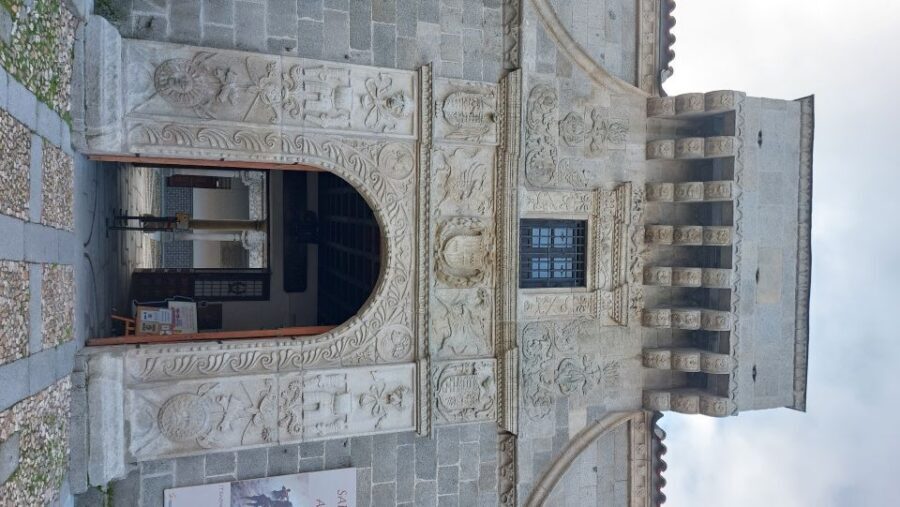
Next you move to the Catedral del Salvador, described as the first Gothic cathedral built in Spain. That title isn’t just trivia. It matters because it sets you up to look at what “Gothic” meant here: height, vertical emphasis, and a tower that behaves like a landmark and a tool.
The most striking element is the tall, solitary tower. On this tour, the guide connects it to a double function:
1) a house of God
2) an important part of the city’s defense
That defense theme is the key. You can view towers as drama, or you can view them as strategy. Ávila clearly designed key architecture to do both. The famous cimorro (its distinctive raised element) is integrated into the wall as another tower. So, in practice, the cathedral isn’t isolated from the city defenses. It’s part of the city’s defensive identity.
If you’re into architecture, you’ll likely leave with a clearer mental map of what you’re seeing. If you’re not, you still get the simple payoff: this cathedral looks like it belongs to a protected city for a reason.
Santa Teresa’s Ávila: influence you can walk to
Ávila’s story doesn’t stay medieval in a museum-case way. The city’s identity is also tied to later history through major figures. The tour makes that real by focusing on Santa Teresa at her basilica.
At the Basilica Casa Natal de Santa Teresa, you learn about her figure and why she matters internationally. The tour frames her as a woman who influenced and transformed not only Ávila and Spain at the time, but also crossed borders and became a reference within the Catholic Church.
Why I think this stop lands: it gives you a bridge between stone and meaning. Without that connection, churches can feel like “pretty buildings.” With the Santa Teresa context, the buildings feel like chapter titles in the city’s story.
And because this is a private tour, the guide can connect her story to the wider locations you’ve already seen—especially the way Ávila used major architecture to reinforce collective identity.
Palacio de Polentinos: 16th-century military life, not just romance
Then you get a different flavor of power: not spiritual power, but administrative and military power. The Palacio de Polentinos is presented as the best example to understand Ávila’s palace architecture from the 16th century, and the big point here is its link to military life.
What you learn is practical and specific: it was the former quartermaster academy of the army. Today it houses the General Military Archive of Ávila and also a museum of the Army.
This stop is a smart way to round out the tour. You’ve already seen the city defended by walls and reinforced by religious buildings. Palacio de Polentinos adds the layer many people forget: defense requires paperwork, planning, and logistics. It makes the city feel organized, not just dramatic.
If you like history that explains how systems worked—rather than history that only lists kings and dates—this palace is worth your time.
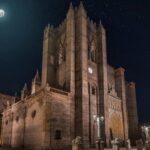
Santa Teresa Square and the Romanesque finish
The walk ends in Santa Teresa Square, described as the big market nerve center of the city. Even if you arrive expecting monuments, this final area gives you the everyday pulse: a meeting place for locals and visitors, not a staged set.
You’ll also find the Church of San Pedro, another Romanesque jewel. Ending here is useful. After churches and walls, you’re ready for one last architectural stop that feels connected to street life.
This is also where the tour format helps you. You don’t finish with a random building after a long trek. You end where you can look around and feel the city still functions.
How the guide makes the 2 hours feel longer
A short private tour lives or dies by pacing, and the experience seems built for that. The tour is live-guided in Spanish, and it’s private for your group (up to 4). That small size matters because you’re not squeezed into a fast group march where every question gets answered in a rush.
One guide name that stands out in the guide reputation here is Oscar, known for excellent attention and a comfortable experience for the group. Even if your guide is someone else, the point remains: you should expect a friendly, organized tempo where you’re not constantly waiting.
Also, the tour is set up with planning flexibility in mind. If you’re visiting with family or a group of friends, the provider says it can handle private visits based on your preferences and time. That means you should feel like you’re booking a conversation, not just a fixed checklist.
Price and value: $188 for up to 4 people
The price is $188 per group, for up to 4 people, for a 2-hour private tour. On paper, it might look like a lot if you compare it to cheap group sightseeing. But the value comes from the structure: you get a focused route through major medieval sights, plus explanations that connect the walls, churches, and key figures.
Here’s the practical way to think about it:
- If you fill all 4 spots, the cost drops to a level that feels much more reasonable for a guided, private experience.
- If you’re traveling as a couple, you’ll still likely feel it’s fair, because you’re paying for guided time with access to multiple major monuments in one run.
This is the kind of tour that’s worth paying for when you want context. If you just want to walk the walls on your own, you can do that. But if you want the “why” behind each stop—why the cathedral’s tower also played defense, why the basilica’s interior surprises after its exterior—this private format is the advantage.
Practical tips so you enjoy it more
Before you go, here are a few on-the-ground considerations based on the tour rules and how these stops work:
- Bring comfortable shoes. You’ll be walking and moving between key points in the historic center.
- Cameras aren’t allowed. If you like taking lots of photos, plan to switch to observation and memory.
- Baby strollers aren’t allowed. If you’re traveling with young kids, you may want to reconsider whether a 2-hour walking tour works for your family.
- The tour is wheelchair accessible, which is a strong plus if mobility is a concern.
- Expect a Spanish live guide, so it helps if you’re comfortable with Spanish conversation or you’re using translation support.
Who this tour fits best
This tour is a great fit if you:
- love medieval walls and want them explained in context
- enjoy Romanesque and Gothic architecture and want the story behind the buildings
- want a tight 2-hour plan that covers several top sites without turning into a long all-day commitment
- prefer small-group comfort and a guide who can pace to your group
It may be less ideal if:
- you rely on cameras for sightseeing and don’t want to adjust
- you’re looking for a long, slow wander with lots of free time sitting around
- you need stroller access during the walk
Should you book Ávila: Tour privado por Murallas y Casco Histórico?
I’d book it if you want Ávila in a compact, meaningful dose. The walls set the stage, the Romanesque basilica delivers a real interior surprise, the Gothic cathedral explains how defense and faith overlap, and the Santa Teresa and military palace stops keep the city’s story from feeling one-note.
If you can live without photos during the tour and you’re happy with a 2-hour guided pace, this is a strong value for a private group. It’s especially worth it for couples or small friends groups who want to connect monuments with the people and ideas that shaped them.
FAQ
How long is the tour?
The tour lasts 2 hours.
What does the tour cost?
It costs $188 per group, up to 4 people.
Where does the tour meet?
The meeting point is next to the door of San Vicente.
What language is the live guide?
The live guide speaks Spanish.
Is the tour wheelchair accessible?
Yes, the tour is wheelchair accessible.
What should I bring, and what isn’t allowed?
Bring comfortable shoes. Cameras aren’t allowed, and baby strollers aren’t allowed.
What are the cancellation and payment options?
You can cancel up to 24 hours in advance for a full refund, and you can reserve now and pay later to keep plans flexible.