REVIEW · MADRID
El Escorial and Valley of the Fallen Half Day Trip from Madrid
Book on Viator →Operated by Travel Tours Experience · Bookable on Viator
Two iconic sites, one efficient morning.
This half-day outing ties together Spanish royal power and a difficult 20th-century legacy, with El Escorial’s Renaissance-monastery complex and the Valley’s monumental basilica setting. You’ll ride out of Madrid in an air-conditioned bus and be guided through key areas with fast-track access, which matters when you’re trying to fit two big places into about 5 hours.
What I like most is how the structure keeps things moving: a guided visit with fast-track entry at El Escorial, then a guided visit inside the Valley’s basilica. Guides like Ana C., Paloma, Aimoa, and Sylvia show up in the feedback as clear, organized storytellers who help you see what you’re looking at without wasting your time.
One thing to consider is the language mix. Even with English offered, some groups can skew Spanish, and you may find parts harder to follow if you’re expecting nonstop English. The buildings are also cold inside, so plan for a chill factor even when Madrid feels warm.
In This Review
- Key points
- Why El Escorial and the Valley of the Fallen fit together so well
- Price and what you actually get for $70.77
- Meeting point, timing, and how the day flows
- The bus ride experience: comfort and your bilingual guide
- Stop 1: Real Sitio de San Lorenzo de El Escorial’s monastery-palace complex
- What to notice inside El Escorial (so it clicks fast)
- Stop 2: Valle de Cuelgamuros and the basilica inside the mountain
- The solemn setting: how long you’ll actually spend here
- Cold, walking, and comfort tips that matter in real life
- Group size and English expectations: plan smart
- Who this half-day tour is best for
- Should you book the El Escorial and Valley of the Fallen half-day trip?
- FAQ
- What time does the tour start?
- Where is the meeting point?
- How long is the trip?
- Are admission tickets included?
- Is there guided time at both locations?
- Is there time to explore on your own?
- Do I need to print anything since it’s a mobile ticket?
- Is the tour offered in English?
Key points
- Fast-track entry helps you spend more time inside and less time stuck outside.
- Guided visits at both sites give context for what can otherwise feel like a pile of stone.
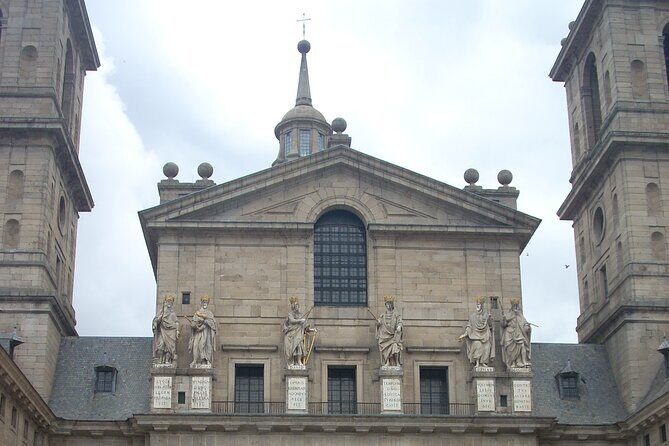
- El Escorial’s unique Renaissance complex combines palace, monastery, and a royal burial basilica.
- Valle de Cuelgamuros (Valley of the Fallen) includes the 150 m cross and a basilica built into the mountain.
- Short but real free time lets you step away and take in the grounds at your own pace.
- Group size up to 53 keeps it social, but it can also affect how smoothly languages are handled.
Why El Escorial and the Valley of the Fallen fit together so well
El Escorial and the Valley of the Fallen don’t feel like siblings at first glance. One is a royal monastery-palace built to project order and authority. The other is a monument to Spain’s 20th-century story, built on a dramatic cliff with a huge cross that you can spot as you approach.
Yet the pairing works because you get two different “systems” of Spain on the same day. At El Escorial, you see how rulers used architecture to control their image. At the Valley, you see how monuments can also shape memory, even when the message is heavy. Doing both by bus is the practical move if you’re short on time in Madrid.
You can also read our reviews of more tours and experiences in Madrid
Price and what you actually get for $70.77
At $70.77 per person for roughly 5 hours 15 minutes, this is priced for a true half-day excursion with more than just transportation. You’re paying for round-trip bus service, a guide on the bus, and two guided entries that include tickets.
What makes the price feel more reasonable is the fast-track approach at both stops. When you’re trying to see El Escorial’s major areas and still reach the Valley afterward, cutting down waiting time is real value—not a “nice to have.”
One other detail that helps: the tour includes the time walking from the bus to the monuments and includes a chunk of on-site free time. That’s useful because both places are big, and you’ll want a few moments to reset your eyes after the guide brings you through the highlights.
Meeting point, timing, and how the day flows
This tour starts at 8:45 am at C. de Ferraz, 3, Moncloa – Aravaca (and returns to the same meeting point). The overall schedule is about 5 hours 15 minutes, and the round-trip drive is about 2 hours of that.
On the ground, the tour is built around two guided blocks: about 1 hour 20 minutes at El Escorial, then about 30 minutes at the Valley of the Fallen. In between, you’ll have time to walk to the monuments and there’s also a total of about 45 minutes included for walking and free exploration.
So the day has a clear rhythm: guided focus where you need it most, then breathing room to look around. It’s not a “wander all day” style trip, which is exactly why it works as a half-day.
The bus ride experience: comfort and your bilingual guide
You’ll ride in an air-conditioned bus, and the route is set up for an efficient, direct flow between Madrid and the mountains. The guide is bilingual English & Spanish on the bus, which is helpful even if you end up hearing different proportions of each language once you’re at the monuments.
That said, the language balance seems to depend on the actual group. Some guides have clearly done a great job switching between English and Spanish without losing momentum. Other times, you may hear more Spanish than you expect if the group is mixed.
If you’re sensitive to that, go in with a flexible mindset. You’ll still likely get useful visual explanations, and a good guide will point out what to pay attention to. If your English ear is fragile that day, you might want a private or strictly English-focused alternative (if available to you).
Stop 1: Real Sitio de San Lorenzo de El Escorial’s monastery-palace complex
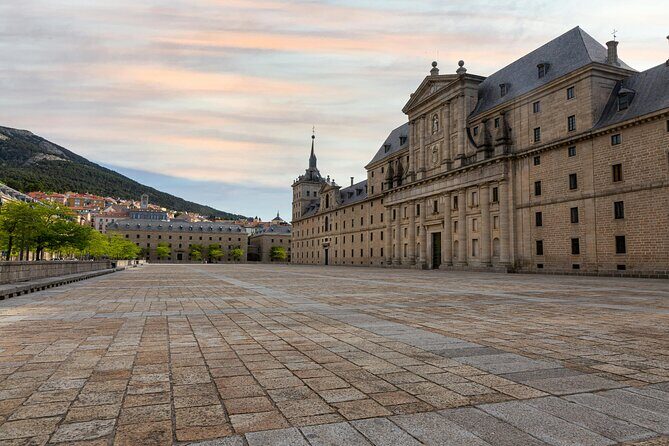
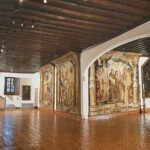
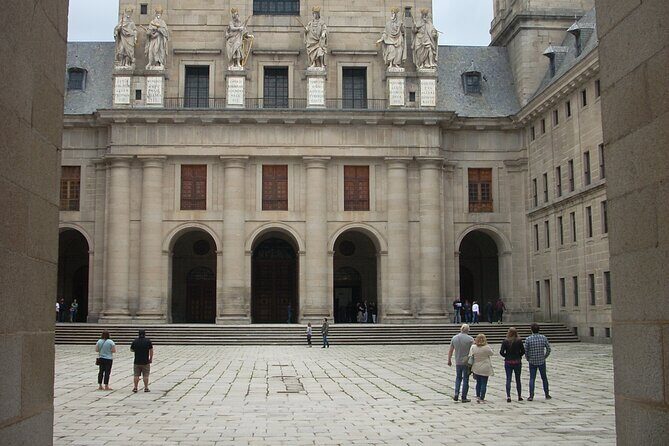
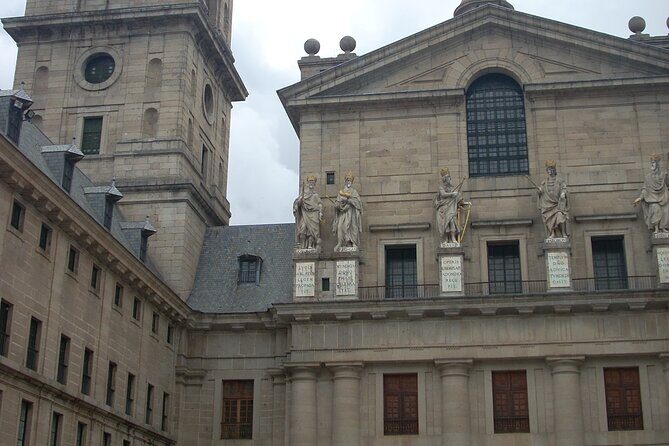
El Escorial is not just one building. It’s a huge complex: a royal residence/palace, a basilica that serves as the burial place for Spanish kings, and a monastery founded by monks of the Order of St. Jerome—now occupied by friars of the Order of St. Augustine.
That combination is the magic. You’re seeing how one site can function as home, church, and spiritual machine at the same time. The architecture is Renaissance and is often called one of the most distinctive examples of its kind across Spain and Europe.
On this tour, you get a guided visit with fast-track entry, which is key because the complex is large and easy to feel lost in if you’re trying to read everything on your own. A strong guide experience—people mention Ana C. and Paloma for their clear explanations—can turn the site from impressive to understandable.
Practical watch-outs at El Escorial:
- Parts of the palace areas you might expect to see can be closed at times. A good guide will route you through what’s available rather than leaving you with nothing.
- Expect indoor cold. Even when it’s comfortable outside, you can feel the chill once you’re inside the big stone rooms.





What to notice inside El Escorial (so it clicks fast)
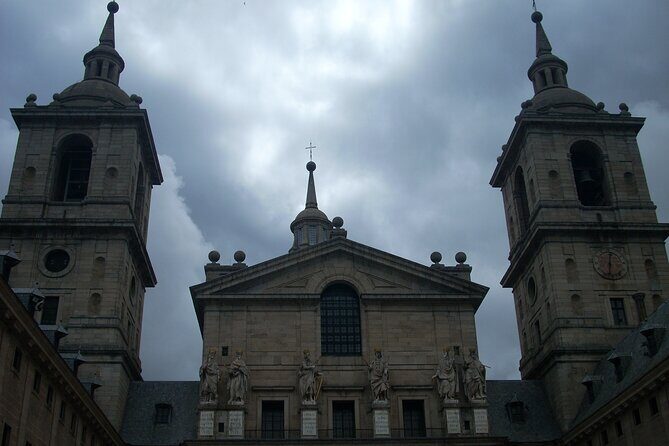
You’ll get about 1 hour 20 minutes here, so you can’t afford to treat it like a slow museum day. Instead, focus on a few anchors that your guide can help you connect.
Look for the layout logic: palace-residence spaces tied closely to religious functions. If your guide talks about who built it and why, it helps you read the complex like a statement, not a random collection of halls.
Also pay attention to the basilica’s role as the royal burial place. Even if you’re not a “cathedral person,” the site’s purpose comes through quickly when you understand that the monarchy is literally built into the religious heart of the complex.
And don’t ignore the monastery side. The fact that it began with the Order of St. Jerome and is now associated with the Augustinian friars is more than trivia—it explains why the mood can feel both royal and monastic, depending on where you stand.
Some reviews also note that there’s time pressure and that not every artwork detail gets the same level of commentary. If you care deeply about paintings or specific art, you might wish the tour gave a longer art-focused segment. For many people, though, the balanced overview is the right match for a half-day trip.
Stop 2: Valle de Cuelgamuros and the basilica inside the mountain
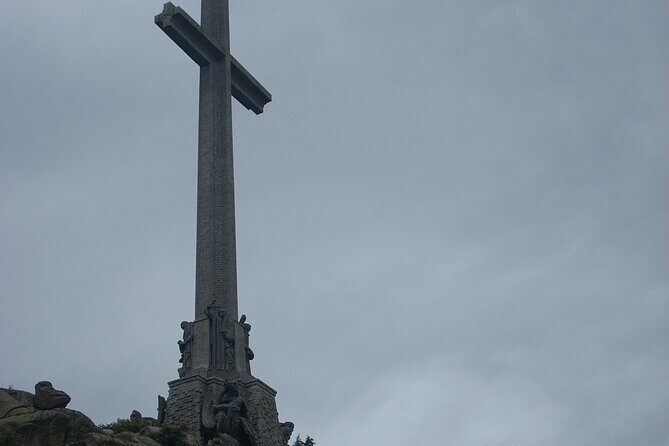
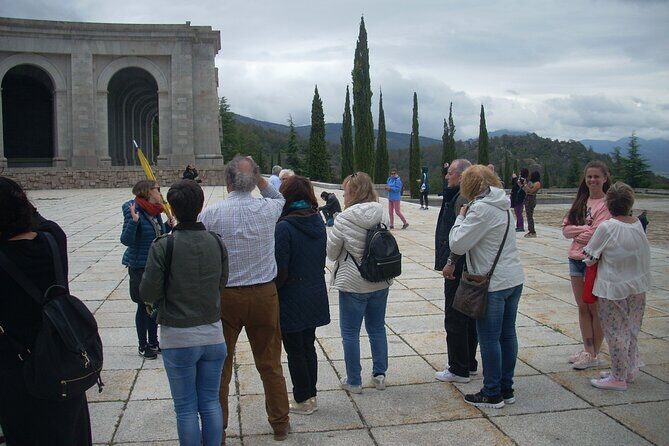
After El Escorial, you head to the Valley of the Fallen, officially called Valle de Cuelgamuros (the name change happened in October 2022). This site is built around a monumental Catholic basilica, an abbey, and a 150 m cross perched on a cliff above the valley.
The most striking technical detail is also one of the most memorable for your mind’s eye: the basilica is built into the mountain—described as being entirely “subway” in the sense that it’s carved out and set within the rock. That changes how the space feels. Instead of a bright, open church experience, it can feel enclosed and solemn.
The tour’s Valley visit is guided inside the basilica with fast-track entrance, then you have time to explore the surroundings on your own. The guided part is usually the most valuable for understanding the meaning behind the architecture and the site’s role in Spain’s difficult past.
One timing note: the on-site Valley portion is shorter than El Escorial. That’s not a flaw—it’s just the trade-off for fitting a second major stop into a half day. If you want a long, reflective walk around every viewpoint, you’ll have to choose a longer tour format later.
The solemn setting: how long you’ll actually spend here
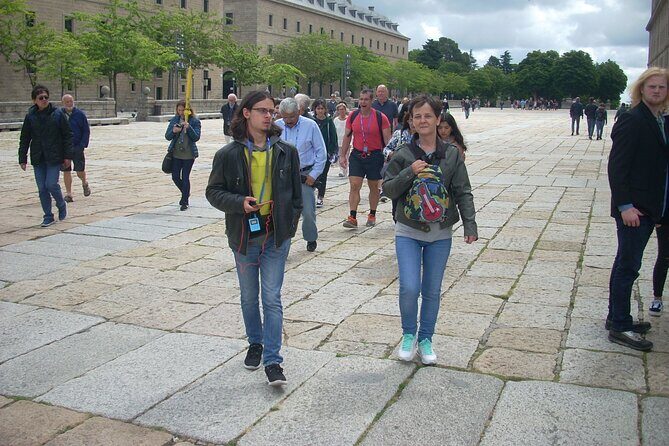
The Valley stop is about 30 minutes total, including the guided entry and time afterward to look around at your own pace. That’s enough to:
- see the basilica interior with guidance,
- take a few steps outside for views and scale,
- and absorb the mood without turning it into a time-sink.
Several mentions highlight that the Valley can feel cold and even a bit impersonal. That’s not just discomfort—it’s part of how the place is designed to feel. If you go expecting a casual sightseeing stop, you might find the tone unexpectedly heavy.
So bring the right expectations: this is a “see and understand” stop, not a picnic-and-photos stop.
Cold, walking, and comfort tips that matter in real life
Yes, it’s Spain. But this is mountain architecture. Multiple notes point out the cold inside both El Escorial and the church in the Valley. Don’t rely on warm morning air. Pack a layer you can tolerate for a while indoors.
Also plan for walking—though it’s not described as difficult. One good sign: pathways and inside areas at El Escorial are paved and fairly easy to navigate. The bus also drops you close to the entrances, which reduces the amount of time you spend hiking just to start the tour.
If you wear thin shoes, you’ll notice it. Your feet will thank you for comfortable footwear, especially if you’re sensitive to cold floors and stone interiors.
Finally, be aware that some group experiences mention audio gear quality and mic management. This can vary by guide and by group setup. If you’re picky about audio, arrive ready with patience and a backup approach: watch faces, look for gestures, and use the guide’s visual cues.
Group size and English expectations: plan smart
Group size is capped at 53. That’s big enough to feel social, but small enough that a guide can still steer the visit. The catch is language handling: when the group has more Spanish speakers, English can become less consistent.
Some guides reportedly switch between Spanish and English smoothly. Others have a more rapid Spanish pace, even when English is advertised. One practical way to handle this: focus on the big picture. Even if you miss a sentence, you can still catch the meaning by watching where the guide points and how they connect the architecture to the story.
If your priority is hearing every explanation in English, you should treat the tour as “English offered with bilingual support,” not a guarantee of perfectly balanced English throughout.
Who this half-day tour is best for
This trip is a strong fit if you want:
- a structured way to see two major sites outside Madrid in one go,
- guided context that explains what you’re looking at,
- and an efficient schedule that leaves you energy for dinner back in the city.
It’s especially good for people who care about how Spanish identity changes across eras. El Escorial gives you the monarchy and religion in one complex. The Valley gives you the 20th-century monument story and its religious architecture scale.
It may be less ideal if:
- you’re expecting a long, art-heavy museum-style visit (some notes suggest not everything about paintings or daily life gets the same depth),
- you dislike cold indoor spaces,
- or you need consistent, continuous English narration regardless of group mix.
Should you book the El Escorial and Valley of the Fallen half-day trip?
I’d book it if you’re visiting Madrid for a short time and want the two biggest “outside the city” stops handled for you. The fast-track entries and guided stops are what make it feel like value, not just a bus ride.
I’d hesitate only if you know you’ll be frustrated by mixed-language group dynamics or if the idea of cold, enclosed church interiors will ruin your day. If those are dealbreakers, look for an option with tighter language control or a longer schedule.
If your goal is clear and practical—see El Escorial’s royal monastery-palace and understand why the Valley is one of Spain’s most talked-about monumental sites—this half-day format is a smart way to do it without burning your whole day.
FAQ
What time does the tour start?
The tour starts at 8:45 am.
Where is the meeting point?
The meeting point is C. de Ferraz, 3, Moncloa – Aravaca, 28008 Madrid, Spain.
How long is the trip?
It lasts about 5 hours 15 minutes (approx.).
Are admission tickets included?
Yes. Admission tickets are included for both El Escorial and the Valley of the Fallen.
Is there guided time at both locations?
Yes. You get a fast-track entrance and guided visit at El Escorial, and fast-track entrance plus a guided visit inside the basilica at the Valley of the Fallen.
Is there time to explore on your own?
Yes. After finishing the Valley visit, you have free time to explore the surroundings on your own.
Do I need to print anything since it’s a mobile ticket?
No. It’s a mobile ticket.
Is the tour offered in English?
The tour is offered in English, and the guide is bilingual English & Spanish on the bus. In practice, the language mix can vary depending on the group.