REVIEW · MADRID
Monastery Royal Barefoot Visit with entrance without waiting for queues
Book on Viator →Operated by RutasMadrid · Bookable on Viator
A monastery visit with a story to match. You get a guided walk through the Descalzas Reales, a convent tied to Juana of Austria, where the art isn’t just decoration—it’s part of daily devotion and royal power. I especially love the Claudio Coello frescoes on the main staircase and the way the choir area keeps that older world alive, with the Dolorosa by Pedro de Mena drawing your attention in the best way.
One possible drawback: the monastery experience can feel uneven depending on what you’re most hungry for. If you expect wall-to-wall wow moments, you might find some areas (including the tapestries) a bit less satisfying than the paintings and sculpture.
Still, the value is strong for the time you spend: it’s typically about 1–2 hours with a small group (up to 15), and you start at the Monasterio de las Descalzas Reales in central Madrid, near public transport.
In This Review
- Key highlights to look for
- Monasterio de las Descalzas Reales: the Austrias’ private world
- Skip-the-queue entry and why the timing feels right
- Stop 1: Monasterio de las Descalzas Reales (Juana of Austria’s convent)
- Frescoes on the main staircase (Claudio Coello)
- The upper cloister chapels and the recumbent Christ (Gaspar Becerra)
- The choir area: original stalls and active prayer
- The Dolorosa by Pedro de Mena
- Tombs connected to the imperial family
- Paintings across Flemish, Italian, and Spanish schools
- The art focus that can make or break your experience: tapestries and gardens
- Tapestries commissioned by Isabel Clara Eugenia
- Two interior gardens and Latin inscriptions
- The overall feel: dense, then focused
- Optional add-on: Madrid de los Austrias walk near Plaza Mayor and Plaza de la Villa
- What makes this tour good value for $34.62
- Who should book this monastery visit
- Should you book? My straight answer
- FAQ
- Do I get tickets included with this visit?
- How long does the monastery part take?
- Is there an option that includes a walk around Madrid?
- How much does it cost?
- How big are the groups?
- Where does the tour start?
- Is this near public transportation?
- What is included in the guided tour?
- What is not included?
- Can the monastery close on some days?
- If I cancel, can I get a refund or change the booking?
Key highlights to look for
- Skip-the-queue entry that helps you get into the monastery quickly
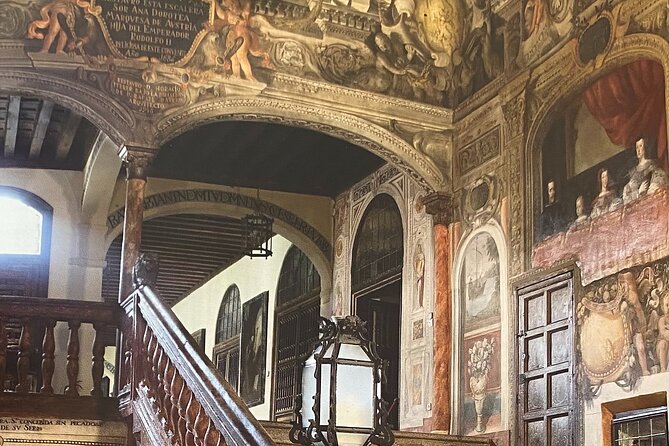
- Frescoes attributed to Claudio Coello on the main staircase
- A 16th-century recumbent Christ (attributed to Gaspar Becerra) linked to a Friday procession
- Choir stalls and the Dolorosa by Pedro de Mena in an active prayer space
- A mix of Flemish, Italian, and Spanish painting from the 16th and 17th centuries
- Optional Madrid de los Austrias walk connecting royal sites around Plaza Mayor and Plaza de la Villa
Monasterio de las Descalzas Reales: the Austrias’ private world
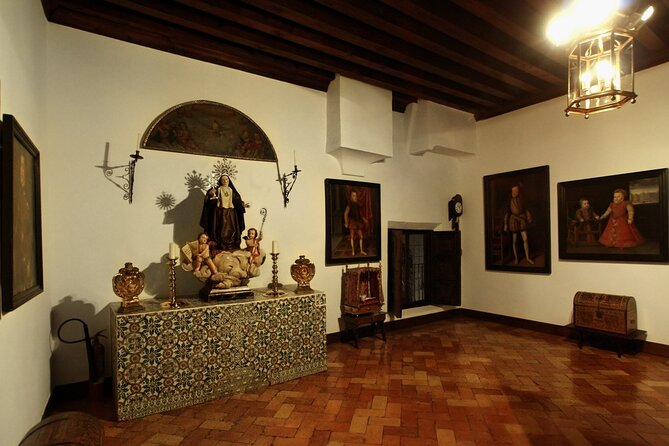
If Madrid is your base, this is the kind of stop that makes the city feel real instead of postcard-flat. The Monasterio de las Descalzas Reales is tied to the Habsburg-Austrian dynasty in Spain, and you can feel that influence in everything you’re shown: the art choices, the themes, and even the way the space functions.
This visit is guided by an art expert, so you’re not just looking at objects—you’re getting a sense of why they exist here. You’ll learn about Juana of Austria, youngest daughter of Charles V and sister of Philip II, who founded the convent. That family connection matters, because the monastery wasn’t only religious. It was also a stage for taste, status, and devotion.
And you get more than one kind of artwork in one pass. Expect frescoes, paintings, sculpture, choir details, and chapels around the upper cloister. It’s a dense art-and-meaning visit, but kept to a practical time frame.
You can also read our reviews of more tours and experiences in Madrid.

Skip-the-queue entry and why the timing feels right
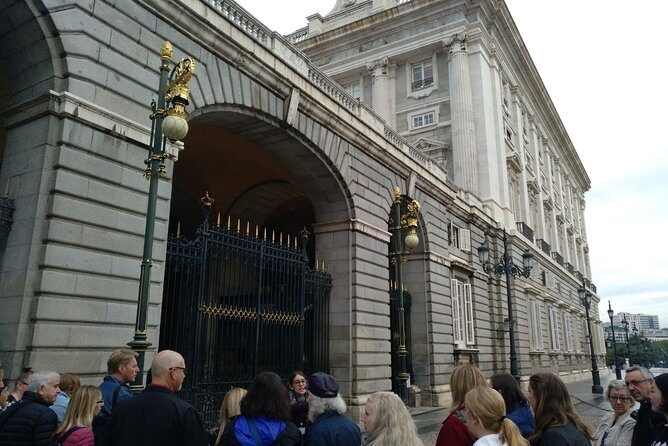
The big practical win here is the entrance without waiting for queues. Madrid can be crowded, and a monastery is not the place you want to burn half your time standing in a line. Getting in smoothly changes the whole feel of the tour: you’re calmer, you start looking sooner, and your guide can keep the pace focused.
The guided visit is set for about 1 hour for the monastery, with an optional second 1-hour segment if you choose the add-on walk through Madrid of the Austrias. The total time is listed as roughly 1 to 2 hours, which is ideal if you want something meaningful without turning your day into a schedule hostage.
Group size is also capped (maximum 15 travelers). That matters because in a monastery interior you can’t spread out. A smaller group helps everyone actually see what the guide is pointing to, instead of playing human origami behind shoulders.
One more note to keep in your back pocket: the monastery may close due to a solemn event or a national holiday. If that happens, your plan might shift, so it’s smart not to treat this as your only option that day.
Stop 1: Monasterio de las Descalzas Reales (Juana of Austria’s convent)
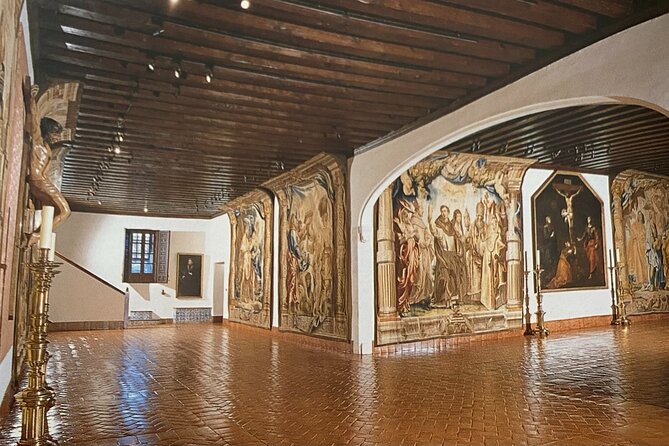
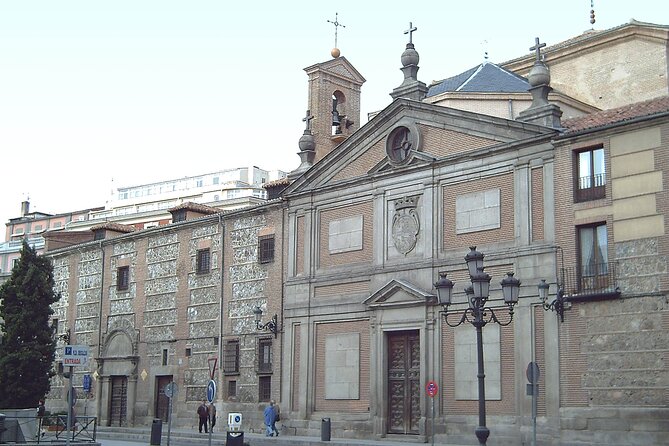
This is the heart of the experience: a guided look at one of Madrid’s most important convents, founded by Juana of Austria. As you move through the spaces, your guide ties the visuals back to the people who made the monastery what it is.
Frescoes on the main staircase (Claudio Coello)
One of the signature wow moments is the frescoes on the main staircase, attributed to Claudio Coello. Staircases sound like a minor detail until you see how often they’re used in European religious architecture to teach, inspire, and frame movement. Here, the fresco work helps you understand the monastery as a carefully arranged experience, not just a collection of rooms.
The upper cloister chapels and the recumbent Christ (Gaspar Becerra)
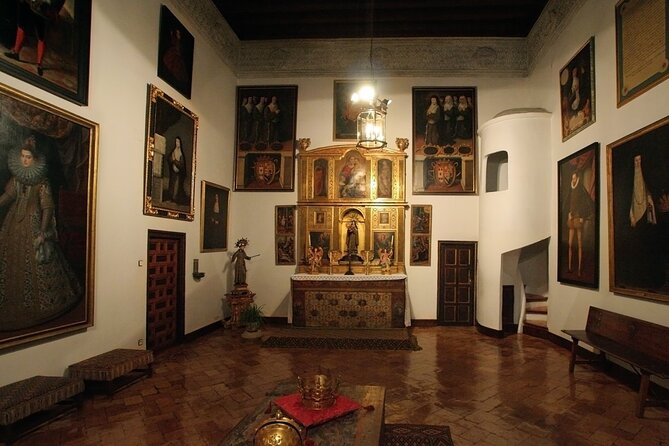
Around the upper cloister, you’ll look at chapels decorated with an image of a recumbent Christ from the 16th century, attributed to Gaspar Becerra. The detail that really pulls it into real life is that this image is carried in a procession on Friday Holy Week. Even if your visit isn’t on the procession day, knowing that this image participates in a living tradition makes your viewing feel more connected.




The choir area: original stalls and active prayer
Next comes one of the most meaningful parts: the choir with original stalls, where the community gathers to pray. This is where the monastery stops feeling like a museum and starts feeling like a place with routine, sound, and purpose. The tour isn’t just about admiring surfaces; it’s about understanding function.
The Dolorosa by Pedro de Mena
In the choir you’ll also see a magnificent Dolorosa by Pedro de Mena. A Dolorosa is a representation of Mary in sorrow, and artists like de Mena were known for creating emotion through form and expression. In this setting, the sculpture’s role isn’t abstract. It’s part of a devotional environment, which changes how you perceive it.
Tombs connected to the imperial family
The choir area also includes the tombs of the Empress María and her daughter the Infanta Margarita. Seeing burial places inside such a compact space gives you a different scale of thinking. This wasn’t only a private refuge; it was linked to rulers and dynastic lines.
Paintings across Flemish, Italian, and Spanish schools
The monastery holds paintings from the 16th and 17th centuries, including works by artists mentioned in the tour description such as Vincenzo Carducci and Antonio Moro. You’ll also encounter Flemish, Italian, and Spanish works. That mix is valuable because it shows the monastery’s artistic networks and preferences—Spain importing talent and style, but filtering it through local religious needs.
If you like art history that actually helps you see, this stop is designed for you. Your guide links the artworks to the people who commissioned and preserved them, not just to dates.
The art focus that can make or break your experience: tapestries and gardens
A lot of convent visits in Madrid are about one star object. This one aims for a broader sweep, which is great—until you realize what you personally care about most.
Tapestries commissioned by Isabel Clara Eugenia
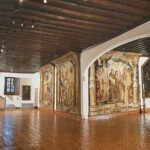
You’ll learn about the monastery’s tapestries commissioned by Isabel Clara Eugenia. These tapestries are meant to decorate and communicate, but they don’t always land the same way for every visitor. If you came for top-tier paintings and sculpture, you may find the tapestries less exciting than the frescoes, choir pieces, and sculptural devotion.
Still, they’re worth your attention because tapestries were expensive and symbolic. They show how the Austrias expressed identity through art that could move, display status, and set a mood for ceremonies.
Two interior gardens and Latin inscriptions
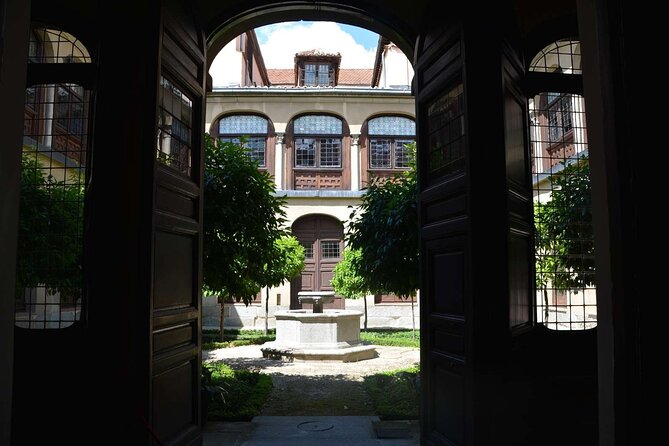
You may also notice interior gardens and Latin inscriptions that can take a moment to decode. Even if you don’t read Latin, the inscriptions signal that this place is built on scholarly and religious literacy. If you enjoy slowing down for small texts and details, these garden areas can give you a calmer rhythm during the tour.
The overall feel: dense, then focused
The main challenge is pacing. The site is full of artistic elements, and the visit is time-limited. If the goal is to see everything, you can’t. If the goal is to understand how key works relate to faith and dynasty, you can.
My practical advice: when your guide calls out an artist name, latch onto it. Works attributed to Claudio Coello and Gaspar Becerra, plus sculpture by Pedro de Mena, aren’t random. They’re the threads tying the monastery together.
Optional add-on: Madrid de los Austrias walk near Plaza Mayor and Plaza de la Villa
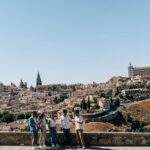
If you choose the option that adds a city walk, you get a smoother transition from monastery art into urban context. The idea is simple: learn the time of the Austrian dynasty by connecting the dots between royal foundations and major civic spaces.
This add-on is described as an opportunity to enjoy a complete route across the Austrias era, including time in the Plaza Mayor and Plaza de la Villa. You’ll also see other emblematic buildings near these squares, and your guide provides histories and legends tied to the dynasty.
Why this is good value: it turns your half-day visit into a mini narrative arc. You start with a royal convent tied to the Habsburg lineage, then you step out and see how that legacy echoes in the city’s public face. Even if you only add this for the second hour, it helps Madrid click into place.
One caution: don’t treat this walk as a free-for-all. You’re in a guided format, so if you’re someone who likes wandering without structure, you might prefer the monastery-only option. But if you like context, the Austrias walk gives you that.
What makes this tour good value for $34.62
At $34.62 per person, the price is less about a bargain feeling and more about how efficiently the visit uses your time.
Here’s the value equation I see:
- Tickets are included with the guided visit, so you’re not juggling separate admissions
- Guidance is included, which is the key to getting meaning from a complex art site
- The skip-the-queue entry saves time in a place where delays can be common
- The monastery visit is built for a short window (about 1 hour), which is practical if you have other plans
In other words, you’re paying to reduce friction. You show up, you enter smoothly, and you get an organized route through the highlights—plus an art expert’s framing.
The only financial “watch-out” is if you’re the kind of visitor who wants a long, self-paced tour. This is structured and time-limited, so the value comes from clarity and access, not from stretching out for hours.
Who should book this monastery visit
I think this works best if you:
- Want a guided art experience without spending half your day on it
- Like learning the stories behind major works, not just admiring them
- Are curious about the Austrias dynasty and how it influenced religious spaces
- Prefer small groups (up to 15) in interiors where quiet focus matters
You might consider skipping or choosing the monastery-only version if:
- You mostly care about one style (like only painting) and want a highly specialized focus
- You get disappointed when a visit covers many types of art in a limited time
- You prefer free roaming over a guided route
Should you book? My straight answer
Yes, if you want a high-impact Madrid stop with built-in context and no queue drama. The monastery is compact for what it contains, and the guide helps you connect the frescoes, choir devotion, and dynastic ties instead of letting the visit blur into generic sightseeing.
Book it especially if you’re interested in the Austrias story and appreciate art that blends beauty with belief. Choose the optional Madrid de los Austrias walk if you want your day to feel like a connected storyline, not two separate checklists.
FAQ
Do I get tickets included with this visit?
Yes. Tickets are included, along with a guided visit.
How long does the monastery part take?
The monastery visit is listed at about 1 hour.
Is there an option that includes a walk around Madrid?
Yes. There is an option for Monastery of the Barefoot plus a walk through Madrid of the Austrias, with another segment of about 1 hour.
How much does it cost?
The price shown is $34.62 per person.
How big are the groups?
The group has a maximum of 15 travelers.
Where does the tour start?
It starts at Monasterio de las Descalzas Reales, Pl. de las Descalzas, 3, Centro, 28013 Madrid, Spain.
Is this near public transportation?
Yes, it’s listed as near public transportation.
What is included in the guided tour?
You get entrance tickets and a guided visit by an art expert guide.
What is not included?
Drinks and tips are not included.
Can the monastery close on some days?
Yes. The monastery may close due to some solemn event or national holiday.
If I cancel, can I get a refund or change the booking?
No. The experience is non-refundable and cannot be changed for any reason.