Toledo reads like a flipbook of empires.
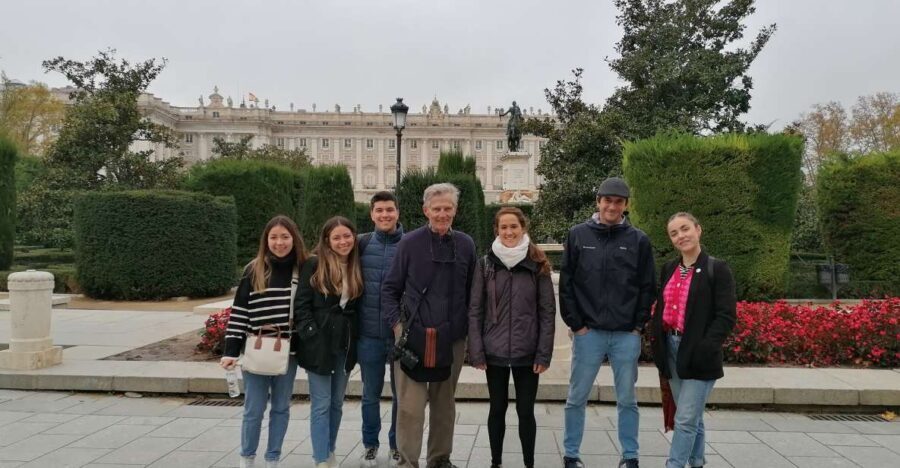
In about 1 hour 45 minutes, this guided English walk strings together the city’s major sights in a way that makes the geography click fast. Guides such as Paula, Carlos, and Marion are repeatedly praised for turning short stops into clear stories you can carry into your next hours on your own.
I love the tight pacing: frequent stops, gentle explanations, and enough time at each spot to notice details instead of just passing by. I also like that the route mixes the city’s big symbols with smaller quirks, so you leave with an honest sense of how Toledo works day to day, not just postcard views.
One thing to keep in mind: there’s a lot of uphill walking, so wear solid shoes and plan for some stairs and slopes. Also, the tour needs a minimum number of participants, so be a little flexible with timing if the schedule shifts close to departure.
In This Review
- Key highlights to look for
- Why Toledo’s Monuments Feel Better When You Walk
- Getting Ready: Comfortable Shoes and a Simple Plan
- Zocodover to Alcázar: The City’s Square Energy and the Castle Edge
- Plaza de la Magdalena Trampantojos: Optical Tricks With a Story
- Mezquita de Tornerías: When Toledo’s Faith Layers Show Up Fast
- Posada de la Hermandad and Plaza del Ayuntamiento: Power, Justice, and the Catholic Monarchs
- Santo Tomé and the Jewish Quarter Views From the Mirador
- The University Story, Church History, and the Jesuit Presence
- Casa Rodrigo de la Fuente: Courtyards, Old Domestic Life, and a Toledo Detail
- Pace, Terrain, and What to Do After the Walk
- Should You Book This Walking Tour of Toledo’s Monuments?
- FAQ
- What language is the guided tour in?
- How long is the walking tour?
- Where is the meeting point in Toledo?
- Is monument entrance included in the tour price?
- Is the tour suitable for most people?
- Can I cancel for a full refund?
Key highlights to look for
- Zocodover as your orientation anchor for Toledo’s past and present social life
- Alcázar viewpoints that help you understand the city’s defensive feel
- Plaza de la Magdalena trampantojos optical tricks that are worth a quick pause
- Mezquita de Tornerías and the sense of layered religions in one compact walk
- Mirador de la Virgen de Gracia for a clear look over the Jewish quarter
- Small-group tour (max 50) with a guide who keeps the route moving
Why Toledo’s Monuments Feel Better When You Walk
Toledo is the kind of city where the streets do the storytelling. If you only see the big names, you miss how the whole place is wired together: squares that gather people, churches that mark power, and viewpoints that explain why this city was easy to defend and hard to forget.
This tour helps you get that wiring in under two hours. You start at a central meeting spot and then bounce through the most important public spaces and religious landmarks. The route is built to help you form a mental map. And that matters, because Toledo is not huge, but it can feel like a maze once you’re wandering on your own.
I also like how the guiding style tends to be practical. Instead of lecturing for the full 90+ minutes, the guide keeps things moving with short stops and clear takeaways. That makes it a good fit for a first visit, a day trip, or a quick orientation morning before you commit to longer monument entrances later.
Getting Ready: Comfortable Shoes and a Simple Plan
You should treat this as a walking tour, not a sit-down lesson. The timing is about 1 hour 45 minutes, and the route covers multiple hills and historic lanes. Some participants note that it’s a real uphill workout. So bring shoes that can handle uneven stone and steps without drama.
The tour is in English, and most travelers can participate. If you’re relying on a headset or you want clearer audio, that’s a good match for this kind of guided format since the group stays together while you listen.
A couple practical notes from the tour details:
- A mobile ticket is used.
- The tour is offered nearby public transportation.
- Service animals are allowed.
- Entrance into monuments is not included in the price, even though several stops are quick and some places can be free to view externally.
If you want to go inside major sites, plan to pay extra on the spot or later. The walk is designed to help you decide what’s worth an entrance ticket with your own eyes.
Zocodover to Alcázar: The City’s Square Energy and the Castle Edge
Your first real anchor is Plaza de Zocodover. It’s the main square and the social heart of Toledo, both historically and today. Standing here with a guide is useful because it sets context. You’ll understand why the city’s public life centers around plazas like this, rather than hiding in quiet streets.
From there, you move toward Alcázar de Toledo. Even when you only get a short stop, the guide’s explanation helps you read the fortress-like presence of the area. Toledo’s topography makes the Alcázar feel like it’s part of the skyline, not just a building you pass. You’ll also start to see why the city’s layout mattered politically and militarily.
What I like about this first stretch is how it gives you a sense of direction quickly:
- Square life (Zocodover) gives you orientation.
- The castle zone (Alcázar) gives you the defensive logic.
If you’re the type who wants a day-trip Toledo to feel more than surface-level photos, this start is the right move.
Plaza de la Magdalena Trampantojos: Optical Tricks With a Story
Next up is Plaza de la Magdalena, where you’ll encounter trampantojos de Toledo. These are optical illusions and playful visual effects that can trick your eye at street level. The quick stop is short by design, but it’s memorable because you’re not only hearing history. You’re also seeing how art and perception show up in everyday Toledo.
This is also a good breather stop. After squares and castle energy, the atmosphere shifts. You’re close enough to notice textures and street details, and the guide’s explanation turns the illusion into a theme: Toledo loves layers, including layers you only notice when you slow down.
For me, moments like this are what make a short guided walk worth the money. If you do nothing but look, it turns into sightseeing. If you look with a cue, it becomes learning you can actually remember.
Mezquita de Tornerías: When Toledo’s Faith Layers Show Up Fast
Then comes Mezquita de Tornerías, one of the oldest mosques in the city. This is a strong stop because it makes the city’s layered religious past feel immediate. You’re not looking at a museum idea of history. You’re standing in a place that represents how Toledo changed over time.
The guide’s job here is key: you need someone to translate the significance without turning it into a textbook. You’ll get enough background to understand why this mosque matters in the bigger Toledo story, and why it sits in the same compact area as major Christian institutions.
If you’re curious about how Spain’s cities carry multiple chapters at once, this is one of the best points on the itinerary. It’s also a great reminder that Toledo’s identity isn’t only tied to one era or one community.
Posada de la Hermandad and Plaza del Ayuntamiento: Power, Justice, and the Catholic Monarchs
At Posada de la Hermandad, the focus is the prison history tied to the Catholic Monarchs. Even a short stop works because you’re connecting a building type (a posada) to a political purpose (detention). It helps you see how institutions in Toledo weren’t always separate. Commerce, authority, and punishment could live close together.
From there, you reach Plaza del Ayuntamiento, a major public space where the big symbol is the Cathedral. This square matters because it represents something bigger than architecture. The guide links the city’s major institutions into one visible setting: political power, justice, and Christian authority.
This is where your “mental map” really sharpens. After Zocodover, and after the fortress zone, you start to understand how Toledo displays power in public. Squares are not just pretty. They’re stages.
One practical thought: the cathedral area is a draw. Even if you’re not paying for a full entrance, the exterior views and the street-level geometry can help you decide later whether you want deeper monument time.
Santo Tomé and the Jewish Quarter Views From the Mirador
Next you’ll visit Santo Tomé, focused on the Jewish neighborhood. Then you continue to Mirador de la Virgen de Gracia, which gives you a broader look over much of the Jewish quarter.
These two stops pair well because they do two different jobs:
- Santo Tomé provides the neighborhood context.
- The mirador provides the “okay, I get the layout” perspective.
I especially like the mirador moment because it helps you stop chasing individual buildings and start seeing the neighborhood patterns. From above, the city’s compactness becomes obvious, and you can tell why people chose to live where they did.
If you’re planning additional self-guided wandering after the tour, this part makes it easier to pick directions. You’ll remember what to look for and where it sits relative to the viewpoints you’ve already seen.
The University Story, Church History, and the Jesuit Presence
Toledo’s religious and civic identity doesn’t end at the big landmarks. The tour includes time for the history of the university (told as a quick stop note) and moves through additional church-focused points.
You’ll stop at Plaza de San Vicente for history related to the Church of San Vicente, then head to Iglesia de San Ildefonso Jesuitas. This is where the guide’s explanation about Saint Ildefonso gives extra meaning to what might otherwise feel like another old church façade.
The tour’s value here is that it shows Toledo’s identity as layered and interconnected. Universities, churches, and public squares all shape what the city becomes. This is also one of the stretches where the guide’s storytelling really affects your experience. Some guides lean funny, some lean dramatic, and some lean very clear and practical. Either way, you should get enough to make the buildings feel purposeful.
Casa Rodrigo de la Fuente: Courtyards, Old Domestic Life, and a Toledo Detail
The final major highlight is Casa Rodrigo de la Fuente, where you’ll see a courtyard from the 15th century. The name comes with social context tied to Rodrigo de la Fuente in the 16th century, so you’re not only viewing a pretty interior space. You’re learning what kind of home life mattered for a prominent figure.
Courtyards are a big deal in Toledo because they show the city’s domestic architecture and how people moved through light, stone, and privacy. Even with a short visit window, this stop helps you remember that Toledo wasn’t built only for grand institutions. It was built for people living their daily lives in old-world streets.
If you enjoy architecture beyond facades, this is a nice way to end on something intimate. After squares and viewpoints, a courtyard feels like a calmer landing.
Pace, Terrain, and What to Do After the Walk
The itinerary is short enough to fit into a day, but long enough to give real context. It also returns you to the starting area in Plaza de Zocodover, so you can keep moving immediately afterward with a stronger sense of direction.
Here’s what I think you should expect, based on how the tour is structured:
- You’ll walk a lot, with uphill sections and historic steps.
- You’ll stop frequently, usually for a few minutes at each key point.
- You’ll get enough background to understand why each place matters in Toledo’s story.
- Monument entrances are not included, so you’ll likely decide on extra ticket stops after the tour, not during it.
If your plan is a full Toledo day, this works well as a first step. Get the map in your head first, then roam with better instincts. If your plan is only a half-day, it still makes sense because you’ll leave knowing what to prioritize next.
One extra note: the tour caps at 50 travelers, which usually keeps things from turning into a stampede. Smaller groups help you hear answers and get the guide’s rhythm rather than just listening to noise.
Should You Book This Walking Tour of Toledo’s Monuments?
Yes, I’d book it if you want a smart orientation in a compact city, especially if you’re visiting for the first time or have limited time. The route covers the main public spaces (like Zocodover and Plaza del Ayuntamiento), faith layers (including Mezquita de Tornerías and the Jewish quarter areas), plus a few memorable “why didn’t I notice that” stops like the trampantojos.
Skip or reconsider if:
- You know walking uphill tires you quickly.
- You’re hoping the price includes monument entries. It does not, so you’ll need to budget extra for any inside visits that catch your eye.
- You prefer a long, inside-focused tour. This is about orientation and key stops, not deep time inside major buildings.
If you’re the type who likes to understand a place before you wander, this is a very efficient way to do Toledo right.
FAQ
What language is the guided tour in?
The tour is offered in English.
How long is the walking tour?
It runs for about 1 hour 45 minutes.
Where is the meeting point in Toledo?
Meet at C. Armas, 3, 45001 Toledo, Spain.
Is monument entrance included in the tour price?
No. Entrance to monuments is not included.
Is the tour suitable for most people?
Most travelers can participate.
Can I cancel for a full refund?
Yes. You can cancel up to 24 hours in advance for a full refund. The experience may also be canceled if the minimum number of travelers is not met, in which case you’ll be offered a different date or a full refund.