REVIEW · MADRID
Madrid Welcome Tour with Local Guide in Eco Tuk Tuk Private
Book on Viator →Operated by Eco Tuk Tuk - Spain · Bookable on Viator
Madrid from street level is a treat. This private eco tuk tuk tour is built for the first days: you glide past big landmarks, get photo stops, and hear what matters before you commit to longer visits. I especially like the blankets for winter-style touring and the fact that the ride covers a lot without the usual walking grind.
Two more reasons it clicks: the tuk tuk is private for your group, so you’re not squeezing with strangers, and the tour is designed to start without the usual queue-and-wait feeling. One real drawback to plan around: the pace can feel quick, and major places like the Prado or Royal Palace are more “see and orient” than “do everything inside” during a 1–2 hour version.
In This Review
- Key highlights you’ll care about
- Why this Eco Tuk Tuk tour works as your Madrid “first move”
- Price: what you’re paying for, and what you get back
- The guide vibe: why names like Laura and Christian keep showing up
- From the covered market to San Francisco el Grande: food smells and big-domed views
- Atocha station and the Spanish Courts: where Madrid’s daily motion meets political power
- Cibeles and Neptune fountains: ancient gods with modern football energy
- Prado Museum viewpoint and what to do with it
- Los Jerónimos and the Royal Palace axis: from monastery scale to royal ceremony
- Puerta de Alcalá and Banco de España: the city’s old gate meets its financial nerve
- Plaza de Santa Ana and Almudena Cathedral: mood, then meaning
- Debod after dark—or at least after the main stops
- Comfort and pacing: what to expect on the ground
- Should you book this Madrid Welcome Tour?
- FAQ
- What sights does this tour focus on?
- Is this a private tour or a shared group?
- Is the vehicle electric?
- Are there blankets for cold or rainy weather?
- Does Templo de Debod require an admission ticket?
- Can I cancel and get a full refund?
Key highlights you’ll care about
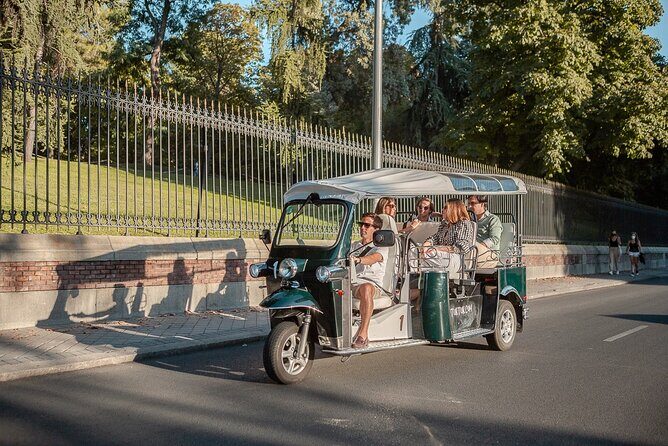
- Electric, private tuk tuk ride that’s made to be comfortable, not a bus replacement
- Photo-friendly stops at major sights, without scrambling for the right angles
- Winter-ready comfort with blankets and protective layers for rain and wind
- Skip the wait mindset: the tour starts without queues or waiting
- Local stories from real guides, including names like Laura, Carlos, Christian, and Gustavo
Why this Eco Tuk Tuk tour works as your Madrid “first move”
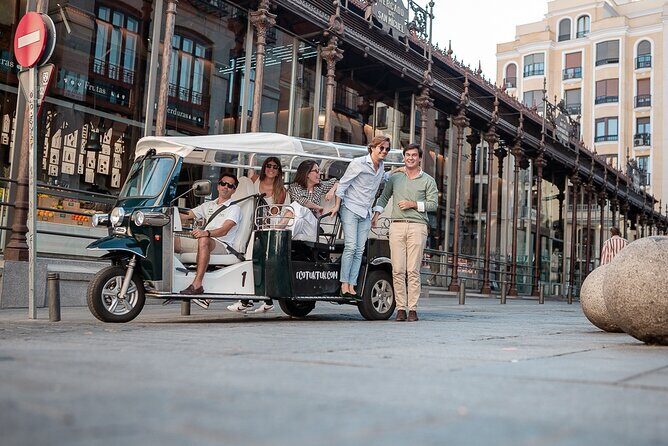
Madrid is huge in feel, even when you’re staying central. A tuk tuk tour helps you understand the city’s shape fast: where the big squares sit, how the museum cluster relates to the Royal Palace area, and why certain streets always show up in every plan you’ll make.
This one is also practical because it keeps you out of the worst of the “too much, too soon” trap. You’re not racing across Madrid on your own timeline, and you’re not stuck waiting for a slow bus load. The ride is designed around pre-selected stops for photos, so your guide can keep the story moving instead of hunting for parking.
I also like that the vehicle is electric and geared for real sightseeing comfort. You still get outdoors views and street-level context, just with less fuss than walking between distant points.
You can also read our reviews of more guided tours in Madrid

Price: what you’re paying for, and what you get back
At $28.66 per person, this tour is priced like a smart orientation stop, not a deep-ticket experience. You’re paying for three things that add real value:
- Time: the tour is about covering a wide loop in about 1 to 4 hours (depending on your choice).
- Comfort: blankets and protective layers matter in winter, and the ride reduces fatigue even in good weather.
- Guided context: you’re not just seeing famous buildings; you’re learning why they’re placed where they are, and what to notice when you come back.
Also worth knowing: the tour offers group discounts, uses a mobile ticket, and is booked fairly far ahead on average. If you’re traveling in peak season, booking early is the easiest way to avoid “sold out on the day you wanted” stress.
The guide vibe: why names like Laura and Christian keep showing up
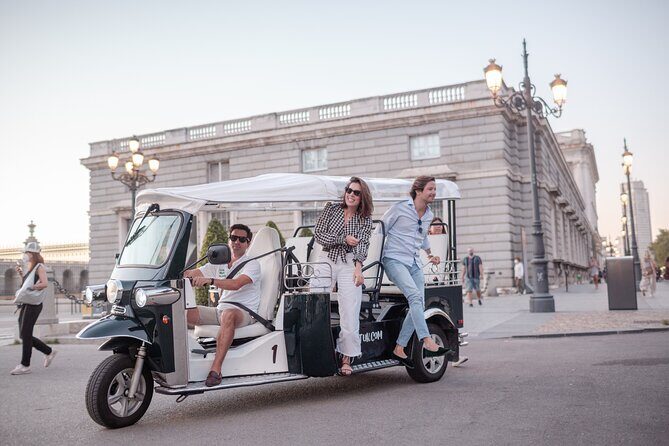
The strongest pattern in the guide feedback is simple: the guides show up prepared, communicate well, and make the story feel human. People specifically praised drivers and guides like Enrique, Juan Carlos, Carlos, Christian, Roberto, Laura, Manuel, Gustavo, Alejandro, Tristan, and Fernando for being friendly, helpful, and willing to go beyond the basics.
You can feel the difference between a tour that lists facts and one that helps you plan next steps. In this case, guides often point out where you’ll want to return on foot, and they help you connect the landmarks you see on the ride with neighborhoods and viewpoints you’ll want later.
Practical tip: if you’re short on time, this is the moment to ask direct questions. Ask what to prioritize first if you only have one museum day, or where to take your next photo without doubling back.
From the covered market to San Francisco el Grande: food smells and big-domed views
One of the first stops is a covered market area dating from around 1916. You’ll see an elegant space for local food, delis, and events—exactly the kind of place that helps you feel Madrid as a living city, not just a postcard collection. If you love snacking while sightseeing, this is where your “walk-and-eat” instincts start.
Then you move to the Royal Basilica of San Francisco the Great, officially the Basilica of Our Lady of the Angels, in Madrid’s historic core. Even from the street, this stop gives you a sense of Madrid’s religious scale and architectural ambition. It’s also a good contrast point: market energy on one side, monumental worship space on the other.
Possible drawback: if you’re the type who wants long interior time, treat this tour as the orientation layer. You’ll get the scene and the story, then decide what deserves your ticket time later.
Atocha station and the Spanish Courts: where Madrid’s daily motion meets political power

Next up is Atocha railway station, described as one of the busiest passenger stations in Spain and a major node in Europe. This stop helps you understand why Madrid feels like a crossroads. It’s not just trains; it’s a constant flow of people, and the station area is one of those practical “you’ll pass here again” locations.
After that, you’ll see the Palace of the Spanish Courts. The building sits where an earlier convent once stood and became the seat of Congress in the 1800s. You’ll notice the neoclassical façade: six Corinthian columns, a triangular pediment with reliefs, and those iconic lions flanking the entrance made from cast iron tied to captured cannon metal from the African war. The detail level is the point here.
One interior highlight is the Session Hall, along with a library/conference hall known as the Lost Steps hall. Even if you don’t go fully inside, this stop helps you place Madrid’s power center in your mental map.
You can also read our reviews of more private tours in Madrid





Cibeles and Neptune fountains: ancient gods with modern football energy
Fountains can be just “pretty,” or they can explain how a city remembers itself. Here you get both.
You’ll come across the paired story of Cibeles and Neptune—how their original plan faced each other, then they were restructured and relocated in the late 19th century. The vibe changes when you connect the myth to today’s crowds: fans associate the locations with victories, with Atletico supporters celebrating by the sea god’s fountain and Real Madrid supporters gathering at Cibeles.
Then the tour zeroes in on Cibeles Fountain itself. It depicts the Roman goddess Cybele (land, agriculture, fertility) riding in a cart pulled by lions, tied to the iconic sculptural details you’ll want to see with your own eyes. It’s a great photo stop because you get a wide view from several angles, and the area feels like a real meeting point.
Prado Museum viewpoint and what to do with it
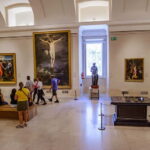
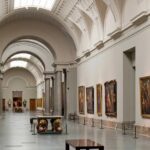
When you reach the Prado Museum area, you’re in Madrid’s big art zone. The tour description frames it with an impressive lineup of European painting giants—Velázquez, El Greco, Goya, Titian, Rubens, and others. The Prado’s strength is not one gallery; it’s the concentration of major artists and eras, including a strong presence from the 16th through the 19th centuries.
Here’s how to use this stop smartly: don’t try to “figure out the museum” during the ride. Use the tuk tuk time to decide what you want most. Ask yourself:
- Do I want Spanish masters first?
- Am I focused on one artist like Goya or Velázquez?
- Do I want paintings with a particular mood, or just the most famous works?
Then plan a separate museum visit with a ticket and enough time. This tour is made to set direction, not replace a museum day.
Los Jerónimos and the Royal Palace axis: from monastery scale to royal ceremony

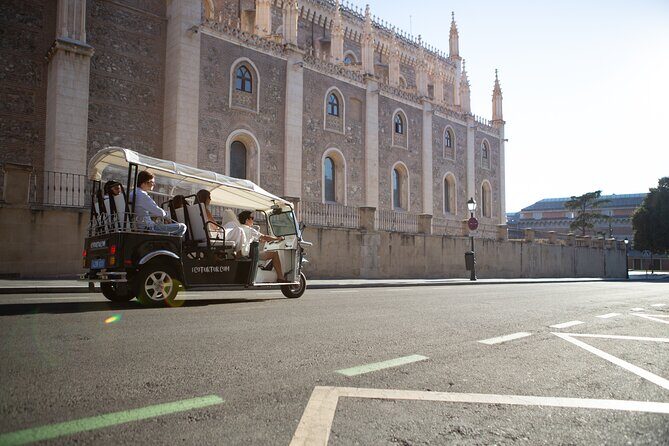
You’ll head to the ancient monastery of Saint Jerome el Real, known as Los Jerónimos. This spot adds depth because it’s tied to one of Madrid’s most important monastic stories. Next to it, the Royal Room expanded later into what became the Palace of the Good Retreat under Philip IV. That sequence matters: it shows how power and religion shaped the city’s physical growth.
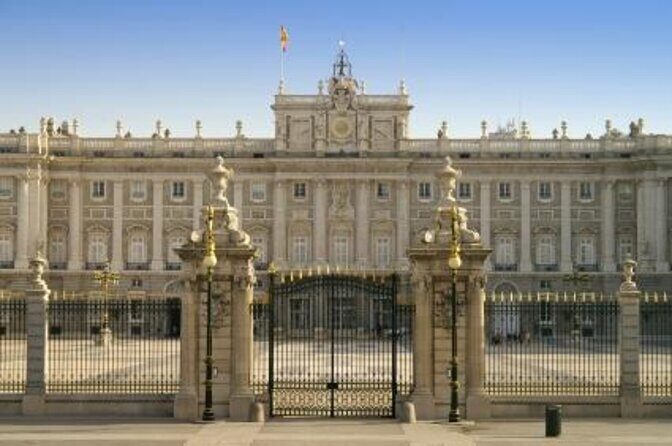
After that, the route swings toward the Royal Palace of Madrid, the official residence of the king for state ceremonies and solemn acts. Current kings live elsewhere, so the Royal Palace is less about daily living and more about public, formal Madrid. You’ll also see the Sabatini Gardens opposite the northern façade—2.66 hectares of open space, which is exactly what you want after sitting in a vehicle for a while.
One drawback to keep in mind: major sites like these can eat your time if you try to do them all in a single tight schedule. Use the tour to get oriented, then pick one for a longer, ticketed visit.
Puerta de Alcalá and Banco de España: the city’s old gate meets its financial nerve
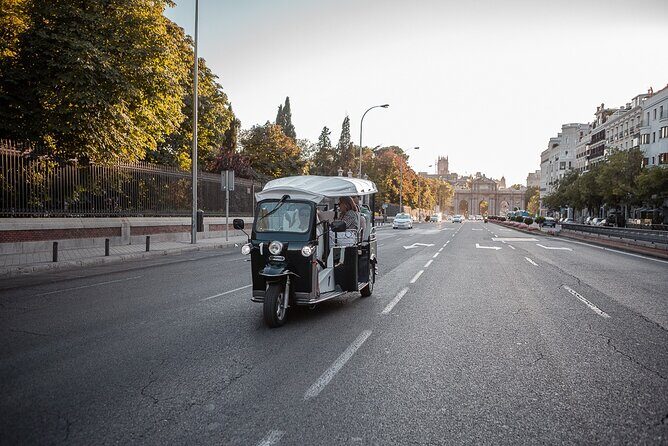
You’ll see Puerta de Alcalá, one of Madrid’s old royal gates, positioned in the center of the roundabout at Independence Square. It’s a classic “you’re in the old city now” landmark, and it’s also a perfect stop to understand how the city’s modern streets grew outward.
Then the tour brings you past the area around Banco de España, where the building was designed to match the importance of its role—especially the issue of coins and banknotes across Spain. The interior is not described as generally open; access is stated to be limited to specific types of educational and cultural groups. So again, think of this stop as a strong exterior-and-context moment, not a spontaneous entry point.
This kind of stop is underrated. It trains your eye. Once you understand where institutions sit—royal power, religious power, financial power—you’ll start noticing patterns in street layout and architecture everywhere else.
Plaza de Santa Ana and Almudena Cathedral: mood, then meaning
Plaza de Santa Ana is an open space in the Cortes district dating from 1810, shaped by repeated urban changes. Even if you only catch it from the tuk tuk, you’ll feel the neighborhood character: this is the kind of square that fits Madrid’s everyday rhythms, not just tourist circuits.
Then comes Almudena Cathedral, described as Madrid’s most important religious building. A detail that really lands: it was consecrated in 1993 by Pope John Paul II, noted as the first cathedral consecrated outside Rome. The cathedral museum area also helps you connect the diocese’s story through rooms with mosaics, episcopal shields, and ornament.
Practical move: if you love religious art or want a slower pace, prioritize the cathedral museum on a separate visit. During the ride, you’ll get the big-picture why.
Debod after dark—or at least after the main stops
The last named highlight is Templo de Debod, an ancient Egyptian building now located in Madrid west of the Spanish Steps. It sits on a high area tied to the Mountain Barracks location. Best part for your planning: it’s listed with free admission (and a typical stop time of about 10 minutes).
Templo de Debod is a smart “final note” because it breaks the pattern. You go from royal and religious Spanish landmarks to an Egyptian structure planted in Madrid’s skyline. It also makes sense as a closer because it’s the kind of place where you can enjoy a view and a photo without needing a huge time commitment.
If you’re traveling in mixed weather, this final short stop is a good way to end on a calm note.
Comfort and pacing: what to expect on the ground
This tour is designed for a short-stress sightseeing style. Still, your experience depends on two things: the version you book (1 to 4 hours) and how you handle a fast overview.
From past feedback patterns, the most praised elements are:
- friendly, helpful guide energy (people mentioned guide support for navigating stops)
- the ride being easy and comfortable
- the tour giving people their bearings for the rest of the trip
- the usefulness of blankets in cold conditions
The main pacing drawback: you can get information overload if you’re juggling questions nonstop while moving quickly. The fix is simple: choose two or three must-ask questions and save the rest for your follow-up visits.
Also note a couple of rules that affect planning:
- Tuk tuks are reserved privately, with a legal maximum of 4 passengers per tuk tuk.
- Pets are not allowed.
- There’s a minimum age of two years and a stated minimum weight requirement of 9 kg, so plan carefully with infants or very small kids.
Should you book this Madrid Welcome Tour?
I’d book it if you want the fastest way to get your bearings and understand Madrid’s big landmarks without wearing out your feet. It’s especially worth it for a first-timer, a couple, a small family, or anyone who wants a friendly orientation guide plus clear next-step ideas for the rest of your trip.
Skip it (or pair it with a more focused plan) if you mainly want long interior visits and don’t care about getting oriented. You’ll likely want separate time for the Prado and for major palace-area sights anyway. Think of this as your map in motion, not your whole itinerary in one shot.
If you’re arriving with limited time, booking early is a smart move since it’s commonly reserved about a month in advance. Then use the tour as your launch pad: decide what to revisit once you’ve seen where everything actually sits.
FAQ
What sights does this tour focus on?
The tour includes stops around Madrid landmarks such as a covered market area dating from around 1916, San Francisco el Grande, Atocha railway station, the Palace of the Spanish Courts, the Cibeles and Neptune fountain area, the Prado Museum area, Los Jerónimos, Puerta de Alcalá, Plaza de Santa Ana, Almudena Cathedral, the Royal Palace area with Sabatini Gardens, and Templo de Debod.
Is this a private tour or a shared group?
It’s private. Only your group participates.
Is the vehicle electric?
Yes. The tour uses a 100% electric and sustainable vehicle.
Are there blankets for cold or rainy weather?
Yes. Blankets and protective layers are provided against rain and wind to help prevent getting cold.
Does Templo de Debod require an admission ticket?
The information provided lists admission as free for Templo de Debod.
Can I cancel and get a full refund?
Yes. You can cancel up to 24 hours in advance for a full refund. If you cancel less than 24 hours before the start time, the amount paid is not refunded.