REVIEW · MADRID
Madrid Historical Tour with Local Guide in Eco Tuk Tuk Private
Book on Viator →Operated by Eco Tuk Tuk - Spain · Bookable on Viator
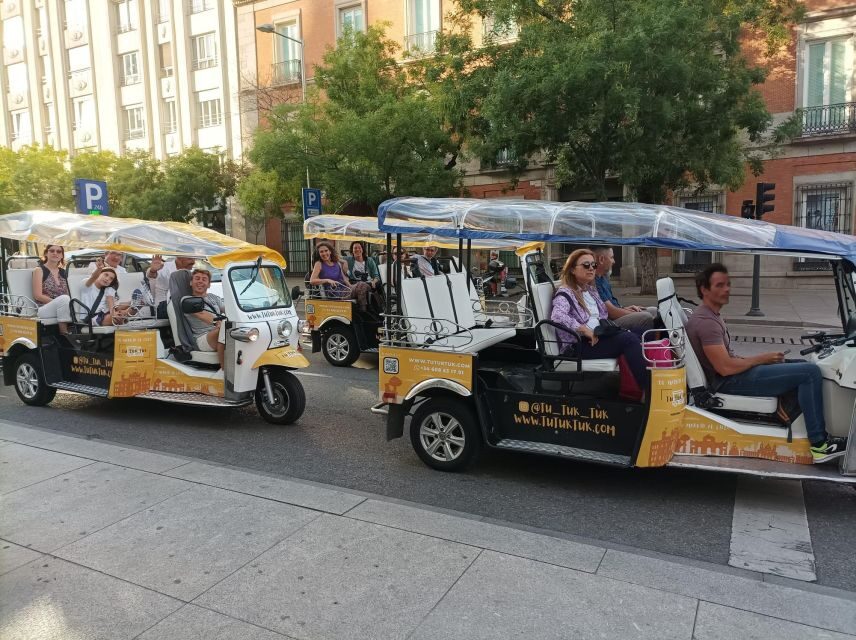
First time in Madrid can feel like sensory overload. This private ride through the center gives you a fast, fun way to get oriented, with an electric tuk-tuk that feels like a novelty without turning sightseeing into chaos. You’ll hit big landmarks and neighborhood corners, plus planned photo pauses, so you spend less time figuring out where to go next and more time learning what you’re seeing.
What I really liked is the mix of major monuments and everyday Madrid stops. I also love that you’re in your own vehicle (just your group), which makes it easier to ask questions and keep the pace comfortable, especially with guides like Carlos, Laura, Fernando, and Clara who are repeatedly praised for storytelling and good humor.
One consideration: the route and photo stops are prearranged, not customizable, and the meeting point is a bit tricky. It’s in the underground area by Plaza de Oriente (near Puerta del Príncipe), so you’ll want to follow the exact pickup instructions to avoid losing time.
In This Review
- Key highlights you’ll feel right away
- Electric tuk-tuk Madrid: fast orientation without the backache
- Where to meet at Plaza de Oriente (Calle Bailén 4 / Puerta del Príncipe)
- From the food-focused market to San Francisco el Grande’s dome
- Atocha station and the Palacio de las Cortes: where Madrid organizes power
- Cibeles and Plaza del Dios de Mar: the football city lesson in stone
- Prado area focus: Los Jerónimos and European painting scale
- Puerta de Alcalá, Banco de España surroundings, and Plaza de Santa Ana’s calm
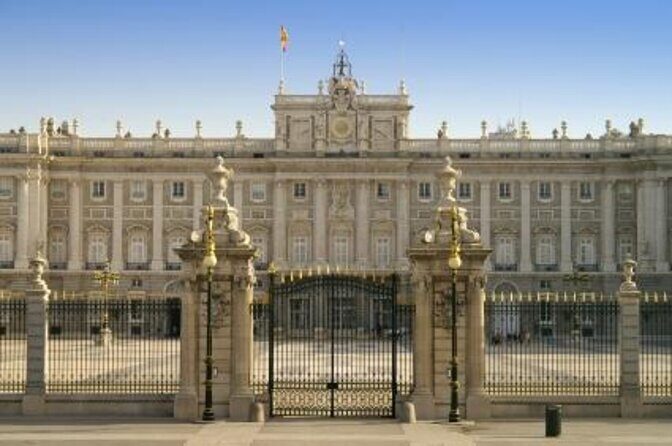
- Almudena Cathedral and Royal Palace gardens: Madrid’s crown jewels, seen efficiently
- Templo de Debod: a short free stop with big photo payoff
- How long should you book (1–4 hours), and who it suits best
- Should you book? My value take on $28.66 per person
- FAQ
- How much does the Madrid Historical Tour cost?
- How long is the tour?
- Is this tour private?
- Is the tour offered in English?
- Is the tuk-tuk electric?
- What is included for comfort in cool or rainy weather?
- Where do I meet for the tour?
- Is there an admission fee for Templo de Debod?
- What’s the cancellation policy?
Key highlights you’ll feel right away
- 100% electric, quieter ride: comfortable for getting around the historic center without long walks
- Private vehicle for your group: less waiting, more conversation with your guide
- Blankets for winter touring: a simple touch that makes a big difference when you’re outside
- No-start-line setup: you get going without the usual queue hassle
- Photo stops are planned: you’re not hunting corners while the light changes
- Guides with personality: names like Carlos, Laura, Fernando, and Clara show up in the best reviews for a reason
Electric tuk-tuk Madrid: fast orientation without the backache
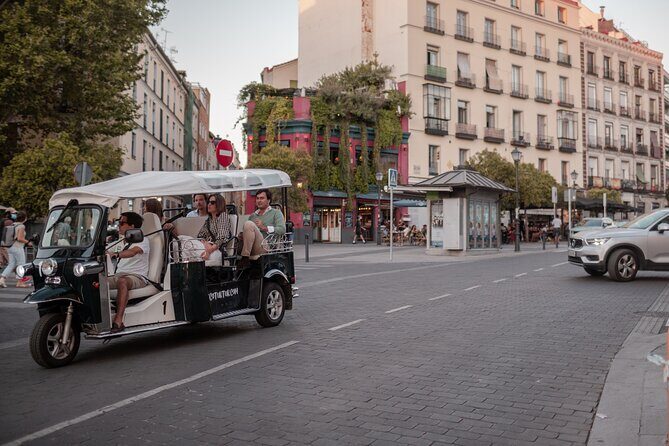
This tour is built for your first days. Madrid is huge in feeling, even when you stay in the center, and it’s easy to waste time backtracking. The electric tuk-tuk format helps you cover wide gaps—between plazas, museums, and cathedral-and-palace zones—while staying at a human pace.
Because it’s private, you’re not packed in with strangers. That matters when you’re trying to understand the city’s logic: how neighborhoods connect, why certain buildings matter, and what you should revisit later on foot. And yes, the vehicle is part of the fun—the electric aspect makes it feel modern, while the open-air vibe keeps the experience Madrid-like instead of boxed-in.
If you’re traveling with older family members, you’ll also appreciate that drivers will help with boarding. That’s not a given on all “short sightseeing” tours, and it can change the whole experience.
You can also read our reviews of more guided tours in Madrid

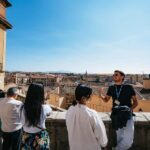
Where to meet at Plaza de Oriente (Calle Bailén 4 / Puerta del Príncipe)
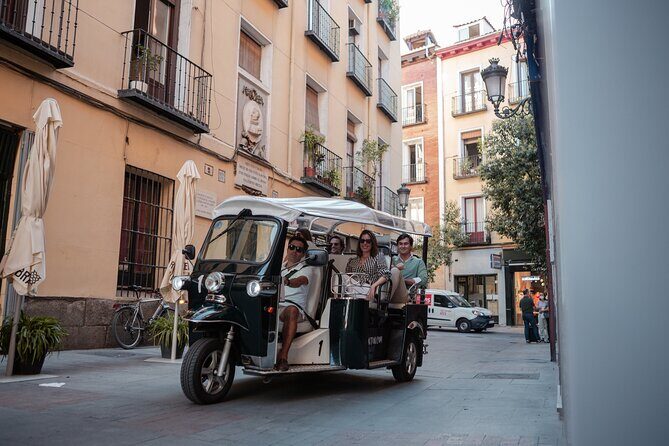
This is the one practical detail that can trip people up. Your meeting point address shows as C. de Bailén, 4, Centro, but the pickup is actually in the bus station underground area right next to the Royal Palace. There’s no obvious “number 4” sign at street level, so you want to navigate by the landmark: Puerta del Príncipe.
Here’s the simple plan:
- Use Google Maps for Calle Bailén 4 or Puerta del Príncipe.
- Look for the stairs to reach the underground station.
- Find the Eco Tuk Tuk signage once you’re down there.
- If needed, contact them by phone or WhatsApp at +34 696 99 78 89.
If you have mobility concerns, they note you can request help with elevator access. Also, if you’re late, the tour can be shortened; if you’re more than 15 minutes behind, the tour may be cancelled with no refund. So treat this meeting point like an appointment, not a casual meet-up.
From the food-focused market to San Francisco el Grande’s dome
The route starts by bringing you into Madrid through its food and atmosphere. You’ll see the covered market area dating from around 1916—an elegant setting where local food, delicatessens, and events create a constant hum. Even if you don’t go inside for a full meal, it’s a great “this is how people live” moment. Madrid is not just palaces and churches; it’s also daily errands, tasting plates, and market conversations.
Next comes the Royal Basilica of San Francisco el Grande (officially Basilica of Our Lady of the Angels). This is the stop where the city’s scale shows up. You’ll get a close look at a major Catholic landmark in the Palacio neighborhood, and your guide can explain why this church is such a recognizable piece of Madrid’s identity.
What makes these stops valuable is the contrast. Market energy tells you one story. Basilica architecture tells you another. Together, they give you a mental map that helps later when you’re walking around on your own.
Atocha station and the Palacio de las Cortes: where Madrid organizes power
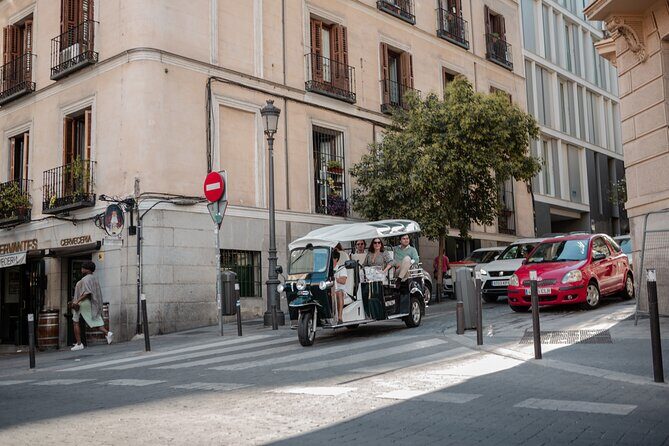
Then you roll to Atocha station, described as the busiest railway hub in Spain and one of the main stations in Europe. Even from outside, Atocha communicates the city’s flow—trains, connections, and movement. It’s a good stop for absorbing how Madrid works as a crossroads.
After that, you’ll reach the Palace of the Spanish Courts (Palacio de las Cortes), built on the site of an older convent and used as the seat of Congress in the 1800s. This is one of those places where the architecture is political. Look at the facade details: the neoclassical portico with striated columns, the triangular pediment with reliefs, and the lions flanking the entrance cast from iron from cannons captured during the war in Africa. It’s the kind of fact that turns a building into a story you can remember.
Inside highlights include the Session room and the Conference room called the Lost Steps. You may not have deep time to tour rooms, but even an exterior-focused stop helps you connect what you see to how Spain’s government developed.
Cibeles and Plaza del Dios de Mar: the football city lesson in stone
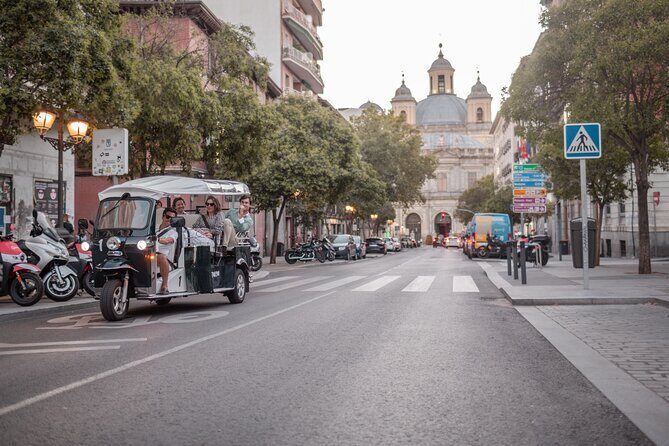
Madrid has plazas that act like social media icons: you recognize them even if you’ve only seen photos. You’ll pass through the area where the Greek gods are placed—Cibeles for Real Madrid and the Plaza del Dios del Mar for Atlético de Madrid. The city literally places sports pride into public space, so it feels less like a fandom and more like urban culture.
This stop is great for first-timers because your guide can connect sports identity to the neighborhoods around it. After you’ve learned this once, you’ll start noticing details everywhere—street names, local references, and even what kinds of crowds gather where.
Even if you’re not a soccer superfan, it’s one of those Madrid moments that makes you feel like you’re getting the local code. And that’s what you want from a short tour.
You can also read our reviews of more private tours in Madrid





Prado area focus: Los Jerónimos and European painting scale
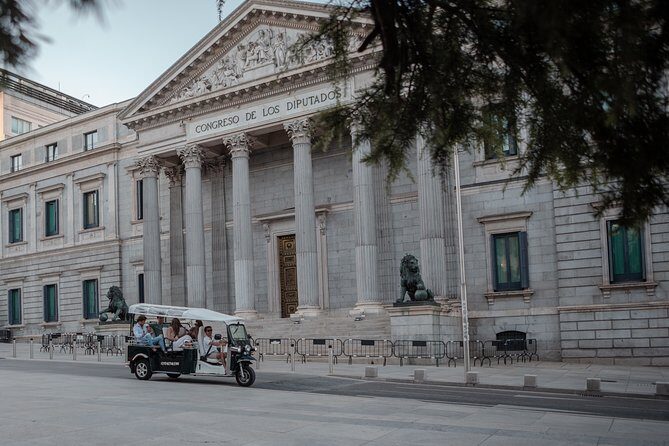
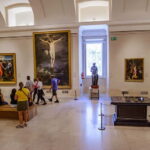
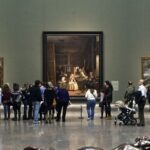
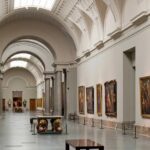
Art lovers get a special payoff here. You’ll visit the zone described as the world’s most important museum for European painting, credited to art historian Jonathan Brown’s perspective. That points directly to the Prado Museum area.
Right next to the museum, you’ll see the Parish Church of San Jerónimo el Real, popularly known as Los Jerónimos. This church has late Gothic character with Renaissance influences, and what’s especially interesting is that much of the current look reflects renovations over centuries.
Why this pairing works: it gives you a quick, respectful primer on Madrid’s “art capital” reputation without turning your day into museum fatigue. You learn what the Prado represents, then you see the church that sits right in the same cultural pocket—so it feels like one coherent neighborhood story, not separate attractions.
Puerta de Alcalá, Banco de España surroundings, and Plaza de Santa Ana’s calm
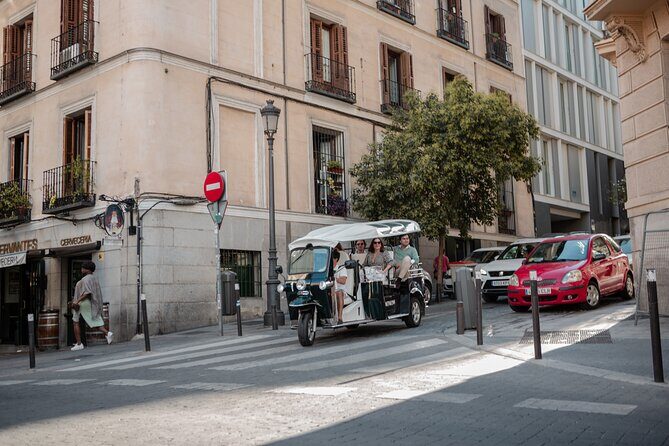
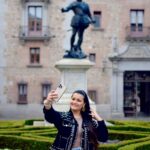
Next is Puerta de Alcalá, a monumental gate ordered by Carlos III to replace a previous one from the 16th century. It was inaugurated in 1778, which is the kind of date you’ll remember because it anchors the building in a real historical period.
This stop also helps you spot the surrounding power architecture. You’ll be in the area near major institutional buildings including the Buenavista Palace (Army Headquarters), Linares Palace (America House), Communications Palace (formerly the Post Office; currently Madrid City Council), and the Bank of Spain.
From there, you’ll also see the Banco de España headquarters concept described as an over-the-top project that won a National Exhibition of Fine Arts award in 1884, built specifically to fit the importance of the bank’s role in coin and bill issuance across Spain.
Then you move into a different mood at Plaza de Santa Ana in the Cortes neighborhood. This is an open square with a long timeline dating from 1810 and multiple rounds of urban change. It’s a good reset stop, because after staring at gates and institutional facades, your brain needs a social space. Squares like this are where you can later plan dinner or a casual wander.
Almudena Cathedral and Royal Palace gardens: Madrid’s crown jewels, seen efficiently
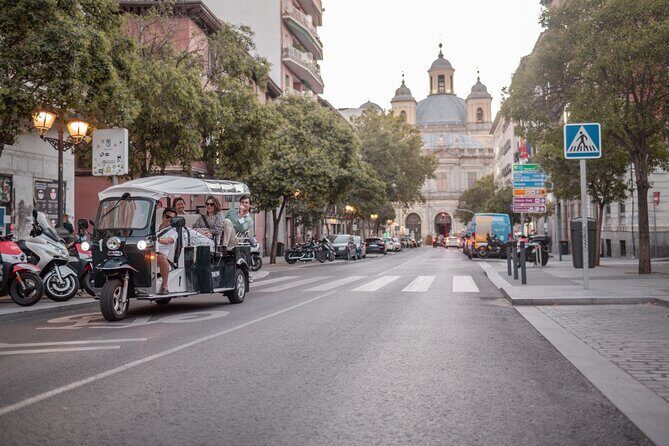
Now you get to Madrid’s religious and royal centerpiece zones.
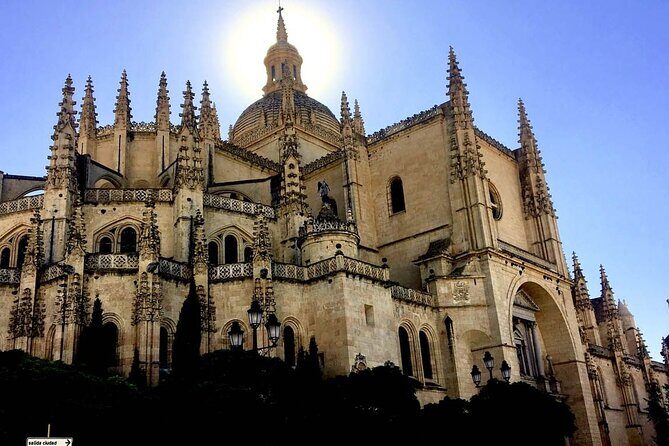
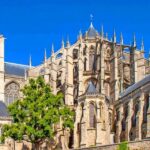
The Almudena Cathedral is the city’s key religious building. It was consecrated on June 15, 1993 by Pope John Paul II, and it became the first consecrated cathedral outside Rome. You’ll also have a chance to learn about the cathedral museum, which includes objects telling the story of the Madrid diocese across multiple rooms featuring mosaics and episcopal shields.
Then the tour turns to the Royal Palace area (Palacio de Oriente). Construction began in 1738 and took 17 years, and Carlos III established his habitual residence there in 1764. The palace sits on the former site of the Palace of the Austrias, destroyed by a fire on Christmas Eve in 1734. That’s a heavy historical chain, and your guide’s job is to make it understandable fast.
The setting matters too: you’ll be near the Campo del Moro gardens and the Sabatini gardens. Campo del Moro dates to the Middle Ages, while Sabatini gardens were created in the 20th century and cover about 2.66 hectares. If you’re planning to return later, these names are useful because you’ll start spotting entrances and viewpoints once you know what to look for.
Templo de Debod: a short free stop with big photo payoff
The Temple of Debod is an ancient Egyptian building relocated to Madrid. Your tour includes a short stop here, about 10 minutes, and the admission is listed as free.
This is a smart way to include a different kind of heritage—one that doesn’t feel tied to Spain’s royal timeline. Instead, it gives you a quick international flavor and an easy photo moment, often memorable because it feels like a mini time machine compared to everything else on the route.
How long should you book (1–4 hours), and who it suits best
The duration ranges from about 1 to 4 hours. In practice, shorter time slots help you get the overview and decide what to revisit. Longer slots let you slow down at more stops and ask more questions.
This private format works especially well if:
- You’re in Madrid for a short visit and want a guided orientation.
- You have kids (multiple reviews mention this being a fun family option).
- You don’t want a heavy walking day but still want more than a drive-by.
- You’re traveling solo and want to ask questions you might never think to ask on your own.
It’s also a good choice for people who want comfort in weather. Blankets and protective layers are included for winter touring, which is a small thing that makes the difference between enjoying the experience and just enduring it.
The main drawback for some people is the “fixed route” nature. If you want spontaneous detours, extra museum time, or customized photo angles, this isn’t designed to be that kind of tour.
Should you book? My value take on $28.66 per person
At $28.66 per person, the value comes from what you’re buying: orientation, narration, and convenience. You’re not just paying for a ride; you’re paying for a local guide who can connect the dots—what a building represents, why a plaza exists, and what to prioritize on your next day.
The electric vehicle is also part of that value. It keeps the experience light, and it’s easier for many people than committing to long walks. Then there are the practical bonuses: blankets in cooler months, pre-selected photo stops, and the promise of starting without queues or waiting.
So should you book? I’d say yes if your goal is to get your bearings fast and learn what to revisit. If your goal is deep museum time, long inside access, or total itinerary freedom, you’ll probably feel constrained by the pre-set stops. Either way, it’s a strong way to kick off a Madrid plan—especially when you’re going to walk the city on your own for the rest of the trip.
FAQ
How much does the Madrid Historical Tour cost?
It’s $28.66 per person.
How long is the tour?
The duration is approximately 1 to 4 hours.
Is this tour private?
Yes. It’s private just for your group.
Is the tour offered in English?
Yes, it’s offered in English.
Is the tuk-tuk electric?
Yes. The vehicle is 100% electric and described as sustainable.
What is included for comfort in cool or rainy weather?
Blankets and protective layers against rain and wind are included.
Where do I meet for the tour?
The meeting point is listed at C. de Bailén, 4, Centro, 28013 Madrid. Pickup is in the underground bus station area by Plaza de Oriente next to the Royal Palace, near Puerta del Príncipe.
Is there an admission fee for Templo de Debod?
Admission for Templo de Debod is listed as free.
What’s the cancellation policy?
Free cancellation is available up to 24 hours in advance for a full refund.