REVIEW · MADRID
Madrid: Highlights & Parks with Electric Bike Private Tour
Book on GetYourGuide →Operated by World Experience · Bookable on GetYourGuide
Madrid looks different from a bike seat.
This 3-hour electric bike tour is designed for the flat (mostly) historic center plus big city parks, so you can cover more than you could on foot without arriving wiped out. I especially like the mix of classic landmarks (Plaza Mayor, Puerta del Sol, Royal Palace area views) and the long stretch of green along the river, plus the fact that your guide helps you connect the dots so the stops feel like a story, not a checklist. One possible drawback: you see most sights from the outside, so if you want museum time or deep interior access, you’ll need to plan that separately.
What makes it work in real life is the small group size and the way guides manage the ride. In past departures, guides like Agustin, Laura, Valeska, Mateo, and Álvaro have been praised for keeping the group moving on time, taking photos, and making you feel safe even when city streets get busy. Still, it is biking: you’ll need comfortable shoes, you should be ready for some irregular surfaces, and the tour is not a good fit for people who feel nervous riding in traffic.
In This Review
- Key things to know before you ride
- Why Madrid Highlights on an Electric Bike Makes Sense
- The 3-Hour Flow: Meeting, Safety, and How the Pace Feels
- Retiro Park: Your First Big “Madrid Green” Moment
- Atocha 11 March Memorial: When the Tour Gets Quiet for a Reason
- Madrid Río and the Bridges: The Ride That Feels Like a Madrid Shortcut
- Casa de Campo Park: More Space, Less Pressure
- Plaza de España and Almudena Cathedral: The Royal-City Setup
- Plaza Mayor and Puerta del Sol: Where the Tour Gets Loud (In a Good Way)
- Malasaña and Chueca Flavor: Vintage Shops and Alternative Night Energy
- What You Don’t Get: A Tour for Seeing, Not Museum Hours
- Price and Value: Is $221 a Smart Use of Your Madrid Time?
- Tips That Make the Ride Feel Easy (Even If You’re Not a Cyclist)
- Should You Book This Madrid Electric Bike Highlights Tour?
- FAQ
- How long is the Madrid highlights and parks e-bike tour?
- What’s included in the price?
- Does the tour include food or drinks?
- What group size is this tour?
- What languages are available for the live guide?
- Are pets allowed, and what should I bring?
Key things to know before you ride
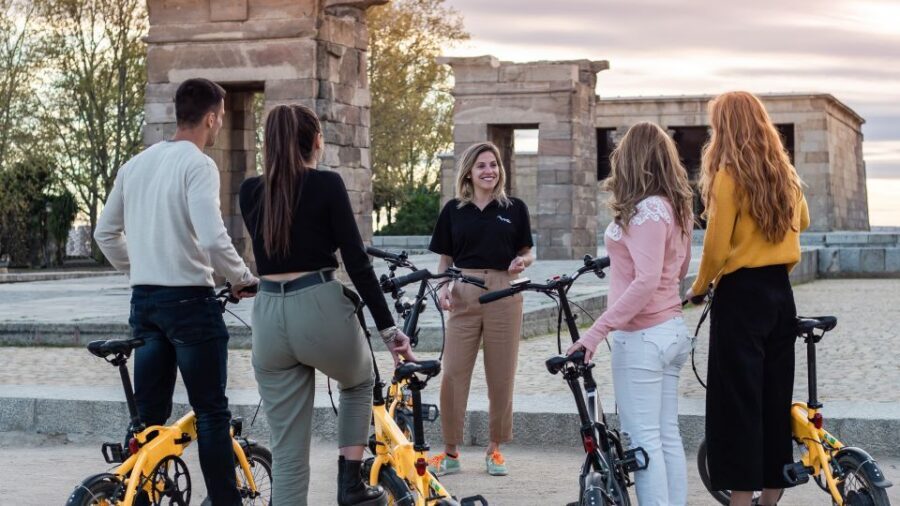
- Effort-light e-bikes: you get electric help, but you’ll still pedal enough to stay in control and enjoy the ride
- A smart mix of Madrid: Royal Palace area viewpoints plus parks like Retiro and the river corridor
- Short, photo-friendly stops: you get time to look around without turning it into a full-day march
- Bridges that sell the views: Toledo Bridge and Segovia Bridge are quick hit spots with big angles
- Small group pace (up to 8): easier questions, better guidance, and less waiting around
- Outside viewing mainly: it’s about seeing and understanding the city, not entering every major monument
Why Madrid Highlights on an Electric Bike Makes Sense
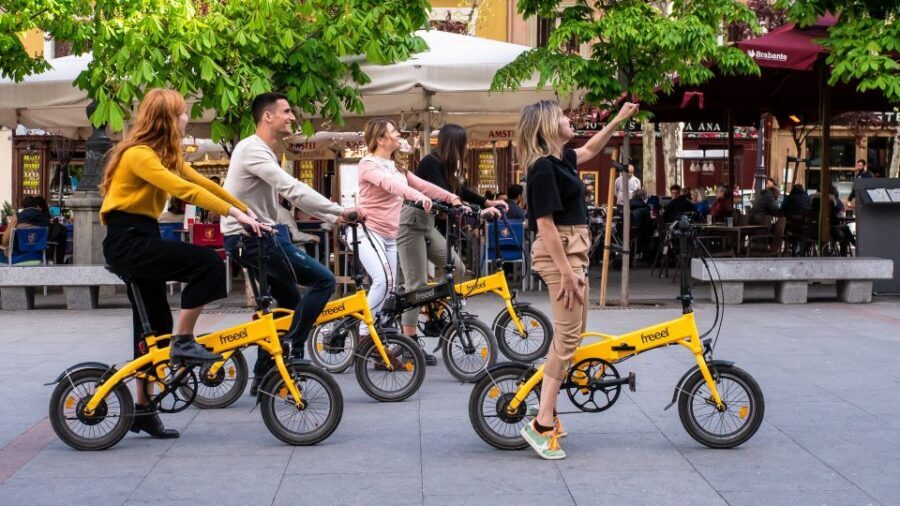
Madrid is a bike city in a way you don’t always expect. The historic core is laid out for moving through it, and the best scenery is spread across areas you can reach quickly if you avoid getting stuck in traffic or wasting time on detours.
The electric assist is the real value. You’re not just renting a bike and hoping for the best. On this tour, the point is that you can keep your energy for looking at the sights, not burning it all climbing hills. That matters in Madrid because you’ll want your legs fresh for parks like Retiro and for the long ride along Madrid Río.
Also, Madrid is full of “you had to be here” moments. When you move by bike, you notice textures and angles you miss on a bus: the relationship between plazas and royal buildings, the way the river corridor opens up, and how neighborhoods change character block by block.
Who this fits best: first-timers who want the big sights plus park time, couples, small groups, and anyone who wants a guided route without committing to a full day. If you hate traffic stress, a guided bike plan still helps because you’re not figuring it out alone.
You can also read our reviews of more cycling tours in Madrid


The 3-Hour Flow: Meeting, Safety, and How the Pace Feels
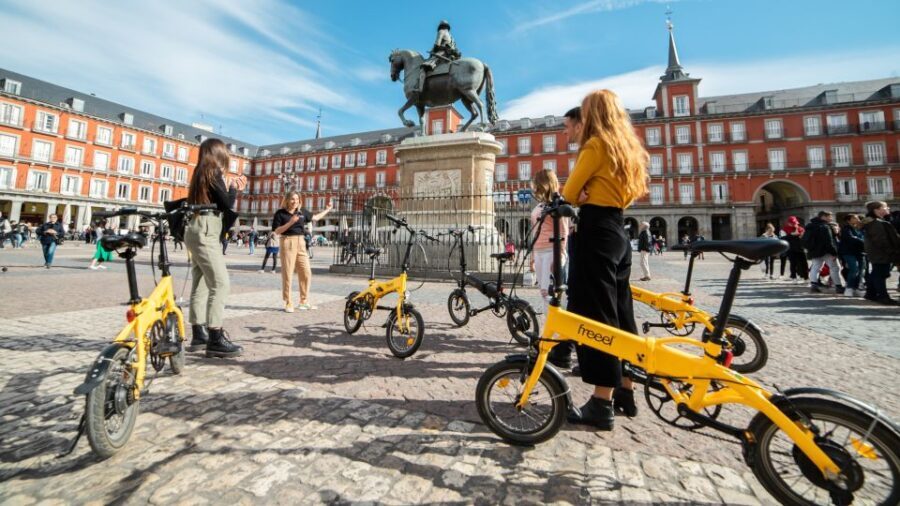
You start at C. de los Jardines, 12 and finish back there. Expect a straightforward rhythm: you get set up, you ride out as a group, you stop often enough to absorb things, and then you wrap up after 3 hours with a clear sense of where everything is.
The small group size (limited to 8 people) is more than a comfort detail. It lets the guide manage traffic moments and regroup quickly when someone wants a photo. That comes through in how guides like Agustin and Mateo are described: they keep the tour moving on time, and they’re attentive to the group’s comfort, including helping with photos.
One practical consideration: this isn’t a leisurely stroll pace. You’ll cover ground, and you should be okay riding for stretches at a steady effort. The good news is that the e-bike takes the edge off, and the stops are timed so you can look without feeling like you’re constantly rushing.
Retiro Park: Your First Big “Madrid Green” Moment
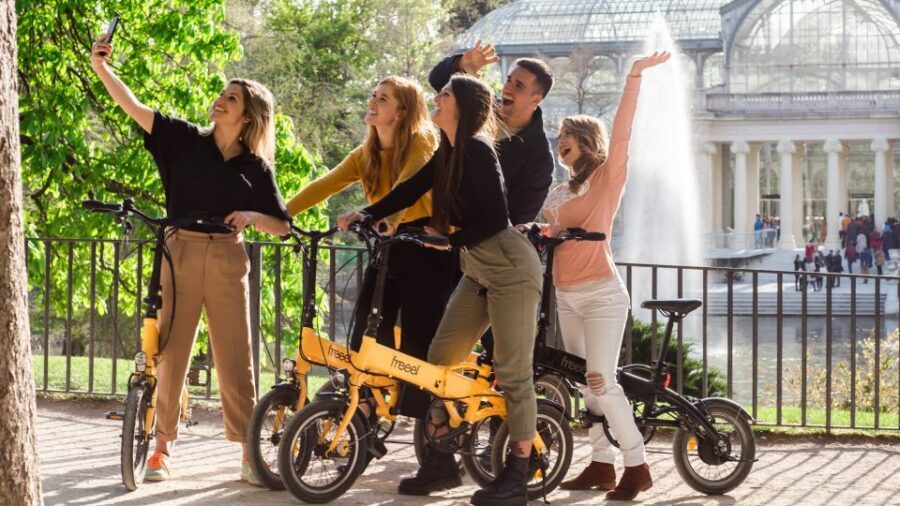
Retiro Park is your opening park stop, and it sets the tone. This is where the city feels like it has space to breathe. In a couple dozen minutes, you get the sense of why locals come here to reset, and why it belongs in any first-time Madrid plan.
From the bike seat, Retiro works well because you can see a lot without getting trapped in slow foot traffic. It’s also an ideal place to practice your confidence with the bike before the tour swings you back toward denser streets.
The main drawback is simple: park paths can be uneven. Your best prep is comfortable shoes and a calm ride style. The tour notes that you must be able to ride on unpaved or irregular ground, so treat this first park segment as part training, part sightseeing.
Atocha 11 March Memorial: When the Tour Gets Quiet for a Reason
Next comes the Atocha Monument 11 March Memorial. This is a reflective pause in the middle of a high-energy sightseeing route.
What I like about including a memorial stop is that it changes the tempo of the tour. You’re no longer only chasing beautiful views or photo ops. You’re seeing Madrid as a city shaped by real events, and that gives context to everything you’ll notice later in squares and near major landmarks.
Time is limited here, so don’t expect a full lesson. Instead, expect short, guided explanations that point you toward what the memorial represents and why the location matters.
Madrid Río and the Bridges: The Ride That Feels Like a Madrid Shortcut
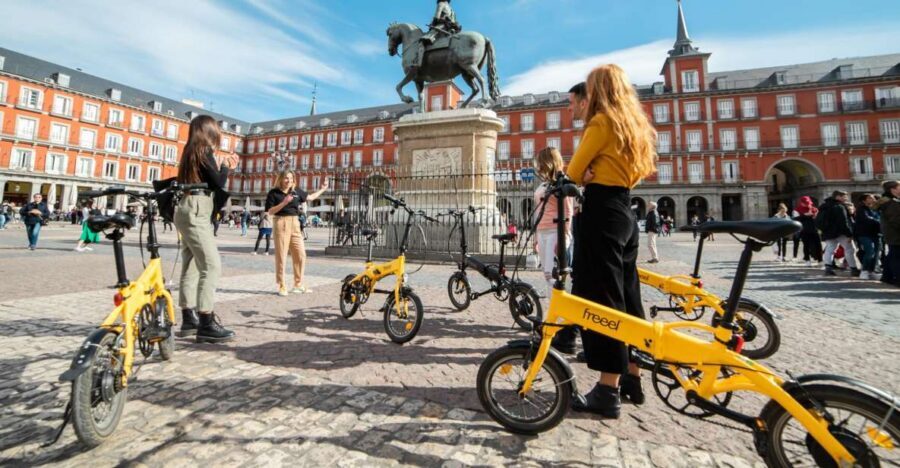
Madrid Río is one of the tour’s biggest wins. It gives you a long, scenic corridor where the pace feels smoother and the scenery keeps opening up as you move.
This segment also explains why bikes are such a good match for Madrid. On foot, you might walk past the best river angles without realizing it. By bike, you can keep rolling and still take in the views because stops are frequent but not long.
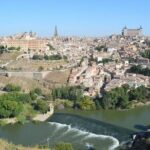
Toledo Bridge is one of your photo stops, and it’s a quick one that usually pays off. Bridges are where you see the city’s layers at once: water, buildings, street grids, and the direction your next stop will take you.
Segovia Bridge is similar but different. It helps you compare angles as you move, and it’s the kind of stop that makes the city feel bigger than you expected, even though you’re still moving through a tight core.
A consideration here: this is still an urban route. If you’re highly sensitive to traffic noise, you’ll want to lean into the sections that feel more open and follow the guide’s instructions about where to ride and when to slow.
You can also read our reviews of more private tours in Madrid




Casa de Campo Park: More Space, Less Pressure

Then you go into Casa de Campo Park. This is a change of scenery from the central plazas and the river corridor.
It’s a smart stop because it breaks the tour up into sections: park to memorial, river to bridges, then another park zone. That keeps your brain from melting into one long stream of landmarks. It also gives your body a slightly different riding feel, since you’re not constantly threading through the densest parts of downtown.
If you’re coming from a place where parks are mostly ornamental, you’ll appreciate Casa de Campo for what it signals: Madrid has major green areas that function as everyday escape routes.
The trade-off is the same as most park riding: you’ll need to stay alert on surfaces and follow the group pace.
Plaza de España and Almudena Cathedral: The Royal-City Setup
Plaza de España is one of the key junction points because it helps you orient yourself. Even if you’ve only seen Madrid through photos, this is where the city’s layout starts to make more sense.
From here, you move toward Almudena Cathedral. The guide talk at this stop matters. This is where the tour’s “storytelling” role really shows up. You’re not just being pointed toward a famous building. You’re given context to understand how the cathedral fits the broader Royal Palace zone.
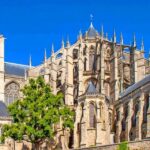
In descriptions of Madrid’s highlights, the Royal Palace area comes up a lot, and this tour places you in the right neighborhood to understand it. You’re positioned near the main access area around Plaza de la Armería, and you’ll get viewpoint awareness around Plaza de Oriente, which sits between the Royal Palace and Teatro Real.
One drawback: you’re not touring inside here. Think of it as a guided orientation + exterior viewing with explanations that help you appreciate what you’re seeing from the street.
Plaza Mayor and Puerta del Sol: Where the Tour Gets Loud (In a Good Way)
Plaza Mayor and Puerta del Sol are the emotional center of many first-time Madrid itineraries. On this bike tour, they’re approached after the parks and river segments, so they land differently than they would if you started downtown on day one with only crowds and noise.
Plaza Mayor works because it’s visually strong from outside. The architecture reads well even at speed, and you get time to slow down and take it in without needing a ticket plan.
Puerta del Sol has that “Madrid happens here” feeling. It’s where you understand the city’s rhythm, and it’s also where your guide’s explanations can help you connect the squares you’ve already ridden past.
A practical consideration: these areas can be busy. Biking through dense pedestrian zones is never the quiet, rolling ride you get along the river. Your best approach is to trust the guide’s route and slow your expectations for solitude.
Malasaña and Chueca Flavor: Vintage Shops and Alternative Night Energy
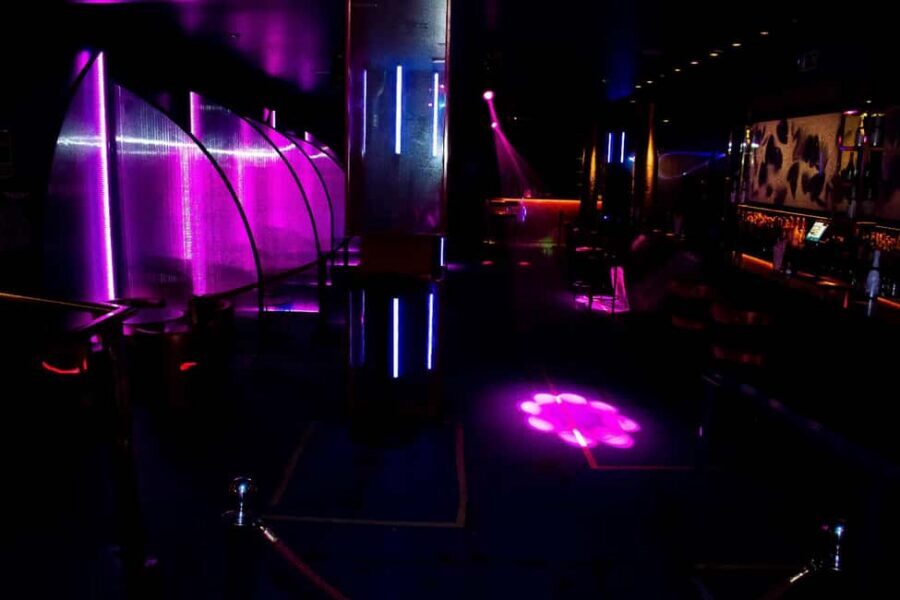
The tour is framed to include the feel of Malasaña and Chueca, with vintage shops and street market vibes, plus Madrid’s alternative nightlife energy. You may not be shopping or going out on the streets during the 3-hour window, but biking through these neighborhoods gives you a real sense of attitude and style.
This matters for value because it gives you something beyond the postcard core. You’ll come away with an idea of where you’d want to return on a free evening, and you’ll know which streets to look up later.
If you’re expecting a shopping spree, you’ll be disappointed. But if you want a vibe check that helps you plan the rest of your trip, this stop style is exactly right.
What You Don’t Get: A Tour for Seeing, Not Museum Hours
This tour is designed as a highlights-and-parks ride. You’re not getting guaranteed entry into major sights, and most monuments are viewed from the outside. That’s not a flaw. It’s the entire math of why the tour can cover so much in 3 hours.
If your priority is long museum visits, you’ll need to build those separately. But for a first or second day in Madrid, outside viewing plus guided context is often the smartest way to start. You learn what’s worth your money and time later.
Also, expect that the “wow” moments are mostly about placement and perspective: the river angles, plaza geometry, and how the palace area sits in the city.
Price and Value: Is $221 a Smart Use of Your Madrid Time?
At $221 per person for a 3-hour private e-bike highlights tour, it’s not cheap. You’re paying for a guide, the e-bike itself, and time-saving route planning that avoids you wrestling with traffic and parking.
Where it becomes good value is when you consider how much you’d spend on transport and how much mental energy you’d burn trying to stitch together a route that covers parks plus royal-zone viewpoints plus central squares. You’re also getting bottled water and a bilingual guide, and the route is small-group, which helps you get answers and photo help without waiting.
Another value point is the safety management. People repeatedly highlight guides who make them feel comfortable and keep the pace controlled, including support when something goes wrong with a bike. That matters because the e-bike makes the ride easier, but it doesn’t remove the need for good guidance.
Where you might question the price: if you already know Madrid well, love walking, and don’t need help navigating or interpreting sights. Then a self-guided plan could be cheaper. But most first-timers don’t start with that kind of map confidence.
Tips That Make the Ride Feel Easy (Even If You’re Not a Cyclist)
You’ll need comfortable shoes and you should wear sunglasses and a sun hat. Madrid sun can be sneaky, even when you think you’re fine. Bring your passport or ID card too, since the tour requires it.
The tour also lists some physical requirements: there’s a maximum weight of 130 kg, a minimum age of 12 (or at least 1.50m tall), and it also states participants must be at least 1.60m tall. If you’re within the sizing edge, it’s worth double-checking before you go so you don’t get turned away.
You should be ready to ride on unpaved or irregular ground. That doesn’t mean rough terrain, but it does mean you shouldn’t plan on flip-flops or slippery shoes and hope for smooth perfection.
If rain shows up, you can still manage it, but wear weather-appropriate clothes and bring a plan for keeping your phone secure for photos.
Should You Book This Madrid Electric Bike Highlights Tour?
Book it if you want a fast, well-guided way to see Madrid’s core highlights plus major parks without spending your trip wrestling with directions. It’s especially good if you’re pairing Madrid with other cities and need a strong start, or if you just don’t want your day to turn into a long walk.
Skip it if your dream day is interior museum time and you want to go inside major monuments at length. Also skip it if you’re uncomfortable riding in city conditions or if you can’t handle irregular surfaces.
My take: this tour is a smart buy for time-strapped first-timers. It gives you the layout of Madrid, the feel of neighborhoods like Malasaña and Chueca, and the key park and river angles that make the city memorable beyond the main squares.
FAQ
How long is the Madrid highlights and parks e-bike tour?
It runs for 3 hours.
What’s included in the price?
You get a professional bilingual guide, the touring bicycle (electric bike), and a bottle of water.
Does the tour include food or drinks?
No, food and drink are not included.
What group size is this tour?
It’s limited to 8 participants.
What languages are available for the live guide?
The live guide is available in Spanish and English.
Are pets allowed, and what should I bring?
Pets are not allowed, and you should bring a passport or ID card plus comfortable shoes, sunglasses, and a sun hat.