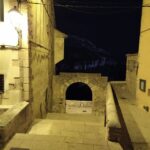
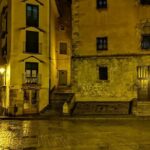
Cuenca glows after dark. This guided evening walk is one of the easiest ways to see the main sights of Cuenca when the heat drops and the crowds thin out. I like how the route is built for night-time views and fast city-center orientation, so you leave knowing where everything sits for your next days on your own.
Two things I really like: the 2-hour pace keeps it from dragging, and the guide’s stories can turn stone and street corners into something you remember. Guides such as Carlos, Guillermo, and Hugo are repeatedly praised for making architecture and medieval details click, not just reciting facts.
One thing to consider: Cuenca’s historic center is old. Expect uneven paving and some steps as you move between viewpoints and landmark spots, so wear shoes you trust after sunset.
In This Review
- Key things that make this night tour worth your time
- Why a Cuenca night tour feels better than daytime
- From C. Alfonso VIII to a city-center start point
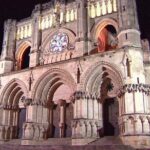
- The illuminated Cathedral and City Hall at your first stop
- An octagonal church on limestone: stop for details, not just photos
- The former convent and the quieter Palace of D. Sebastián de Covarrubias
- Ruins from the 13th century in the narrowest part of the historic center
- The Inquisition court and prison on the edge of the Hoz del Huécar
- Casas Colgadas: the symbol of Cuenca over the abyss
- How the old stone bridge became the 1903 iron bridge
- The Parador on its rock edge: ending with a dramatic setting
- Price and value: $9.88 for a focused night route
- Who this night tour suits best
- Should you book this guided night tour?
- FAQ
- How long is the guided night tour?
- What time does the tour start?
- Where do we meet, and where does the tour end?
- How much does the tour cost?
- How large is the group?
- What will I see during the walk?
- Is it easy to reach the starting point with public transport?
- What is the cancellation policy?
- Are service animals allowed?
Key things that make this night tour worth your time
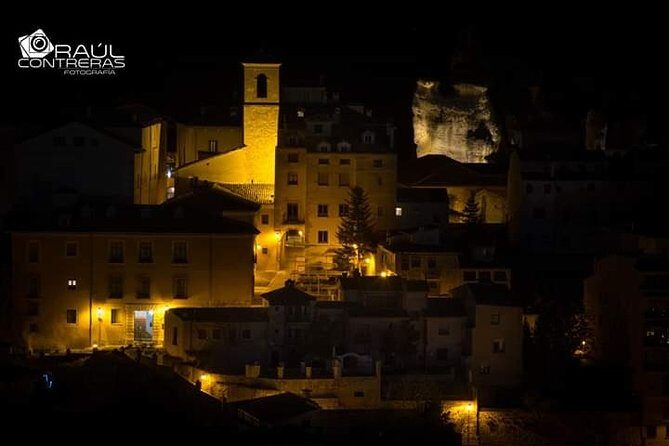
- Illuminated landmarks give you a different read on Cuenca’s architecture than daytime photos
- A guided orientation through the historic center so you can navigate later
- A smart mix of big sights and lesser-known stories, including the Palace of D. Sebastián de Covarrubias
- Casas Colgadas at the center of it all, lit dramatically over the ravine
- Bridge history with a clear timeline, including the replacement iron bridge from 1903
- A small-group feel with a maximum of 50 people on the walk
Why a Cuenca night tour feels better than daytime
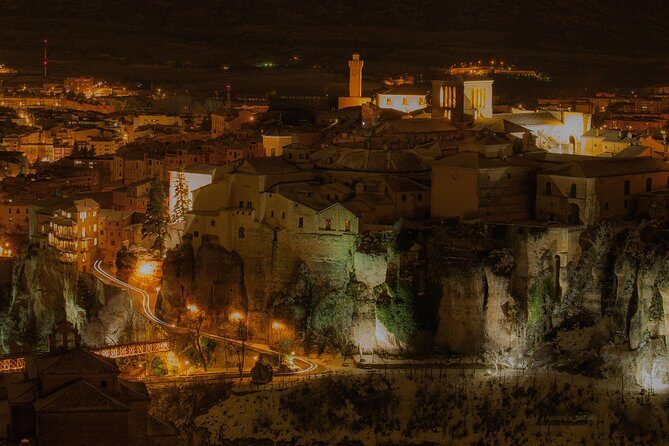
Cuenca is a “look up” city. At night, the same facades you’d spot in daylight take on sharper edges, and the shadows help you understand the shape of the place. The timing matters: the tour starts at 8:00 pm, which is ideal for enjoying the monuments without dealing with peak sun and peak crowds.
You’re also walking with structure. In about two hours, you get pulled along a route that covers the most important landmarks, plus a few that most people pass without stopping. That means you’re not just chasing photos; you’re building a mental map.
You can also read our reviews of more guided tours in Cuenca

From C. Alfonso VIII to a city-center start point
The tour begins at C. Alfonso VIII, 1, 16001 Cuenca, right in the heart of the action. Starting from a central spot makes it easier to arrive, get oriented, and settle into a slow night pace. It also helps if you plan to meet up with dinner after the walk, because you’re not stuck miles away from your next step.
You’ll likely find this is a tour style that works even if you’ve only had a short time in Cuenca. It’s not a long trek; it’s a focused route designed for comprehension and momentum. And with a maximum of 50 travelers, you should still be able to hear the guide at normal walking volume.
The illuminated Cathedral and City Hall at your first stop
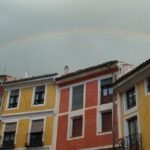
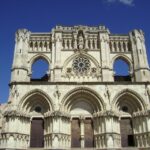
One of the first scenes is the area framed by colorful leaning houses, with the Cathedral and City Hall lit up. This is a strong opening because it gives you immediate scale: you see how Cuenca sits in layers, stacked and tucked along steep lanes.
That opening also does a practical job for you. You’re not just admiring. You’re learning what key sites look like at night, so later, when you pass them again in daylight, you’ll recognize the exact angles and street connections.
An octagonal church on limestone: stop for details, not just photos
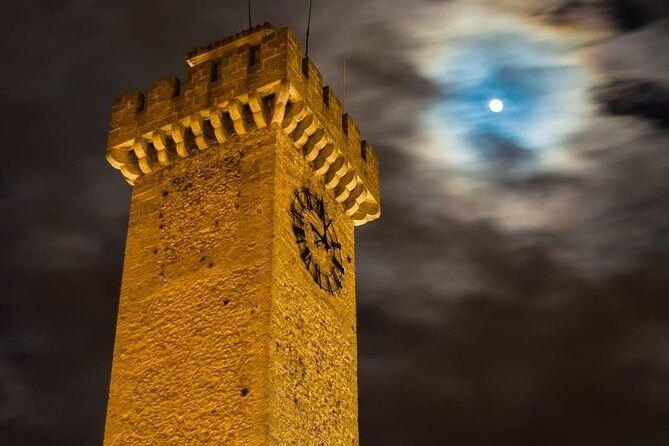
Another stop takes you to an octagonal church raised on a limestone cornice. The night lighting makes the elevation easier to notice, so you can understand the building’s “lift” rather than only seeing the silhouette.
This is one of the classic ways a good guide improves your experience. Instead of you walking past and thinking, nice, you start to spot how the setting supports the structure. When the guide points out the relationship between the church and its rocky support, the place becomes easier to read.
The former convent and the quieter Palace of D. Sebastián de Covarrubias
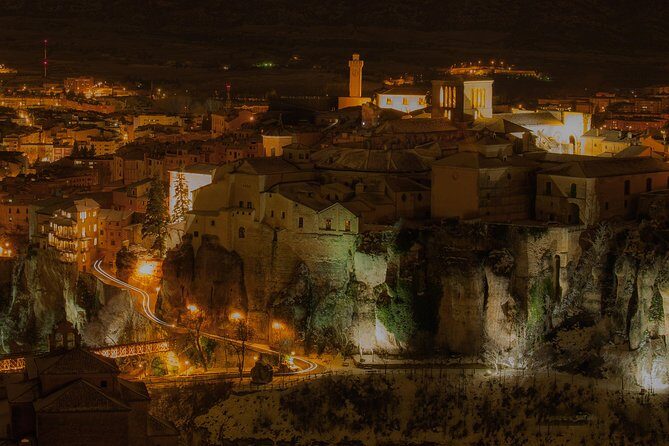
You’ll also move past a former convent from the 17th century. The tour includes what few people think to look for: the Palace of D. Sebastián de Covarrubias.
This kind of stop is valuable because Cuenca isn’t only about the headline monuments. When you learn that a palace sits in a spot you might otherwise treat as a shortcut, you start seeing the historic center as a living map of roles—faith, power, and everyday life layered together.
You can also read our reviews of more evening experiences in Cuenca
Ruins from the 13th century in the narrowest part of the historic center
One of the more intriguing moments comes when you reach the ruins from the 13th century, described as what was the first building in the city in one of the tightest areas of the historic center—between two gorges.
At night, ruins can feel more dramatic because you lose the “daylight clarity” that normally turns rubble into just, well, stone. Instead, you focus on what the location implies: why it was built here, and how the geography shaped early settlement.
If you like understanding cities as geography first and architecture second, you’ll probably enjoy this stop a lot.
The Inquisition court and prison on the edge of the Hoz del Huécar
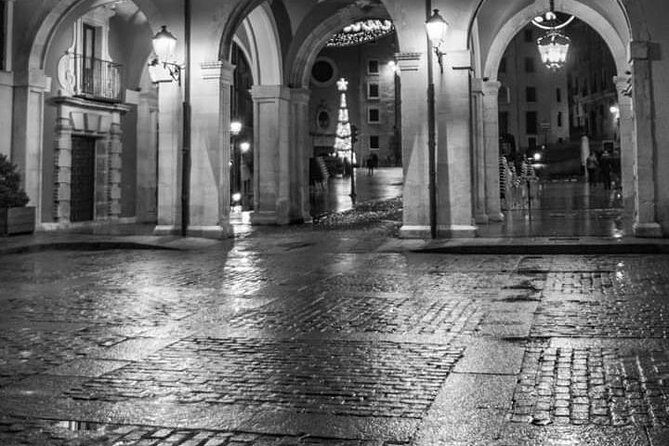
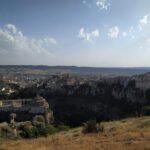
Then comes a heavier chapter. The route includes the former court of the Inquisition and prison, standing over the historic part of Cuenca on the edge of the Hoz del Huécar.
This stop works because it’s tied to placement. The setting makes the story feel less abstract. You’re standing where the building’s presence would have influenced fear, control, and movement, and the ravine edge adds to the sense of isolation.
It’s also a reminder that Cuenca’s beauty didn’t grow in a vacuum. Night lighting may look romantic, but the city’s past includes plenty of harsh realities.
Casas Colgadas: the symbol of Cuenca over the abyss
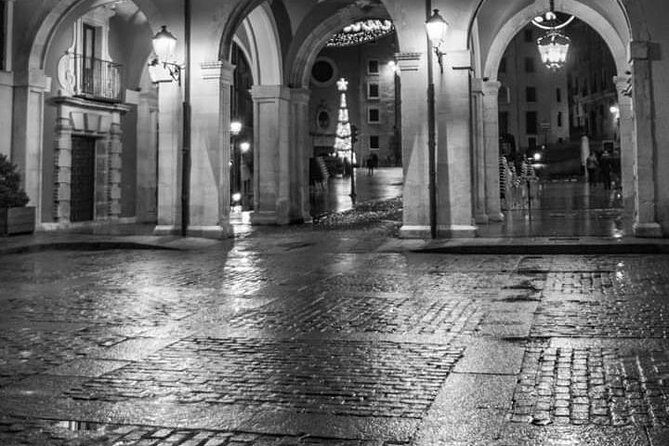
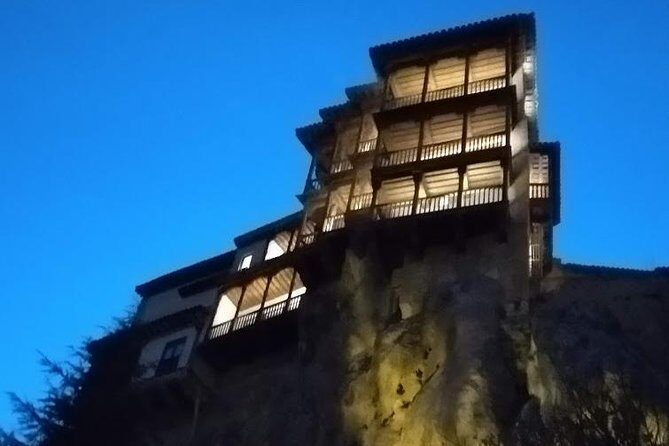
When the tour reaches the city’s symbol with more than 600 years of history, you get the payoff view. This is the famous Casas Colgadas, described as “defying the abyss” with special lighting.
Here’s the key point for your planning: night is when Casas Colgadas is easiest to appreciate as an overall scene. In daylight, you’re busy scanning details. At night, the lighting helps you see the structure’s relationship to the ravine and the angles of the bridge-like walkway.
This stop also tends to feel like the highlight for good reason. It’s one of the rare places where architecture, engineering, and atmosphere all hit at once.
How the old stone bridge became the 1903 iron bridge
Another very specific piece of the tour’s value is the bridge story. You’ll learn what happened to the old stone bridge and why it was replaced by an iron bridge from 1903.
This kind of detail matters because it turns a pretty viewpoint into a lesson about change. You start asking better questions, like what might break, what might be rebuilt, and how technology and risk drove decisions. Night makes the explanation feel cinematic, but the information is practical: it explains why what you see today looks the way it does.
The Parador on its rock edge: ending with a dramatic setting
The final stretch leads you toward the current Parador, with careful lighting and a dizzying situation on a rock near the ravine edge. Even if you’re not staying there, it’s a strong ending because it ties together the tour’s biggest theme: Cuenca is built vertically, and the drops are part of the story.
As you finish, you’ll likely notice how much you can now interpret. You’ll recognize where the ravine pulls you, which streets “stack” toward the center, and where landmarks sit relative to each other. That makes your next self-guided walk easier.
Price and value: $9.88 for a focused night route
At $9.88 per person for about 2 hours, this tour is priced like a smart local add-on rather than a premium museum-and-bus day. You’re paying for a guided route that covers multiple landmark categories: big squares, churches, ruins, prison history, bridge evolution, and the iconic Casas Colgadas scene.
If you’re visiting Cuenca for a short trip, this kind of value is especially strong. It’s the fastest way to get your bearings with minimal effort. You’ll likely feel you gained more context than the cost suggests.
Who this night tour suits best
I’d book this if you want:
- a quick, guided map of Cuenca’s historic core
- night views of the Cathedral-area streets and Casas Colgadas
- an explanation-heavy walk where the guide connects buildings to the city’s geography
It’s also a good fit if you’re not trying to do everything. Two hours is long enough to understand the city’s “shape,” but short enough to keep your evening flexible. With service animals allowed and the tour marked as suitable for most travelers, it’s an approachable option for a wide range of visitors.
Should you book this guided night tour?
If you’re deciding between seeing Cuenca casually and seeing it with context, this one leans toward the second option. The route hits the sights people remember, but it also includes the stops that give you the city’s layers—like the Covarrubias palace reference, the Inquisition court/prison setting, and the bridge timeline.
Also, the night timing is practical. You avoid peak daylight heat and crowding while still getting the dramatic lighting that makes Cuenca feel like a film set. For the low price and the tight two-hour structure, this is the kind of booking that often turns into a “now I get this city” moment.
FAQ
How long is the guided night tour?
It runs for about 2 hours.
What time does the tour start?
The start time is 8:00 pm.
Where do we meet, and where does the tour end?
Meeting point: C. Alfonso VIII, 1, 16001 Cuenca, Spain.
Ending point: Spanish Abstract Art Museum. Juan March Foundation (Casas Colgadas), C. Canónigos, 3, 16001 Cuenca, Spain.
How much does the tour cost?
The price is $9.88 per person.
How large is the group?
The tour has a maximum of 50 travelers.
What will I see during the walk?
You’ll pass and learn about major Cuenca sights such as the Cathedral and City Hall area, an octagonal church on a limestone cornice, the former convent and the Palace of D. Sebastián de Covarrubias, 13th-century ruins, the Inquisition court and prison area by the Hoz del Huécar, Casas Colgadas, the bridge history (including the 1903 iron bridge), and the Parador.
Is it easy to reach the starting point with public transport?
Yes, it is near public transportation.
What is the cancellation policy?
You can cancel for free up to 24 hours in advance for a full refund. If you cancel less than 24 hours before the start time, there is no refund.
Are service animals allowed?
Yes, service animals are allowed.