REVIEW · MADRID
Guided Visit to Thyssen-Bornemisza Museum
Book on Viator →Operated by De Paseo · Bookable on Viator
Art history, but with breathing room.
This guided visit at the Thyssen-Bornemisza Museum is designed for small groups of up to 7, so you’re not lost in a loud pack. You’ll tackle highlights across the 13th to the 20th centuries, and the expert guide gives a clear timeline that helps you connect the dots between art movements. I especially like the built-in radio guides, which make it easier to hear commentary as you move room to room.
The big trade-off: at about 1 hour 30 minutes, you will not see the whole museum, even though it holds nearly a thousand works. If you want to slow down and stare for long stretches, plan to return later or follow the tour with a self-guided walk through a few favorite sections.
In This Review
- Key things to love about this Thyssen visit
- Why the Thyssen-Bornemisza works so well in Madrid
- The semi-private format: what 1.5 hours really means
- Your guided sweep: 13th-century roots to 20th-century shocks
- Early schools and the Renaissance foundation
- Impressionism and the color shift
- 20th-century avant-garde: where everything gets louder
- The Spanish anchors: Picasso and Dalí
- Meeting at P.º del Prado, 8: easy start, smooth flow
- The guide matters: what I’d watch for in real life
- Value check: is $77.08 worth it?
- Tips to get more out of the tour (without rushing)
- Who should book this Thyssen-Bornemisza tour
- Should You Book This Thyssen-Bornemisza Guided Visit?
- FAQ
- How long is the guided visit to the Thyssen-Bornemisza Museum?
- What is the price of the tour?
- Is the museum ticket included?
- What group size should I expect?
- Are radio guides provided during the museum visit?
- Who conducts the tour?
- Where do we meet for the tour?
- Is public transportation nearby?
- Is cancellation free?
- When should I book?
Key things to love about this Thyssen visit
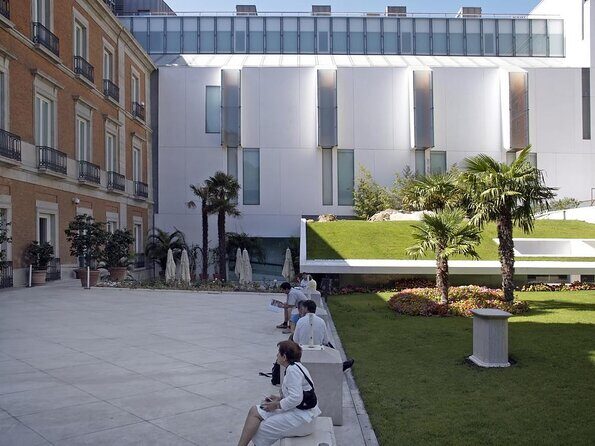
- Small group up to 7 people means more questions and less time waiting in line with a parade.
- Expert guide + radio guides helps you keep up as the art shifts from century to century.
- Ticket included so you can focus on art, not ticket logistics.
- A smart art-history sweep across Italian primitives, Flemish painters, Impressionism, and 20th-century movements.
- Strong attention to major names like Titian, Rubens, Rembrandt, Caravaggio, Picasso, and Dalí.
- Coverage focused on key works (often around 15 to 20) instead of trying to sprint through everything.
Why the Thyssen-Bornemisza works so well in Madrid
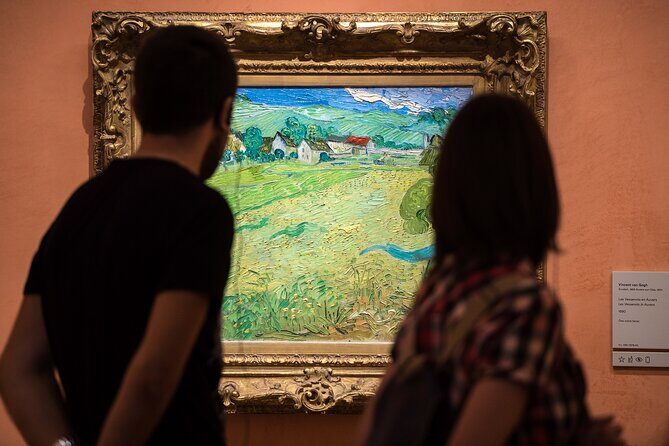
Madrid’s famous for its art triangle, with the Prado and Reina Sofía nearby. The Thyssen-Bornemisza plays a different role in that lineup: it fills in the gaps between eras and countries in a way that helps you understand how painting changed over centuries.
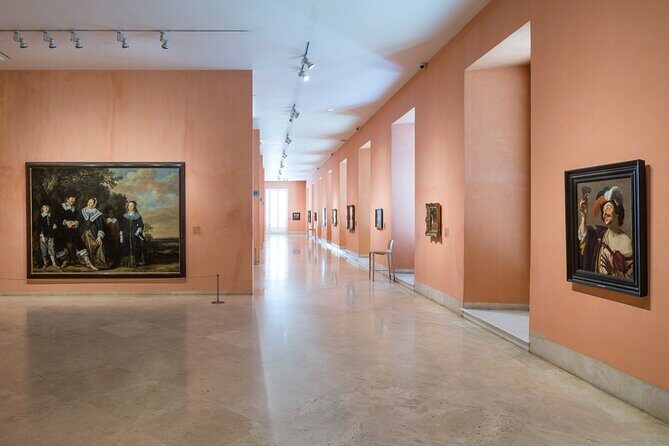
What I like about this museum for first-timers is that it’s not stuck in one style. You can move from early European painting to Renaissance breakthroughs, then jump to the Impressionist world, and finally land in the energy of 20th-century avant-garde art. The collection is also strong in foreign artists who may feel new to you on a Madrid trip, especially the Italian Primitives and Flemish Primitives that don’t always get the same spotlight elsewhere.
And yes, you’ll see the kinds of names that make you stop mid-step: Titian, Rubens, Rembrandt, Caravaggio, Manet, Renoir, Van Gogh, Gauguin, Kandinsky, Hopper, and Picasso. There’s also special Spanish power in the building, with Picasso and Dalí appearing among the highlights.
You can also read our reviews of more guided tours in Madrid



The semi-private format: what 1.5 hours really means
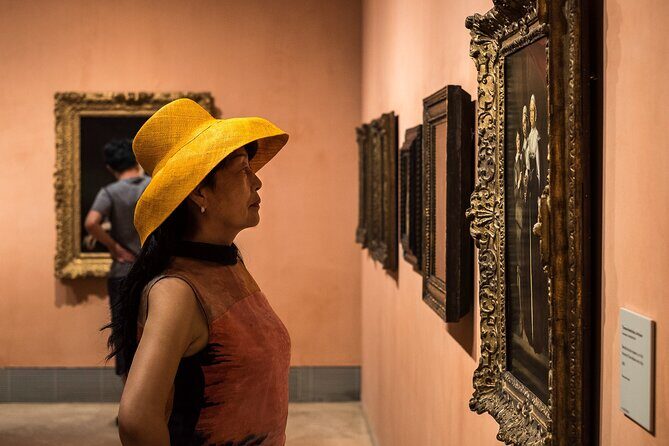
This is a guided tour built for “small group” pacing. With up to 7 travelers, the guide can slow down when people ask questions, and you’re less likely to get separated in a crowd.
Duration is about 1 hour 30 minutes, and that matters. The museum has nearly a thousand works from the 13th to the 20th century. In a time limit, the guide will focus on key paintings and explain the bigger story around them. Based on the way the guides are described, you should expect a tour that highlights roughly 15 to 20 works, with commentary that connects styles and movements from Renaissance right through to modern art.
One practical consequence: if you’re the type who loves reading every label, you’ll feel a little urgency during the tour. The tour is meant to help you pick favorites, not to replace deep time in the museum.
Your guided sweep: 13th-century roots to 20th-century shocks
This tour is built around one stop: the Thyssen-Bornemisza itself. The experience is basically a guided storyline through the collection, so you don’t just see paintings—you learn what they’re doing and why their style matters.
Early schools and the Renaissance foundation
You start with eras that teach you how European painting learned to tell stories on canvas—composition, light, figures, and symbolism. The museum’s mix of Italian and Flemish primitives is the kind of foundation that makes later art feel less random. You’ll get context for how these schools helped build the visual language artists used for centuries.
Then the tour connects forward into Renaissance thinking. This is where the guide’s timeline style is useful. When you hear how the ideas evolve, you start noticing patterns fast—like how perspective, realism, and dramatic emphasis show up differently across periods.
Impressionism and the color shift
Next comes the Impressionist era, with major artists such as Monet, Degas, Van Gogh, and Gauguin. This is a key transition zone in any art museum, because it’s where painting stops aiming for only accuracy and starts chasing mood, light, and instant perception.
In a short guided format, this part is all about recognition. You’ll learn what to look for so you can spot brushwork choices and color decisions without needing a full art degree.
You can also read our reviews of more museum experiences in Madrid






20th-century avant-garde: where everything gets louder
The museum also carries big weight in the 20th century, including movements like Fauvism, Expressionism, Surrealism, Abstraction, and Pop Art. This is often where first-time museum visitors feel either thrilled or confused. A good guide prevents the confusion by giving you the mental framework first.
The tour’s value here is the pace: the guide doesn’t treat modern art like a separate universe. Instead, it’s shown as part of a long chain of changes in subject, technique, and belief. That makes you more likely to enjoy even the paintings you would not pick on your own.
The Spanish anchors: Picasso and Dalí
Having Picasso and Dalí in the same visit is a bonus because they act like anchor points. You get moments that feel iconic and easy to discuss, even if you’re not fluent in art history. The guide can point out how Spain’s modern imagination sits inside the broader European story the museum tells.
Meeting at P.º del Prado, 8: easy start, smooth flow
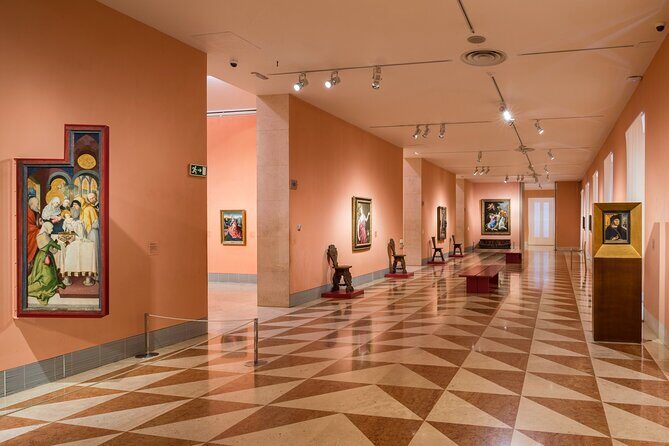
Meet at P.º del Prado, 8, Centro, 28014 Madrid. The location is practical and central, and it’s near public transportation, so you’re not stuck planning a complicated arrival.
The tour ends back at the same meeting point, which is great for an afternoon plan. You can walk on to the rest of the Paseo del Prado area after your visit, instead of dealing with the stress of figuring out how to get across town afterward.
If you’re trying to make the timing work for comfort, there’s one detail worth listening to: one guide experience noted a 4:00 pm slot that felt like having more space inside the museum. If you have flexibility, later tours can sometimes feel calmer—worth considering when you’re sensitive to crowds.
The guide matters: what I’d watch for in real life
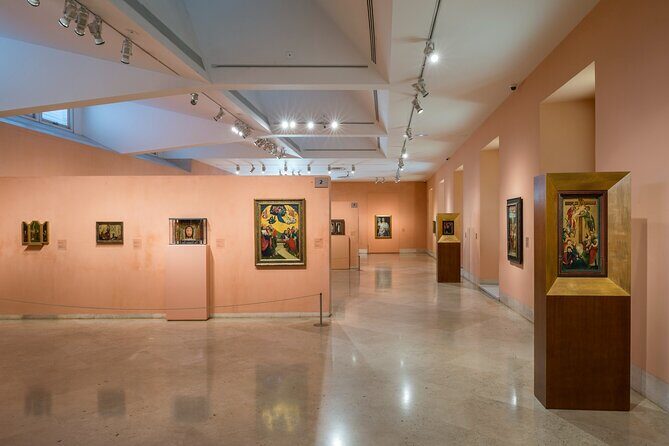
What stands out from the guide feedback is how consistently they try to make art history make sense in plain language. Names that come up often include Miguel, Ana Cristina Carvajal, Ana, Laura, Pablo, and Erea, plus a student-guide example with Myra mentioned as enthusiastic and memorable.
Here’s what you should hope for from any guide you get:
- A clear timeline that helps you connect one room to the next
- Explaining movements, not just listing names
- Good pacing, so you get to actually look at paintings during the talk
There is a small risk. A few comments highlight that some tours can feel like they show too many works in the time you have. If you’re the type who needs longer looking time, that might bother you. The best approach is to treat the tour as a guided map: let it point you to 2 or 3 paintings you want to return to later.
Value check: is $77.08 worth it?
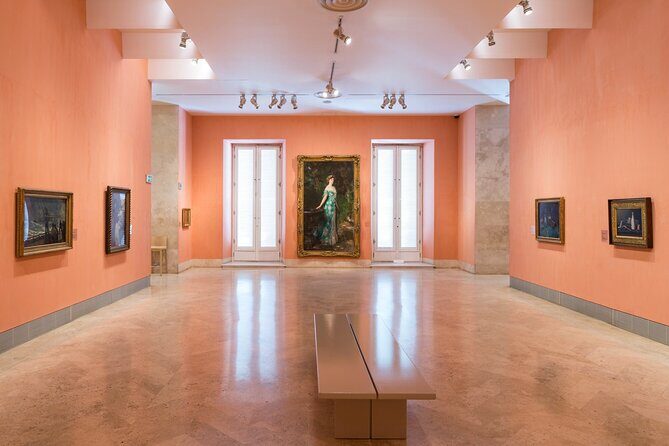
At $77.08 per person, this isn’t a budget throwaway, but it also doesn’t feel inflated for what’s included. You get:
- Museum ticket included
- Expert guide throughout
- High-quality radio guides inside the museum
Here’s the value logic: in a museum this size, the hard part is not entering—it’s knowing where to spend your attention. The guide’s job is to help you see the collection’s structure quickly. Add radio guides, and you can move without straining to hear. That combination saves time and mental energy, which is often what you’re really paying for.
Also, it’s a small-group experience (max 7). That pushes value up, because you’re buying a more conversational pace than a giant group tour.
If you’re trying to decide, I’d weigh one question: Do you want a fast, guided story, or do you want total freedom to wander? If you want the story, the price feels more reasonable. If you want to spend hours on your own, you might save money with self-guided museum time.
Tips to get more out of the tour (without rushing)
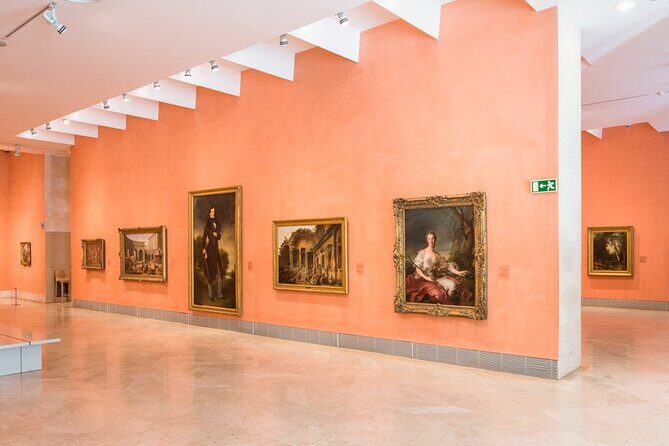
Here are practical moves that help you enjoy a time-boxed visit like this one:
- Pick a goal for your first pass.
Decide in advance what you want to leave with. For example: Impressionism favorites, 20th-century art impressions, or a feel for how Spanish modern art fits into Europe’s changes.
- Don’t try to see every painting.
The tour will likely hit around 15 to 20 key works. That’s plenty to learn the museum’s logic, but it won’t replace slow looking.
- Listen for the movement words.
When the guide connects a painting to a movement like Expressionism or Surrealism, you’ll start spotting the same traits in other works you see later on your own.
- Use the tour to choose what you revisit.
If you love something, remember the visual cues. After the tour, you can return to a couple of sections and spend longer time on what clicked.
- Ask one question, even if it feels awkward.
Small groups make this easier. Questions can shift you from passive viewing to active noticing.
Who should book this Thyssen-Bornemisza tour
This experience fits you best if:
- You want an art museum visit that gives you a timeline instead of just labels.
- You like the idea of seeing a wide range, from Renaissance foundations to modern movements, without getting overwhelmed.
- You prefer small-group pacing and better chances to ask questions.
It may feel less ideal if:
- You’re a serious long-stare museum person who wants to spend half a day inside one wing.
- You get annoyed when a guide moves quickly through many highlights. In that case, be ready to treat this as your orientation stop, not your final destination.
Should You Book This Thyssen-Bornemisza Guided Visit?
Yes, I’d book it if you want the museum’s big story in a manageable amount of time. The combination of ticket included, expert guide, and radio guides is the core value. And because the group stays small (up to 7), you’re more likely to leave with real understanding, not just photos of famous names.
Before you book, ask yourself one thing: do you want a guided path through centuries, or do you want to roam without structure? If you’re unsure, this tour is the safer bet. It helps you come out with context—and then you can decide how you want to spend the rest of your day around the Art Triangle.
FAQ
How long is the guided visit to the Thyssen-Bornemisza Museum?
It runs about 1 hour 30 minutes.
What is the price of the tour?
The price is $77.08 per person.
Is the museum ticket included?
Yes. Your ticket for the Thyssen-Bornemisza Museum is included.
What group size should I expect?
The group is maximum 7 travelers for this semi-private visit.
Are radio guides provided during the museum visit?
Yes. High-quality radio guides are included for use inside the museum.
Who conducts the tour?
An expert guide leads the visit throughout.
Where do we meet for the tour?
The meeting point is P.º del Prado, 8, Centro, 28014 Madrid, Spain.
Is public transportation nearby?
Yes. The meeting point is near public transportation.
Is cancellation free?
Free cancellation is available. You can cancel up to 24 hours in advance for a full refund.
When should I book?
On average, this experience is booked about 31 days in advance.