REVIEW · MADRID
Madrid: Axe Throwing Challenge
Book on GetYourGuide →Operated by Urban Safari Tiro de Hacha · Bookable on GetYourGuide
Axe throwing in Madrid is weirdly addictive. In 55 minutes, you get taught the basics, then you test your aim in a friendly competition with prizes for the top shooters. I like the practice-first format and the focus on clear safety instructions with an instructor who speaks Spanish and English.
One thing to weigh: it’s 18+ only, and you may share a target with up to three other people depending on your booking. If you want a quiet, one-on-one coaching vibe, this setup is more social and competitive than that.
In This Review
- Key things I’d plan around
- Axe throwing in Madrid: what this 55-minute session really feels like
- Getting to Calle Delicias 9 without stress
- Inside the range: technique, safety, and your first 15 minutes
- Challenges and competition: how the format stays fun (and fair)
- Shared targets and the social side: you’ll likely end up chatting
- What to bring (and what will trip you up)
- Price and value: is $24 per person worth it?
- Who should book this axe throwing challenge in Madrid?
- Practical tips before you go
- Should you book this? My honest take
- FAQ
- FAQ
- How long is the Madrid axe throwing challenge?
- How much does it cost?
- Where is the meeting point?
- Do I need to speak Spanish to participate?
- What should I wear or bring?
- Are food and drinks allowed?
- Is it wheelchair accessible and is there an age limit?
Key things I’d plan around

- Safety training first, then 15 minutes of practice so you’re not guessing
- Spanish and English instruction, which matters if your Spanish is rusty
- Challenges before the main competition, so you build confidence fast
- Top prizes for 4 shooters, plus surprise gifts that keep everyone watching
- Shared targets, so expect teamwork energy and friendly banter
- A group photo, which is a nice souvenir after the dust settles
Axe throwing in Madrid: what this 55-minute session really feels like

This is the kind of activity that breaks the usual Madrid rhythm. You’re not just doing sightseeing and moving on. You’re learning a hands-on skill, getting coached on form, and then putting it to the test in a timed set of throws.
The session is built to move. You start with instructions and safety rules, then you get a solid block of practice. Only after that do you face a series of challenges and the real competition. That order is important: it prevents the usual first-throw panic and helps you feel competitive rather than helpless.
Also, the venue is set up for short attention spans in a good way. You get multiple moments to try, adjust, and improve. And because prizes go to the best four shooters, everyone has a reason to pay attention—your target becomes a little mini-stage for the whole group.
You can also read our reviews of more tours and experiences in Madrid.



Getting to Calle Delicias 9 without stress

The meeting point is at Calle Delicias 9. The closest subway stops are Palos de La Frontera and Estación del Arte. Plan to arrive about 10 minutes early. Not because you’ll be rushed—because you’ll settle in, get ready in the right shoes, and start on time.
If you’re building a day in Madrid, this one is easy to schedule. With a 55-minute duration, you can pair it with a meal before or after without losing an entire afternoon. Just don’t schedule it for the very end of your day if you hate being late. City schedules and metro timing can be unpredictable.
Inside the range: technique, safety, and your first 15 minutes

The core of the experience is an experienced trainer walking you through technique and safety. Before anyone throws anything, you’ll get clear guidance on what’s allowed, how to handle the equipment, and how to behave in the throw zone. This matters because axe throwing only works if the rules are simple and everyone follows them.
Then you get a practice window—about 15 minutes—where you can focus on the mechanics. Think of it as your ramp-up time. You’re not judged immediately. You’re learning how to hold, swing, and throw with a steady approach.
Language is also a real practical advantage here. The instructor works in Spanish and English, and that means you can understand the technique without relying on guesswork. If you’ve ever felt lost in group activities because of language barriers, this is one of those spots where it actually makes a difference.
Challenges and competition: how the format stays fun (and fair)
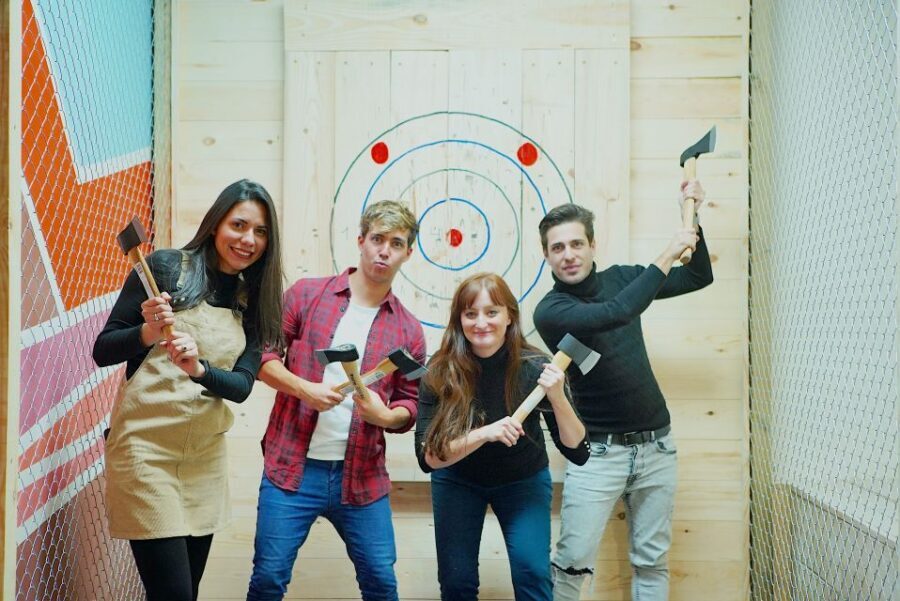
After practice comes a series of challenges. This is where the activity turns from learning into play. The challenges are designed so you can measure improvement while still keeping things friendly. You’ll get multiple rounds, and you’ll have chances to adjust your aim.
Then you move into the main competition. You’re not competing against a massive crowd—this is set up around targets and turns. That’s part of what makes it feel fair. You’re judged on how you throw from your station, not on who’s been practicing for years.
And there’s a reward system that keeps the energy up: surprises and gifts are awarded to the 4 best shooters. That detail makes a difference. It’s not just, win or lose and then everyone leaves. It’s a moment for the whole group to react and cheer.
Shared targets and the social side: you’ll likely end up chatting
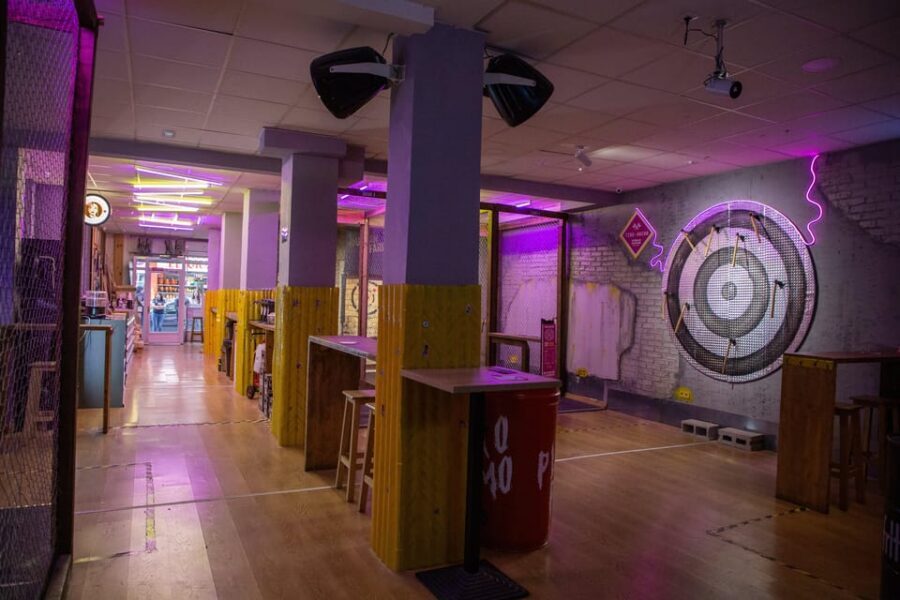
Here’s how it works if you book a spot for a shared target. A target holds up to 4 people, so if you booked “in the shared option,” you’ll be matched with three others. That’s not a downside by default—it’s part of the fun for many groups.
The activity is designed to get people laughing quickly. You’re all doing something new at the same time, so the conversation topics start themselves: What grip are you trying? Are you hitting high or low? Who’s already getting the hang of it?
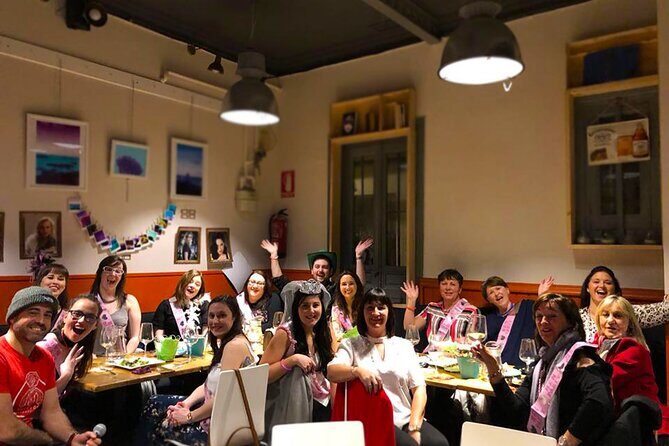
Another perk: you get a group picture. Even if you don’t care about photos while you’re busy throwing, this is the kind of souvenir that makes the memory stick. Axe throwing is one of those Madrid experiences people remember because it’s so unusual—and a picture helps.






What to bring (and what will trip you up)
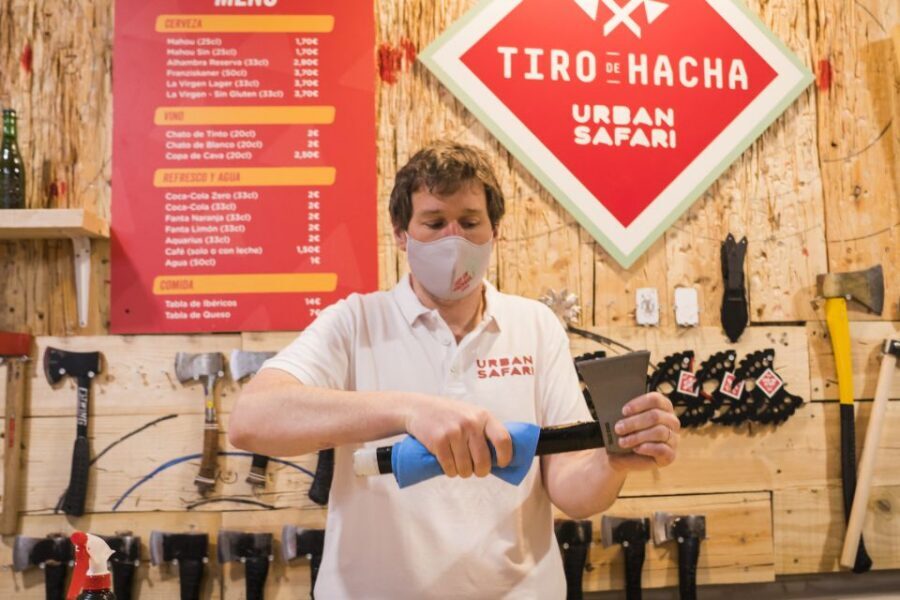
This is one of those activities where preparation is simple. You just need to follow a few rules.
Bring:
- Closed-toe shoes. Plan for grip and stability.
- If you want water, you’ll be able to bring it, but it must follow the rules below.
Do not bring:
- Food and drinks are not allowed (except water in a transparent bottle).
- No intoxication.
- No alcohol or drugs.
Also note: food and drinks can be purchased, but that doesn’t mean you can bring in your own snacks. If you’re coming straight from sightseeing, it’s smart to eat beforehand, then treat this as an active, focused block of time.
One more rule that’s worth respecting: the company can refuse entry. That’s common for safety-focused venues, especially where sharp equipment is involved. The best move is to show up clear-headed and ready.
Price and value: is $24 per person worth it?
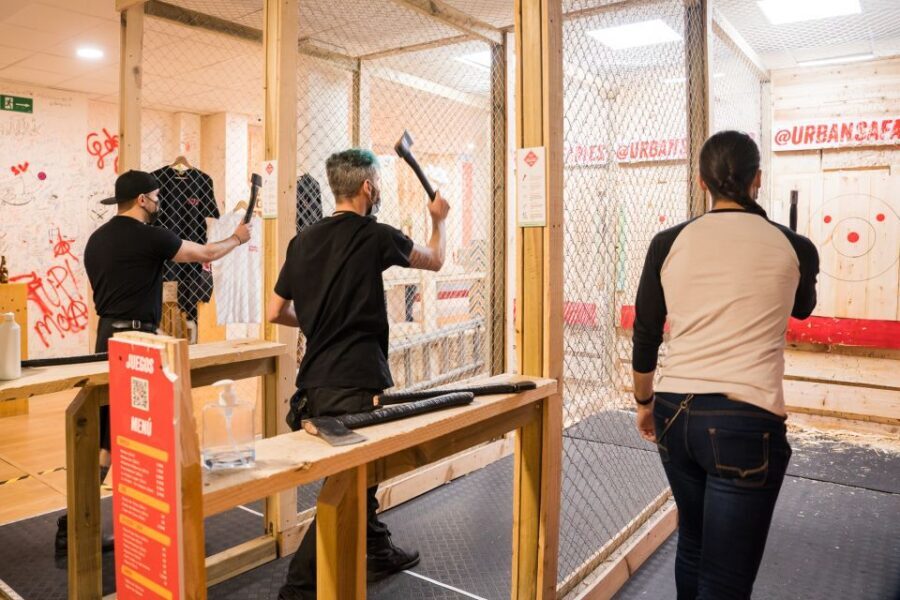
At $24 per person for a 55-minute session, the value comes from what’s included—not just the sport. You’re getting:
- instructor-led technique and safety instructions
- practice time
- challenges
- the competition rounds
- prizes for top shooters
- a group photo
That’s a lot of structure for one fixed price. You’re not paying to wander around and figure things out alone. You’re paying for guided time plus a setup that keeps the pacing moving.
If you compare it to other “learn something and try it once” activities, the big difference here is that you’re actively throwing in multiple phases. You get the teaching moment and then the doing moment, back to back.
The only reason it might not feel like great value is if you’re the type who needs long, private coaching or you hate sharing space with others. But if you’re okay with a shared target environment, this price hits a sweet spot.
Who should book this axe throwing challenge in Madrid?
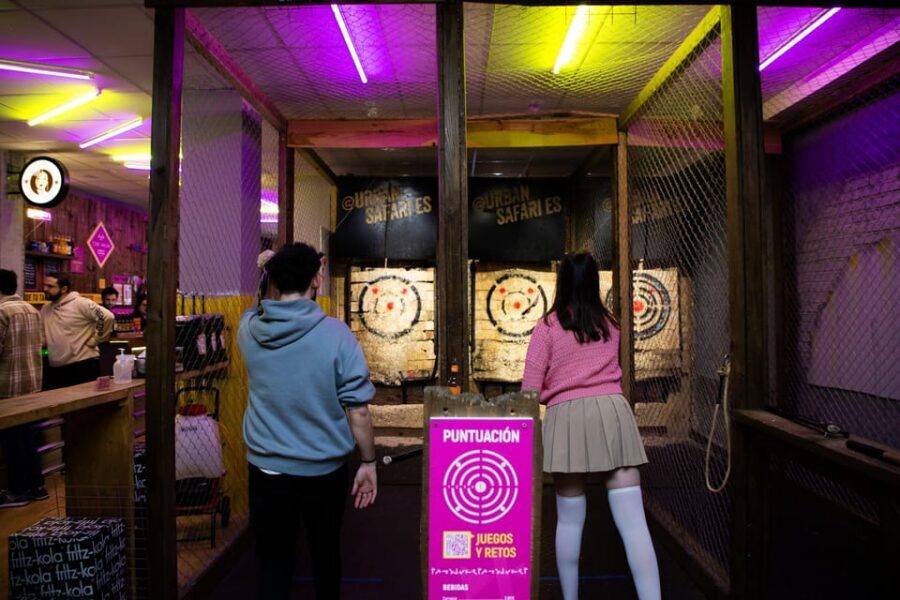
This works best for:
- groups who want an activity that’s more interactive than most sightseeing
- people celebrating something (birthdays are a perfect match for this format)
- anyone who wants a short, memorable Madrid experience that doesn’t require days of planning
- visitors who need English support, since instruction is offered in both Spanish and English
It’s less ideal if:
- you’re under 18 (this activity is for 18+ only)
- you want a silent, contemplative activity
- you don’t like rules and safety briefings (you’ll need to follow them carefully)
- you plan to bring snacks or drinks with you (that’s restricted)
Practical tips before you go
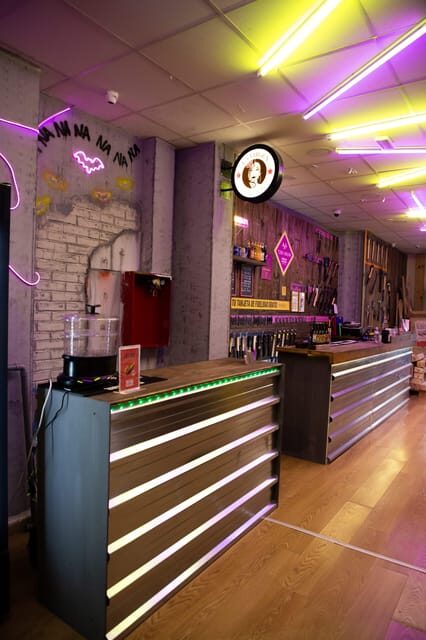
Axe throwing is simple, but it’s physical and a bit technical. A few practical habits will make your session smoother:
- Wear comfortable closed-toe shoes with good footing. You’ll be turning and bracing your stance.
- Arrive on time. Getting there 10 minutes early helps you avoid rushing and keeps the safety flow calm.
- If you’re bringing water, use a transparent bottle since that’s allowed.
- Think of it as learning plus competition, not just entertainment. The practice time is your chance to get traction—use it.
Also, if you’re sensitive to sharing time with strangers, remember you might be grouped into a shared target (up to 4 people). The vibe usually turns friendly because you’re all doing the same beginner-to-competition arc.
Should you book this? My honest take
If you want a Madrid activity that feels different from museums and plazas, book it. The structure is the selling point: instructions, practice, challenges, then competition, all within a tight 55-minute window. The added details—Spanish and English instruction, prizes for the top four shooters, and a group photo—make it more than a one-off gimmick.
Skip it if you’re looking for a family activity (it’s 18+ only) or if you’re hoping for a quiet, private sports lesson. Otherwise, this is a fun, straightforward way to spend an hour in Madrid while doing something you can’t really do on a normal walking day.
FAQ
FAQ
How long is the Madrid axe throwing challenge?
It lasts 55 minutes, including instructions, practice time, and the challenges/competition.
How much does it cost?
The price is $24 per person.
Where is the meeting point?
Meeting point is at Calle Delicias 9. The closest subway stations are Palos de La Frontera and Estación del Arte.
Do I need to speak Spanish to participate?
No. The instructor speaks Spanish and English.
What should I wear or bring?
You should wear closed-toe shoes. If you bring water, it must be in a transparent bottle.
Are food and drinks allowed?
Food and drinks are not allowed. Water in a transparent bottle is the only exception noted.
Is it wheelchair accessible and is there an age limit?
It’s listed as wheelchair accessible. It’s for participants 18 years and older (not suitable for children under 18).