REVIEW · MADRID
Madrid: City Highlights Private Bike Tour
Book on GetYourGuide →Operated by Bike Tours Madrid · Bookable on GetYourGuide
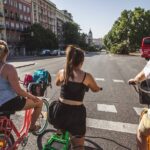
Three hours on two wheels works in Madrid. It is a private bike tour with a local expert who fills in context as you move through big sights and quieter streets, plus regular stops for photos and explanations. You get that rare combo: you see a lot, but you also understand what you are looking at.
I especially like the big-picture overview you get in a short time. From Chueca and Malasaña’s street life to the monumental center, the route helps you map Madrid fast.
One possible drawback: it is still a 3-hour ride. This tour is not suitable for children under 13, pregnant women, wheelchair users, or people over 80, and you’ll want to be comfortable pedaling for most of the time.
In This Review
- Key highlights worth planning around
- Starting at Puerta del Sol: the easy meet-up and a smooth start
- Chueca and Malasaña: modern Madrid on real streets
- Parque del Oeste viewpoints: where your photos get easy
- Debod: the Temple’s Egypt connection (and why it lands well on a bike)
- Royal Palace and Plaza Mayor: major landmarks without the slog
- The old market stop: a smart way to plan your next meal
- Paseo del Prado, Neptune, Prado Museum area, and Cibeles: the classic Madrid block
- Retiro Park finish: the green pause that makes the day feel complete
- Price and value: why $53 for 3 hours can make sense
- Practical stuff that will save you stress
- Should you book this Madrid bike tour?
- FAQ
- How long is the Madrid City Highlights Private Bike Tour?
- Where is the meeting point?
- What is included with the tour?
- What languages do the guides speak?
- Is this tour private?
- Are helmets provided?
- What should I bring with me?
- Is the tour affected by rain?
- What is the cancellation policy?
- Who should not book this tour?
Key highlights worth planning around
- Private guide, multiple language options (English, French, Dutch, Spanish)
- Puerta del Sol start near Sol Metro at the Trixi bike shop (easy to reach)
- Neighborhood time in Chueca and Malasaña for modern shopping and the feel of La Movida de Madrid
- Temple of Debod stop with an Egypt story plus major photo views from the area
- Classic Madrid monuments and plazas including the Royal Palace and Plaza Mayor
- Paseo del Prado and Retiro Park for the long, scenic moments you cannot get from the center alone
Starting at Puerta del Sol: the easy meet-up and a smooth start
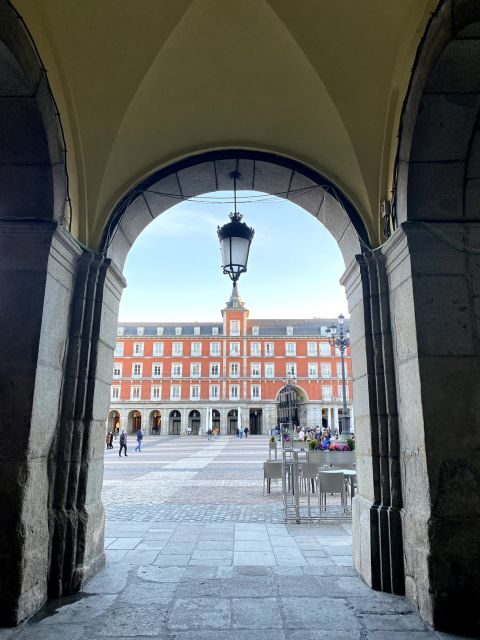
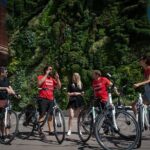
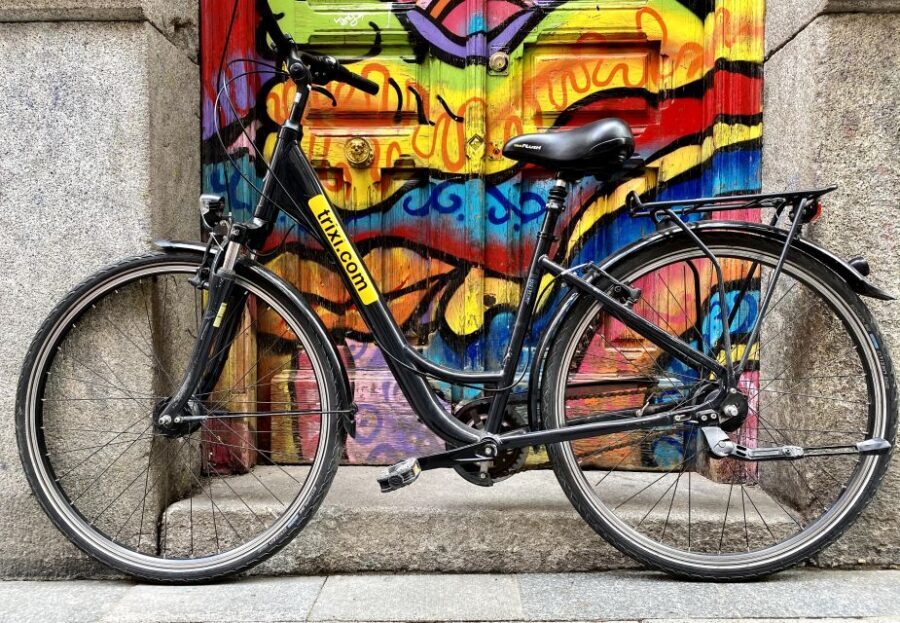
The tour kicks off at the Trixi bike shop in central Madrid, on C/ De los Jardines 12, close to Puerta del Sol and the Sol Metro Station. Guides wear black or yellow shirts, and they recommend you arrive about 15 minutes early so you can get fitted, grab water, and settle in before the route starts.
In practice, this timing matters. If you show up late, you’ll spend the first stretch rushing instead of enjoying the handoff. And the guide’s early briefing helps set expectations for how the ride will feel, where you’ll pause for photos, and how they’ll handle questions.
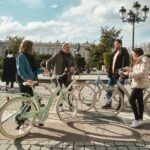
You’ll get a bike and water as part of the tour, and a helmet is available (it’s optional). One detail I really appreciate for city cycling is that the equipment is reported as being in very good condition, including options like e-bikes in some cases. If you prefer an easier ride through parks and long stretches, that can be a big factor in how much you enjoy the full 3 hours.
You can also read our reviews of more cycling tours in Madrid

Chueca and Malasaña: modern Madrid on real streets
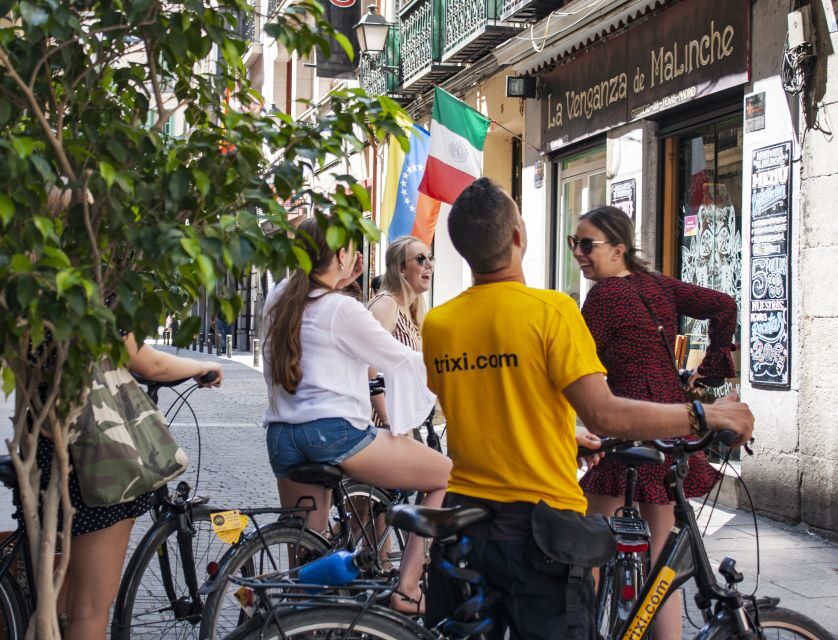
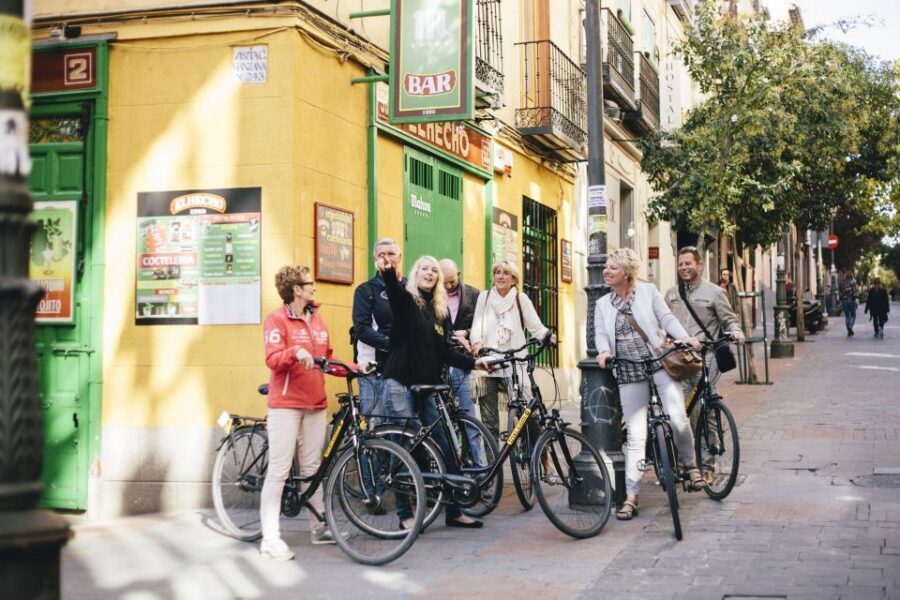
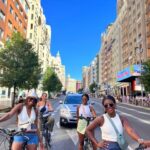
The heart of the early ride is where Madrid shows its newer face: Chueca and Malasaña. This is not just a quick drive past landmark buildings. You actually ride through the kinds of streets where people shop, linger, and eat, with stops timed for commentary and pictures.
Chueca brings a social, design-forward vibe. The route is set up so you can take in modern shopping and dining areas without feeling trapped in a mass group. If you’re the type who likes to spot storefronts, cafes, and street scenes you can revisit later, this section gives you good “what to look for tomorrow” ideas.
Then Malasaña shifts into something more bohemian and music-adjacent, connected to La Movida de Madrid. The tour’s talking points here are meant to give you a feel for why these neighborhoods carry their reputations, not just the name on a map.
A nice sign you’ll enjoy this section: guides like Matilda and Álvaro are specifically noted for giving useful context and answering questions along the way. That means your stops are not just pauses to catch your breath. They are chances to connect what you see with how Madrid became what it is.
Parque del Oeste viewpoints: where your photos get easy
After the neighborhood riding, the tour heads toward higher ground at El Parque del Oeste, where you get splendid views. This is one of those stretches where bikes help: you move efficiently to the lookout, then you can actually take your time with photos.
Viewpoints are worth planning for, even if you think you’ll skip them. From these kinds of spots, Madrid reads differently. You can see how the city spreads, how neighborhoods layer into the center, and how parks act like breathing space inside a dense area.
The benefit here is practical, not just scenic. If it’s your first day, these views help you understand the city’s structure, so later you can navigate on your own with less guesswork.
Debod: the Temple’s Egypt connection (and why it lands well on a bike)
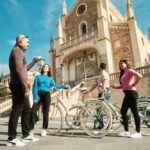
One of the most interesting stops on this route is the Temple of Debod. It’s an Egyptian/Roman temple that was gifted by the government of Egypt, and the guide explains the story behind that present. If you only see the temple as a photo backdrop, you’ll miss the point. The bike tour format gives you enough time to hear the meaning and then look at the site with fresh context.
This stop also fits the flow of the day. You’ve already taken in neighborhood energy and a major viewpoint, so when you arrive at Debod, it feels like a shift into something calmer and more historical. That change of pace is part of what makes the ride enjoyable instead of exhausting.
And because you’re on a bike, you are not confined to one “station” area. You experience the surrounding street rhythm as well as the temple itself, which helps you remember where it sits in Madrid rather than treating it like a standalone attraction.
Royal Palace and Plaza Mayor: major landmarks without the slog
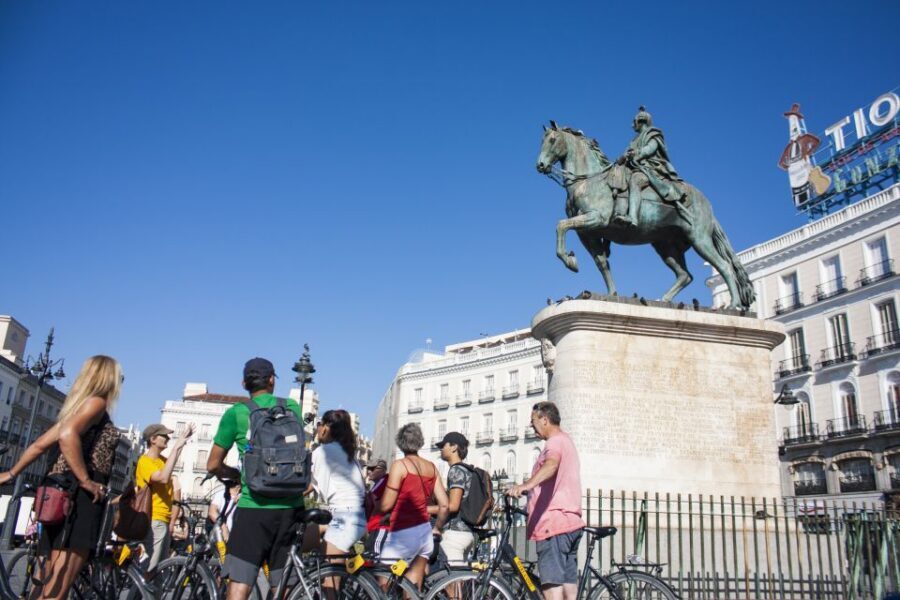
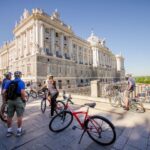
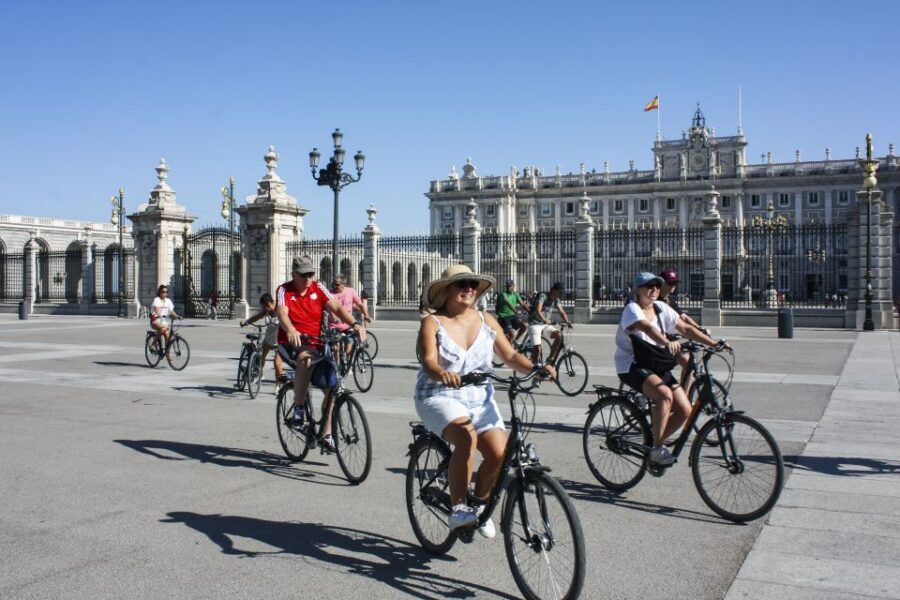
No matter what kind of trip you’re taking, Madrid’s center has a way of pulling you toward the big names. On this tour, you pass by the Royal Palace and Plaza Mayor, with stops designed to let you take in the scale and architecture.
The advantage of seeing these landmarks from a bike route is timing and energy. You’re not spending your day inching from one place to the next on foot. Instead, the guide keeps the movement efficient, then slows down when it matters for commentary and photos.
Plaza Mayor is one of those squares that looks great in every light, but it also helps if you understand what you are looking at. The guide’s cultural storytelling helps turn the moment from a snapshot into something more memorable. You’ll also pick up suggestions for what to eat next, which leads nicely into the next part of the route.
You can also read our reviews of more city tours in Madrid



The old market stop: a smart way to plan your next meal
Midway through the day, you stop in an old market and get recommendations on what to eat. This matters more than people expect. Madrid is full of places that look tempting, but without a hint of what locals actually choose, you can end up with a meal that is just fine instead of memorable.
A guided food suggestion is most valuable when it comes from someone who has watched visitors navigate the city. You get a short list of what to try, and often you’ll also learn what makes each option a sensible choice—quick, filling, easy to share, or especially local.
It’s also a helpful psychological shift: after monuments and parks, you get a concrete action item for later. That keeps the tour from feeling like only sightseeing. It becomes part of your trip plan.
Paseo del Prado, Neptune, Prado Museum area, and Cibeles: the classic Madrid block
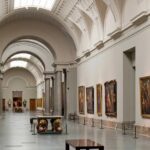
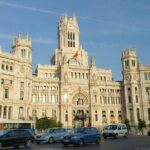
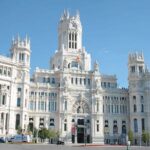
This is where the route leans into the grand boulevard feeling. You ride along Paseo del Prado, pass by the Fountain of Neptune, and continue through the area around the Prado Museum. You also get the impressive view of Madrid’s City Hall, known as el Palacio de Cibeles.
This whole stretch works on a bike for two reasons. First, it’s efficient. Long, iconic streets and big buildings are easier to absorb when you can cover more ground without breaking your legs. Second, bike speed helps you see relationships between places—how the fountains line up with the boulevard, where the museum area sits relative to the rest of the city, and how Cibeles functions as a visual anchor.
The Neptune fountain and Cibeles are also great for photo moments because they give you both sculptural detail and wide architectural angles. If you like photographing architecture, you’ll appreciate having time built in for stops.
One practical note: this area can involve traffic flow and busy streets depending on time of day. That’s where the guide’s pacing and “safe, calm routing” approach makes a difference. People have praised guides like Matilda for steering the group confidently while still allowing questions.
Retiro Park finish: the green pause that makes the day feel complete
The day doesn’t end in the hardest place to ride. It finishes with Retiro Park, or Parque del Buen Retiro, after the tour passes through the central highlights.
Retiro Park is a different kind of Madrid experience: less “look at the building,” more “breathe and reset.” After a few dense sightseeing stops, it’s a gift to have greenery and space, plus the chance to slow down. The bike lets you cover the park’s key zones without turning the last part of the tour into a crawl.
This is also where the tour format shines. You get narration earlier while the city is still “on.” Then you end with a scenic stretch where you can digest what you saw. If you’re the kind of person who needs a mental timeout during trips, this finish helps you land the day feeling satisfied rather than overstimulated.
Price and value: why $53 for 3 hours can make sense
At $53 per person for a 3-hour private ride, the value comes from what’s included, not just the headline cost. You get:
- a bike
- a professional guide who speaks English, French, Dutch, or Spanish
- water
- a helmet (optional)
That’s a pretty strong bundle for central Madrid, especially when the alternative is trying to coordinate bike rentals, figuring out routes on your own, and losing the guided context.
The “private” part is important too. A one-on-one or small-group format (groups in the feedback range from about 5 friends to around 12 people) typically means you can ask questions without feeling like you’re interrupting. Guides such as Cris and Matilda have been highlighted for delivering an overview plus extra tips for the rest of your stay.
Also, a 3-hour bike tour can be one of the best ways to manage energy. It is structured enough to avoid decision fatigue, but it still gives you enough variety to feel like you got your money’s worth on day one.
Practical stuff that will save you stress
A few details can make the difference between a great ride and an annoying one.
Bring your passport or ID card. Wear clothing that lets you pedal comfortably, and note that bare feet are not allowed. Plan for rain or shine. The tour can be canceled due to heavy rain, so it’s smart to check conditions the day you go and keep your expectations flexible.
Finally, think about timing. This tour starts in the Sol/Puerta del Sol area, so it’s easiest if you’re staying nearby or you don’t mind a short hop by Metro. The route is designed for a smooth flow across neighborhoods and landmarks, so showing up on time helps you get the full experience.
Should you book this Madrid bike tour?
Book it if you want a smart first pass at Madrid that mixes modern neighborhoods (Chueca and Malasaña) with major landmarks (Royal Palace, Plaza Mayor) and high-value stops (Temple of Debod, Prado area, Cibeles, and Retiro Park). It’s also a good pick if you like asking questions and getting practical ideas for what to do next, not just hearing facts while you pedal by.
Skip it if you cannot comfortably ride for about 3 hours, or if it’s not a good fit for your situation (no children under 13, no wheelchair use, no pregnancy suitability, and no over-80 participants based on the tour rules). Also, if you’re expecting a leisurely stroll vibe, this is still a bike tour with movement most of the way.
If you’re deciding between DIY sightseeing and having a guide connect the dots, this one is hard to beat for value. You get the route, the context, and a clean mental map of Madrid in one go.
FAQ
How long is the Madrid City Highlights Private Bike Tour?
The tour lasts 3 hours.
Where is the meeting point?
Meet at the Trixi bike shop at C/ De los Jardines 12, Madrid, near Puerta del Sol and Sol Metro Station.
What is included with the tour?
The price includes a bike, a professional guide (speaking English, French, Dutch, or Spanish), water, and an optional helmet.
What languages do the guides speak?
Guides speak English, French, Dutch, or Spanish.
Is this tour private?
Yes, it’s a private group tour.
Are helmets provided?
A helmet is provided as an option.
What should I bring with me?
Bring your passport or ID card.
Is the tour affected by rain?
The tour takes place rain or shine, but it may be canceled due to heavy rain.
What is the cancellation policy?
You can cancel up to 24 hours in advance for a full refund.
Who should not book this tour?
It’s not suitable for children under 13, pregnant women, wheelchair users, and people over 80.