REVIEW · MADRID
Madrid Highlights: Tuk-Tuk Tour w/pick up (2 hours)
Book on GetYourGuide →Operated by GiraMad · Bookable on GetYourGuide
Two hours, Madrid in motion. This electric tuk-tuk route is built for seeing a lot of the city fast, with short scenic drives and smart photo breaks. You’ll roll past major landmarks like Puerta de Alcalá, Cibeles Fountain, and the area around Santiago Bernabéu, plus historic neighborhoods like La Latina and Las Letras.
What I like most is the pace: you get the big-picture overview without committing to long museum lines. I also like that it’s private (up to 4 people) with a multilingual guide, so explanations can match your language and your questions. One thing to consider: with so many stops packed into 2 hours, most monuments are viewed from the road or for brief photo moments, not long on-site visits.
In This Review
- Key Highlights Worth Getting Excited About
- Electric Tuk-Tuk Pace: How the 2-Hour Route Feels
- Where You Start and Finish: Plaza de España to Plaza de Santa Ana
- Plaza de España, Temple of Debod, and Early Views You’ll Remember
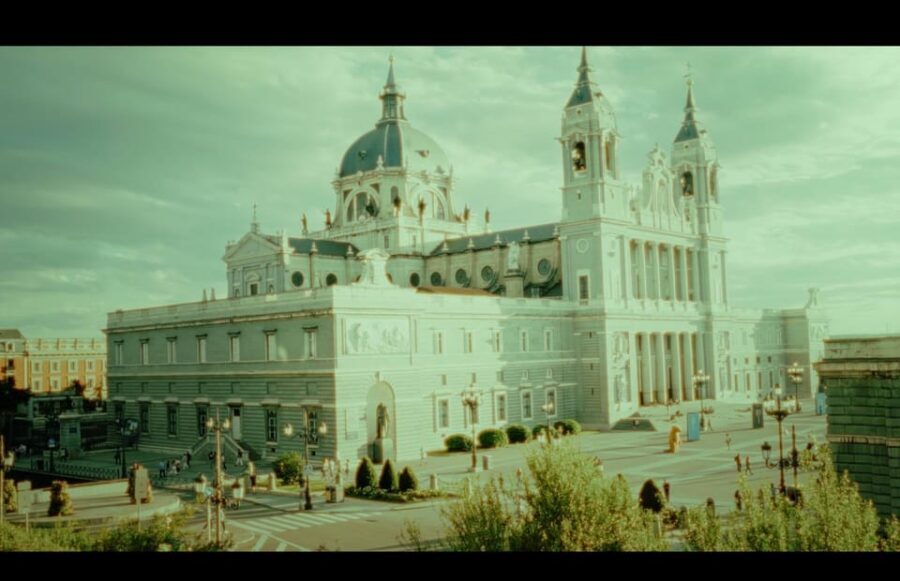
- Almudena Cathedral and the Royal Axis: Seeing Madrid’s Statement Buildings
- Plaza de la Villa, Market of San Miguel, and Arco de Cuchilleros
- La Latina and San Francisco el Grande: When the Tour Gives You More Than Photos
- Classical Literature Stops Near Parliament and Old Streets
- Botanical Garden, Prado Area, and Jerónimos: Big Art Energy on a Fast Schedule
- Alcala Gate, Las Ventas, Salamanca, and Bernabéu: Madrid’s Modern Face
- Cibeles Fountain to Las Letras: Finishing in the Classic Photo-and-Story Zone
- The Guide Makes It Worth It: Multilingual Explanations and a Real Personality
- Price and Value for Up to 4 People
- Who This Tour Suits (and Who Should Skip It)
- Should You Book This Madrid Tuk-Tuk Highlight Tour?
- FAQ
- How long is the Madrid Highlights electric tuk-tuk tour?
- Where does the tour meet, and where does it end?
- What’s the price, and is it private?
- Is an entrance ticket included for monuments?
- What languages are available for the live guide?
- Does the tour run in rain?
- Is the tour wheelchair accessible?
Key Highlights Worth Getting Excited About
- Electric tuk-tuk comfort: easy rolling ride with a guide who narrates as you go
- Icon loop: Puerta de Alcalá, Cibeles Fountain, Las Ventas, and Bernabéu all show up on the route
- Historic-to-modern mix: from Plaza de España and royal sights to the Bernabéu area
- Quick stops with purpose: photo breaks at high-impact viewpoints, plus time for select entries
- Multilingual guide (English/Spanish/Portuguese/Italian): useful if you want real context, not just names
Electric Tuk-Tuk Pace: How the 2-Hour Route Feels
A tuk-tuk tour can be either a “see everything, learn nothing” sprint or a clean introduction. This one leans toward the second option. The ride is designed around short segments and timed stops, so you don’t spend your whole time walking from place to place. That matters in Madrid, where neighborhoods feel close on a map but take time in real life.
The 2-hour format also changes how you should plan your expectations. You’re not going to fully tour every building. You’re going to get oriented: where the big sights sit, how the districts connect, and what’s worth returning to later for a deeper visit.
You’ll also notice the tour is comfortable with weather swings. It’s not suspended due to rain, and blankets are provided for cold days. That’s a practical win if you’re traveling in shoulder season or you’re trying to avoid wasting your day waiting for better weather.
You can also read our reviews of more tours and experiences in Madrid



Where You Start and Finish: Plaza de España to Plaza de Santa Ana
The tour starts at the door of Hotel Barceló Torre de Madrid, in front of Plaza de España and near the metro station with the same name. This is a good starting point because it puts you near major connections and right in the thick of central Madrid. You don’t need a complicated transit plan to meet the guide.
It ends around Plaza de Santa Ana (finish at Pl. de Sta. Ana, 14). That’s a nice way to land, because the city’s central nightlife and restaurant areas are right there. Even if you’re not planning a late night, it’s a smart location to continue wandering on foot afterward.
From a logistics angle, this matters: you don’t just “return to where you began.” You finish in a different lively pocket, which makes the whole day feel more efficient.
Plaza de España, Temple of Debod, and Early Views You’ll Remember
Right away, you’re pointed at the classic Madrid baseline: open squares, royal connections, and viewpoints that help you understand the geography. The first stops include Plaza de España and Temple of Debod.
At Plaza de España, you’ll get scenic views while you’re still fresh and before the route piles on the landmarks. Temple of Debod is a unique early stop because it’s not just another church façade. It gives you a sense that Madrid isn’t only about royal palaces and grand boulevards—it also hosts historically significant monuments that feel like a cultural plot twist.
There’s also at least one photo stop early in the loop. Think of these as anchor moments. You’ll come back later and remember the skyline direction and the road layout, which makes it easier to self-explore afterward.
Potential drawback here: the stop-and-go style means you’ll want to have your phone/camera ready. If you’re fumbling with settings while the tuk-tuk is waiting, you’ll feel rushed.
Almudena Cathedral and the Royal Axis: Seeing Madrid’s Statement Buildings
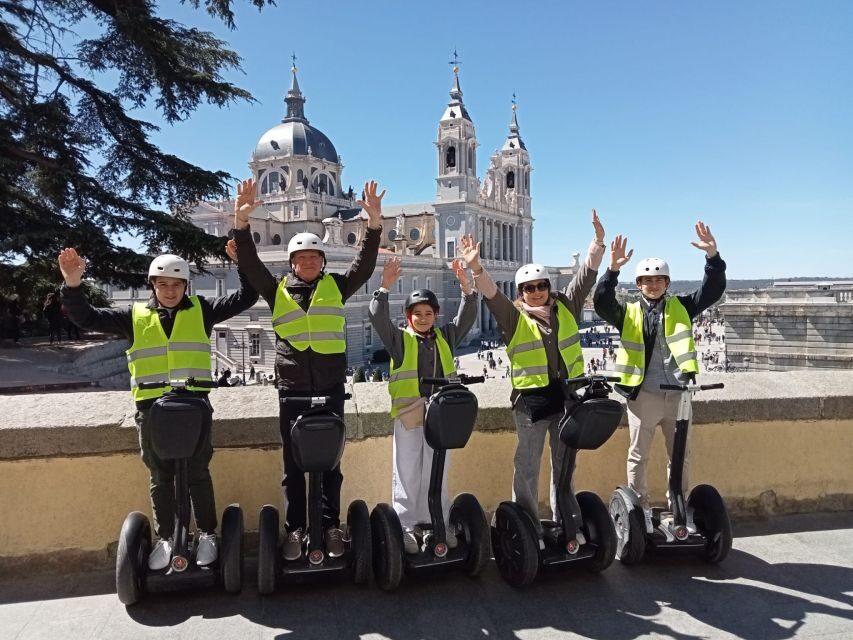
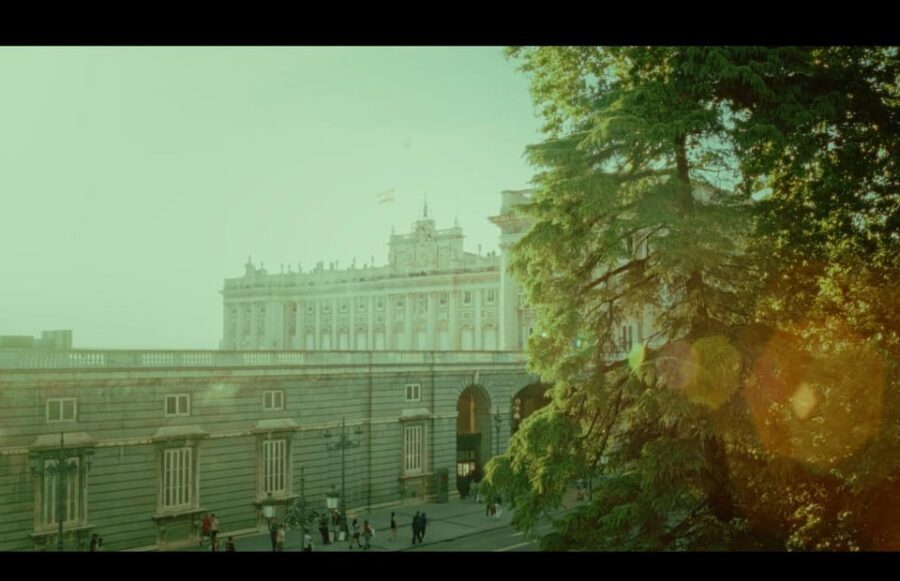
Next you move into Madrid’s grand visual corridor. The tour includes Argüelles, then Almudena Cathedral, then a photo moment connected to Palacio Madrid (the description references the palace area).
This section is where the city’s identity becomes obvious. Almudena Cathedral is one of those landmarks people recognize immediately from photos. Seeing it as part of the drive helps you understand why it sits where it does—how the surrounding roads funnel your view toward it.
You’ll also get a Teatro Real stop (Royal Theatre). Even if you’re not catching a show, it’s a landmark that signals the cultural weight of the center. From a first-time perspective, these are the buildings you want to “place” in your mental map.
One practical tip for this part: wear comfortable shoes, but also accept that you’ll spend more time looking than walking. If you enjoy architectural backdrops and street-level orientation, this is the right rhythm.
Plaza de la Villa, Market of San Miguel, and Arco de Cuchilleros
As the tour reaches the historic core, you’ll pass by Plaza de la Villa, the Mercado de San Miguel, and Arco de Cuchilleros. These stops are perfect for people who love the texture of old Madrid—markets, narrow streets nearby, and the sense of daily life happening around the monuments.
Here’s the useful part: the tour helps you connect these places to the bigger sights. After this, if you decide to return later, you won’t feel like you’re wandering randomly. You’ll know what the market area “leans toward” and how it fits into the surrounding blocks.
For Mercado de San Miguel specifically, the description frames it as a sightseeing stop. So plan for viewing rather than a full meal. Entrance fees and meals aren’t included, so if you want to eat, you can add that later when it suits your schedule and appetite.




La Latina and San Francisco el Grande: When the Tour Gives You More Than Photos
This is one of the more meaningful districts on the route: La Latina. It’s a neighborhood cue that the tour isn’t stuck only in the polished museum-and-palace zone.
Then you reach Royal Basilica of Saint Francis the Great (San Francisco el Grande). The tour description calls out time for entry at select places, and this basilica is specifically mentioned. It’s also described as having a massive dome (the third biggest of a Catholic church dome in the world), which is a great reason to step inside if time allows.
Even if you don’t know the basilica by name, the dome detail gives you a clear expectation: you’ll want to look up and take your time with the interior perspective. A short stop can still be memorable if you’re intentional—stand where you can actually see the height and curvature.
Right after that, there’s a brief Puerta de Toledo photo stop (the route description notes it as essentially 0 minutes). That’s a reminder of the tradeoff: some iconic structures are included as quick viewpoint moments. If you’re the type who wants long, slow photo sessions, you may want to come back later.
Classical Literature Stops Near Parliament and Old Streets
A cool stretch follows that feels distinctly Madrid: Casa de Cervantes and Casa Museo Lope de Vega, then Congress of Deputies, and Atocha Railway Station.
This part works because it adds a different layer. The tour isn’t only about royal power and big squares. You get cultural references (Cervantes and Lope de Vega) and then the governance center by way of the Congress area. Atocha brings in the everyday Madrid beat—travel, movement, and the city’s “working” rhythm.
Because these are mostly sightseeing-from-the-route moments, you shouldn’t expect detailed interior tours here. But the payoff is context. After seeing them on the route, you’ll recognize the city’s political and literary landmarks more easily when you walk later.
One drawback to keep in mind: stations and political buildings can feel less photogenic from the road if you’re trying to frame a perfect shot. Be ready for the fact that some landmarks are included for location awareness more than Instagram-level close-ups.
Botanical Garden, Prado Area, and Jerónimos: Big Art Energy on a Fast Schedule
Next comes a strong cultural sweep: Royal Botanical Garden, Museo del Prado, and Jerónimos. This section is where the tour gives you major-name Madrid territory without asking you to commit to a full museum day.
Why that’s valuable: if you haven’t visited Madrid before, it helps you understand how the city organizes art, gardens, and monumental architecture into walkable clusters. Even if you only glance at the exteriors and drive-by views, you’ll learn where future priorities belong.
If you do have a longer trip ahead, you can use this tour as your planning shortcut. You’ll likely decide whether the Prado is a must-return and which direction you want to approach it from. Entrance fees aren’t included, so this is more about placement than ticketed time.
The route continues toward Retiro Neighborhood, adding that classic “green-and-grand” feel that Madrid is known for. Again, the focus stays on orientation: you’ll leave understanding why the Retiro area feels different than the central historic blocks.
Alcala Gate, Las Ventas, Salamanca, and Bernabéu: Madrid’s Modern Face
Now the tour turns toward wide avenues and modern icons. You pass Alcalá Gate, then Las Ventas (photo stop), then Salamanca, and finally Santiago Bernabéu Stadium.
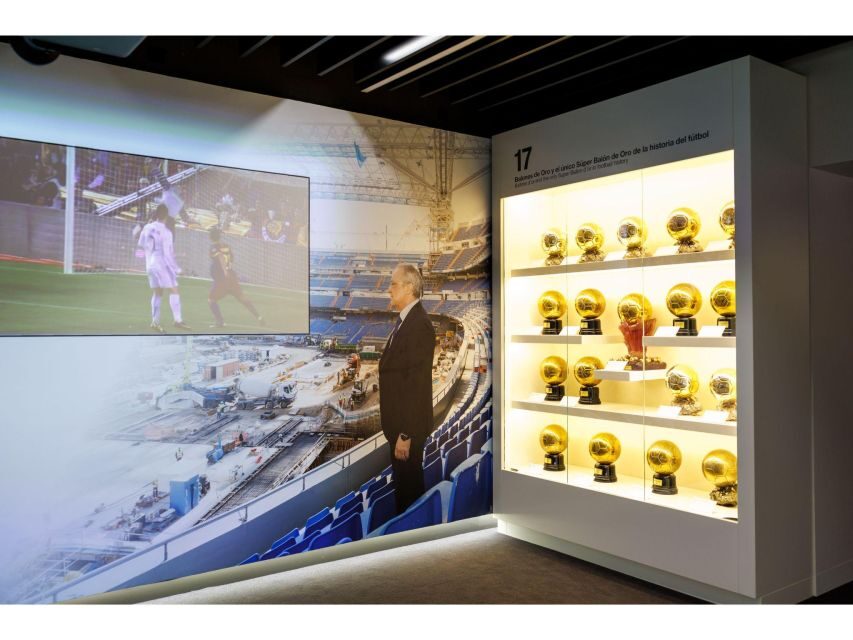
This is a smart inclusion if you want one tour that covers more than postcard Madrid. Las Ventas is a landmark with a strong visual identity, and the Bernabéu stadium brings the story into sports and contemporary Madrid. Salamanca, meanwhile, offers a different vibe—more upscale streets and a more polished feel than some of the older quarters.
Photo stops here are quick, so plan to shoot from the best angle available at the roadside. If you’re a big soccer fan, you’ll probably want to come back later for a longer look, especially if you want stadium access. But as a visual introduction, it works.
In this part, the tuk-tuk’s value becomes clear: you get to cover a lot of ground without exhausting walking. It’s the kind of ride that makes you feel like you’re getting a citywide preview rather than just a “small center” loop.
Cibeles Fountain to Las Letras: Finishing in the Classic Photo-and-Story Zone
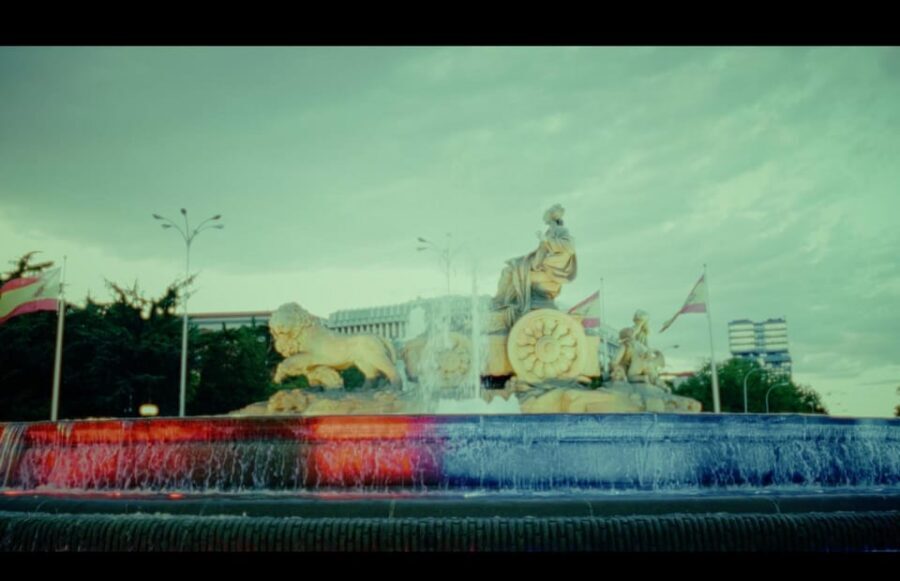
After Bernabéu, the tour returns toward central icons: Cibeles Fountain, then Las Letras Quarter, and finally Plaza de Santa Ana.
Cibeles is one of those landmarks that instantly anchors your mental map of Madrid. Even from a scenic drive stop, it’s easy to understand why it’s so often photographed—big, symmetrical, and visually dominant. From there, the route slides into Las Letras, which is tied to literature and old-city character. That transition is fun because it shifts the feeling from monumental avenue to neighborhood storytelling.
The tour includes scenic time near Plaza de Santa Ana, which is a fitting ending. You get dropped in an area where you can keep the energy going—walk, snack, or just wander without needing transit right away.
This ending point is also practical for families and groups who want an easy post-tour plan. You don’t have to immediately head back to the hotel.
The Guide Makes It Worth It: Multilingual Explanations and a Real Personality
This is where the tour score often gets high: the multilingual guide. The listed languages are English, Spanish, Portuguese, and Italian. And one detail that sticks from past experiences is that Francisco has excellent Portuguese, which makes a big difference if you want to understand the stories without straining.
A good guide also helps you see what you’d otherwise miss. Even on a quick photo stop, they can give you a short reason why a building matters, or a bit of street context that turns a landmark into a story. That’s the difference between collecting names and actually learning the city.
Because the tour is private for a group up to 4, you can ask questions without feeling like you’re cutting into a big group’s time. If you care about Madrid beyond the highlights—architecture, neighborhoods, or how districts connect—this format is a strong fit.
Price and Value for Up to 4 People
The price is $234 per group up to 4 for a 2-hour ride. That’s not a budget bargain, but it can be good value depending on how you travel.
If you’re splitting with a couple of people, you effectively turn it into a “pay for convenience” deal: you’re paying to avoid the time cost of transit, the walking fatigue, and the uncertainty of what to prioritize. You also get a private guide and a vehicle that can cover wide areas fast.
If you’re solo, it’s less cost-friendly because you’re paying the full group price. In that case, it’s worth asking yourself whether you prefer:
- a guided overview to reduce planning stress, or
- spending that money later on paid entry tickets and slower self-guided wandering.
Since entrance fees aren’t included, think of the tour as your orientation layer. You’ll likely return to one or two places afterward for paid entry on your own time.
Who This Tour Suits (and Who Should Skip It)
This tour is ideal for people who want a fast, structured intro to Madrid and like seeing a wide mix of areas in one outing. It’s especially good if you’re:
- short on time,
- visiting for the first time,
- traveling with a small group and want personal pacing,
- more interested in highlights and neighborhood context than deep museum hours.
It’s not suitable for children under 2, and it’s not listed as appropriate for wheelchair users. If mobility is a concern for you or someone in your party, you’ll want to choose a different format.
Also, if your travel style is all about long visits and quiet contemplation inside monuments, this won’t feel slow enough. The trade is speed and orientation, not full site immersion.
Should You Book This Madrid Tuk-Tuk Highlight Tour?
Book it if you want a guided, electric tuk-tuk overview that covers major icons plus neighborhood variety in just 2 hours. It’s a practical way to get your bearings fast, and the multilingual guide helps you turn those quick glimpses into something you actually understand.
Skip it if you’re the type who wants to spend most of your time inside places with tickets and guided entry. This tour is best used as a starting point, then paired with one or two longer visits later.
If your schedule is tight and you’re trying to make Madrid feel manageable on day one, this is a smart bet.
FAQ
How long is the Madrid Highlights electric tuk-tuk tour?
The tour lasts 2 hours.
Where does the tour meet, and where does it end?
It meets at the door of Hotel Barceló Torre de Madrid, in front of Plaza de España and the metro station of the same name. It finishes at Pl. de Sta. Ana, 14.
What’s the price, and is it private?
The price is $234 per group up to 4. It’s a private group tour.
Is an entrance ticket included for monuments?
No. Entrance fees to monuments are not included.
What languages are available for the live guide?
The guide is available in English, Spanish, Portuguese, and Italian.
Does the tour run in rain?
It is not suspended due to rain.
Is the tour wheelchair accessible?
It is not suitable for wheelchair users.