REVIEW · MADRID
Madrid Monumental and Retiro Park : Gran Vía, Cibeles and more
Book on Viator →Operated by Trip Tours Madrid · Bookable on Viator
Madrid’s center clicks fast. This tour stitches together some of the city’s most meaningful sights, from Puerta del Sol with Km 0, the Bear and the Madroño, and key historical stories, to a calm finish in Retiro Park with the Crystal Palace and Big Pond. I like that the route is tight enough to feel like a single narrative, not a random checklist. I also like the storytelling angle, where even stone and street plans come with context.
One thing to keep in mind: it’s a solid 2.5-hour walk and it depends on good weather, so plan for comfortable shoes and a day that isn’t pouring rain.
In This Review
- Key highlights at a glance
- A 2.5-hour route that reads like Madrid’s timeline
- Puerta del Sol: Km 0, the Bear and Madroño, and the pulse of Spain
- Gran Vía architecture walk: Metropolis and Telefónica
- Calle de Alcalá and Banco de España: the old road and the money behind it
- Cibeles and Neptuno: sports rituals and myth made visible
- Paseo del Prado: UNESCO Art Walk and a museum exterior worth noticing
- Retiro Park finale: Crystal Palace, Big Pond, and time to breathe
- Price and logistics: why it feels like more than the number
- Guide style: what you can hope for (including named examples)
- Who should book this and who might skip it
- Should you book this Madrid Monumental and Retiro Park tour?
- FAQ
- How long is the Madrid Monumental and Retiro Park tour?
- Where does the tour start and end?
- What language is the tour offered in?
- Is a mobile ticket used?
- What is included in the tour price?
- How big is the group?
- Does the tour require good weather?
Key highlights at a glance

- Puerta del Sol symbols first: Km 0 and the Bear and the Madroño get explained in plain language
- Gran Vía’s big-name buildings: Metropolis and Telefónica are treated as story-worthy landmarks
- Old Madrid meets institutional Madrid: Calle de Alcalá and Banco de España mix street-level charm with power and design
- Fountains with local meaning: Cibeles and Neptuno connect Madrid to sports culture
- Paseo del Prado as an art corridor: UNESCO setting with connections to major museums
- Retiro Park wind-down: Crystal Palace, Big Pond, and gardens for a softer landing
A 2.5-hour route that reads like Madrid’s timeline
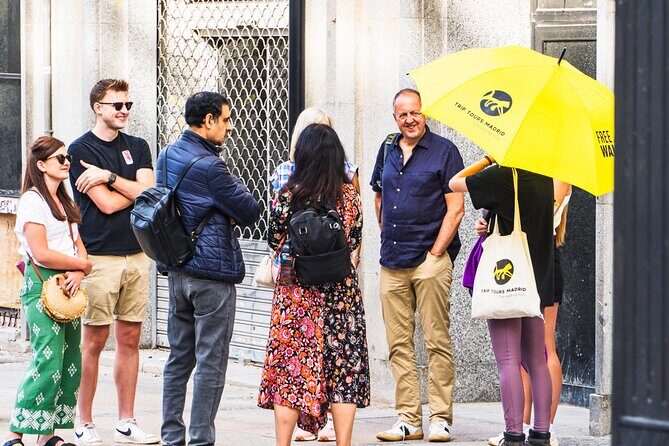
This is a guided walking tour that runs about 2 hours 30 minutes, with a maximum group size of 25. You start at Puerta del Sol and end in Retiro Park, which is a smart way to avoid ending your day in the loudest spot and hoping your feet still want to cooperate.
The big value here is how the guide turns the city into a sequence you can remember. You’re not just looking at monuments; you’re learning why each place matters—politically, economically, artistically, and even through small legends that locals repeat.
You can also read our reviews of more tours and experiences in Madrid.



Puerta del Sol: Km 0, the Bear and Madroño, and the pulse of Spain
Your tour begins in Puerta del Sol, Madrid’s famous meeting point where geography and symbolism overlap. You’ll hear the origin story of the square and see major markers like the Bear and the Madroño, plus Km 0, the point from which Spain’s radial road network starts.
This is a great first stop because it’s the kind of place you’ll pass again later anyway. Getting the meaning early helps you spot details faster, and you’ll understand why Madrid feels like it’s organized around this center.
You also get an admission ticket included for this first segment, so you’re set up to spend your time listening and looking, not wandering around trying to figure out what to do next.
Gran Vía architecture walk: Metropolis and Telefónica
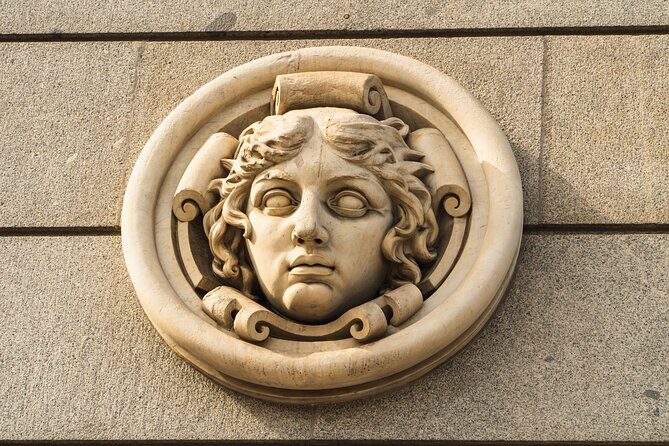
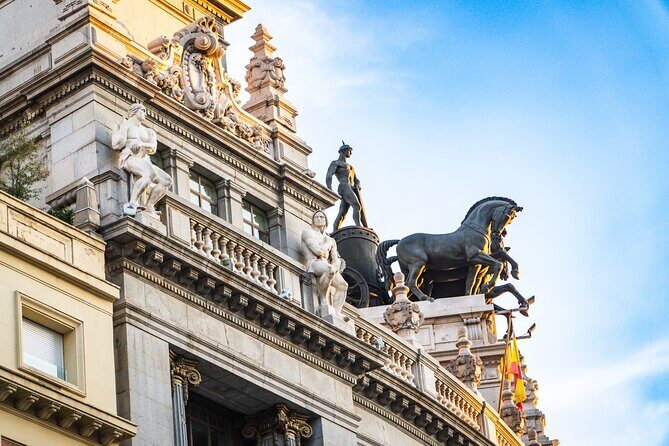
From Sol, you move into Gran Vía, the street many people think of as Madrid’s showpiece. The tour frames it as a “Madrid roadway” lined with striking architecture, historic theatres, and recognizable shopfronts—then it slows down so the buildings have names and stories.
Two stops you’ll hear called out are the Metropolis Building and the Telefónica. These aren’t random facades on a busy avenue; they’re part of Madrid’s modern identity. I like that the guide helps you read the street like a timeline of taste and ambition.
For this part, the admission is listed as ticket free, which means you’ll focus on walking, photos, and explanations rather than scheduling around entries.
Calle de Alcalá and Banco de España: the old road and the money behind it

Next is Calle de Alcalá, one of the oldest and longest streets in Madrid. You’ll stroll along a corridor that connects the city from ancient times, and you’ll see the Circle of Fine Arts Building as a standout. This section works well if you like the feeling of being in a place where the present still hugs the past.
Then you’ll head to Banco de España, where the tour is all about the exterior. Expect the guide to talk about why this monumental building matters to Spain’s economy, and also about local stories and legends that swirl around its security and treasure. Even if you don’t care about rumors, the fun is in hearing how the city thinks—what people want to believe, what they fear, and what they admire.
Here, admission is included for this stop, so it’s a longer attention grab before you move toward the open squares and fountains.
Cibeles and Neptuno: sports rituals and myth made visible
Downtown Madrid gets louder in a good way at Plaza de Cibeles, where you’ll see the fountain of the goddess Cibeles. This is one of those places that feels instantly recognizable, even before the guide starts talking. The explanation connects Cibeles to sporting celebrations, which helps you understand why this spot is more than pretty stone—it’s part of how people mark big moments.
Around the fountain, you’ll also look at major surrounding buildings like the City Hall and the Palace of Cibeles. This is where the tour becomes very “look up.” Architectural details matter, and the guide is there to point them out.
You’ll then move to Fuente de Neptuno, another iconic fountain. The tour ties it to Atletico Madrid fan celebrations and connects the mythological meaning to the wider monumental setting of the Paseo del Prado area. This pairing is smart: it gives you two fountains, two different moods, and a clearer sense of how Madrid builds a visual corridor through water, sculpture, and ritual. Admission is included for Neptuno.






Paseo del Prado: UNESCO Art Walk and a museum exterior worth noticing

Paseo del Prado is next, and the tour treats it like an outdoor gallery. This avenue is listed as a World Heritage Site and known as an Art Walk, with connections to several of Madrid’s top museums. Even if you don’t go inside during this tour, you’ll understand why this street is often called a cultural spine.
You’ll learn about its cultural legacy and how the avenue connects museums, plus you’ll notice the gardens and classical fountains as part of the overall design. Admission is listed as ticket free for this segment, which makes it ideal for slowing down, letting your eyes adjust, and taking photos without worrying about lines or entry timing.
There’s also a stop for the exterior of a major museum. You’ll learn the museum’s history and its notable treasures, including masterpieces by Velázquez, Goya, and El Bosco. Since the focus is exterior, it’s a good primer if you plan to visit one of these museums later on your own.
Retiro Park finale: Crystal Palace, Big Pond, and time to breathe

The last stretch ends in Parque del Retiro, another World Heritage Site and a true mood shift from the city’s hard edges. This is where the tour gives you the payoff: a green oasis where you can relax after the monuments.
You’ll see the Crystal Palace, the Big Pond, and the historic gardens. It’s not just a pleasant ending; it’s also a practical one. Starting your next phase of Madrid exploration from Retiro means you’re positioned near a major green area, with lots of nearby dining options and routes through the city.
Admission is included for the Retiro portion, and the final stop is about enjoying the park rather than rushing through it. If you’re the type who needs a visual reset by day’s end, this finishing choice is excellent.
Price and logistics: why it feels like more than the number

The listed price is $3.11 per group (up to 6), for about 2 hours 30 minutes with a professional guide and guided time at multiple key sites. That’s the part I can’t ignore. Even though the exact ticket details vary by stop (some include admission; others are ticket free), you still get a structured route with historical storytelling plus practical recommendations.
The tour also uses a mobile ticket, and it’s offered in English. With a cap of 25 people, it’s not a huge crowd crush, and that matters for hearing details clearly at busy squares and along big avenues.
If you care about value, the best part isn’t the price alone. It’s that you get help turning what you see into what you remember—stories about Km 0, Cibeles celebrations, and why these buildings matter in Madrid’s big picture.
Guide style: what you can hope for (including named examples)
The guide is described as an expert in Madrid’s history, and the overall tone you’ll experience is friendly, with storytelling and anecdotes. Several guides are named in experience notes—Stuart is described as funny and top-tier, Carlota as energetic and well-prepared, and Paula/Charlotte as expressive and cheerful (with some guidance that fits seasonal visuals like holiday lights).
That matters because the route is dense. When the guide can explain the meaning behind the monuments, the walk stops feeling like memorizing street names. Instead, it becomes a set of cause-and-effect stories: how a square became symbolic, how an avenue became a stage, and how fountains became part of daily identity.
A practical tip for you: come with questions. This is the kind of tour where the guide’s answers can steer you toward where to eat, which museum to prioritize next, and how to time the rest of your day.
Who should book this and who might skip it
Book it if you want a guided way to get oriented fast, especially if it’s your first or second day in Madrid. It’s also ideal if you like architecture and public spaces, and if you’d rather learn the connections than rely on apps and guesswork.
You might skip it if you hate walking for 2.5 hours, or if your travel style is mostly about museum interiors. This tour focuses on major monuments and key exteriors, with Retiro as a relaxing ending.
Should you book this Madrid Monumental and Retiro Park tour?
If you’re trying to make Madrid feel coherent quickly, I think this is a strong yes. The route starts at the city’s symbolic center, tracks through major architectural icons, and ends with a real decompression zone in Retiro Park.
Just match it to your day: wear comfortable shoes, keep an eye on the weather, and leave a little room afterward for exploring on your own. With that setup, you’ll finish with both memorable sights and a clearer sense of what Madrid is signaling through its streets.
FAQ
How long is the Madrid Monumental and Retiro Park tour?
It lasts about 2 hours 30 minutes.
Where does the tour start and end?
It starts at Puerta del Sol (Centro, 28013 Madrid) and ends at Retiro Park (Retiro, 28009 Madrid).
What language is the tour offered in?
The tour is offered in English.
Is a mobile ticket used?
Yes, the tour uses a mobile ticket.
What is included in the tour price?
You get a professional guide, a guided walking tour of the main monumental attractions, storytelling and historical information, and personalized recommendations (including tips on restaurants and additional activities). Some stops include admission tickets, while others are ticket free.
How big is the group?
The maximum group size is 25 people.
Does the tour require good weather?
Yes. It requires good weather, and if it’s canceled due to poor weather, you’ll be offered a different date or a full refund.