REVIEW · MADRID
Madrid on foot: From Debod to Retiro
Book on GetYourGuide →Operated by RandallST · Bookable on GetYourGuide
Walking Madrid, the city explains itself. This end-to-end stroll is built around stories you can actually see: an Egyptian temple in Spain, the Royal Palace and nearby landmarks, then Madrid’s main squares and finally Retiro Park. What I like most is the small group format (up to 7 people) and how the guide connects details so the streets feel like one picture, not separate sights.
There is one catch: this is a steady walk for about 3 hours, and it’s not a good match if your fitness level is low or if you need easier pace and frequent breaks.
Why this walk feels like Madrid, not a checklist
- Debod’s Egyptian temple is the surprise opener that makes you look twice at everything after it
- Royal Palace + Almudena area gives you architecture and monarchy context without getting too stuffy
- The Madrid de los Austrias streets bring literature and history into the sidewalk-level experience
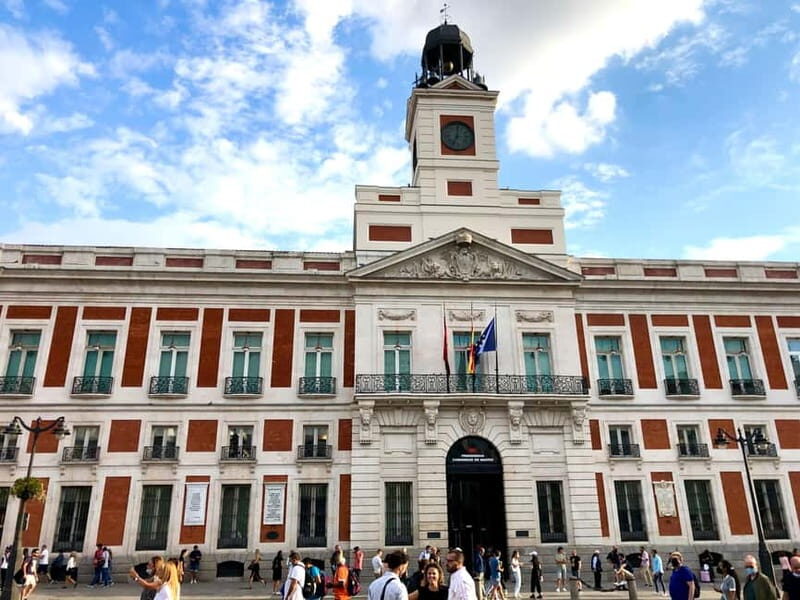
- Plaza Mayor and Puerta del Sol show how Madrid’s public life changes from market-square to city center
- Calle Alcalá to Retiro Park closes with a calm green ending, not a frantic finish
- Small group (max 7) means you can ask questions and keep moving at a human pace
In This Review
- From Cervantes to Retiro: an easy way to orient yourself
- Debod’s Egyptian temple: the plot twist at Plaza de España
- Royal Palace, Almudena Cathedral, and the Galileo detail you’ll remember
- Madrid de los Austrias and Calle del Codo: history at sidewalk speed
- Plaza Mayor and Puerta del Sol: where Madrid gathers
- Calle Alcalá to Cibeles: grand façades and real-world context
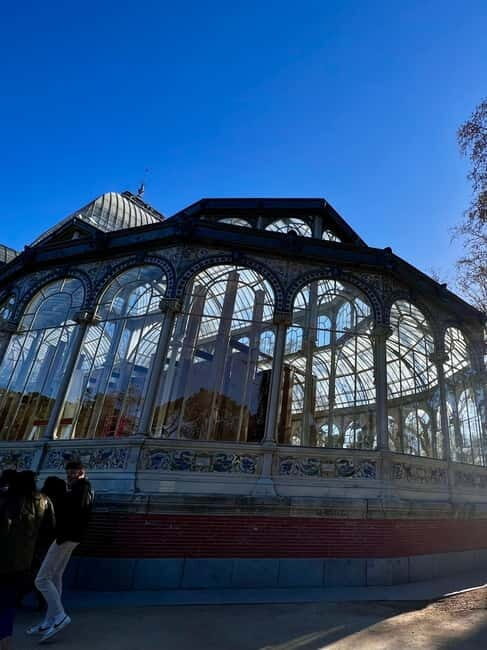
- Retiro Park finale: ponds, Palacio de Cristal, and Ángel Caído
- Price, pace, and who should choose this walk
- Should you book Madrid on foot: From Debod to Retiro?
- FAQ
- How long is the tour?
- Where does the tour start and where does it end?
- How big is the group?
- What languages are available?
- What should I bring?
- Is this tour good for kids?
- Is it suitable for people with mobility impairments?
- Is alcohol allowed on the tour?
From Cervantes to Retiro: an easy way to orient yourself
This tour is designed for people who want one solid arc across central Madrid. You start at Plaza de España, and then you move through the city’s big landmarks in an order that makes sense on foot. By the time you reach Retiro, the main neighborhoods won’t feel random anymore.
The route is also a good fit if you like your sightseeing with explanations that stick. You’ll learn why a famous Egyptian temple is in the middle of Spain, then you’ll see how Madrid’s power centers, religious sites, and public squares all sit close enough to connect on one walk. That’s the real value here: you get the why behind what you’re seeing, not just names on stone.
One more plus: the cultural mediator style of guiding. It’s not only history facts. It’s also street-level curiosity, like the theatre language you hear in the Royal Theater area, and the little details tied to writers who walked these same streets.
Debod’s Egyptian temple: the plot twist at Plaza de España
The tour begins near the Cervantes monument in Plaza de España, and almost immediately it sets up the main theme: Madrid keeps surprises. One of the first stops in the story is the Egyptian temple of Debod—because yes, you’re staring at an Egyptian site in Spain.
That opener matters more than you might think. It trains you to notice how cities layer things over time. Madrid doesn’t only “have history”; it keeps adding meaning to old and new spaces, sometimes in unexpected ways. If you’ve ever visited a city where everything feels separate, this kind of start helps you read the city as a whole.
You’ll also get your bearings fast for the rest of the walk. After the Debod story, the Royal Palace area feels like the next chapter of Madrid’s public face: power, culture, and symbolism packed into a short distance.
Practical tip: start the walk with comfortable shoes ready. Even early on, you’re covering ground at a steady pace, and Madrid’s central streets can have uneven spots.
You can also read our reviews of more tours and experiences in Madrid.


Royal Palace, Almudena Cathedral, and the Galileo detail you’ll remember
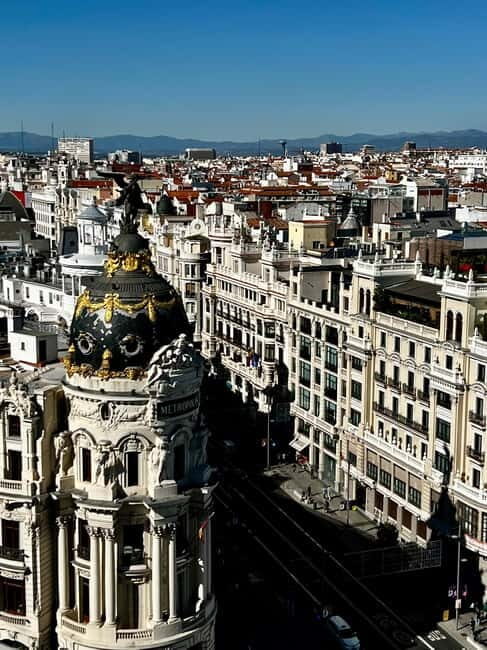
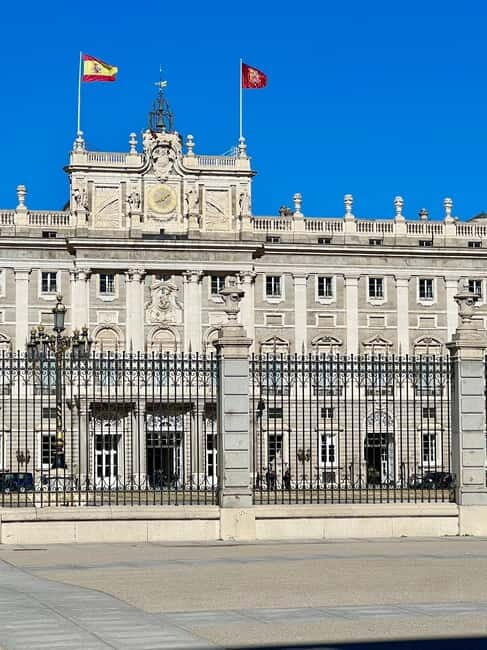
From the Debod lead-in, the walk moves you toward the big monarchy zone. You’ll pass by the Royal Palace of Madrid, described as the largest palace in Western Europe and the official residence of Spain’s monarchy. This is a landmark you can see from multiple angles while still walking, so the explanations feel tied to what your eyes are doing.
Around that palace area, the tour adds context you might miss if you just look at walls from the outside. You’ll talk about the Almudena Cathedral and the Royal Theater, including the theatre expression Mucha m!* that comes up in the Royal Theater context. It’s the kind of phrase that makes the culture feel lived-in rather than museum-like.
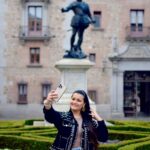
Then comes a detail that’s genuinely memorable: a statue whose construction is linked to Galileo Galilei. Even if you don’t remember the exact explanation later, you’ll walk away with a stronger sense that Madrid’s landmarks connect to broader European science and culture—not just local stories.
A balanced note: if you’re the type who loves interiors, this tour is mostly about what you can see from the route. It’s still valuable, because the outside viewpoints plus guided context often help you decide what you’d want to explore more on your own afterward.
Madrid de los Austrias and Calle del Codo: history at sidewalk speed
After the palace zone, the walk shifts into a more story-rich stretch: Madrid de los Austrias. This is where the tour slows just enough to make the streets feel like more than passageways.
You’ll learn about the foundations of the old Almudena, and you’ll pick up the feeling that modern Madrid sits above older layers. That kind of point-of-view changes how you see construction and street patterns as you move.
Then you’ll pass by Calle del Codo, connected to the writer Quevedo. This is one of those streets where the name alone feels like trivia—until someone ties it to a real author connected to the city’s past. You start noticing how Madrid’s street layout carries echoes of older urban life.
What I like here: the tour keeps your attention on a chain of details. You don’t just stop for one photo and move on. You walk with a thread, which makes the whole experience feel more coherent.
Possible consideration: this section depends on walking pace and attention. If you’re tired early or you need frequent breaks, it may feel like you’re rushing through stories. That’s the main reason this isn’t ideal for people with low fitness.
Plaza Mayor and Puerta del Sol: where Madrid gathers
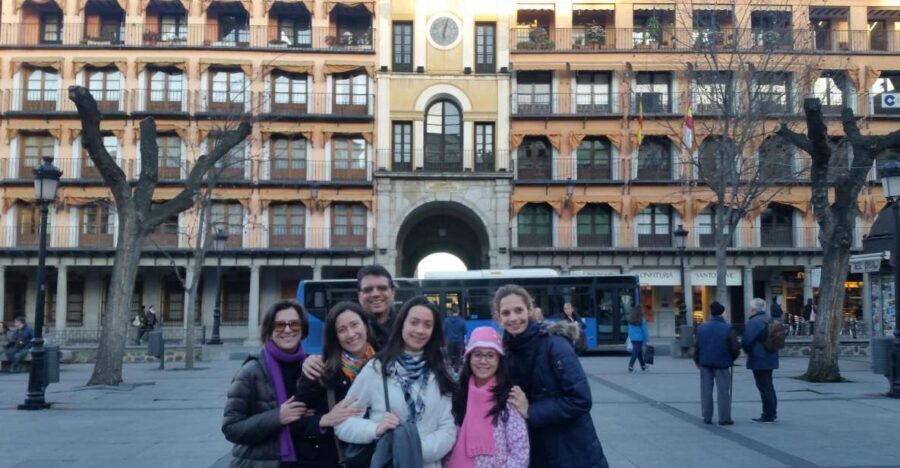
Next up is Plaza Mayor, a centerpiece with centuries behind it. You’ll hear it’s been shaped by fires, memories of war, and more than four centuries of public life. It’s also where the tour points out the oldest restaurant in the world—so yes, even the food story fits the theme of tradition and staying power.
Why this stop works on a walking tour: Plaza Mayor is a natural pause point. Even if you don’t go inside anything, you can look around and feel the square’s scale. Then the guide can explain how the place used to function as a market and how its role evolved over time.
From there, the tour heads to Puerta del Sol, described as the heart of Madrid. You’ll enter and exit several times through the streets that connect it to Gran Vía, Madrid’s main artery. That repeated walking-through isn’t random. It helps you understand Puerta del Sol as a hub, not a single viewpoint.
Quick tip: if you’re visiting in peak hours, Sol can be crowded. The advantage of a guided walk is that you’re not stuck deciding where to stand or which street to pick. You just follow the flow and keep learning.
Calle Alcalá to Cibeles: grand façades and real-world context
After the central squares, you move along Calle Alcalá—a long, important corridor where the city’s grand side shows up fast. You’ll pass the Círculo de Bellas Artes and you’ll also hear a practical distinction about the Banco de España: it’s the real bank building, not the one people may recognize from TV.
That detail is useful. It keeps you from getting distracted by pop-culture “stand-ins” and helps you connect the building you’re actually seeing with the role it plays in Madrid.
Then you’ll reach the fountain and palace of Cibeles, plus the Puerta de Alcalá. These are classic Madrid images, but the tour’s value is in tying them to what you’re learning earlier: how Madrid represents authority, culture, and civic identity across different zones.
A small realism check: this part can feel like a photo sprint if you’re going on your own. With a guide, you get the context to slow down mentally, even while your body keeps moving.




Retiro Park finale: ponds, Palacio de Cristal, and Ángel Caído
The walk ends in Retiro Park, which is a smart way to close. Instead of finishing at another dense city square, you get green space and a change in sound and pace.
Inside Retiro, you’ll see its ponds, the Palacio de Cristal, and Ángel Caído. Even if you don’t know what every monument is on sight, having a guided explanation helps the park feel less like a pretty backdrop and more like a designed space with meanings.
This ending is also practical. After hours of city streets, Retiro gives you a natural decompression point. You’ll still be moving, but the environment helps you reset.
If you’d like more value after the tour, this is the area where you can extend your afternoon. The tour doesn’t require you to “keep going,” but it gives you a comfortable starting point for your own wandering.
Price, pace, and who should choose this walk
The price is $28 per person for about 3 hours with a small group (max 7) and live guiding in Spanish or English. For central Madrid, that’s a fair value when you consider how many big landmarks you connect in one route—and the fact that you’re not only getting facts, you’re getting the links between them.
Where the price really pays off is in the way the guide helps you interpret what you see. The Debod opener, the Royal Palace monarchy context, the Quevedo connection on Calle del Codo, and the theatre phrase around the Royal Theater area aren’t things you’d naturally pick up from a casual self-guided walk.
Now the pace: it’s walking-focused and best for people who can handle a steady 3-hour stroll. It’s not suitable for people with mobility impairments, people with low fitness, and it’s not set up for children under 8. There’s also a cap age-wise with people over 70 listed as not suitable.
Who I’d recommend this tour for:
- First-time visitors who want a strong overview without riding a bus
- Travelers who like stories tied to specific streets and buildings
- Anyone planning additional self-guided time afterward and wanting the right mental map
Should you book Madrid on foot: From Debod to Retiro?
Book it if you want a guided walking line across Madrid’s most important landmarks, with explanations that make the city feel connected. The small group size and the culture-mediator approach are big reasons this route feels thoughtful instead of rushed.
Skip it if you need a slow, low-impact experience or you’re traveling with someone who struggles with steady walking. This is a walk-first tour, so comfortable shoes are not optional.
If you’re the kind of traveler who likes to understand why places look the way they do, this tour is a very efficient way to start your Madrid trip—and it ends in Retiro, which is a nice reward for finishing strong.
FAQ
How long is the tour?
It lasts about 3 hours.
Where does the tour start and where does it end?
It starts at the Cervantes monument in Plaza de España and ends back at the same meeting point.
How big is the group?
The group is limited to 7 participants.
What languages are available?
The live guide offers Spanish and English.
What should I bring?
Wear comfortable shoes. Dress appropriately for the season and weather.
Is this tour good for kids?
It’s not suitable for children under 8.
Is it suitable for people with mobility impairments?
No, it’s listed as not suitable for people with mobility impairments.
Is alcohol allowed on the tour?
No. Alcohol and drugs are not allowed.