REVIEW · MADRID
Madrid: Prison Island Giant Indoor Escape Game Entry Ticket
Book on GetYourGuide →Operated by Spark Island · Bookable on GetYourGuide
A prison you can play your way out of. Prison Island is a big, indoor adventure game set inside a futuristic themed prison, built for 32 rooms of changing challenges. I like that it is not a straight line. Your team can move between cells and build your own route as you hunt for points.
I also like the competitive edge: after you finish, you can check the leaderboard and see how you stacked up. One possible drawback to note: the game does expect you to work things out together, so if your group wants lots of hand-holding or constant hints, you might wish you had a bit more direction during tricky moments.
In This Review
- Key highlights
- Prison Island in Madrid: what you’re signing up for
- 32 rooms and a choose-your-route game you can feel
- Inside the futuristic prison: how the challenges feel in practice
- Scoring, the leaderboard, and why competition changes behavior
- Who it’s for in Madrid: families, friends, and team-building
- Price and value: what $26 buys you in a 32-room game
- Getting started at Spark Island: where to meet and how to arrive ready
- A practical game plan for your first 30 minutes
- Should you book Prison Island Madrid?
- FAQ
- How many rooms are in Prison Island Madrid?
- How long is the experience?
- What is included in the ticket?
- Is food and drinks included?
- Where do I meet for the activity?
- What languages are available for the host or greeter?
- What should I wear?
- What age groups is it suitable for?
- Is there line skipping included?
- Can I cancel and get a refund?
- Is there a reserve now and pay later option?
Key highlights
- 32 themed cells inside one indoor arena, so you get real variety
- No single way out, which rewards planning and quick teamwork
- Physical, technical, and tactical tasks that use more than just logic
- Leaderboard scoring, so the game ends with a friendly competition
- Great for ages 10 to 99 and flexible for groups of friends or teams
Prison Island in Madrid: what you’re signing up for
Prison Island (by Spark Island) is one of those escape-game formats that feels more like a TV-game challenge than a locked-room puzzle. The concept traces back to the spirit of the famous Fort Boyard style of adventure games, and you can feel that in the design: lots of set pieces, lots of movement, and lots of team roles.
In Madrid, you’re inside a high-tech indoor arena staged as a futuristic prison. Instead of wandering outside or walking long distances, your “world” is the game space itself. The action runs through themed cells, each one mixing different types of challenges.
The game is built for teamwork first. You’ll be solving, coordinating, and communicating your way through. If you like games where you need a plan and also need to stay flexible when the plan breaks, this fits well.
Also, the format is designed to keep things moving. You spend time tackling multiple challenges rather than getting stuck for ages on a single puzzle, which is a big deal if you’re bringing friends who all have different strengths.
And yes, it is competitive in a fun way. You don’t just complete tasks. You progress and collect points, then you can see how you ranked on the leaderboard when you’re done.
You can also read our reviews of more tours and experiences in Madrid



32 rooms and a choose-your-route game you can feel

Most escape rooms are linear: one room leads to the next, and progress is basically a hallway rule. Prison Island flips that. There’s no single way out. You can move freely between challenges, which means your team can choose how to play.
That freedom matters because the “best” route depends on your group. If your team is strong at physical tasks, you might want to start with the cells that reward agility and quick execution. If you’re the type that likes puzzles and patterns, you might aim for the more mental cells early so you bank progress before you’re tired.
It also changes how you think about time. With 32 rooms in the mix, your goal is not only to solve. It is to decide what to try now, what to leave for later, and when to rotate roles so nobody gets stuck.
The game is set up as an action game. That is not marketing fluff; it shows up in the way tasks are structured. You’ll likely be balancing physical effort with technical execution and tactical thinking. Translation: your team’s success usually comes from dividing jobs, not from one person carrying the whole group.
This is also why the experience works for groups with mixed ages and abilities. Even if someone struggles with one challenge type, they can contribute in another cell. The variety of the 32-room layout helps you find your team rhythm.
Inside the futuristic prison: how the challenges feel in practice
Here’s the practical way to think about what you’ll do: you enter a themed cell area, then you work through a sequence of challenges that mix three skill types.
Technical challenges: These usually reward close attention and problem-solving. Expect tasks that require you to coordinate steps, figure out sequences, or use systems in the environment.
Physical challenges: This is part of why comfortable clothing matters. The game is built as an action experience, so your body is involved, not just your brain. If you show up in stiff shoes or outfits that restrict movement, you’ll feel it fast.
Tactical challenges: This is the teamwork layer. Even when you understand the puzzle, you still need the right roles and timing. One person might operate while another checks the field, and someone else keeps the team moving so you don’t waste time.
And because you can move between rooms, you are not trapped in one style of challenge. If one cell is draining your team, you can shift your focus to another and come back later. That flow is a major reason people like this concept for groups: it helps reduce the classic escape-room problem where everybody gets stressed in the same room at the same time.
For pacing, I recommend you treat it like a team sport: quick try, quick adjust, and keep communication simple. If you start arguing about who should be doing what, you burn minutes. If you create a simple routine—one leader, one problem-solver, one runner/handler—you’ll usually move better.
Scoring, the leaderboard, and why competition changes behavior
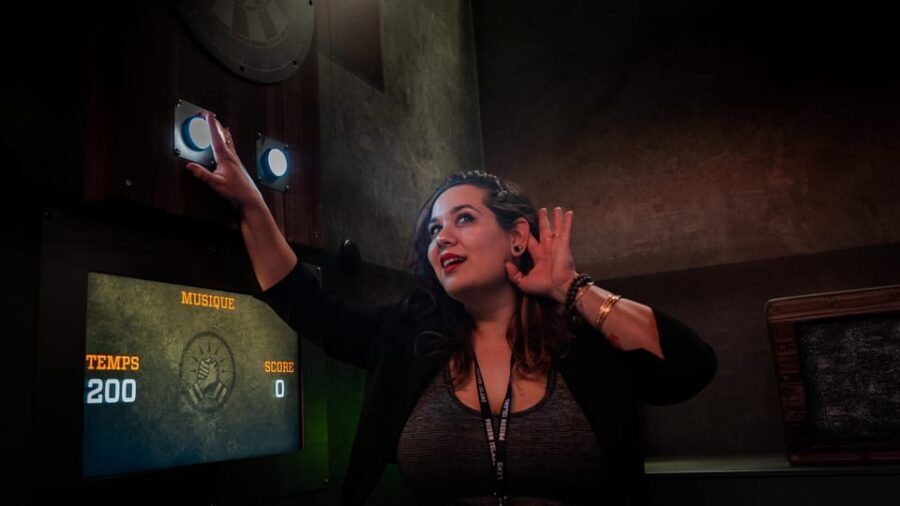
Prison Island is not only about finishing. It’s about accumulating points as you progress through cells. That scoring structure turns the last stretch into a real strategy moment.
At the end, you can check the leaderboard and see how your team ranks. That can make the experience feel bigger than a single-session puzzle, because there’s external comparison. Even if your main goal is fun, the leaderboard gives your group something to aim for beyond simply completing tasks.
It also affects decisions during the game. With a points-based flow, you’re more likely to:
- tackle challenges efficiently instead of overthinking one solution
- rotate quickly to keep energy up
- decide when a cell is worth another try versus when to move on
One real-world clue comes from how different groups finish at different speeds. Ana from Spain shared that her kids, age 14, managed to do all the cells in about 1.5 hours. That suggests the experience can move fast when your team clicks. On the flip side, Karoline from Austria said they spent around 3 hours there, which points to a slower, more exploratory approach or just a group that needed more time to sort out the tougher moments.
Either way, you’re in control of your style. The game supports fast teams and persistent teams, because it does not punish you for moving around. You just need to manage your time and keep communication tight.
Who it’s for in Madrid: families, friends, and team-building
Prison Island is designed to work across a wide range of ages: it’s listed as perfect for all ages from 10 to 99. That sounds broad, but the room variety is likely why it holds up. Different cell challenges can suit different abilities, and the shared teamwork requirement pulls everyone into the game.
It’s also stated as ideal for groups, including corporate team-building events. For companies, the value is pretty clear: you’re not stuck in a meeting room. You’re doing collaborative problem-solving in real time, and you can see how people communicate under pressure.
If you’re planning a group trip, this is especially useful because the experience is contained. You don’t need to coordinate long sightseeing schedules. Everyone gathers, you play, you score, you leave. It’s an activity that works as a dedicated block on your Madrid day.
A note on suitability: it is not suitable for children under 10, and it’s also not suitable for people over 70. Since physical challenges are part of the format, it’s worth taking those limits seriously for comfort and safety.
What about language? The host or greeter is available in English, French, and Spanish. So you can usually make sure your group understands the basics before you start.





Price and value: what $26 buys you in a 32-room game
At about $26 per person, you’re paying for a structured indoor adventure with serious room count and built-in variety. The key value point is scale: 32 rooms means you’re not buying a single puzzle experience. You’re buying a session of constantly changing challenge types.
The entry ticket includes 2 hours in Prison Island, with the overall duration listed as 1 to 2 hours. In practice, that matters because you’re not likely to feel rushed through one dramatic finale. You’ll have time to explore multiple cells and to recover if your team misses something.
Also included is the chance to skip the ticket line, which is underrated. When you arrive in a new neighborhood and you want to start quickly, skipping delays helps your group stay in the right energy level for an active game.
Not included: food and drinks. So plan for a snack or meal before you go. I’d rather you arrive with energy than hunt for something sugary right before you’re moving around and thinking hard.
Overall, the price feels fair for an activity that is equal parts team challenge and indoor entertainment. You’re not just paying for a room—you’re paying for a whole game flow.
Getting started at Spark Island: where to meet and how to arrive ready

Meet up at the building marked with the Spark Island logo. You’ll see a sign outside, and you should show your GetYourGuide voucher at the entrance.
This matters because the experience is time-based. If you arrive late or unorganized, you lose play time. For a game like this, losing even 20 minutes can change what your team manages to finish.
What to bring is simple: comfortable clothes. Since physical tasks are in the mix, wear something you can move in. Comfortable shoes are a smart idea too, even though only clothing is explicitly listed. If you’re bringing kids or mixed ages, comfort becomes even more important because the game is about participation, not endurance misery.
Before you start, expect the host or greeter to help your group get moving in the right language. The experience lists English, French, and Spanish support, so choose the option that matches your group best to avoid misunderstandings when instructions matter.
A practical game plan for your first 30 minutes
If you want to do well without turning it into a stress festival, use this simple rhythm your team can apply right away.
First, assign roles quickly:
- one person leads communication
- one or two people tackle the current puzzle steps
- one person watches time and suggests when to move on
Second, treat your first few cells like warm-up. You’re learning how the game wants you to think—technical versus physical versus tactical. Once you figure out the pattern, you’ll make better decisions in later rooms.
Third, communicate early, not late. In action puzzle games, silence usually costs time. Say what you’re trying and what you think comes next.
Finally, if a cell is eating your minutes, don’t let it drain the whole team mood. The game allows you to move between challenges, so switch gears, then come back later if it still feels solvable.
This is where that Fort Boyard–style inspiration really shines. It is not about finding one magic key. It is about teamwork, adaptability, and playing the game like it’s a set of connected challenges.
Should you book Prison Island Madrid?

Book it if:
- you want a high-energy indoor group activity in Madrid
- you like puzzles but also enjoy movement and teamwork
- you’re traveling with friends, family, or a company group and want one shared challenge
- your group enjoys a points-and-leaderboard finish
Skip it if:
- your group wants a quiet, seated, mostly-mental escape-room vibe
- you need lots of built-in hints to feel comfortable progressing
- you have very young kids under 10 or older adults over 70 who may struggle with the physical parts
If you’re on the fence, I’d make the decision based on your group’s balance of strengths. Prison Island tends to reward teams that can rotate roles and keep momentum. If that sounds like you, it’s a strong pick for a fun Madrid day that still feels like more than a one-note activity.
FAQ
How many rooms are in Prison Island Madrid?
The game features 32 challenge rooms.
How long is the experience?
The duration is listed as 1 to 2 hours, and the ticket includes 2 hours in Prison Island.
What is included in the ticket?
The ticket includes time in Prison Island for the 32 challenge rooms (2 hours).
Is food and drinks included?
No. Food and drinks are not included.
Where do I meet for the activity?
Meet at the building with the Spark Island logo outside. Show your GetYourGuide voucher at the entrance.
What languages are available for the host or greeter?
English, French, and Spanish.
What should I wear?
Wear comfortable clothes.
What age groups is it suitable for?
It’s perfect for all ages from 10 to 99, and it is not suitable for children under 10 or people over 70.
Is there line skipping included?
Yes, the ticket includes skipping the ticket line.
Can I cancel and get a refund?
Free cancellation is available up to 24 hours in advance for a full refund.
Is there a reserve now and pay later option?
Yes, it offers reserve now & pay later (book your spot and pay nothing today).