REVIEW · EL ESCORIAL TOURS
Private VIP visit El Escorial Palace, Monastery and Gardens
Book on GetYourGuide →Operated by Dream Tours Madrid · Bookable on GetYourGuide
El Escorial is history with gravity. This private VIP visit is built for people who want more than a quick look, with an official local expert guide taking you through the UNESCO World Heritage complex tied to King Philip II and the Spanish Golden Age. You also get a helpful advantage: skip-the-line express security, plus headsets if you need them.
I really like two parts of this experience. First, the Royal Crypts and Saint Lawrence Basilica make the power of Spain feel physical, not abstract. Second, the Renaissance Library experience helps you connect what Philip II was trying to do culturally with what you actually see inside.
One consideration: this visit is not suitable for people with mobility impairments, and the 3-hour format is designed to cover a lot. If you prefer slow, free-form wandering over guided interpretation, you may feel a little pushed to keep up.
In This Review
- Key highlights you’ll care about
- Private VIP time at El Escorial in just 3 hours
- Getting there from Madrid: quick, practical logistics
- The monastery first: a grill-shaped complex with a mission
- Saint Lawrence Basilica: where architecture does the talking
- Royal Crypts of the Kings of Spain: power you can’t ignore
- The Renaissance Laurentine Library: Philip II’s collecting mindset
- Gardens and outdoor rhythm: reset for your feet and eyes
- Habsburg palace and villa: royal rooms without the guesswork
- San Lorenzo de El Escorial village: history meets daily life
- Price and value: what you’re really paying for at $129
- Who should book this VIP El Escorial visit
- Before you go: small practical notes that matter
- Should you book this El Escorial private VIP visit?
- FAQ
- How long is the Private VIP visit to El Escorial Palace, Monastery and Gardens?
- What is the price per person?
- What’s included in the ticket?
- Where do I meet for the tour?
- What languages are available for the guide?
- Is this tour private, and does it skip line access?
Key highlights you’ll care about
- Skip-the-line express security so you waste less time waiting
- Royal Crypts + Saint Lawrence Basilica for the most dramatic, high-stakes moments
- Renaissance Laurentine Library and the ideas behind Philip II’s collecting
- Gardens that give your eyes a break from stone and ceilings
- Private group VIP access with a government-approved official guide
- San Lorenzo de El Escorial village stop to connect the monastery to real life
Private VIP time at El Escorial in just 3 hours
El Escorial is one of those places that feels designed to overwhelm you on first sight. The complex is imposing and symmetrical, and it has that clear 16th-century confidence. What makes this tour worth your time is that it gives you structure. Instead of floating around trying to piece together what matters, you get a guided path through the key zones that connect architecture, religion, and royal ambition.
The visit is private VIP and lasts about 3 hours. That matters because El Escorial is not just a single building. You’re dealing with a monastery complex where major spaces share the same overall idea. A guide turns that idea into something you can follow in real time, especially as you move from the monastery spaces toward the church elements and then into the library.
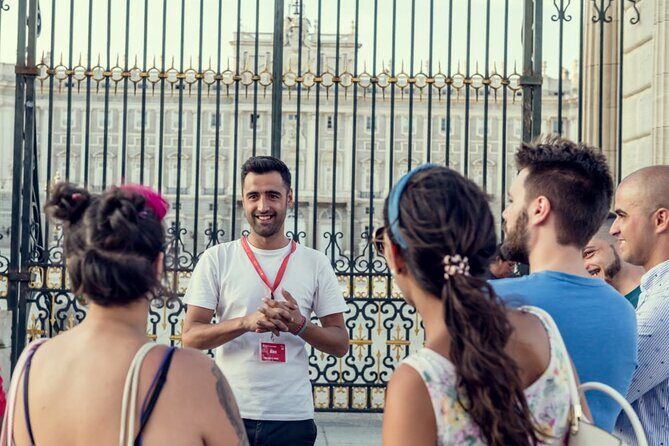
You’ll also hear the story in the style you want. The tour runs with live guides in English and Spanish, and the pace can be adjusted to your level. If you know nothing, you’ll get the basics without feeling talked down to. If you’re already into Spanish history, you won’t feel like you’re watching a highlights reel.
Getting there from Madrid: quick, practical logistics
San Lorenzo de El Escorial is about 40 minutes from Madrid city centre, and public transportation runs all day. That’s a real plus if you like doing one focused day-trip activity instead of stacking multiple things.
The meeting point is: Av. de Juan de Borbón y Battenberg, 6, 28200 San Lorenzo de El Escorial, Madrid, Spain. Being specific here helps. El Escorial is spread out, and it’s easy to lose time if you show up near the wrong entrance.
Plan to arrive early enough to settle your bearings and check in. This is the kind of tour where you benefit from starting calm, not rushing at the gate. Also, this experience includes an express security check, but it still helps to stay ready with your timing.
The monastery first: a grill-shaped complex with a mission
One of the most memorable descriptions of this place is that the monastery complex has a grill-shaped plan. On paper, that sounds like a trivia fact. On site, it changes how you understand the whole layout. As you move through the core areas, you start to see how the building’s structure supports order, worship, and daily life inside a royal-monastery world.
The tour’s core time is spent inside the complex. Expect a guided exploration that lets you peel back the layers of the 16th-century structure and understand what Spain was aiming for during the reign of King Philip II. This isn’t history as a list of dates. It’s history as a set of choices: what gets emphasized, what gets built, and what gets collected.
As you follow your guide, you’ll also get help seeing the “why” behind the “wow.” For example, the monastery’s scale can feel overwhelming until someone explains how the spaces relate to the broader goal of the Spanish Golden Age—religion and ideology expressed through architecture and art.
Saint Lawrence Basilica: where architecture does the talking
The Saint Lawrence Basilica is one of the stops you don’t want to treat like a quick photo break. This is where the experience leans into the emotion of the place—bigness, seriousness, and the feeling that you’re in a space built for ceremony.
A guide helps you read the basilica without turning it into a lecture. You’ll understand what you’re looking at, why it’s arranged the way it is, and how it fits the monastery’s overall royal religious role. If you’ve ever walked into a major church and wished someone had pointed out what mattered first, this is that fix.
This is also the zone where the tour’s private feel helps. You can ask questions and keep your attention on the key points rather than being rushed through like a conveyor belt.
Royal Crypts of the Kings of Spain: power you can’t ignore
If you want a “hold on, this is real” moment, the Crypts of the Kings of Spain are it. This is the part that makes the monastery feel less like a museum and more like a living expression of monarchy and faith.
In a guided visit, the crypts become easier to understand. Instead of just looking and moving on, you get context that ties the crypts to Spain’s royal line and to the broader Philip II story. The result is that you leave with a stronger sense of what the monarchy meant here—not just who was buried, but why this kind of burial space mattered.
This is one of the tour components that people seem to remember most. It’s the kind of stop that earns your full attention, especially if you care about how rulers tried to shape legacy.
The Renaissance Laurentine Library: Philip II’s collecting mindset
The Renaissance Laurentine Library is where your brain gets its workout. This isn’t just a room full of books. The tour frames it as a statement of intellectual ambition tied to Philip II’s quest for expansive humanistic knowledge.
You’ll spend time in the library, and you’ll get help connecting the architectural and cultural choices behind it. When you’re standing in a historic library, it’s easy to admire it without fully understanding what it represents. A good guide closes that gap fast.
What I like about this part of the tour is the way it changes your reading of the monastery complex. The site isn’t only about religion and authority. It also signals curiosity, collection, and the desire to project knowledge as part of rule. Even if you’re not a book person, you’ll get why this library belongs on the short list of Europe’s big symbolic spaces.
Gardens and outdoor rhythm: reset for your feet and eyes
After stone-heavy interiors, the gardens are a smart change of pace. You get a different sensory rhythm: open air, softer sightlines, and calmer visuals than the basilica-and-crypt intensity.
The gardens also help you understand the Renaissance approach to designing space around power and devotion. A guided walk in the gardens makes it easier to see the “designed” part of nature here. It’s not just background. It’s part of how the complex presents itself.
This stop is also practical. It gives you a chance to shake out your legs and regroup mentally before the tour moves into the remaining palace and villa areas.
Habsburg palace and villa: royal rooms without the guesswork
The tour includes the Habsburg palace and villa, which is great because it broadens your perspective beyond the church and library. Monastery complexes can sometimes feel one-note if you only focus on worship spaces. Here, you get the royal living and ceremonial angles too.
The value is in how a guide connects these rooms to the larger reign story. You’re not collecting random facts about different buildings. You’re building one picture of how the monarchy functioned and how it tried to leave a lasting mark.
And because it’s a private group, you’re less likely to feel like you’re rushing through rooms just to keep up with others. That matters in rooms where small details can be easy to miss.
San Lorenzo de El Escorial village: history meets daily life
A nice touch is that the tour doesn’t end the moment you step outside the monastery gates. You also get time for a stroll through the charming village of San Lorenzo de El Escorial.
This village stop helps you understand what the monastery means beyond 16th-century symbolism. You see the setting where people live alongside this monumental heritage site. It also makes the day feel less like a one-building sprint and more like a real place with its own rhythm.
If you like ending a tour with an easy walk and a sense of place, this adds real value. You can also use the time to spot where you might want to grab a bite after your guided portion ends.
Price and value: what you’re really paying for at $129
At $129 per person for a 3-hour private VIP visit, the first question is obvious: is it worth it versus a standard group ticket?
For this kind of site, I think the value comes from three areas that add up:
- Official, government-approved expert guidance: El Escorial rewards interpretation. Without a guide, you can miss the connections between monastery plan, basilica role, crypt meaning, and the library’s significance.
- Private group comfort: You get a pace that can stay comfortable. In past experiences with similar private tours, the biggest difference is time to ask questions without feeling like you’re slowing everyone down.
- Time saved: Express security helps you start sooner and keeps your 3 hours focused instead of fragmented.
You’re not only buying entry tickets. You’re buying the ability to understand what you’re seeing in the time you have. That’s the real “value math” here.
Also, the tour has a strong satisfaction signal, sitting at a 4.9 rating from 23 reviews. I treat that as a useful clue, not a guarantee, but it aligns with the kind of experience this site demands.
Who should book this VIP El Escorial visit
This tour is a great match if you:
- Want a guided route through the monastery, basilica, crypts, library, gardens, and royal spaces without piecing it together yourself
- Prefer a private group experience with room for questions and pacing
- Are interested in the Spanish Golden Age and how Philip II shaped culture through architecture and collecting
It may not be the best fit if:
- You need an accessibility-friendly option. This tour is not suitable for people with mobility impairments.
- You want a long, independent museum-style day where you can roam slowly and linger randomly.
If you’re visiting Madrid and you want one high-impact day trip that actually teaches you something, this is one of the strongest ways to do it.
Before you go: small practical notes that matter
- Wear comfortable shoes. You’ll be moving through multiple spaces across the complex.
- Plan to start at the meeting point on time so you can benefit from the express security flow.
- Bring curiosity. This tour works best when you ask simple questions like what you’re looking at and why it was built this way.
- If you get a headset, use it. Headsets if required help you stay synced with the guide, especially in echoing spaces.
Also, note the tour runs in Spanish and English, so pick the language that lets you relax and actually listen.
Should you book this El Escorial private VIP visit?
Yes, if you want a structured, high-meaning day that turns El Escorial from intimidating stone into understandable Spanish power and ideas. The Royal Crypts, Saint Lawrence Basilica, and Renaissance Laurentine Library are exactly the kind of stops that become far more rewarding with an expert guide. And the private format helps you keep the pace human.
I’d skip it only if you’re looking for a slow wander day or if mobility is an issue. Otherwise, this is one of those rare day trips where the extra cost mainly buys clarity, not just convenience.
FAQ
How long is the Private VIP visit to El Escorial Palace, Monastery and Gardens?
The tour duration is 3 hours.
What is the price per person?
The price is $129 per person.
What’s included in the ticket?
It includes entry tickets, an official government-approved guide, and headsets if required.
Where do I meet for the tour?
The meeting point is Av. de Juan de Borbón y Battenberg, 6, 28200 San Lorenzo de El Escorial, Madrid, Spain.
What languages are available for the guide?
The tour is offered in Spanish and English.
Is this tour private, and does it skip line access?
Yes, it is a private group, and it includes an express security check to help you skip the line.