REVIEW · MADRID
Retiro Park bike tour- Get transported to the XVI century
Book on Viator →Operated by Madrid Bike Tours · Bookable on Viator
Two wheels, five centuries of Madrid. This Retiro Park bike tour mixes big-city sights with a calm break inside Madrid’s park world, all with a local guide narrating what you’re seeing. It’s also framed as a jump back to the XVI century, and the route choices help you connect the dots across Madrid’s long timeline instead of just snapping photos and moving on.
I especially like that bikes and helmets are provided, so you can focus on the ride, not the gear hunt. I also like the human factor: the guide (for example, Andrea) tells the story with care and clarity, including details that make the landmarks feel less like postcards and more like places with reasons to exist. One thing to think about: parts of the route can get tight, and you’ll be mixing with pedestrian crowds, so it helps to stay alert and patient at street crossings.
In This Review
- Key things to know before you ride
- City-center start: where the ride finds its story
- Plaza de Cibeles: the fountain square that anchors Madrid
- Puerta de Alcalá: a triumphal arch with deeper roots
- Parque del Retiro: the long green pause with monarchy roots
- The value question: is $42.06 worth it?
- Riding real Madrid: how to enjoy the crowds and still feel in control
- What the timing and group size really mean
- Who should book this Retiro bike tour
- Should you book? My honest take
- FAQ
- What’s the duration of the Retiro Park bike tour?
- How much does the tour cost?
- Where do I meet for the tour?
- Is the bike and helmet included?
- Is the tour offered in English?
- Do I need to pay for admission at the main stops?
- What physical fitness level do I need?
- How large is the group?
- Is there free cancellation?
Key things to know before you ride
- You get the bike and helmet—no need to rent or figure out equipment on arrival.
- A local guide runs the show, keeping the ride organized and the sightseeing meaningful.
- Plaza de Cibeles and Puerta de Alcalá are built-in highlights, not optional detours.
- Retiro Park time is real, with a long stop that lets you absorb the space.
- Group size stays capped at 25, which is usually a good balance for a smooth ride.
City-center start: where the ride finds its story
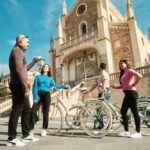
This tour starts at Wonder Tours / Tour Operator, Calle de Santiago 18, in Madrid’s Centro. That’s a smart base because you’re already close to the major streets and squares that define central Madrid. Before you reach the park, you’ll roll through the city’s core, including an area that’s also known for shopping—so you get both “Madrid out in the open” energy and quick context for where you are on the map.
The whole point of riding instead of walking is speed with perspective. Walking can feel like checklist mode. A bike does the opposite: it keeps you moving, but you still stop at key landmarks long enough to understand what you’re looking at. You’re not just passing through; you’re being oriented.
Also, the experience is designed for a moderate fitness level. That doesn’t mean you’re sprinting up hills or doing anything extreme, but it does mean you’ll want comfortable pacing. If you’re someone who gets stressed around traffic, take comfort in the fact that the group stays together under a guide’s direction—then do your part: keep a steady line, signal turns early, and don’t assume pedestrians will behave like they’re in a bike lane.
You can also read our reviews of more cycling tours in Madrid


Plaza de Cibeles: the fountain square that anchors Madrid
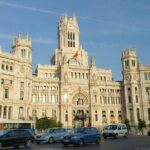
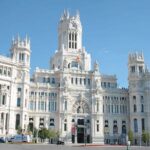
One of the big payoff stops is Plaza de Cibeles, a signature square where the architecture and sculpture sit right at the crossroads of major avenues—Calle de Alcalá, Paseo de Recoletos, and Paseo del Prado. This is one of those places you recognize immediately, even if you can’t place the name at first glance. The marble sculptures and fountains make it feel monumental, but it’s also a practical landmark for orientation because so many important routes feed into this area.
What makes the stop more than a pretty break is the story behind the name. Plaza de Cibeles was originally called Plaza de Madrid. In 1900, the City Council renamed it Plaza de Castelar, and later it became Plaza de Cibeles. That’s a useful reminder that Madrid’s public spaces have been “edited” over time—politically and culturally—not just decorated.
From a rider’s perspective, this stop works well because it resets you after moving through the city. You get a clear view of the square before you continue, and the guide’s explanation helps you look at the marble sculptures as symbols, not just ornaments. If you like travel moments where you learn enough to feel smarter instantly, this is a strong one.
Puerta de Alcalá: a triumphal arch with deeper roots
Next up is Puerta de Alcalá, the Neo-classical gate monument located in Plaza de la Independencia. It’s often described as Madrid’s triumphal arch moment, but what I find more interesting is the way it gets positioned historically. The Puerta de Alcalá is considered the first modern post-Roman triumphal arch built in Europe, and it predates the Arc de Triomphe in Paris and the Brandenburg Gate in Berlin.
That comparison matters because it changes how you perceive scale. You start thinking: Madrid wasn’t waiting around for other cities to set architectural trends. It was already shaping the “grand monument” language in Europe earlier than many people assume.
Even better, the name carries meaning. Puerta de Alcalá traces back to the Arabic word al-qal’a, which points to a citadel. In other words, the area’s identity isn’t purely “Neo-classical and done.” It’s layered, and the guide helps you see that the architecture stands on older meanings embedded in the place name.
Your time at Puerta de Alcalá is about 5 minutes. That’s not long, but it’s enough when the guide focuses the attention. You’ll likely get the right angles for photos without turning it into a long detour that drains your energy before you hit the park.
Parque del Retiro: the long green pause with monarchy roots
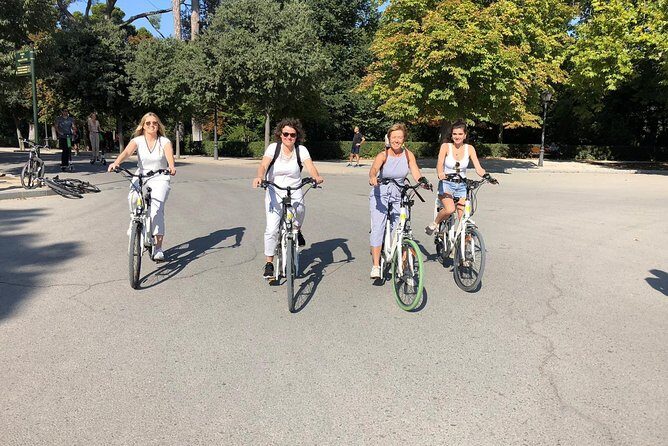
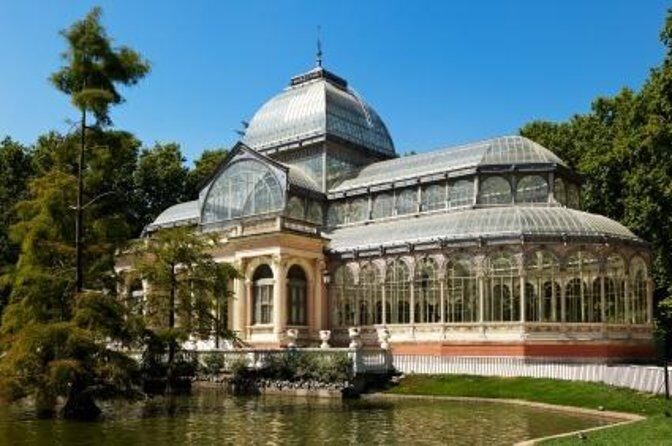
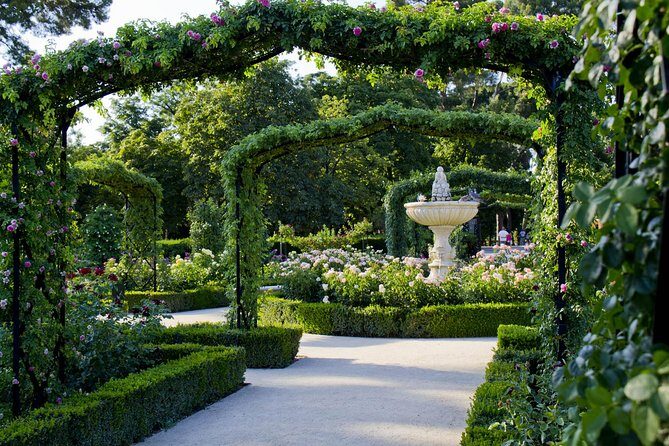
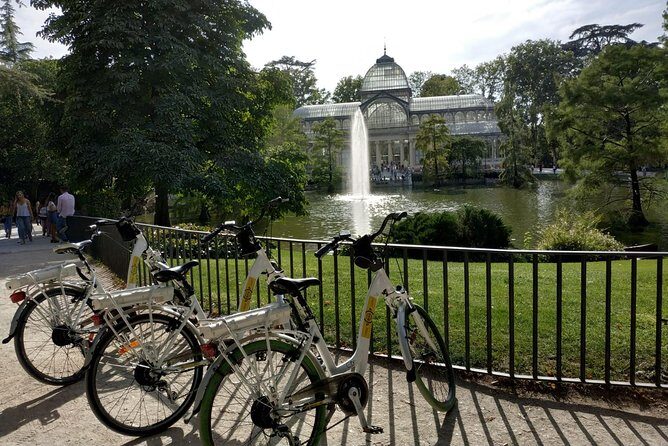
Then you slow down into Parque del Retiro—often called El Retiro. This is one of Madrid’s largest city parks, and the tour gives you around 45 minutes here, which is a meaningful chunk. The time matters. If you only glance at Retiro for a few minutes, you miss the way the park changes the feel of Madrid: fewer hard edges, more room to breathe, and a different kind of soundscape.
Here’s what adds depth: Retiro wasn’t always a public escape. The park belonged to the Spanish Monarchy until the late 19th century, when it became a public park. That shift changes how you understand what you’re seeing. Even when you’re walking through it like a tourist, the layout reflects centuries of who had access and why the space was valued.
Because this is a bike tour, you don’t have to do the “full park workout” yourself. You get guided movement plus time to absorb the atmosphere. It’s a good compromise for days when you still want to see multiple major sights, but you also need a break that feels like Madrid rather than just Spanish-brick monuments.
The eco-friendly part is real in practice too. Riding lets you cover distance with less disruption than constant taxi hops, and it’s also a nice way to keep your day from feeling like a string of indoor ticket lines.
The value question: is $42.06 worth it?
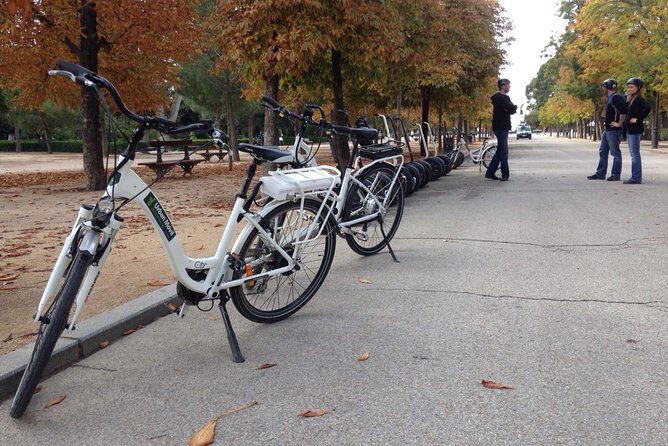
At about $42.06 per person for roughly 2 hours, you’re paying for guided interpretation plus the logistics of a bike setup. What makes it feel reasonable is that the basics are included: the local guide, the bicycle, and the helmet. You’re also not paying for admissions for the landmarks called out, since the stops include free admission tickets where applicable.
That said, this tour isn’t “cheap sightseeing.” It’s more like buying time and ease. Two hours is enough to connect several top highlights—Centro and shopping-area streets, Plaza de Cibeles, Puerta de Alcalá, and a substantive visit to Retiro—without turning the day into a giant walking marathon.
If you already plan to spend time in this exact area anyway, the tour can save you effort: you don’t have to map a tight route, figure out bike rentals, and then guess which viewpoints matter most. If you’re the kind of traveler who enjoys wandering with no structure, you might prefer a self-guided walk and metro hop. But if you want clear storytelling and a faster path between highlights, the value tilts positive quickly.




Riding real Madrid: how to enjoy the crowds and still feel in control
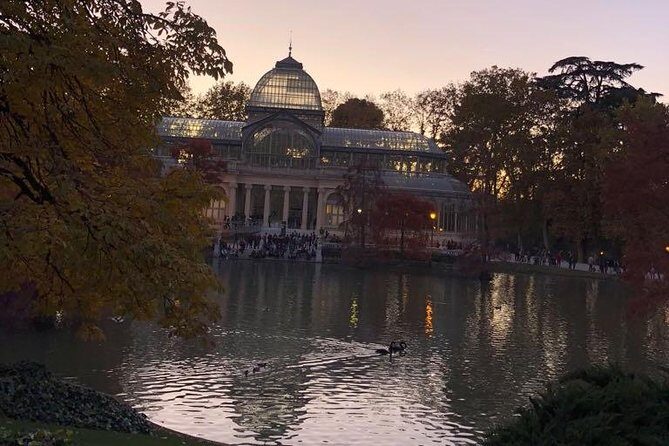
One of the only true watch-outs is the traffic and pedestrian overlap. The ride includes city streets and busy public areas, and you can expect moments where you’re navigating around walkers. This isn’t a reason to skip the tour—it’s a reason to ride smart.
Here’s how I’d plan your mindset:
- Stay relaxed about slow moments. The guide will keep the group moving as conditions allow.
- Keep your eyes up. In busy squares, people may step into your path without looking for bikes.
- Don’t fight the pace. Short stops and turns are part of the rhythm, especially near iconic places.
Also, check your bike at the start. You’re given a helmet and bike, but bike comfort and basic safety are still on you. Make sure the seat feels right, you can brake smoothly, and your steering is comfortable before you roll into the denser parts of the city.
Finally, language choice matters. The tour is offered in English. If you’re booking for a specific language and you care a lot about how clearly the stories come across, it’s worth double-checking that the guide’s language matches your needs before you head out. Clear narration is half the value on tours like this.
What the timing and group size really mean
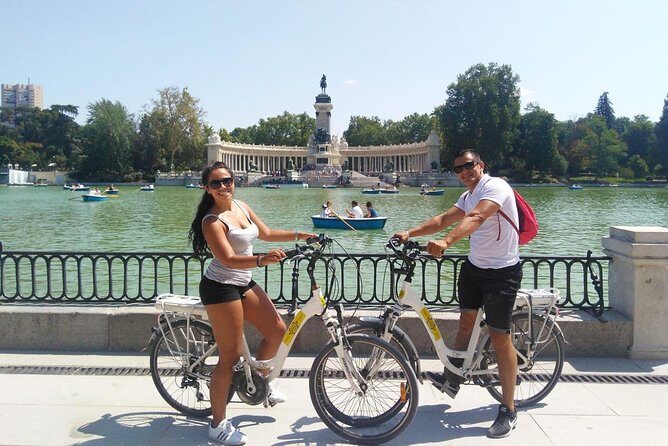
This experience is about 2 hours, with a structure that balances movement and pauses. Puerta de Alcalá is a short, focused stop (around 5 minutes), while Retiro gets the longest dedicated time (about 45 minutes). That tells you the “meat” of the experience is the park, but the “framework” is the central monuments that anchor where you are in Madrid’s story.
The group cap is 25 travelers. That matters because bigger groups can turn into slow chains where you constantly stop and start. With a smaller ceiling, you generally get better cohesion. Still, urban rides can feel crowded in stretches, so expect a lively atmosphere at squares and near entrances.
The tour uses a mobile ticket, and you’ll confirm at booking. It also ends back at the meeting point, so your logistics are simple. You won’t be stranded across town after the ride—you’re back where you started.
Who should book this Retiro bike tour
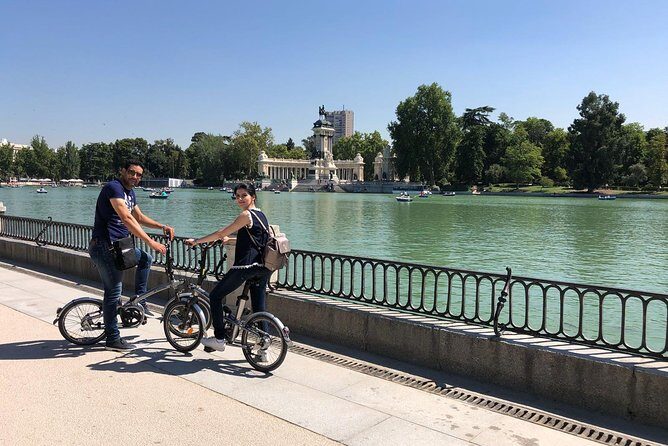
This is a good fit if you want:
- A bike-friendly way to cover Madrid’s big landmarks without turning the day into a 20,000-step competition.
- Clear guide storytelling that helps you understand names, monuments, and why the park matters.
- A mix of city energy and a real pause in Retiro—about 45 minutes is enough to feel like you escaped, not just parked.
It may be less ideal if you:
- Struggle with moderate physical activity or uneven pacing.
- Get very anxious in crowded pedestrian settings.
- Need completely quiet, low-traffic sightseeing.
If you’re traveling solo or in a small group, this is one of those tours that can quickly give you confidence in the city layout. Even if you don’t speak a lot of Spanish, you’re guided to the highlights and given context so you can connect the sights later on your own.
Should you book? My honest take
Book it if you want a time-saving, story-led way to see Madrid’s central icons and then enjoy a proper chunk of Retiro without planning rentals or building an itinerary from scratch. The included bike and helmet lower friction, and the stop mix covers both “Madrid monuments” and “Madrid breathing space.”
Skip it (or at least reassess) if you’re sensitive to crowding and close-quarter navigation. Also, if language quality is a deal-breaker for you, confirm the guide language at booking since the narration is a key part of what makes this tour satisfying.
FAQ
What’s the duration of the Retiro Park bike tour?
The tour is listed as about 2 hours.
How much does the tour cost?
The price is $42.06 per person.
Where do I meet for the tour?
The meeting point is Wonder Tours / Tour Operator, Calle de Santiago, 18, Centro, 28013 Madrid, Spain.
Is the bike and helmet included?
Yes. The tour includes use of a bicycle and a helmet.
Is the tour offered in English?
Yes. The tour is offered in English.
Do I need to pay for admission at the main stops?
The information provided notes free admission tickets for Puerta de Alcala and Parque del Retiro.
What physical fitness level do I need?
The tour asks for a moderate physical fitness level.
How large is the group?
The tour has a maximum of 25 travelers.
Is there free cancellation?
Yes. You can cancel up to 24 hours in advance for a full refund.