Segovia feels like a time machine. This half-day guided tour from Madrid strings together the big three eras in Segovia’s stonework: Roman, Gothic, and medieval, starting with the famously well-preserved Roman aqueduct. I especially like the way the route begins with something so visually dramatic that you instantly get why Segovia matters.
You’ll also get one clear advantage that makes the day easier: you’re in an air-conditioned vehicle with an official bilingual English-Spanish guide doing the legwork. One caution: if the bus runs late, your time in Segovia can feel compressed, since the schedule still has to stay on track.
In This Review
- Key Things to Know Before You Go
- Leaving Madrid for Segovia: How the 11-Hour Schedule Works
- Roman Aqueduct First: Segovia’s Signature Moment
- Segovia Cathedral in the Main Square: Gothic Where You Can Pause
- Church of St Stephen: The Quiet Medieval Stop With a Romanesque Bell Tower
- The Alcázar of Segovia: Castle-Palace on a Rocky Crag
- A small morale boost: food when it’s cold
- Using Your Free Time Like a Pro (Instead of Wandering)
- Transportation and Group Comfort: The Part You Can Count On
- Price and Value: What $51.20 Gets You
- Pacing and Logistics: When the Day Feels Tight
- Should You Book This Segovia Tour?
- FAQ
- FAQ
- What time does the Segovia tour start from Madrid?
- How long is the tour?
- What’s included in the tour price?
- What stops are part of the guided experience?
- Is there free time during the tour?
- Where do I meet the tour in Madrid?
- Can I cancel and get a full refund?
- What’s the group size limit?
Key Things to Know Before You Go
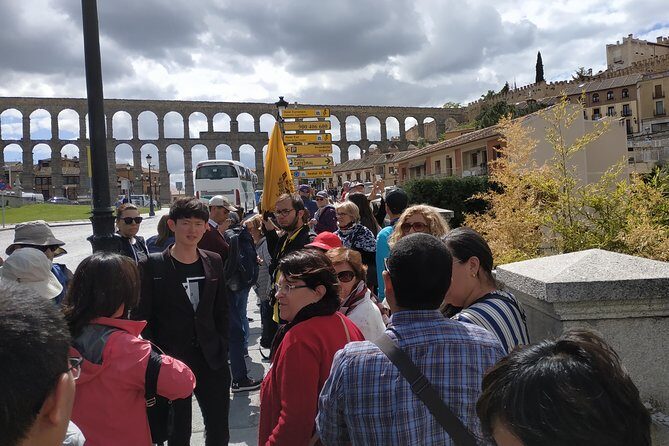
- Roman aqueduct first: an elevated, preserved landmark that sets the whole tone of the city
- Three landmark stops on foot: Segovia Cathedral, Church of St Stephen, and the Alcázar area
- Free time at the end: you control where you eat and what you revisit
- Bilingual official guide: English-Spanish narration built in while you’re walking
- Smallish group size: up to 55 people, which helps the pace feel manageable
Leaving Madrid for Segovia: How the 11-Hour Schedule Works
This is a long day by clock time, even though it calls itself half-day. It starts at 9:00 am in central Madrid at C. de San Bernardo, 5, Centro, 28013 Madrid, and the whole experience runs about 11 hours. That’s the tradeoff: you’re not just sightseeing, you’re also traveling to and from Segovia in a comfortable, air-conditioned vehicle.
The tour is a bilingual guided walking format, and the vehicle part matters more than you might think. Segovia is easy to fall behind on if you’re trying to self-manage transport and walking plus time for meals. Here, someone plans the flow for you, and you get the bonus of free time later to do it your way.
Another practical note: the tour includes a mobile ticket, and it’s confirmed after booking. The group caps at 55 people, so you won’t feel like you’re moving through a stadium crowd.
You can also read our reviews of more tours and experiences in Madrid.



Roman Aqueduct First: Segovia’s Signature Moment
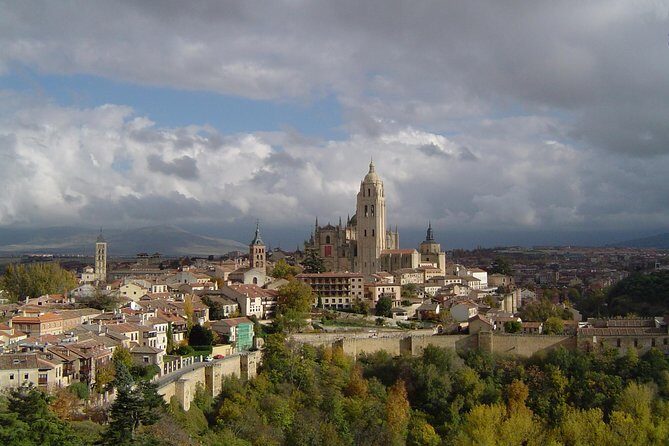
Your first stop is one of the best-preserved elevated Roman aqueducts and the foremost symbol of Segovia. This is a smart way to start, because it gives you a frame for the rest of the city. Before you climb into medieval streets and castle views, you see the Roman engineering that helped make the settlement possible and memorable.
When you’re standing near the aqueduct, focus on what’s still physical and obvious: it’s preserved and elevated, which means it’s not just ruins you have to imagine. It’s a clear, intact structure. That makes it easier to understand why this landmark is treated like a symbol rather than a side stop.
If you’re the type who likes photos that actually tell a story, this is your anchor shot. From there, the guided walk naturally shifts from infrastructure to religious and military architecture.
Segovia Cathedral in the Main Square: Gothic Where You Can Pause
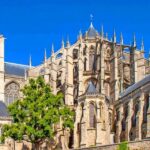
Next comes Segovia Cathedral, described as a Gothic-style Roman Catholic cathedral in the main square. It’s dedicated to the Virgin Mary, and the building work is mid-16th century in style and era.
This stop works well for two reasons. First, the cathedral is in the main square, so you’re not hunting for it while your feet are already tired. Second, the architecture shift from Roman to Gothic is immediate and visible. Even if you’re not counting details, you’ll notice the change in feel when you’re looking at a Gothic-style façade and thinking in terms of a church built in the mid-16th century.
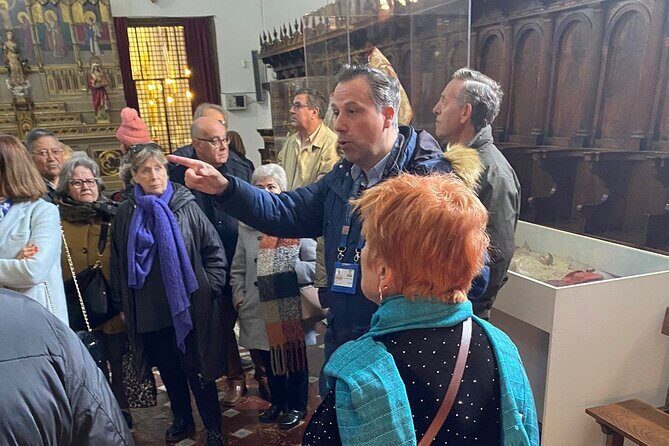
A practical rhythm tip: when the guide points things out, let yourself listen for a minute. Then give yourself a second when you stop and just look. This is one of those places where the surroundings matter, since the square helps you transition from guided walking to your own pacing.
Church of St Stephen: The Quiet Medieval Stop With a Romanesque Bell Tower
After the cathedral, you’ll head to the Church of St Stephen, one of several medieval churches in Segovia. The church dates to the 12th century, and what to zero in on is its Romanesque bell tower.
This isn’t a huge “look at me” stop compared to the aqueduct or the Alcázar, and that’s exactly why it can be satisfying. It gives your eyes a different kind of detail: Romanesque architecture tends to feel heavier and more grounded than Gothic forms. The bell tower is also a strong landmark, so you can still orient yourself even if you’re only spending a short time there.
If you’re walking with kids, or you’re someone who gets museum fatigue, this stop can break up the day in a helpful way. It’s medieval, it’s specific, and it doesn’t demand a long time commitment to appreciate it.
The Alcázar of Segovia: Castle-Palace on a Rocky Crag
Then comes the biggest visual payoff: the Alcázar of Segovia. It’s a medieval alcázar and part of a UNESCO World Heritage setting. The setting is half the drama. The building rises out on a rocky crag above the confluence of two rivers near the Guadarrama mountains, and it’s described as being shaped like the bow of a ship.
That description isn’t just poetic. When you see it, the form helps you understand why this castle is so recognizable. It’s not a random fortress on a hill; it’s a distinctive shape that dominates the skyline and gives Segovia a strong identity.
The guide-led context matters here. The Alcázar began as a fortress, then served as a royal palace, a state prison, and later used by the Royal Artillery College and a military academy. Today, it’s used as a museum and for military archives.
So even though you’re primarily sightseeing from the outside during a walking tour, the layers of use help you make sense of what you’re seeing. You’re looking at a structure that kept changing jobs as Spain’s needs changed.




A small morale boost: food when it’s cold
If the day is chilly (and Segovia can be), plan to warm up at the palace area cafeteria. One highlight that stood out: on a cold day, the cafeteria served hot chocolate and Irish coffee, and people were genuinely excited about it. After hours of walking, that kind of simple comfort feels like a win, not an afterthought.
Using Your Free Time Like a Pro (Instead of Wandering)
The tour includes ample free time at the end, so you can eat, explore, and sightsee at your own pace. That’s a big deal on a day trip like this because you don’t have to guess what matters most to you while you’re tied to a group schedule.
Here’s how I suggest you use it:
- If you want photos, prioritize the areas you liked most during the guided stops. The aqueduct views and Alcázar surroundings are the best “repeat” candidates.
- If you want food, treat this free time as your meal window, not as a vague bonus. You’ll get better results if you go when you’re ready rather than waiting until you’re hungry and rushed.
- If you feel like you missed a detail earlier, this is your chance. The cathedral square and the medieval streets around the stops are good places to slow down.
One more practical thought: the free time comes after the guided portion, so if you’re hoping to linger inside a specific building for a long stretch, decide what you want most early. The guide can’t magically extend your schedule if you’re waiting until the last minute.
Transportation and Group Comfort: The Part You Can Count On
This experience is not just walking. It includes transportation to and from Madrid in an air-conditioned vehicle, which is exactly the kind of comfort you notice more on a long day than you’d expect. The itinerary starts at 9:00 am, and you’re spending hours in transit and on foot, so a comfortable bus helps you arrive ready.
The group limit of up to 55 people also helps keep the rhythm workable. Large crowds can make landmark stops feel chaotic; this is capped well enough that the guide can still guide rather than just herd.
Also, it’s designed with a practical reality in mind: it’s said that most people can participate. That suggests the walking isn’t described as extreme in the information provided, though you’ll still want comfortable shoes for a guided city route.
Price and Value: What $51.20 Gets You
The price is listed at $51.20 per person. That number can sound either low or too low, depending on what you’re comparing it to. The real value here is that you’re paying for three things at once: a bilingual official guide, guided walking in the city, and round-trip transportation from Madrid.
If you try to DIY this kind of day, you end up spending time figuring out transport and you lose the advantage of having someone connect the landmarks into a coherent story. Here, the tour handles the “how to see it” part, and you still get independent time at the end.
One thing you should keep in mind: the information provided doesn’t spell out extra services beyond what’s listed as included. So if you’re hoping for specific add-ons like meals or special entries, you’ll want to confirm what’s covered by the tour once you book.
Still, for a day that includes the Roman aqueduct symbol stop, the Gothic cathedral stop, a medieval church stop, and the Alcázar setting, the escorted format plus transport is good value if your time is limited.
Pacing and Logistics: When the Day Feels Tight
This tour runs about 11 hours total. That’s long enough that timing matters. The itinerary is structured to hit major sights and still leave time for meals and extra exploring at the end, but it’s not a slow, lounge-around kind of outing.
Here’s the key risk: there’s at least one issue that can throw pacing off—if the bus arrives late to pick you up, you can lose time in Segovia because the day still has to end at the scheduled return. If you’re trying to catch later plans in Madrid, build in slack rather than assuming the schedule will be perfect.
My practical advice:
- Treat the end free time as meaningful, not optional. If you want to eat well and see at your pace, plan to spend part of that window on food.
- Wear layers. You’re walking in an outdoor city for a while, and cold weather can make breaks feel necessary.
- Bring your energy for the Alcázar area. It’s the crown moment, and you’ll want a calm mindset to enjoy it rather than rush it.
Should You Book This Segovia Tour?
Book it if:
- You want a guided intro to Segovia’s Roman-to-medieval arc without coordinating transport yourself.
- You like seeing the big landmarks in one stretch: the Roman aqueduct, Segovia Cathedral, Church of St Stephen, and the Alcázar.
- You value structure in the morning and freedom at the end for your own meal and wandering pace.
- You appreciate the comfort of air-conditioned round-trip transport from Madrid.
Skip it or consider an alternative if:
- You’re the kind of person who needs lots of unhurried time for one site, especially museums or indoor stops, since this is designed to cover multiple landmarks plus free time.
- You have tight commitments later in Madrid and can’t tolerate the possibility of schedule compression.
FAQ
FAQ
What time does the Segovia tour start from Madrid?
It starts at 9:00 am.
How long is the tour?
The duration is listed as approximately 11 hours.
What’s included in the tour price?
Included are a bilingual English-Spanish official guide, an air-conditioned vehicle, and a bilingual guided walking tour around the city, plus transportation to and from Madrid.
What stops are part of the guided experience?
The tour visits the Roman aqueduct, Segovia Cathedral, the Church of St Stephen, and the Alcázar of Segovia.
Is there free time during the tour?
Yes. There is ample free time at the end to eat, explore, and sightsee.
Where do I meet the tour in Madrid?
The meeting point is C. de San Bernardo, 5, Centro, 28013 Madrid, Spain.
Can I cancel and get a full refund?
Yes. There is free cancellation, and you can cancel up to 24 hours in advance for a full refund.
What’s the group size limit?
The tour has a maximum of 55 people.