REVIEW · SEGOVIA
Segovia: Private City Walking Tour with Alcázar of Segovia
Book on GetYourGuide →Operated by Tour Travel & More · Bookable on GetYourGuide
Segovia compresses centuries into one walk. I really like how this private tour ties together Roman engineering and the Alcázar’s royal interiors without turning it into a museum lecture. You get a guided loop through the city’s big photo moments and the story behind how Roman, Muslim, Jewish, and Christian communities shaped Segovia.
The one thing to weigh is pace: it’s a 3-hour walking experience in rain or shine, so comfortable shoes matter more than you think, especially if you’re the type who likes to stop and look up a lot.
In This Review
- Key highlights to look forward to
- Why this Segovia tour works: Roman aqueduct to royal halls
- Starting with pickup and an orientation you can feel
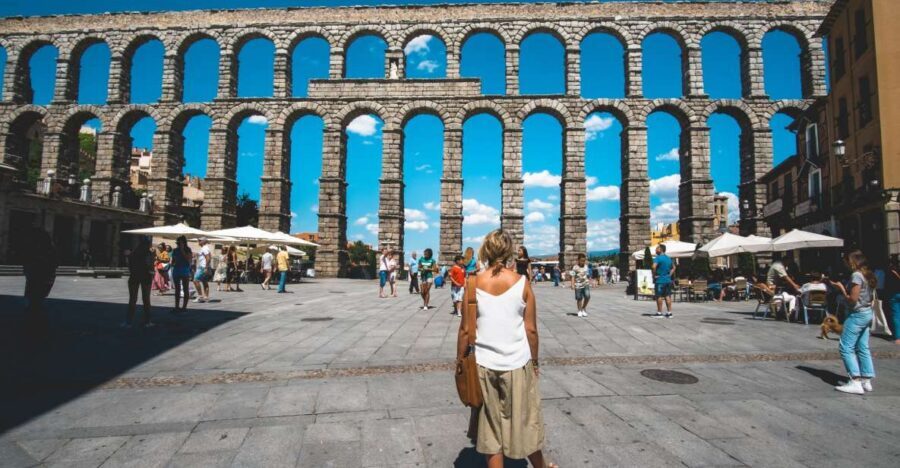
- The Roman aqueduct: why this stop deserves the time
- Casa de los Picos and the granite “points” you’ll never forget
- Plaza Sirenas and Medina del Campo: where the city feels grand
- San Martín church: Romanesque style with Mozarabic roots
- The Jewish quarter near Plaza Mayor and cathedral views
- Medieval city walls: seeing the edges of old power
- Entering the Alcázar of Segovia: a palace and a fortress
- Price and value: is $158 per person worth it?
- What to pack, wear, and do on a rain-or-shine day
- Who this private Segovia tour fits best
- Should you book this Segovia private walking tour with Alcázar?
- FAQ
- How long is the Segovia private city walking tour with the Alcázar?
- What is included in the price?
- Do I skip the ticket line for the Alcázar?
- Where does the tour start?
- What languages are available for the live guide?
- Is the tour wheelchair accessible?
- What should I bring?
Key highlights to look forward to
- Over 1,800-year-old Roman aqueduct: a standout stop with serious photo payoff
- Casa de los Picos façade: spot the granite “points” as you move through town
- Sirenas and Medina del Campo squares: grand, open spaces that frame the old city
- Mozarabic church of San Martin: a Romanesque-style church stop for cultural context
- Jewish quarter and Plaza Mayor area: a different Segovia angle near the cathedral view
- Alcázar entry plus skip-the-line: guided access to gilded royal spaces
Why this Segovia tour works: Roman aqueduct to royal halls
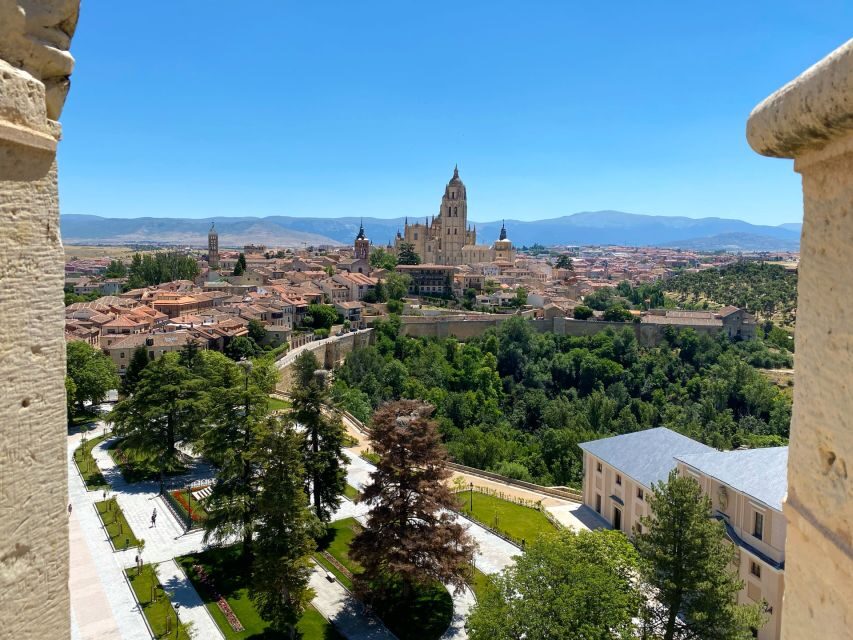
Segovia has a talent for making time feel close. One minute you’re staring at a Roman structure that’s been standing for more than a thousand lifetimes; the next you’re walking through plazas where medieval and later Christians built their city around earlier layers. This private format helps because your guide can connect the dots as you go, instead of you having to piece it together on your own.
I like the balance here. You spend real time outdoors for the major city visuals—the aqueduct, squares, and walls—then you step inside the Alcázar so the story has a finished edge. The Alcázar isn’t just a pretty castle stop; it’s a palace-fortress where Castilian royalty once lived, and you’ll see how that power shows up in the interiors, including gilded ceilings.
The tour is also built for questions. When you’re given the right explanations at the right moments—like why Segovia’s heritage reads differently street by street—the city starts to make sense fast. If you enjoy history as a walkable map, this fits your style. If you want a short stop-and-go sightseeing checklist only, you might find 3 hours a bit long.
You can also read our reviews of more walking tours in Segovia

Starting with pickup and an orientation you can feel
This tour starts with your guide meeting you at your accommodation centrally, or at a central meeting point. That small detail matters in Segovia, where you don’t want to burn vacation time figuring out the best entrance points or crisscrossing streets while the light changes.
Once you’re gathered, you’ll get a guided plan of what you’re seeing and why it mattered. That’s the difference between simply moving between sights and actually understanding the pattern: Roman infrastructure, later Islamic-era influence, Jewish quarters, and Christian-era changes all leaving visible marks. You’ll notice it most in the way the guide frames each stop—where you’re standing, what used to be there nearby, and what you should pay attention to when you take photos.
It’s a private group for 3 hours, and the guide works in English or Spanish. Private usually means less rushing. You can ask small questions without feeling like you’re interrupting a bus-sized line of people.
And yes, it runs rain or shine. So your plan should assume you’re out walking. Bring water, and dress for damp streets if the weather looks uncertain.
The Roman aqueduct: why this stop deserves the time
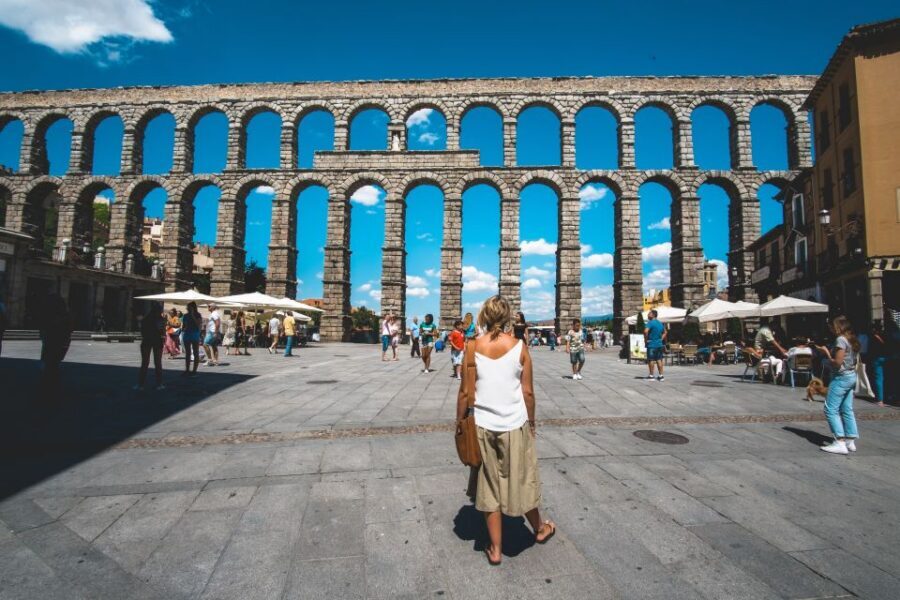
The Roman aqueduct is the star in the practical sense: it’s the kind of monument that looks dramatic from a distance and becomes more impressive the closer you get. It’s described as over 1,800 years old, and when you see it in person, that number stops being a fun fact and becomes a feeling. How many cities have carried on underneath something like this for nearly two millennia?
What I like about this stop is the way your guide turns it into more than a photo. Roman aqueducts were engineering projects, and here you can see the scale and the intent. You’ll be able to snap pictures of the structure, but you’ll also get the context behind why this aqueduct mattered to Segovia’s growth.
Photo tip that doesn’t require fancy gear: don’t only shoot straight-on. Move a few steps so you can catch the aqueduct rhythm against the older streets and rooftops. The stone has texture, and that texture shows best when the light hits at an angle. If it’s overcast, you’ll still get good results—Roman stone often photographs nicely in softer light.
One consideration: this is a walking tour. If you prefer monument stops where you can park your body and linger for ages, budget your time. You’ll have enough time for good photos, but you’re still moving through the city.
Casa de los Picos and the granite “points” you’ll never forget
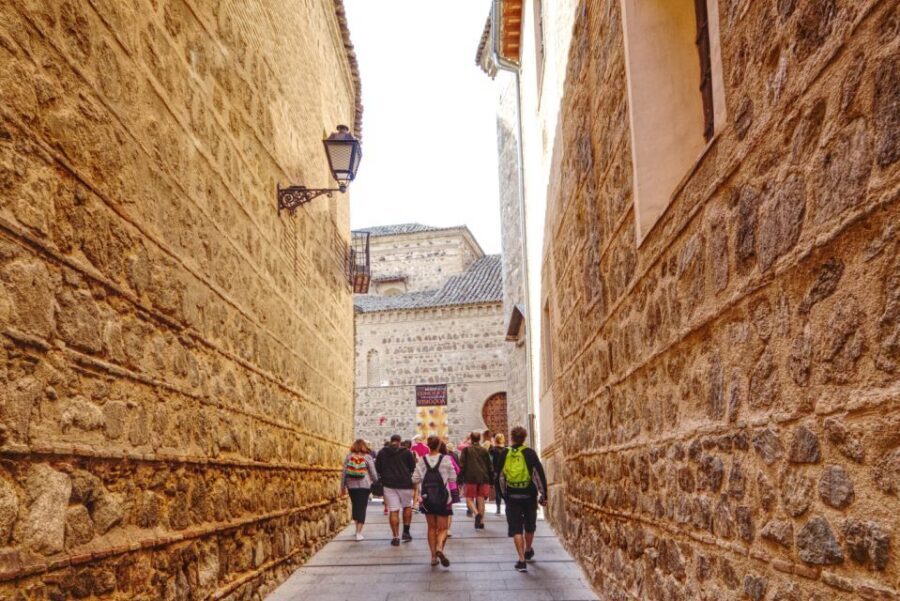
After the aqueduct, you’ll keep moving through the older urban fabric, including a stop by the Casa de los Picos façade. This building is known for its granite points—those jagged, textured details that look decorative but also feel distinctly structural, like the stone itself is doing the storytelling.
What makes this stop valuable is the contrast. The aqueduct shows you Roman infrastructure at scale. Casa de los Picos shows you a later Segovia expression: how wealth and style show up in stonework and façades. When your guide points out what to look for, the façade stops being just an interesting door front and becomes a clue about the city’s aesthetic choices over time.
This is also one of those stops where slowing down helps. You’ll probably find yourself automatically looking up because the design is meant to be seen from the street. If you enjoy architectural details, you’ll feel rewarded here.
Plaza Sirenas and Medina del Campo: where the city feels grand
The tour then works through Segovia’s public spaces: the Sirenas and Medina del Campo squares. Squares are more than a break from walking. In historic cities, they’re the stages where communities gathered, traded, celebrated, and argued. Even now, they help you understand the layout of the old center.
Expect to pause for photos and quick context. The guide’s job is to explain why these spaces matter in Segovia’s timeline—how different eras influenced where people built, worshipped, and controlled movement through town.
If you like architecture and atmosphere, these squares are a good moment to slow down just enough to notice the buildings around you: the lines, stone tones, and the way the streets funnel into open areas. If you don’t like crowds or you’re sensitive to tight spaces, open squares often feel like mental breathers on a walking tour.
The only drawback is timing. On a 3-hour itinerary, you get a taste, not a full neighborhood marathon. You’ll likely want to come back later on your own if you’re the type who falls for plazas and keeps photographing them.



San Martín church: Romanesque style with Mozarabic roots
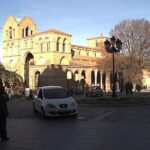
Next up is the Mozarabic church of San Martin, built in the Romanesque-style. This is a fascinating kind of stop because it sits at the intersection of culture and design. “Mozarabic” signals a layered past tied to how communities lived and worshipped during complex historical periods, while Romanesque style points to the architectural language of the era.
What I like about including this church on a private walk is how it balances the outdoor monuments. You get a chance to shift from stone engineering and royal grandeur to the quieter, more human side of history—what people built for faith and daily community life.
Practical note: churches can feel cooler than the street, so dress accordingly. If it’s raining, indoor stops are a welcome reset.
The Jewish quarter near Plaza Mayor and cathedral views
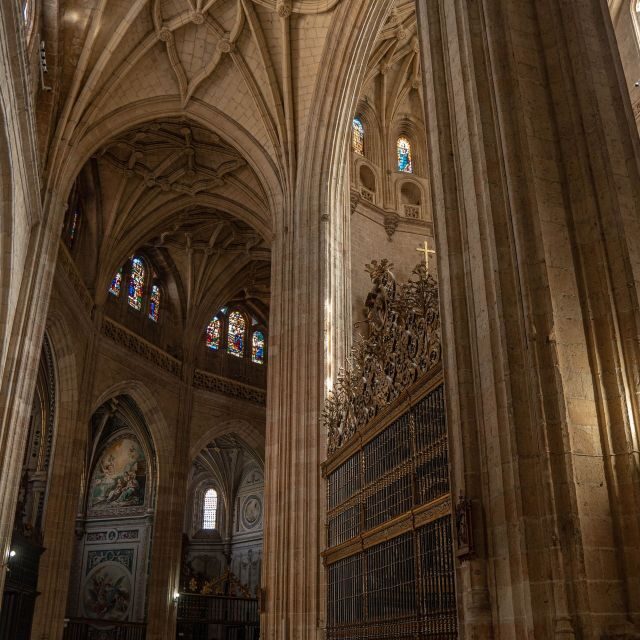
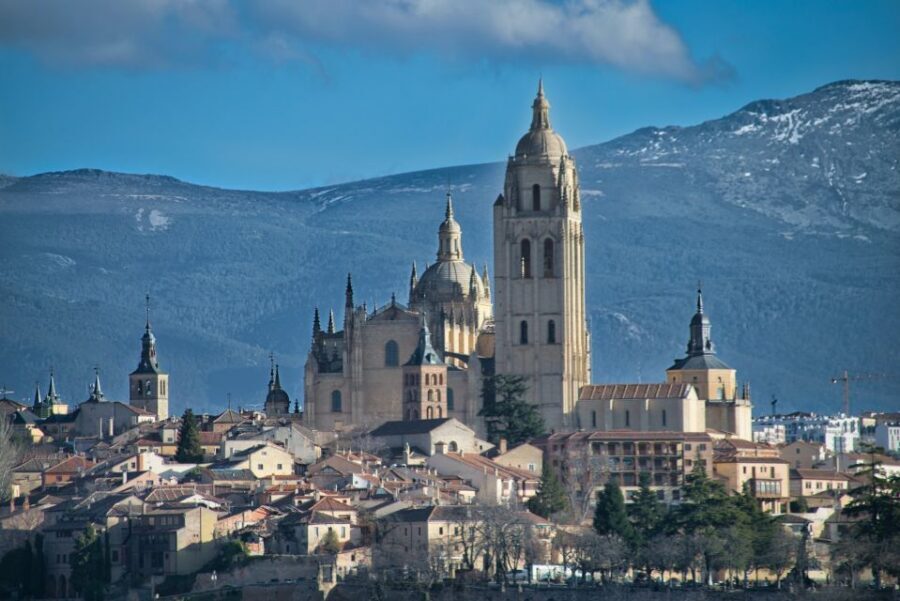
Then comes a major Segovia identity zone: the Jewish square next to Plaza Mayor. From there, you’ll be able to view a cathedral that’s described as having Gothic and Renaissance style elements. Even if you only get an external view, it’s a useful way to see how architectural style changed over centuries.
This part of the tour works especially well if you like to understand how neighborhoods evolve. The guide helps connect what you’re seeing in the streets to the idea of Segovia as a multi-layered city—Roman, Muslim, Jewish, and Christian influences showing up in different parts of town.
I also like the flow: you’re not stuck in one “history zone” the whole time. You move from squares to church to Jewish quarter to cathedral views, and the city starts to read like a story with chapters, not separate attractions.
Medieval city walls: seeing the edges of old power
You’ll also arrive at the medieval city walls’ remains. City walls can be surprisingly emotional because they show boundaries: where protection ended, where the city’s identity began, and how power was organized in stone.
On this tour, the walls aren’t just a background. They’re a transition point. They help you feel the defensive side of Segovia before you move into the Alcázar, which is basically the same idea—protection mixed with prestige—just scaled up.
If it’s a wet day, uneven surfaces near old walls can be slick. Take your time here. The best walking tours always encourage slow confidence.
Entering the Alcázar of Segovia: a palace and a fortress
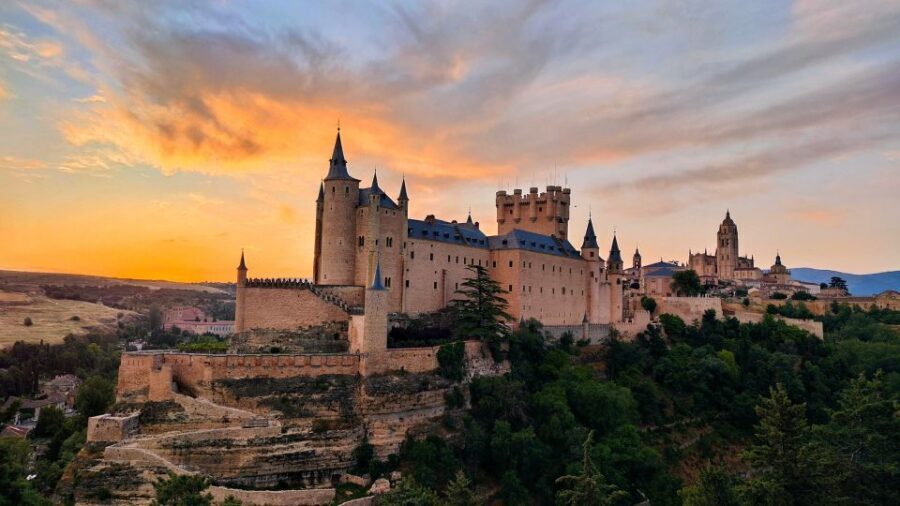
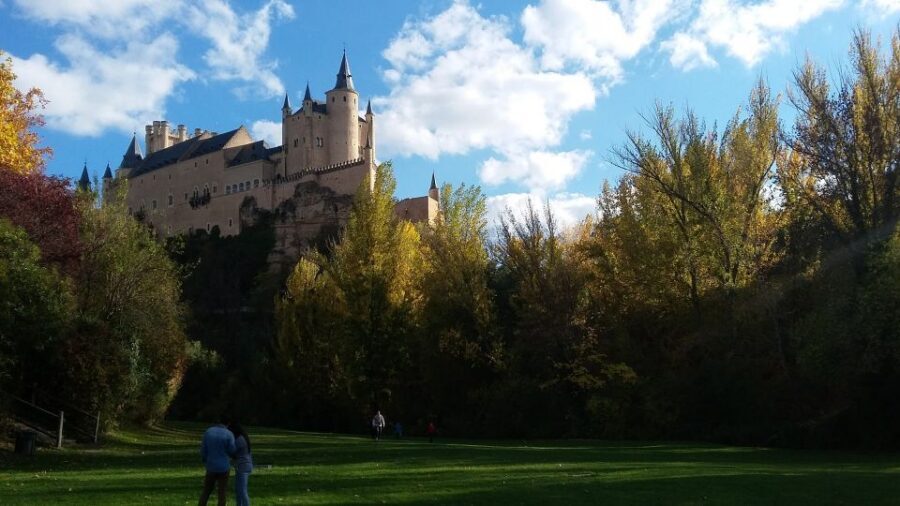
The big finale is the Alcázar of Segovia. You’ll enter the royal palace and fortress, with entrance fee included and skip-the-ticket-line handling so you spend more time inside where the details matter.
Here’s what makes the Alcázar special beyond the obvious exterior silhouette: it’s described as having lavish royal interiors, with gilded ceilings. That’s the kind of detail that changes how you interpret the whole castle. Outside, it looks like a strong, iconic fortress. Inside, you see how Castilian royalty lived—how power was displayed in ornament, materials, and layout.
As you move through the halls, your guide helps connect the setting to the idea of royal life in a place that could also defend itself. It’s a reminder that castles weren’t only for war; they were also the stage for administration and status.
Tip for enjoying the interior: don’t rush straight from one room to the next. Pick moments to pause where the ceilings and ornamental details are easiest to spot. Even if you’re not a “castle person,” the combination of palace comfort and fortress purpose makes the Alcázar a memorable stop.
And because this is a guided private tour, you won’t just be reading plaques. You’ll be hearing explanations that make the building’s choices feel logical.
Price and value: is $158 per person worth it?
At $158 per person for a private 3-hour walking tour, the price isn’t “cheap,” but it’s often fair for what you get: a private guide, hotel pickup at a central location or central meeting point, skip-the-ticket-line, and the Alcázar entrance fee included.
Where the value shows up for you:
- You don’t have to organize multiple tickets and timing yourself.
- The guide helps you understand why each stop fits into Segovia’s layered identity.
- You get a smooth route through several major areas: aqueduct, squares, church, Jewish quarter area, walls, and the Alcázar interior.
The private element is the biggest difference. If you’re traveling with someone who likes asking questions, private time pays off. If you prefer silent sightseeing, you might feel the cost more strongly because the guide’s explanations are part of the value.
A smart way to decide: ask yourself whether you want a quick highlights walk or a guided “make it make sense” experience. If you want the story to click, this pricing aligns well with your goal.
What to pack, wear, and do on a rain-or-shine day
This tour takes place rain or shine, so your gear matters. Keep it simple and functional.
Bring:
- Comfortable shoes (non-negotiable for stone streets)
- Water and something to snack on if you need it (food isn’t included)
- Comfortable clothes for changing conditions
- Cash (handy to have, since the tour info specifically mentions it)
During the tour, plan to stop for photos at the aqueduct and in the squares. You’ll also want to take time inside the Alcázar for ceiling and interior details. The guide can point you toward what’s worth focusing on so you don’t waste time photographing the same angle repeatedly.
If you tend to get cold on walking tours, bring a light layer. If it’s sunny, you’ll still want water during the outdoor segments.
Who this private Segovia tour fits best
I’d steer you toward this tour if you:
- Want a guided walk that connects Roman, Muslim, Jewish, and Christian influences
- Like architectural details and not just big monuments
- Want private pacing for adults or couples who prefer less crowd pressure
- Appreciate finishing with an iconic UNESCO World Heritage site interior visit
It’s also a good fit if you’re visiting Segovia for the first time and want a structured overview that still feels personal. And if your Spanish or English comfort is basic, the tour offers live guidance in English or Spanish, so you can follow along easily.
Should you book this Segovia private walking tour with Alcázar?
If your goal is to experience Segovia in a way that makes the city feel coherent—Roman aqueduct to medieval squares to royal interiors—then yes, I’d book it. The best reason is the combination: you see the exterior city highlights and then you get to understand the Alcázar from the inside, with an expert guide and entrance fee included.
I’d only hesitate if you have mobility limits or you dislike long indoor-outdoor walking on a rain-or-shine schedule. Otherwise, this is the kind of 3-hour tour that gives you real leverage: it helps you see Segovia clearly, not just quickly.
One more bonus from real-world experience with this provider: guides can be excellent at turning the Jewish quarter and Plaza Mayor area into something you understand, not just something you pass by. One guide named Coral is noted for answering questions well and even recommending restaurants afterward, which can help you keep the momentum going once the tour ends.
FAQ
How long is the Segovia private city walking tour with the Alcázar?
It lasts 3 hours.
What is included in the price?
A private guide for 3 hours, meeting with the guide at your centrally located hotel or a central meeting point, and the entrance fee to the Alcázar of Segovia.
Do I skip the ticket line for the Alcázar?
Yes, the tour includes skip-the-ticket-line entry.
Where does the tour start?
Your guide meets you at your accommodation centrally located, or at a central meeting point.
What languages are available for the live guide?
The tour is offered in English and Spanish.
Is the tour wheelchair accessible?
Yes, it is wheelchair accessible.
What should I bring?
Bring comfortable shoes, comfortable clothes, food and drinks, water, and cash.