Big sights, tight schedule, great payoff.
This long day links two World Heritage cities with bilingual walking tours and a round-trip bus. I like that the plan gives you big, recognizable icons in both places: the Segovia aqueduct and Alcázar, then Toledo’s layered religious history from Santa María la Blanca to the Cathedral. One drawback to keep in mind: the day is long, and bus timing and comfort (especially air-conditioning) can make a noticeable difference by late afternoon.
In Segovia you’ll start with a Roman showstopper and end with that famous ship-bow castle view above the river bend. In Toledo, the walking tour format helps you grasp how Jewish, Muslim, and Christian cultures shaped the city’s buildings and stories over centuries. If you hate crowds, or if you want extra time for photos and slow browsing, you may feel rushed.
In This Review
- Key takeaways before you go
- A two-city day that hits the big icons early
- Segovia’s Roman aqueduct and the ship-bow Alcázar
- Quick Segovia tips that help
- Toledo’s “three cultures” route: synagogues, churches, and a cathedral
- The El Greco moment: why it’s worth planning around
- Churches and Altar-level details: why these stops stick
- Price and logistics: what your $77.06 actually buys
- Bus comfort note (important)
- Who this tour is best for (and who should consider two days)
- Guide style: the difference between a good and a great day
- Final verdict: should you book Segovia & Toledo?
- FAQ
- What time does the tour start?
- Where do we meet in Madrid?
- How long is the day trip?
- Is the tour offered in English?
- What size is the group?
- What does the price include?
- Is entry to all monuments included?
- Does the tour end back at the same meeting point?
- Will I receive my ticket digitally?
- Is the tour suitable for most travelers?
Key takeaways before you go
- Roman aqueduct first: a photo-friendly opener with instant “wow” factor.
- Alcázar shapes Segovia: learn why it looks like a ship and how it changed roles over time.
- Toledo’s three-cultures story: you’ll connect streets and monuments to the city’s older past.
- Expect walking: walking tours are the core format in both cities.
- Group size can vary: some days may feel bigger, which can affect attention and English level.
- AC and timing matter: several reviews point to comfort issues when traffic runs long.
A two-city day that hits the big icons early
This tour is built for travelers who want two cities’ worth of “I can’t believe that’s here” moments in one day. You leave Madrid at 9:00 am and you’re back at the same meeting point later the same day. Total time runs about 11 hours 30 minutes, so you’ll be active, walking in historic centers, and relying on bus connections between towns.
The best part of a format like this is momentum. You’re not spending half the day figuring out where to go. A guide takes you from one landmark to the next, and the commentary helps the buildings make sense fast—especially in Toledo, where the city’s identity is partly the overlap of faiths and eras.
The catch is energy. By mid-to-late afternoon, you’re likely to feel it—especially if you get a bus delay or you’re stuck in slow-moving traffic. Pack for a day that’s more “marathon with breaks” than “leisure stroll.”
You can also read our reviews of more tours and experiences in Madrid.



Segovia’s Roman aqueduct and the ship-bow Alcázar
Segovia is the easier city to love fast. It’s compact, and the key sights feel close together once you get your bearings. The tour begins with one of the best-preserved Roman aqueducts, a structure that still looks engineered for accuracy and endurance. I love starting here because it sets the tone: you’re seeing what power and planning looked like long before castles and cathedrals.
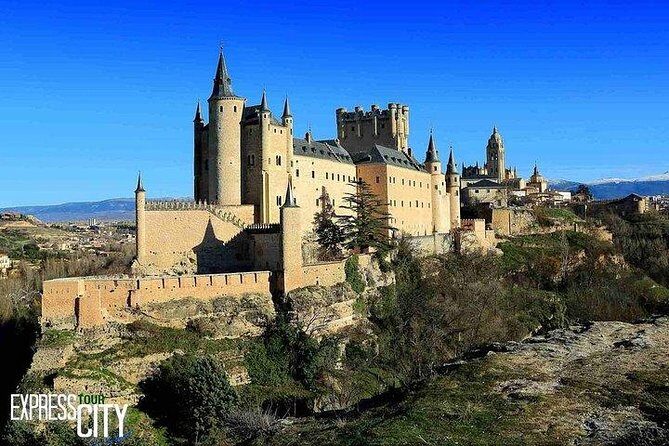
From there, you head to the Alcázar of Segovia, a medieval castle-palace perched on a rocky crag above a river junction near the Guadarrama Mountains. The signature detail is the shape—often described as like the bow of a ship—and the guide’s job is to help you read that shape as more than a cool silhouette.
Why the Alcázar matters:
- It wasn’t just “a castle.” It shifted roles over centuries: fortress, royal palace, prison, and later a military college and academy.
- Today it’s used as a museum and archive building, so you’re not only looking outward at views; you’re also getting context for how the site was used.
One practical consideration: several reviews mention ticket or entry issues around major sites in Segovia. Even when the tour stops at the right places, your ability to go inside may depend on on-site conditions and timing. If you’re the type who needs to be inside every major monument, treat the guided stops as the backbone, not a guarantee of full access to every interior space.
Quick Segovia tips that help
- Wear shoes with grip. Segovia streets can be uneven and you’ll likely walk more than you expect for a “short sightseeing” day.
- Bring water. You’re outside and climbing/descending around viewpoints and old streets.
- If you spot a pastry shop you love, consider grabbing something earlier rather than assuming you’ll have time at the end.
Toledo’s “three cultures” route: synagogues, churches, and a cathedral
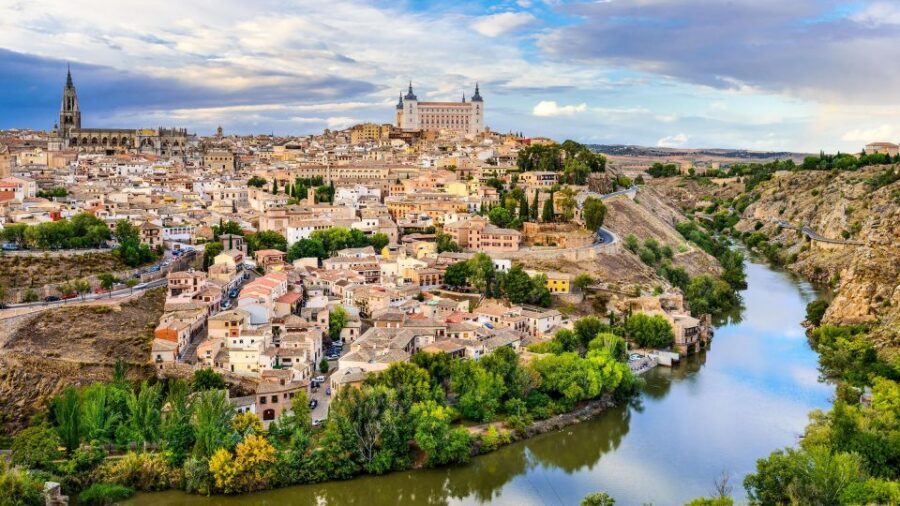
Then you shift to Toledo, and the tone changes. The city is famous for how Jewish, Moorish, and Christian influences overlapped across centuries. The walking tour framework helps because you don’t just view buildings—you learn what to look for and why it matters.
A major stop is the Synagogue of Santa María la Blanca (also known historically as the Ibn Shushan Synagogue). It dates to 1180 and is often described as among the oldest synagogue buildings in Europe still standing. Today it’s preserved by the Catholic Church and functions as a museum. That mix—historic Jewish architecture, then later preservation—makes it a powerful stop if you like seeing how later periods protect (and reinterpret) older spaces.
You’ll also visit the Church of St Stephen, a 12th-century medieval church in Segovia (distinct from Toledo, but included as part of the broader itinerary’s “church and tower” variety). The note about its Romanesque bell tower is helpful: when you’re in a tour day like this, tiny architectural features are easy to miss unless a guide points them out.
Toledo’s religious monuments keep escalating in scale and meaning. One of the highlights is the Primate Cathedral of Saint Mary of Toledo, a Roman Catholic cathedral and the seat of the Metropolitan Archdiocese of Toledo. It’s a key example of 13th-century High Gothic style in Spain, and you’ll learn why it’s frequently treated as a top Gothic achievement in the country.
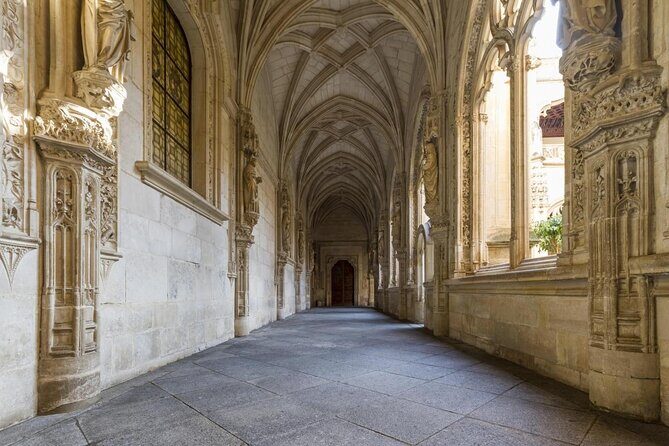
Also included is the Monastery of San Juan de los Reyes, built in the Isabelline style in the 15th century. It was founded by Ferdinand II of Aragon and Isabella I of Castile to commemorate both the birth of their son, Prince John and their victory at the Battle of Toro (1476) over Portugal.
The El Greco moment: why it’s worth planning around
You’ll hear about El Greco’s painting The Burial of the Count of Orgaz as part of the Toledo experience. That’s the kind of art stop that can take a tour from “architecture tour” to “personal connection,” especially if you like how art turns historical legend into something you can stand in front of.
But here’s the reality check: the itinerary is tight, and some reviews mention running short on time to reach certain El Greco-related locations. If El Greco is your main priority, arrive with a small plan in mind: which site matters most, and how you’ll handle a day that sometimes moves slowly.






Churches and Altar-level details: why these stops stick
A big reason this tour feels satisfying is that it balances monumental sights with places that have quieter detail. The Iglesia de Santo Tomé is an example: it’s tied to the Reconquest era and built on the site of an older mosque. That kind of layered construction is one of Toledo’s secrets—buildings carry past functions even when faith changes.
The tour’s inclusion of these churches helps you learn a key skill for Toledo: look at architecture like a timeline. A Roman structure, a Moorish-to-Christian transformation, a Gothic cathedral—each one answers a different question about who had power and what styles were in fashion.
That’s also why guided commentary matters here. If you’re trying to interpret the city on your own during a rushed schedule, it can get confusing fast. A good guide links details you’d otherwise miss—like the connection between reconquest-era church reuse and what you’re seeing in front of you today.
Price and logistics: what your $77.06 actually buys
At $77.06 per person, the value comes from two things: transport and interpretation. You’re getting a round-trip high-end bus from Madrid plus guided walking tours in both Segovia and Toledo in English (with bilingual support).
If you tried to piece this together yourself, you’d still pay for a long-distance day outing and you’d likely need separate tickets/transport arrangements. The tour format solves that by bundling it.
What it doesn’t automatically guarantee:
- Entry to every interior space at every stop isn’t clearly listed as included.
- Food isn’t mentioned as included, so you’ll want to budget for snacks and meals on your own.
- Timing and bus comfort depend on the day’s traffic and vehicle condition. Some reviews praised comfortable seating and working air-conditioning. Others reported hot buses, weak AC, seat recliner problems, and delays that ate into city time.
If you’re a “comfort-first” traveler, I’d plan for the worst and hope for the best. That means water, sun protection, and patience. If your schedule is strict, this tour can still work, but treat it as a full-day experience where small disruptions happen.
Bus comfort note (important)
A recurring theme is that the bus experience can swing. One day can feel fine; another day can turn muggy fast. If you’re sensitive to heat, consider dressing in breathable layers and having a small cooling option (like a handheld fan) in your day bag.
Who this tour is best for (and who should consider two days)
This day trip suits you if:
- You want a guided overview that helps you understand what you’re seeing without studying maps for hours.
- You’re comfortable walking and handling a long schedule.
- You like “big icons” more than slow, museum-by-museum pacing.
It might not suit you if:
- You want lots of free time inside major monuments. The schedule is packed, and some reviews point to limited time and occasional difficulty with accessing certain interiors.
- You hate the feeling of being herded through crowded streets. With a maximum stated group size of 55, most days will be manageable—but some reviews mention confusion when groups were larger or mixed, which can affect how much attention you get.
- Your English level needs to be consistently perfect. The tour is offered in English, but bilingual coverage can vary by guide and group mix.
If you can spare an extra day, doing Segovia and Toledo separately often gives you a calmer pace. Even if you don’t, you can still make this tour work by choosing your priorities: pick 1–2 must-do interiors per city, then enjoy the rest as “see it, learn it, move on.”
Guide style: the difference between a good and a great day
A strong guide can make a crowded, long day feel worth it. In the feedback you’ll find names like Ophelia and Alejandra praised for Segovia, with other guides such as Andrea, Angie, Alfredo, Andy, Melissa, and Ester also receiving high marks for humor, clarity, and keeping the group moving.
Toledo has its own standouts in the feedback too—names like Jesus and Maria come up. The pattern is clear: when the guide is confident, the city’s details feel connected instead of random.
So, even though the sites are the same, the experience can change day to day based on who’s guiding and how the group breaks down.
Final verdict: should you book Segovia & Toledo?
Book it if you want a fast, guided sampler that hits the headline monuments of both cities in one day—especially if you’d otherwise struggle to connect Toledo’s layered religious past to what you see on the street.
Skip or consider two separate trips if:
- You’re hoping for lots of free time or deep museum focus.
- You’re heat-sensitive and can’t handle a long day in traffic.
- You need guaranteed interior access at every major stop.
If you go in with realistic expectations—comfortable shoes, flexible timing, and a clear list of your top priorities—this is one of the best ways to get your bearings quickly in both Segovia’s Roman-to-castle story and Toledo’s three-cultures cathedral-and-church circuit.
FAQ
What time does the tour start?
The tour starts at 9:00 am.
Where do we meet in Madrid?
You meet at C. de San Bernardo, 5, Centro, 28013 Madrid, Spain.
How long is the day trip?
It runs for about 11 hours 30 minutes (approx.).
Is the tour offered in English?
Yes. The experience is offered in English, with bilingual guided walking tours in English and Spanish.
What size is the group?
The tour lists a maximum of 55 travelers.
What does the price include?
It includes round-trip bus between Madrid and Segovia/Toledo and bilingual guided walking tours in Segovia and Toledo.
Is entry to all monuments included?
Entry isn’t specifically listed in the provided information. If you want to go inside major sites, you should plan for the possibility that additional tickets or on-site conditions may affect access.
Does the tour end back at the same meeting point?
Yes, it ends back at the meeting point.
Will I receive my ticket digitally?
Yes. It uses a mobile ticket.
Is the tour suitable for most travelers?
The information says most travelers can participate, but it’s still a walking day in historic areas. If you’re unsure about your stamina, it’s worth thinking about how much walking you can comfortably handle.