REVIEW · MADRID
Tour “Barrio de las Letras” Spanish Golden Age
Book on Viator →Operated by Trip Tours Madrid · Bookable on Viator
Madrid turns literary on this walk.
This Barrio de las Letras tour is a smart way to learn Spanish Golden Age stories using the streets themselves. You’ll go from major landmarks to smaller alleyways where the guide connects what you see with who lived, wrote, and fought here—Cervantes, Quevedo, Góngora, and Lope de Vega.
I especially like the tight 2 hours 30 minutes route with nine named stops. I also like that the tour mixes big-ticket figures with close-up street details, including a famous trampantojo on Calle de la Cruz and the story of Cervantes’ resting place at the convent. One consideration: the tour ends at Lope de Vega’s House-Museum, not back where you started, so plan your next step after the walk.
In This Review
- Key Highlights You’ll Feel Right Away
- Barrio de las Letras in One Morning: What You’re Really Buying
- Starting at Puerta del Sol: Getting Your Bearings Fast
- Calle de la Cruz Trampantojo: When a Building Plays Tricks
- Calle de Álvarez Gato and Bohemian Lights: Grotesque Theater in Plain View
- Plaza de Santa Ana: Statues, Stories, and the Old Theater Tradition
- Iglesia de San Sebastián: A Monument You Can Actually Notice
- Calle de las Huertas: Letters on a Street and Lives in Your Head
- Convento de las Trinitarias Descalzas de San Ildefonso: Cervantes’ Final Resting Place
- Calle de Quevedo: Rivalries You Can Trace on Foot
- Casa Museo Lope de Vega: Closing with the Phoenix of Wits
- Price and Logistics: Why This Feels Like Value
- Who Should Book This Barrio de las Letras Walk
- Quick Practicalities You’ll Want to Know
- FAQ
- Where does the tour start?
- Where does the tour end?
- What time does the tour begin?
- How long is the tour?
- How much does it cost?
- What does the price include?
- Is an admission ticket included anywhere?
- Do I need a printed ticket?
- How big is the group?
- What if I need to cancel?
- Should You Book This Barrio de las Letras Tour?
Key Highlights You’ll Feel Right Away
- A guided stroll through nine Golden Age stops, paced to fit in a single morning
- Street-based sights with free admission at most stops, so you’re not stuck paying for entrances
- Cervantes’ connection built into the route, including an admission ticket at the convent
- Literary rivalries made walkable, from Quevedo vs. Góngora
- Small-group vibe with a maximum of 20 people
Barrio de las Letras in One Morning: What You’re Really Buying

You’re paying for a guided walk that turns Madrid’s Literary Quarter into a story you can follow. The price is $3.47 per group (up to 6), and it only guarantees your place on the tour. So think of it as you’re reserving time with a guide and getting a focused route—not buying a museum pass for everything.
The schedule runs about 2 hours 30 minutes (approx.), which is long enough to feel like you left Puerta del Sol with a new mental map, but not so long that it eats your whole day. Most of the stops are ticket-free by design. That matters if you’re trying to control costs while still seeing major author-linked places.
Another practical win: the tour uses a mobile ticket. No printing stress. And because it’s capped at 20 travelers, you’re more likely to get helpful attention from the guide when questions pop up.
You can also read our reviews of more tours and experiences in Madrid.


Starting at Puerta del Sol: Getting Your Bearings Fast
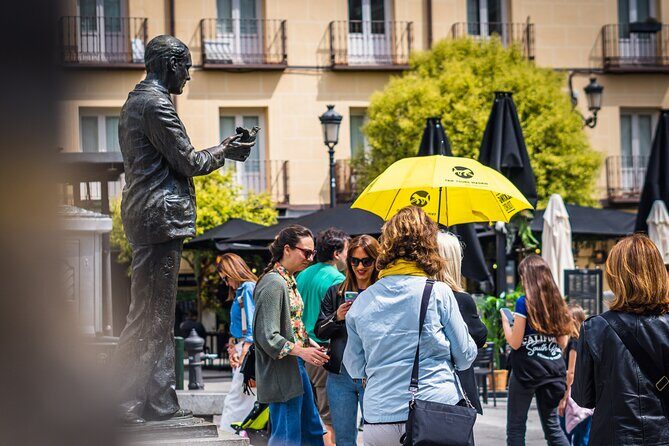
You begin in the Puerta del Sol area, at the Trip Tours Madrid meeting point (Centro, 28013). The tour starts at 11:00 am, and you’ll get a short 15-minute introduction right at the start.
This first stop matters more than it looks. Puerta del Sol is busy, full of movement, and easy to treat like a generic city square. Here, the guide uses it to set the stage for the Spanish Golden Age and what you’ll be watching for as you walk. After this, the neighborhood stops feel less like random streets and more like chapters.
If you like tours where you understand the why, not just the where, this intro usually pays off quickly. You’ll start noticing how the guide names places and links them to authors and themes as you move deeper into the quarter.
Calle de la Cruz Trampantojo: When a Building Plays Tricks
Next you head to Calle de la Cruz, about another 15 minutes on the route. This is where the tour gets fun: the guide points out one of Madrid’s striking trampantojos—visual trickery built into architecture.
A trampantojo is basically an illusion. You look at a façade and think you’re seeing one thing, but the design is playing a different game. The guide’s job here is to help you see past the first impression and learn what’s really going on.
What I like about this kind of stop is it breaks the pattern. Not every stop has to be a major author’s name carved into stone. A clever street illusion lets you experience the place the way people in the Golden Age might have—curious, watchful, and willing to be surprised by what’s in front of them.
Calle de Álvarez Gato and Bohemian Lights: Grotesque Theater in Plain View
At Calle de Álvarez Gato, you’ll spend around 15 minutes. This stop centers on sperpentos tied to Bohemian Lights.
That sounds like artsy jargon until the guide translates it into street-level storytelling. In plain terms, sperpentos are about distortion and exaggeration—using ugliness and twisty humor to show truth. So you’re not just hearing a literary concept. You’re learning how that style fits the mood of Madrid’s past, and how literature can sound like a place looks.
If you care about the way writing reflects reality, this is a satisfying stop. You’ll connect a text concept to the neighborhood’s tone and architecture, not just memorize a date.
Plaza de Santa Ana: Statues, Stories, and the Old Theater Tradition
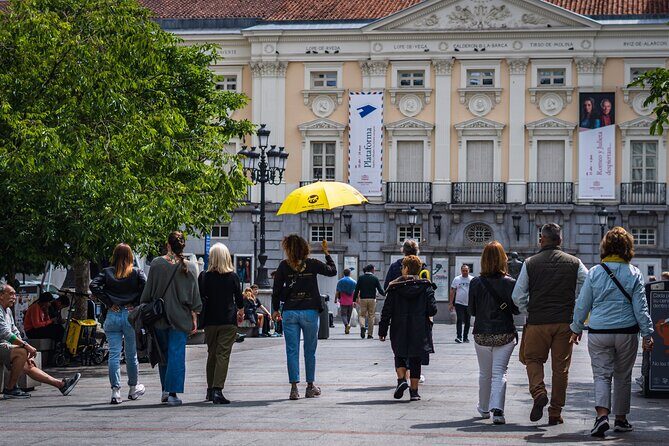
Then you reach Plaza de Santa Ana, still about 15 minutes on the schedule. This is described as the main square of Madrid’s more bohemian pocket, and the guide focuses on the stories tied to statues and the Corral de Comedias.
This is the kind of stop that works even if you’re not a theater superfan. A corral de comedias is a traditional stage format—an old-school performance culture that shaped how plays were experienced in the city. The guide uses the square to help you imagine how people once gathered, watched, and reacted.
I like that this stop blends art (statues) with culture (the theater tradition). It helps you understand why these authors weren’t writing in a vacuum. Their words belonged to a city that watched plays, argued over ideas, and celebrated performers.





Iglesia de San Sebastián: A Monument You Can Actually Notice
Next is Iglesia de San Sebastián, again about 15 minutes. The key point here is that it’s described as a National Artistic Historic Monument of Spain.
That designation is more than a label. It’s a reminder that this isn’t just a pretty church you happen to pass on a walk. It’s part of Spain’s protected cultural record. The guide will show you and tell you its story, giving you context for why the building matters within the broader Madrid identity.
I also appreciate that the tour doesn’t push you into a constant parade of names. You get a formal site with a clear status, which helps your brain file information into something real.
Calle de las Huertas: Letters on a Street and Lives in Your Head
You’ll then walk to Calle de las Huertas for about 20 minutes. This stretch is described as a street full of links to the most illustrious characters of the Golden Age, with stories of their lives.
Even when you don’t see anything dramatic at eye level, this is a strong kind of stop. The guide essentially gives you a set of mental bookmarks: names, occupations, rivalries, and the social world behind the writing. By the time you reach the next stop, you’re not just moving through Madrid. You’re moving through a map of relationships.
Practical tip: wear shoes that can handle a steady pace. This is the part where the walk starts to feel like a real morning workout, even though the tour remains organized.
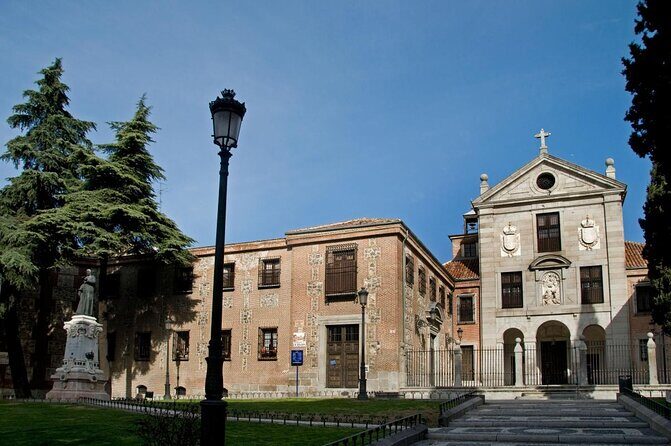
Convento de las Trinitarias Descalzas de San Ildefonso: Cervantes’ Final Resting Place
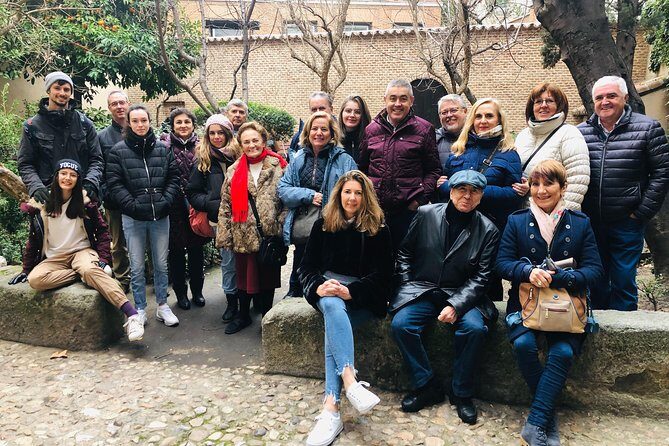
One stop you should treat with extra attention is the Convento de las Trinitarias Descalzas de San Ildefonso, about 10 minutes. Here, the tour includes admission, and the big connection is where Miguel de Cervantes rests forever.
This is the stop that turns a literary walk into something personal. You’re not only hearing about an author—you’re seeing the place tied to his memory. And because admission is included on this part of the route, you don’t have to figure out entry details yourself.
What I like: the stop is short enough that it doesn’t feel rushed, but important enough that it anchors the whole tour. Once you’ve made that connection, every later street mention—especially anything tied to rivalry and legacy—lands with more weight.
Calle de Quevedo: Rivalries You Can Trace on Foot
After Cervantes, the tour moves to Calle de Quevedo for about 10 minutes. This is where you’ll learn what happened between the rivals Francisco de Quevedo and Luis de Góngora.
Literary rivalries are often discussed like they happened in a classroom. This stop changes the feeling. The guide connects their feud to the city environment, so it reads less like a debate on paper and more like a social story.
If you like literary conflict—who wrote what, who competed with whom, who mocked whom—this is a rewarding moment. It also helps you understand why Golden Age authors weren’t just producing art. They were also navigating status, influence, and audience.
Casa Museo Lope de Vega: Closing with the Phoenix of Wits
The tour ends at Lope de Vega’s House-Museum (Calle de Cervantes, 11). The final stop is about 15 minutes, and the guide closes with a flourish around Lope’s house and story—calling him the Phoenix of the Wits.
Ending here works because Lope de Vega is one of the figures who can represent the whole era: prolific, dramatic, and tightly linked to Madrid’s performance culture. Seeing his house-museum at the end gives your route a satisfying payoff.
Two practical notes:
- The tour finish location is a museum stop, so give yourself time to look around if you want.
- Because it doesn’t end back at Puerta del Sol, I’d plan your next activity after the tour with a little breathing room.
Price and Logistics: Why This Feels Like Value
Let’s talk about the pricing structure, because it’s part of what makes this tour feel fair.
The cost is $3.47 per group, for groups of up to 6, and that price only guarantees your place. In other words, you’re paying for the guided route and the organization of the walk. Most stops are marked as free (Puerta del Sol, Calle de la Cruz, Calle de Álvarez Gato, Plaza de Santa Ana, Iglesia de San Sebastián, Calle de las Huertas, Calle de Quevedo). Only the Cervantes convent stop includes admission.
That means you’re not double-paying. You’re not buying a bundle of museum entrances you might not want. You’re paying for story-led access where it counts.
Timing also matters. The average booking window is about 23 days in advance, which suggests this walk stays popular enough that you shouldn’t wait until the last week if your dates are fixed.
And about the vibe: the rating is 5/5 with 72 reviews, and it’s recommended by 100%. One review singled out the guide Marivic for keeping attention high with sympathy and strong knowledge of the barrio’s history. That lines up with why this tour works: the route is compact, so the guide’s ability to connect details is the main ingredient.
Who Should Book This Barrio de las Letras Walk
I think this tour is a great fit if you:
- Want a guided introduction to Madrid’s literary neighborhood
- Like learning through people and place, not just dates
- Have only a morning and want a coherent route from Puerta del Sol toward Lope de Vega’s museum
- Enjoy a mix of author stories and street details, including trampantojo visuals and theater-linked concepts
It might not be the best match if you:
- Prefer long museum time without walking
- Want a full day that starts and ends at the same place
- Are trying to avoid all structured stops, because this is a set route with specific named locations and pacing
Quick Practicalities You’ll Want to Know
- You’ll walk for about 2 hours 30 minutes total.
- The tour group has a maximum of 20 people.
- It uses a mobile ticket.
- The tour is set for 11:00 am and starts at Trip Tours Madrid near Puerta del Sol and ends at Lope de Vega’s House-Museum.
- Service animals are allowed, and it’s near public transportation.
FAQ
Where does the tour start?
It starts at Trip Tours Madrid near Puerta del Sol (Centro, 28013 Madrid).
Where does the tour end?
It ends at Lope de Vega’s House-Museum (Calle de Cervantes, 11, Centro, 28014 Madrid).
What time does the tour begin?
The tour starts at 11:00 am.
How long is the tour?
It lasts about 2 hours 30 minutes (approx.).
How much does it cost?
The price is $3.47 per group, for up to 6 people.
What does the price include?
The price guarantees your place on the tour.
Is an admission ticket included anywhere?
Yes. Admission is included at the Convento de las Trinitarias Descalzas de San Ildefonso stop. Other listed stops are free.
Do I need a printed ticket?
No, it’s a mobile ticket.
How big is the group?
The tour has a maximum of 20 travelers.
What if I need to cancel?
You get free cancellation. Cancel up to 24 hours before the experience’s start time for a full refund.
Should You Book This Barrio de las Letras Tour?
Yes, I’d book it if you want a time-efficient, story-led walking tour that moves through the key author-linked spots of Madrid’s Literary Quarter. The low group price helps, but the real value is how the route strings together streets, literary figures, and even street illusion and theater references in a way that’s easy to remember.
If you’re the type who likes to show up, get oriented, and leave with names and meaning attached to streets, this one fits nicely. Just plan for the fact that you’ll finish at Lope de Vega’s House-Museum, so your next stop is already part of the plan.