REVIEW · MADRID
Tour en tuk-tuk electrico por MADRID MODERNO
Book on Viator →Operated by TUK TUK MADRID · Bookable on Viator
A fast ride can still feel personal. This electric tuk-tuk tour turns Madrid’s big-name landmarks into a smooth, 90-minute photo-and-facts loop, with quick stops so you can actually see (and not just pass by) the sights. I especially like the small private group size (up to 4) and the way the guides work hard to make the information clear in English. One thing to keep in mind: the schedule is packed, so you’re mainly doing brief stops rather than long museum time.
You’ll hit a great mix: Royal Palace and Almudena, then the museum belt around Atocha and Reina Sofía, and later the Retiro/Prado area, plus Salamanca, Cibeles, and the big city energy of Gran Vía. If you arrive with limited time and want a solid map in your head before you wander on your own, this is a strong fit.
In This Review
- Key highlights to look for
- Why an Electric Tuk-Tuk Works for Madrid in 90 Minutes
- Royal Palace and Almudena Cathedral: First Views That Set the Tone
- San Francisco el Grande, Puerta de Toledo, and Neptune Fountain
- Atocha Station and Reina Sofía: Museums Without the Trek
- Retiro and Prado Neighborhood: Jerónimos, Buen Retiro Survivors, and the Academy
- Prado Museum and Puerta de Alcalá: Big Names, Quick Angles
- Las Ventas, Salamanca, and the Plaza de Colón Side of Madrid
- Cibeles, the Bank of Spain, and the Grand Finale on Gran Vía
- Before You Book: Fit, Timing, and What to Expect on the Road
- Should you book this Madrid Modern electric tuk-tuk tour?
- FAQ
- How long is the electric tuk-tuk tour?
- How many people are in a group?
- What language is the tour offered in?
- What’s included in the price?
- Are museum or monument tickets included?
- Where does the tour start and when?
Key highlights to look for
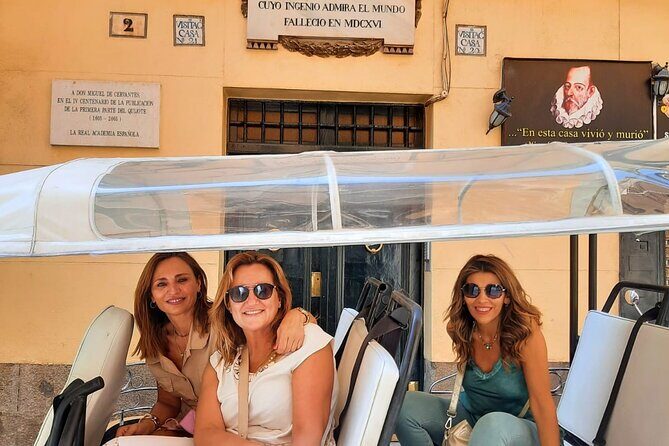
- Up to 4 people in a private tour: easier conversation and less waiting around.
- Electric tuk-tuks make long distances feel easy, even when streets are busy.
- English-guided storytelling: guides in past tours (like Juan and Jimena) were praised for clear communication.
- Short, practical stops for photos at major landmarks, not a long sit-down lecture.
- Atocha → Reina Sofía → Retiro/Prado route: you’ll get Madrid’s “center map” without running across town.
- Traffic-friendly guidance: you may still want to listen through the audio gear, since street noise can be loud.
Why an Electric Tuk-Tuk Works for Madrid in 90 Minutes

Madrid is wide. Even the “central” areas can sprawl once you start walking with purpose. That’s where an electric tuk-tuk shines. You get wheels, not legs. The route is built to cover a lot of ground, but at the speed of something you can actually enjoy—slow enough to look, fast enough to keep momentum.
The other big win is how you use the stops. This isn’t just a drive-by bus tour. You have the option to stop at each attraction for pictures, and you’ll hear a brief history on the spot. That combo matters. A lot of Madrid landmarks look similar if you only catch them from the sidewalk. With a guide’s context, you start recognizing styles, eras, and why a place matters.
Finally, the tour’s pricing is easier to justify than it first looks. It’s $131.54 per group (up to 4). If you book as a pair or family, your cost per person drops fast compared with tours priced per traveler. And since it’s private, you’re not stuck waiting for a crowd rhythm.
You can also read our reviews of more tours and experiences in Madrid.


Royal Palace and Almudena Cathedral: First Views That Set the Tone
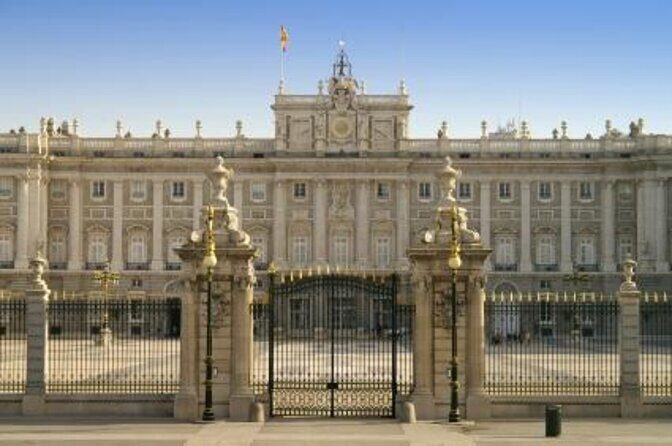
The tour often starts by pointing you toward Madrid’s royal core. The Royal Palace of Madrid is huge—an official residence, with a massive footprint and thousands of rooms. From the outside, it can already feel like a movie set. The guide’s job is to help you read what you’re seeing: why it’s considered the largest palace in Western Europe and what that scale signals about Spanish power and ceremonial life.
Then you move to Almudena Cathedral, dedicated to the Virgin Mary under the invocation of Almudena. Here’s what makes the stop worth it: the cathedral’s timeline shows up in the building itself. It was developed over a long period and uses different architectural languages—neoclassical outside, neo-gothic inside, and different design in the crypt. Even if you don’t go in for long, you’ll catch how Madrid blends time periods rather than freezing them.
Practical note: these early stops are ideal for photos, but arrive ready to keep your eyes moving. Madrid streets can be lively and parking is tight. The tuk-tuk format helps you reposition quickly while still getting the key angles.
San Francisco el Grande, Puerta de Toledo, and Neptune Fountain
From the royal/center zone, you shift into Madrid’s layered city layout. Royal Basilica of San Francisco el Grande is one of those landmarks people remember for its presence—an important church in the historic center, tied to older religious foundations in the area. The guide’s quick explanation helps you connect it to its neighborhood and the way religious buildings cluster in Madrid’s older fabric.
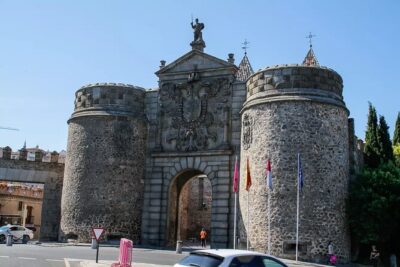
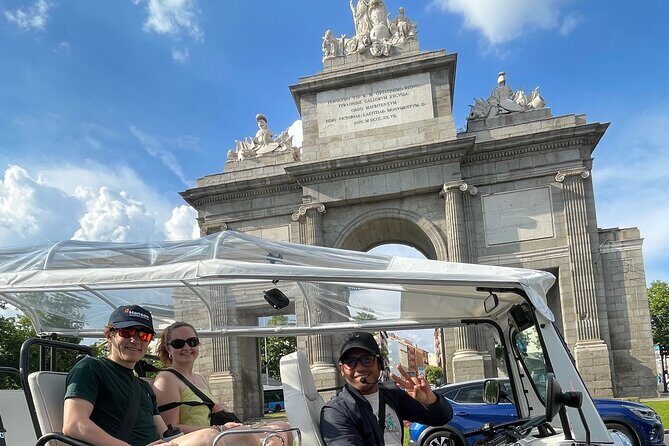
Next comes Puerta de Toledo, a city access gate with a story built around independence and commemoration. Gates sound small until you learn the context—this one was designed as a triumphal arch honoring King Ferdinand VII, marking Spanish independence after the French occupation. It’s also located right in a major traffic circle now, which means you’ll see it framed by everyday Madrid life, not only as a standalone monument.
Then you land at the Neptune Fountain in Plaza de Cánovas del Castillo. This is a classic Madrid moment: grand, neoclassical, and placed right where people cross paths. The fountain’s story is also part of the charm. Proposed in the late 1700s, construction ran through the 1780s, and it was moved to its current location later. The quick narration helps you understand why this kind of fountain system shaped Madrid’s public spaces.
Tip for photos: Neptune and the palace-zone views are easiest to shoot when you ask for a quick angle adjustment before you hop out. If you’re serious about pictures, do the photo stop first, then listen to the last bits while standing in place.
Atocha Station and Reina Sofía: Museums Without the Trek
If you want a museum stop that doesn’t turn into a half-day hike, this is your chance. The tour reaches Atocha Station, described as the railway junction with the highest passenger traffic in Spain. It’s one of those places where Madrid’s modern life overlaps with older structures and changing city needs.
From there, you head to Museo Reina Sofía (MNCARS). This museum focuses on 20th century and contemporary art, and the location is part of the story: the museum’s headquarters are based in the old General Hospital building, with later expansion. That matters because you don’t just get art—you get architecture that evolved alongside Madrid’s needs.
A quick reality check: with a 90-minute tour, you’re not doing a full museum visit here. You’re using it as a landmark stop. That’s still valuable. You leave with a clear sense of where the museum is, what it’s known for, and whether you want to come back later on your own time.
Retiro and Prado Neighborhood: Jerónimos, Buen Retiro Survivors, and the Academy
One of the smartest things about this route is how it strings together the Retiro/Prado area landmarks in a way that feels logical instead of random.
You’ll hit Jerónimos next, the old monastery known as Los Jerónimos. This is a stop where the guide’s short explanation helps you understand why it’s such a big Madrid name. Even if you’re just stepping out briefly for a look, you’ll get a clearer sense of its role in the city.
After that, you move through the Buen Retiro Palace leftovers area, where two surviving buildings are treated like anchors for what was once a much larger royal complex. The Casón del Buen Retiro is one of those survivors, originally built for court festivities and later tied to art collections. It also connects to the story of how famous works moved over time—so your guide’s narration helps you understand why this building’s identity changed from palace ballroom to museum space to later study center.
Then you’ll see the Salón de Reinos, described as the former representative axis of the palace complex and known for its heraldic decoration. It even had a later life as the Army Museum. Again, the point isn’t long reading time. It’s catching how a single building can shift purposes across centuries.
From there, the route includes the Real Academia Española (RAE). This is a less common tourist stop, and that’s a good thing. It’s tied to the Spanish language academies network and founded in the early 1700s. If you like cultural institutions that aren’t just postcard stops, you’ll appreciate this detour.




Prado Museum and Puerta de Alcalá: Big Names, Quick Angles
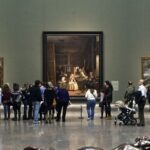
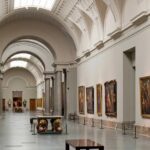
The Museo Nacional del Prado is one of the world’s heavyweight art institutions, and the tour keeps it part of the “highlights spine” of the day. You’ll hear about its strong collection focus, especially Spanish painters from the 15th to the 18th centuries, with standout names like Velázquez, El Greco, Goya, and others. That context is useful even if you don’t spend hours inside, because it helps you decide what to target later.
After Prado, the tour goes to Puerta de Alcalá, one of Madrid’s historic royal gates. It sits in a major roundabout area, so you’ll likely see it surrounded by city motion. That’s perfect for an overview tour: it gives you the sense of where Madrid’s old routes meet modern streets.
If you’re picky about photo quality, do this stop with intention. Puerta de Alcalá can look different depending on where you stand in the circle. Ask the driver for the best spot to step out and frame it cleanly.
Las Ventas, Salamanca, and the Plaza de Colón Side of Madrid
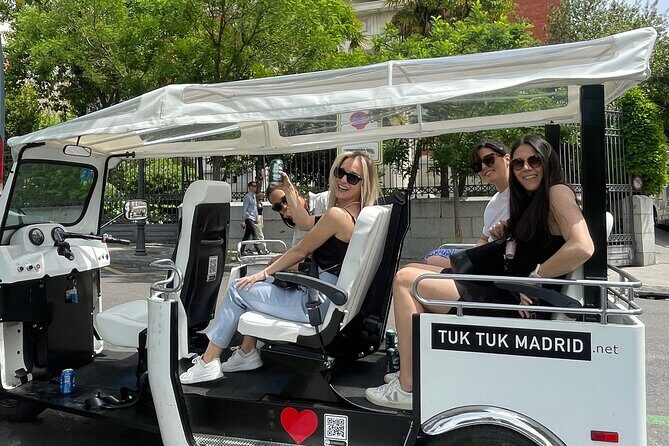
Madrid isn’t only royal and museum. This tour also turns toward neighborhoods with identity and shopping energy.
Las Ventas bullring is the next big landmark. It’s described as Spain’s largest bullring and among the largest in the world by size. Even if bullfighting isn’t your interest, the architecture and the scale are worth a look. Your guide’s explanation helps you understand why Las Ventas is such a symbol.
Then you head into Barrio de Salamanca, named after its 19th-century builder and known today for upscale commerce, luxury shopping around streets like Serrano, Claudio Coello, and Ortega y Gasset. This is where Madrid looks more like what many people imagine: polished streets, high-end storefronts, and a sense of living standards.
You’ll also pass Plaza de Colón, where major streets converge, with a neo-gothic monument to Christopher Columbus. This stop is brief but helpful. It gives you a “crossroads landmark” you can use later when you’re navigating on your own.
Cibeles, the Bank of Spain, and the Grand Finale on Gran Vía
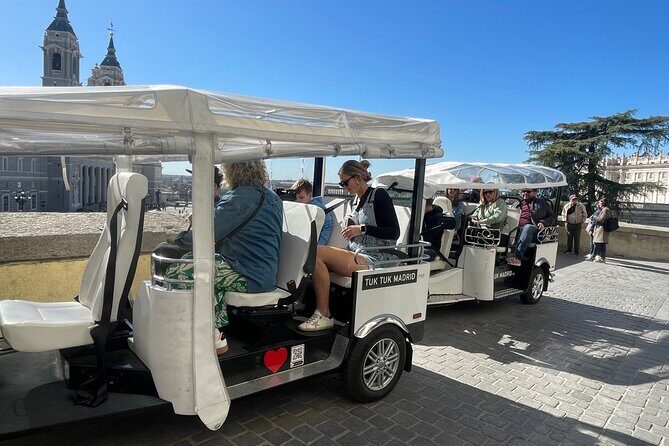
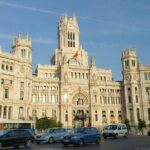
As the tour heads back toward the city’s heartbeat, you’ll reach Cibeles. Locals call it La Cibeles, and it’s one of those places everyone seems to know in Madrid. It’s tied to the 18th century urban remodeling plan of King Carlos III, with mythological fountain motifs and plans for a larger civic design in the area. Even if you only stop briefly, you’ll understand why this square became a favorite public “salon” space.
Next comes the view of the Bank of Spain, with its headquarters built in the late 1800s and overlooking Plaza de Cibeles. Again, this is a good overview move: you get civic architecture without spending time researching coordinates on your own.
Then you land on Gran Vía, Madrid’s iconic avenue stretching between Calle de Alcalá and Plaza de España. It’s famous for theaters and cinemas and even for the idea of Madrid’s Broadway along certain sections. The tour stop here is a fun ending because Gran Vía is Madrid in one breath: street style, motion, and neon-adjacent energy—even if some older venues change over time.
The best part is how you finish. You’re dropped back at the meeting point, and you’ll have a clear sense of which areas you want to revisit next.
Before You Book: Fit, Timing, and What to Expect on the Road
This experience fits best when your goal is orientation and highlights, not long museum immersion. If you want deep time in Prado or Reina Sofía, plan to come back separately. This tour gives you the map and the context so your solo time feels smarter.
You should also be ready for city sound. One review specifically pointed out that the audio system could be improved because Madrid traffic can cover the guide’s voice. Your best move is simple: use the audio equipment they provide and don’t be shy about asking the guide to repeat key details once you stop.
Finally, this tour’s success depends on smooth meet-up execution. A small number of past bookings reported issues with the guide or driver not showing up on time. To protect your day, be proactive: confirm the meeting point address (C. de Vergara, 1 in Centro) and be on-site a few minutes early. If anything feels off, use the operator contact method right away.
Should you book this Madrid Modern electric tuk-tuk tour?
I’d book it if you’re arriving in Madrid with limited time and want to see the main monuments plus a useful slice of the museum quarter and Salamanca—without wasting hours crossing town on foot. It’s also great value if you can fill the group up to 4, since the price is per group and includes bottled water and the guide/driver.
Skip it if you’re the type who needs long indoor time at big-ticket museums or cathedrals. This is a highlights route with brief stops, not a sit-and-stay day. And if you’re sensitive to noise, note that street traffic can interfere, so plan to rely on the audio gear during explanation moments.
If your aim is to get your bearings fast and then explore with confidence, this is a very practical way to start your Madrid story.
FAQ
How long is the electric tuk-tuk tour?
The tour lasts about 1 hour 30 minutes.
How many people are in a group?
It’s a private tour/activity, with price listed per group up to 4 people.
What language is the tour offered in?
The tour is offered in English.
What’s included in the price?
The tour includes bottled water and a guide/driver.
Are museum or monument tickets included?
Some stops are listed as admission free (for example, Jerónimos and the Prado area in the provided info), while other stops are listed as not included. This tour is built around short stops, so you should expect that not every site involves entry.
Where does the tour start and when?
It starts at C. de Vergara, 1, Centro, 28013 Madrid, and the start time is 9:00 am. The tour ends back at the meeting point.