REVIEW · MADRID
Tour Segovia and La Granja de San Ildefonso from Madrid
Book on Viator →Operated by Agiday Experience · Bookable on Viator
Roman water works meet fairytale castles.
This day trip is built for a calm, unhurried feel, with a small group (maximum 8 on a semi-private tour) and a comfortable Mercedes Vito ride. You get a guided walk through Segovia’s key monuments, with extra audio support if your group needs language help, so you’re not stuck just staring at stone.
I also love the way the route teaches as it goes—starting with the Roman aqueduct system and ending with sweeping views over the old town and the Alcázar. One practical note: a couple of major stops are not ticket-included (the Cathedral of Segovia and Iglesia de la Vera Cruz), so you should plan on paying extra there.
In This Review
- Key highlights to look for
- A calm semi-private Segovia day from Madrid (and why it matters)
- Getting from Madrid to Segovia in a Mercedes Vito (what your day will feel like)
- Roman aqueduct power: Segovia’s water story plus the sand trap
- Segovia’s historic core: Juan Bravo, Casa de los Picos, and San Martín
- Corpus Christi’s synagogue story and a real walk through La Juderia
- Cathedral time you control, plus the Alcázar and San Marcos views
- Vera Cruz: the Romanesque-Mudejar octagon (and what not to expect)
- La Granja de San Ildefonso: gardens with a guided option, palace on your terms
- Price and value: what you’re really paying for
- Who this tour suits best (and who should pick something else)
- Should you book this Segovia and La Granja tour?
- FAQ
- Where does the tour start in Madrid?
- How big is the group on this semi-private tour?
- What language is the guide, and is translation available?
- Are tickets included for the main sights?
- Do I have to visit the Royal Palace at La Granja?
- Is the tour very physically demanding?
- What happens if the weather is bad?
Key highlights to look for
- Small group pace (max 8): less waiting, more time to ask questions and look closely.
- Roman engineering, not just a photo stop: the aqueduct story includes the water “sand trap” area.
- Segovia’s mixed faith history: the Corpus Christi church sits where the old main synagogue once stood.
- Included Alcázar time: you get an hour inside one of Spain’s most recognizable castles.
- Two worlds in one day: Segovia streets by day, then La Granja gardens with an optional palace visit.
- Comfortable transport: Mercedes Vito with air conditioning, a good match for a long day.
A calm semi-private Segovia day from Madrid (and why it matters)
If you’ve ever done a “see everything in 3 hours” tour, this one will feel different. The whole concept here is quiet pacing—the guide keeps the group together, but you’re not rushed from one stop to the next like a conveyor belt.
Segovia is easy to love because it’s compact and full of strong shapes: Roman arches, Gothic spires, and that dramatic, ship-prow Alcázar silhouette. A small group helps you actually notice details—like how the aqueduct is positioned across the city, or how certain streets frame the cathedral views.
The day is long (about 9 to 10 hours), but the tour’s structure gives you breathing room: guided blocks, short free-time windows, and agreed meal time that can flex with the group.
You can also read our reviews of more tours and experiences in Madrid.



Getting from Madrid to Segovia in a Mercedes Vito (what your day will feel like)
Your day starts at P.º del Prado, 3, Retiro (Madrid), and you head out in a Mercedes Benz Vito (or similar), with air conditioning. That’s a big deal on a long day trip, especially if the weather is warm when you’re heading toward the mountains.
On the way back, the tour includes a route that passes through the Guadarrama mountain range and its scenery. You’re not just doing back-and-forth logistics—you get a different kind of Spanish view during the drive.
Also keep in mind: the tour is guided in Spanish, with audio support used for other languages. The tour notes mention multiple audio options so people can follow together. If you’re comfortable reading facial expressions and pointing at monuments, you’ll still be fine—but if language matters a lot, audio help is a real plus.
Roman aqueduct power: Segovia’s water story plus the sand trap
The first major stop is the Aqueduct of Segovia, one of the city’s most recognizable symbols. It’s impressive in a very specific way: the structure is so well-preserved that it still feels like an active piece of engineering, not just a ruin for sightseeing.
You’ll learn the history, legends, and reconstructions tied to this Roman architecture, and the aqueduct’s secrets—basically the story of how the water system worked and why it looked the way it did. The key value here is that the guide doesn’t treat the aqueduct like a standalone monument. Instead, it’s presented as part of a system that connected the city.
Then you move to the Desarenador del Acueducto (San Gabriel sand trap). This is a shorter stop, but it’s the kind of detail many quick tours skip. The sand trap was a second decantation area before the water continued toward the higher parts of Segovia.
What I like about this sequence is that it turns your visit from seeing stone into understanding function. You get a look at the canal operations and how water moved through the system before reaching the more monumental aerial section. If you’re the type who likes “how did they do that,” this stop is a strong payoff.
Segovia’s historic core: Juan Bravo, Casa de los Picos, and San Martín
After the aqueduct, the tour shifts into historic-city walking. You’ll spend time around a few spots that explain Segovia’s layers—politics, architecture, and religious transitions.
First, there’s the Monumento a Juan Bravo in the Medina del Campo Square. Juan Bravo was a key military and political leader during the War of the Communities of Castile in the 16th century. The statue shows him mounted on a horse with a determined posture. It’s a quick stop, but it connects the city’s monuments to real historical conflict.
Next is the Casa de los Picos (House of Spikes). The façade is covered in carved granite spikes shaped like diamonds—so yes, your photos will look dramatic. But the more interesting part is the architectural mix: it’s associated with the 15th century and reflects a blend of Gothic and Renaissance styles. The design feels unusual for its time, and that’s exactly why it’s worth a close look rather than a drive-by.
Then you’ll visit Church of San Martín, described as Romanesque with Gothic and Mudejar elements. That mix matters because Segovia is not one style, one decade, one “theme park.” You’re seeing architecture evolve in layers, and you’ll likely notice how different influences create different moods inside and out.
A practical tip: these are mostly short stops, so keep your walking shoes ready and don’t plan bathroom breaks between each one. The flow is designed to stay calm, but the day still stacks a lot of iconic sights.
Corpus Christi’s synagogue story and a real walk through La Juderia
This is one of the most meaningful sections of the day. The tour includes Iglesia del Corpus Christi, which is the best-preserved former synagogue of the Segovian Aljama among five known synagogues. The current church relates to a conversion around 1410, so you’re looking at a building shaped by centuries of change.
You’ll get about 20 minutes inside, with ticket included. The architectural details tied to Jewish culture are discussed, and then you’ll see how later Christian use adapted the space. The prayer room is described as divided into three naves, separated by horseshoe arches and octagonal pillars, with distinctive capitals topped by pineapple-and-scroll shapes. There’s also mention of a continuous gallery and patterned intradoses.
Even if you’re not an architecture nerd, this stop can hit hard because it shows history as a living thing—reused, repurposed, and preserved. It’s also a reminder that “old town” doesn’t mean simple. Segovia’s past is layered and complicated, and the tour gives you time to respect that.
After the church, you walk through La Juderia, the Jewish quarter streets. The tour frames it as a community that, for much of its history, lived with relative well-being and fewer violent episodes compared to later periods—especially up to the 15th century. It’s a short segment, but it helps you connect the buildings you just saw to the streets around them.






Cathedral time you control, plus the Alcázar and San Marcos views
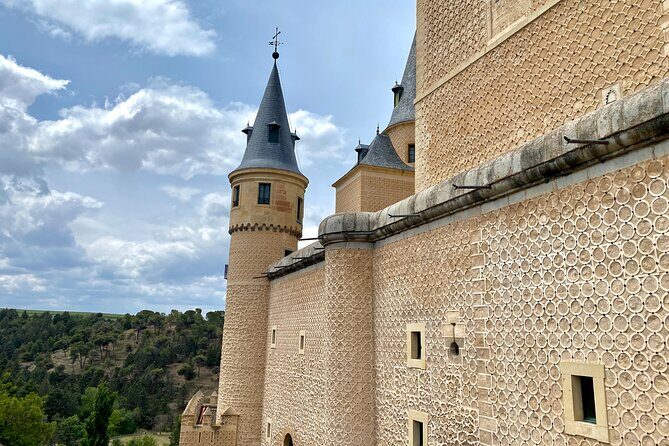
Two of Segovia’s biggest attractions show up in back-to-back blocks: the Cathedral of Segovia and the Alcázar—with a viewpoint stop to stitch the city together.
For the cathedral area, you get about 1 hour to visit on your own, plus another hour for meal time (timing depends on group pace). The ticket for the cathedral is not included, so plan ahead if you want a smoother entry experience.
Why this matters: having a bit of self-guided time gives you control. If you love to climb towers, linger at stained glass, or just find a quiet corner, you can. If you don’t, you can use your hour efficiently without feeling guilty.
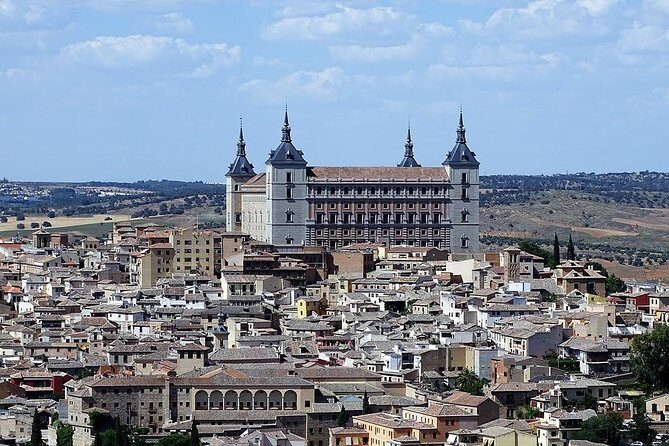
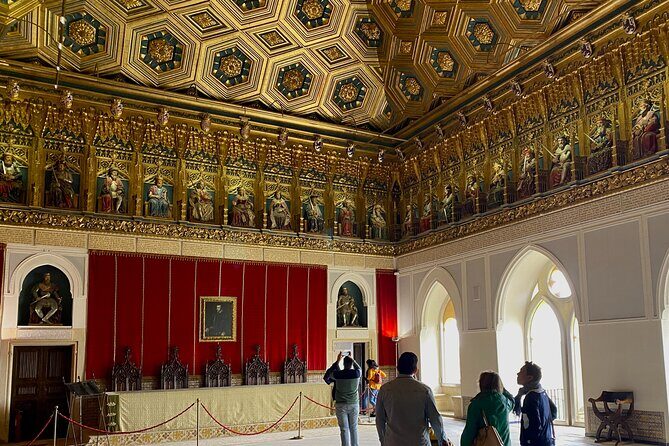
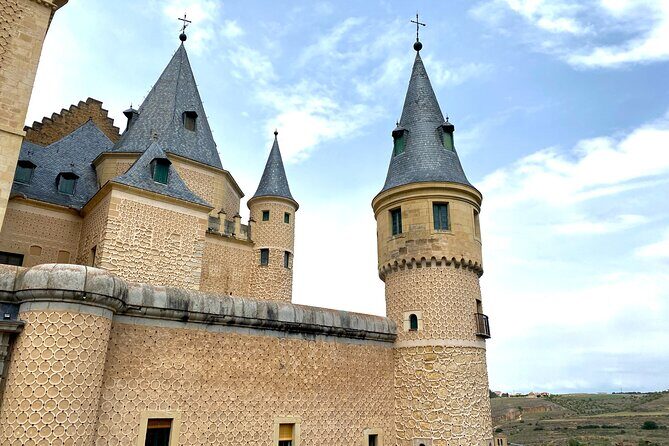
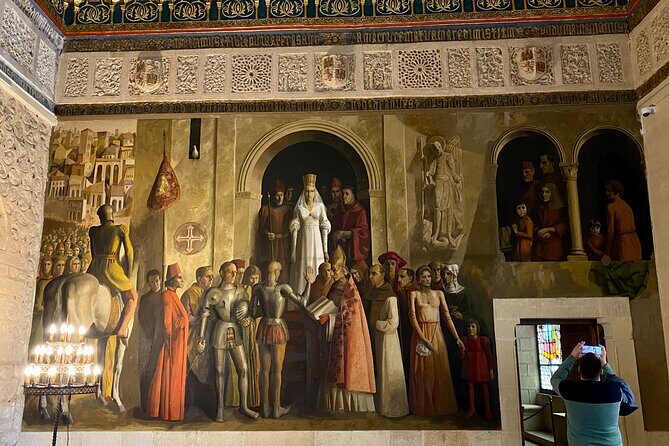
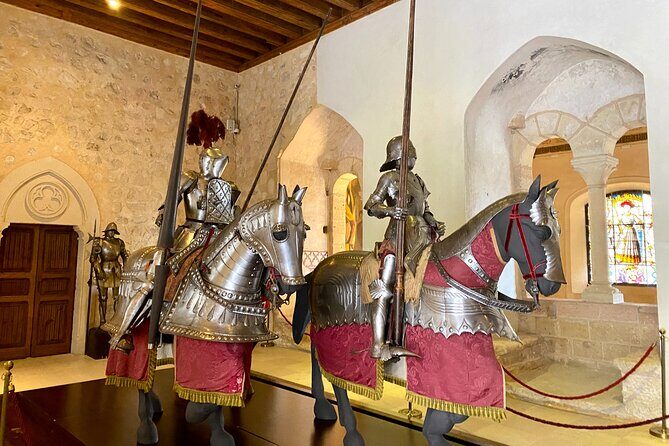
Next comes the Alcázar of Segovia with ticket included. You’ll have about 1 hour 30 minutes, which is a solid amount of time inside a castle. The Alcázar is famous for its fairytale, ship-prow silhouette. This is one of those places where even the exterior already tells a story, but the real value is in the architecture and history inside.
Then you get a short viewpoint: Mirador de la Pradera de San Marcos. From here you can see panoramic views of the old town, the Alcázar, and surrounding areas. The timing is about 15 minutes, and that’s enough to reset your eyes after dense street viewing. It also helps you place earlier stops geographically—your brain starts mapping the city in a useful way.
Vera Cruz: the Romanesque-Mudejar octagon (and what not to expect)
The tour includes Iglesia de la Vera Cruz, described as Romanesque-Mudejar and considered one of the most important examples of that style in Spain. It sits outside the historic center area, in a zone called El Parral.
This church is known for its octagonal plan, and the tour notes connect that shape to the Holy Sepulcher idea associated with Jerusalem. The exterior is the focus of the stop (and the stop is listed at about 20 minutes), and the ticket is not included.
If you prefer high-activity stops, this one might feel quieter than the Alcázar. But it’s a useful contrast: you get a different architectural mood, and the octagonal geometry is the kind of detail you appreciate more when the day isn’t rushed.
La Granja de San Ildefonso: gardens with a guided option, palace on your terms
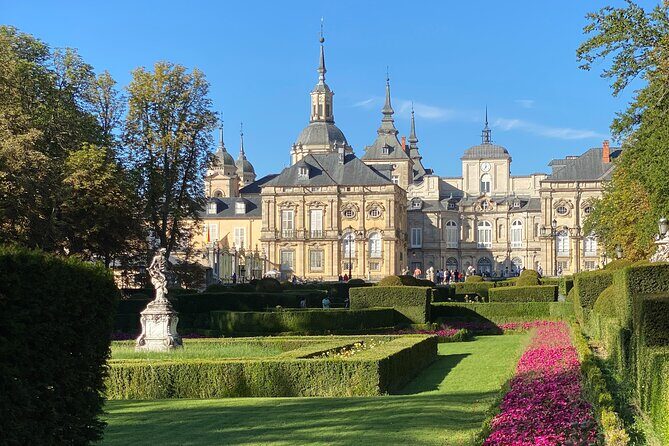
After Segovia, you head toward La Granja de San Ildefonso, the 18th-century royal palace and garden complex used as a summer residence by Spanish monarchs.
Here’s how the experience is structured: you can choose to walk through the gardens with the guide, and you have the option to visit the Royal Palace on your own. The tour description doesn’t spell out palace ticket inclusion, so treat the palace visit as something you’ll do independently based on what you want from the gardens.
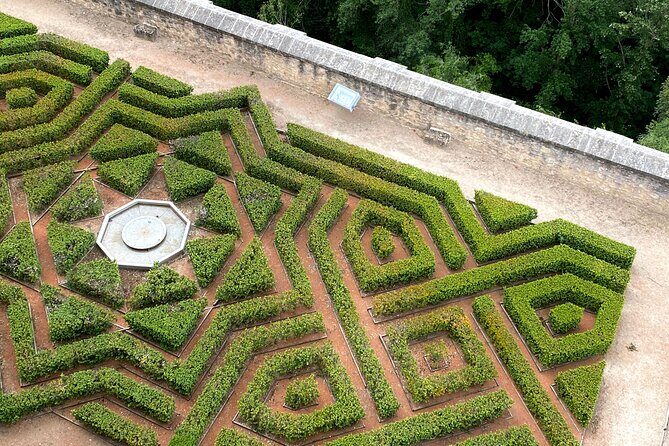
The gardens are known for their geometric layout and spectacular fountains, plus sculptures, statues, and tree-lined walks. This is a different pace than Segovia’s dense historic core. If Segovia makes you think with stone and angles, La Granja lets you enjoy symmetry and open air. Even with a guided component, you’ll still have the feeling of wandering at your own speed.
One smart approach: if you want photos of fountains and strong lines, start your palace-or-no-palace decision early. Once you’ve chosen, you won’t have to “schedule in your head” while your feet are tired.
Price and value: what you’re really paying for
At $162.90 per person for about 9 to 10 hours, the pricing makes sense when you break it down by experience design, not just ticket math.
You’re paying for:
- Small-group attention (semi-private, up to 8) with a calm pace.
- Comfortable transport in an air-conditioned Mercedes Vito.
- Guide time across multiple historic sites, including Roman engineering and synagogue history.
- Admission value where included, specifically the synagogue church (Corpus Christi) and the Alcázar (both included). The aqueduct and several other stops are listed as free, while the cathedral and Vera Cruz are listed as not included.
In practice, the only places you’re likely to pay extra are the Cathedral of Segovia and Iglesia de la Vera Cruz. That’s not a deal-breaker; it just means you shouldn’t think of this tour as fully ticketed. If you’re the type who wants to see everything no matter what, you’ll probably be adding those anyway.
Also consider the timing: you’re not just getting a list of monuments. You’re getting a day that connects them—aqueduct system logic, then city streets, then panoramic orientation, then a royal garden reset.
Who this tour suits best (and who should pick something else)
This fits you if:
- You want a semi-private feel without the stress of huge groups.
- You enjoy history explained in context, not just dates.
- You like architectural variety: Roman → medieval → early modern → royal gardens.
- You’re okay with walking through old-town streets at a moderate pace.
It might not fit as well if:
- You want a very fast, high-volume checklist tour with zero “quiet time.”
- You hate paying separate tickets at major sites (since the cathedral and Vera Cruz are not included).
- You strongly need a guide who speaks your language directly; the tour uses Spanish plus audio support, not a fully multilingual live guide.
If you’re visiting Madrid and you only have one day to do Segovia plus La Granja, this is a practical pairing. The two places feel connected enough to do in one sweep, while still giving you that satisfying contrast between city and gardens.
Should you book this Segovia and La Granja tour?
I’d book it if you like the idea of Segovia with room to breathe. The combination of small-group pacing, multiple high-value stops (aqueduct system and sand trap, Corpus Christi synagogue story, and included Alcázar time), plus the La Granja gardens option makes this feel like a well-built day trip.
I’d hesitate only if you’re trying to minimize extra ticket spending at the cathedral and Vera Cruz. Also, plan your day around weather: the tour requires good weather, and poor conditions can mean a different date or a refund.
If you want a smooth, thoughtful day with less rushing and more actual understanding of what you’re seeing, this is a strong choice.
FAQ
Where does the tour start in Madrid?
The meeting point is P.º del Prado, 3, Retiro, 28014 Madrid, Spain. The tour ends back at the same meeting point.
How big is the group on this semi-private tour?
The semi-private tour is maximum 8 participants. The overall activity also states a maximum of 14 travelers.
What language is the guide, and is translation available?
The guide is in Spanish, and audio is used for other languages so you can follow along with simultaneous translation support.
Are tickets included for the main sights?
Admission is included for Iglesia del Corpus Christi and the Alcázar of Segovia. The aqueduct, sand trap area, and several other listed stops are free. The Cathedral of Segovia and Iglesia de la Vera Cruz are not included.
Do I have to visit the Royal Palace at La Granja?
You have the option to walk through the gardens with the guide. You may also visit the Royal Palace of La Granja de San Ildefonso on your own.
Is the tour very physically demanding?
The tour notes ask for a moderate physical fitness level, so you should be comfortable walking and standing through multiple stops across a long day.
What happens if the weather is bad?
The tour requires good weather. If it’s canceled due to poor weather, you’ll be offered a different date or a full refund.