REVIEW · TOLEDO
TOUR TOLEDO 3 CULTURAS ⭐⭐⭐⭐⭐
Book on GetYourGuide →Operated by FOLLOW ME TOLEDO · Bookable on GetYourGuide
Toledo has three histories living side by side. This short, focused tour strings together Christian, Jewish, and Muslim Toledo in a way that helps you actually picture the city’s long timeline. You start at Plaza de Zocodover, then wind through tight lanes where your guide ties the streets to real places and real craft traditions.
What I like most is the mix of big-name sights and hands-on context. You’ll get a guided look at the Palace House of Rodrigo de la Fuente, and you’ll hear how Toledan steel and damascene work connect to daily life, not just posters.
One thing to consider: it’s a tight route with walking on uneven, narrow streets, so go in with comfy shoes and expect a bit of uphill effort when the route climbs toward the viewpoints.
In This Review
- Key things you’ll notice on this Three Cultures tour
- Meeting at Zocodover 5: the fastest way to get oriented
- Alcázar of Toledo: a Christian power stop that sets the timeline
- Mezquita de las Tornerías: the 11th-century Muslim layer
- Plaza Cuatro Calles: where street corners do the storytelling
- Jewish-quarter viewpoints: San Cristóbal and key landmark sightlines
- The Legend of the Toledan Night: a darker pause with context
- Swords, damascene, and Toledo craft culture: why this tour feels more than sightseeing
- Casa Rodrigo de la Fuente: included entrance and El Greco’s medical connection
- Finishing near the Cathedral area: Plaza del Ayuntamiento to Zocodover
- Price and value: what $11 buys you in real terms
- Who this tour suits best
- Should you book Tour Toledo 3 Culturas?
- FAQ
- Where does the tour start and end?
- How long is the tour?
- What language is the live guide?
- What’s included for entrances?
- Is the tour wheelchair accessible?
- Are alcohol and drugs allowed?
Key things you’ll notice on this Three Cultures tour
- Plaza de Zocodover as the launch point for a citywide story
- Alcázar of Toledo presented as a turning point in Toledo’s Christian chapter
- Mezquita de las Tornerías explained with an 11th-century timeline
- Cues of craftsmanship around damascene, swords, cutlery, pottery, and local traditions
- San Cristóbal viewpoints with clear sightlines over the Jewish quarter area
- Casa Rodrigo de la Fuente entrance included, plus cultural context tied to El Greco
Meeting at Zocodover 5: the fastest way to get oriented
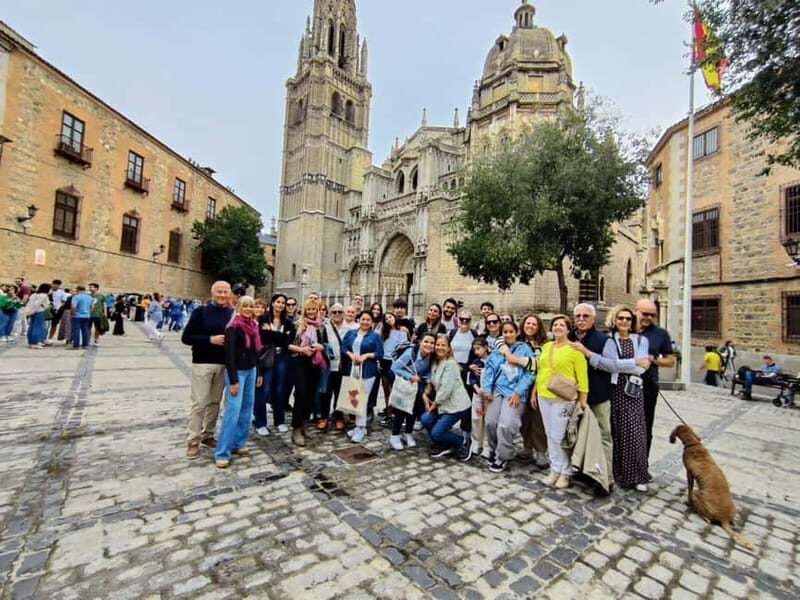
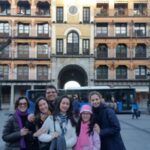
You begin at Plaza de Zocodover 5, by the clothing shop Koker and a pharmacy. This matters because Zocodover is the kind of center people use as a reference point, and it helps you get oriented fast. From there, the tour doesn’t waste time on “here’s a map.” It sends you straight into Toledo’s street maze.
You’ll also be walking in a way that makes sense for the story. The route moves stage by stage through Toledo’s past, with your guide explaining how the street layouts and building types fit together. That’s the real value of a guided format here: you don’t just see monuments, you learn how the city’s layers connect.
The tour is Spanish, lasts about 105 minutes, and is designed for a group format (a minimum of 6 people is required). If you’re short on time in Toledo, this is a smart way to cover the three-cultures theme without spending the whole day jumping between far-apart stops.
You can also read our reviews of more tours and experiences in Toledo.


Alcázar of Toledo: a Christian power stop that sets the timeline
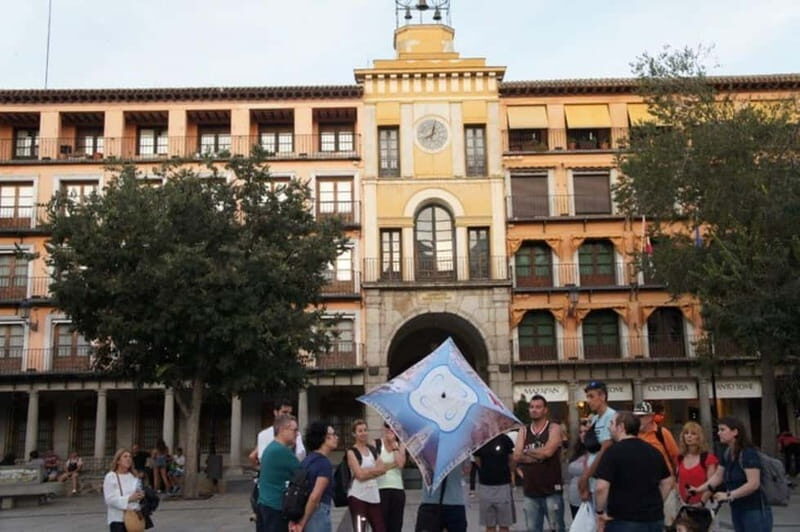
One of the first major stops is the Alcázar of Toledo, and that location is a built-in clue to Toledo’s later political story. Even if you’re not focused on military architecture, the Alcázar gives you a “from here, things shifted” feeling.
I like how this tour uses big anchors like Alcázar to help you place the other stops. When your guide talks about how different periods marked the city, you’re not working from guesswork. You’re anchored by a recognizable landmark, then guided toward the earlier and more complex layers that come next.
Practical note: you’ll be moving from the open plaza into narrower streets and viewpoints. If you know your walking pace is slow, plan to keep a steady rhythm early so you’re not trying to sprint at the later uphill segments.
Mezquita de las Tornerías: the 11th-century Muslim layer
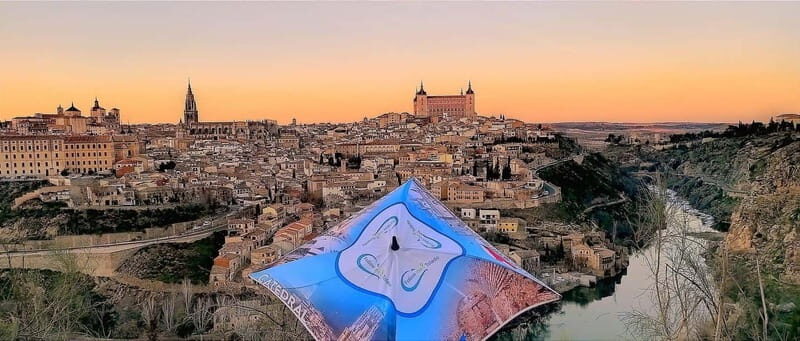
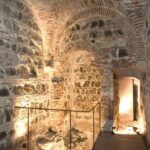
Next up is the Mezquita de las Tornerías. The key detail here is your guide’s chronology: an 11th-century placement. That one date does a lot of work. It helps you avoid the common mistake of treating “Muslim Toledo” as one vague era. Instead, you start thinking about specific time periods and how they overlap with later Christian and Jewish presence.
What makes this stop feel worthwhile is the way it’s integrated into the walking route. You don’t hear the story in a single speech. You watch how the city fabric supports the narrative: street by street, landmark by landmark, your guide points out what you’re seeing and why it matters in the broader “three cultures” picture.
If you enjoy architectural clues and timelines, this is one of the strongest moments. It’s not just a name on a sign; it’s part of the city’s chronological logic.
Plaza Cuatro Calles: where street corners do the storytelling
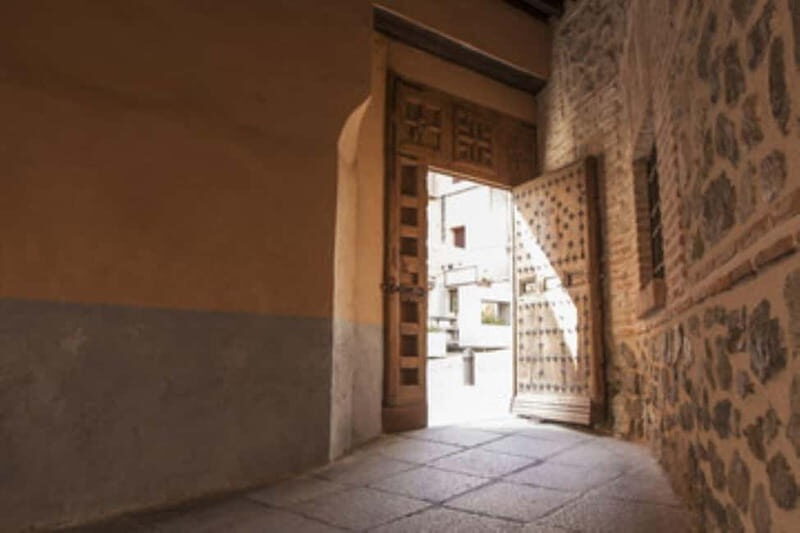
After the mosque stop, you reach Plaza Cuatro Calles, another excellent hinge point in the itinerary. I like this kind of stop because it’s visual. Plazas and junctions help you understand how people navigated the city.
Your guide uses these spaces to explain the city’s layout and how Toledo’s different periods left traces in what people built and where they moved. It’s also a place where you can pause without feeling like you’re breaking the flow of the tour.
Drawback to keep in mind: like much of Toledo’s center, this is an area where sidewalks can feel tight at peak times. Keep close to your group so you don’t get separated while photos happen in the middle of foot traffic.
Jewish-quarter viewpoints: San Cristóbal and key landmark sightlines
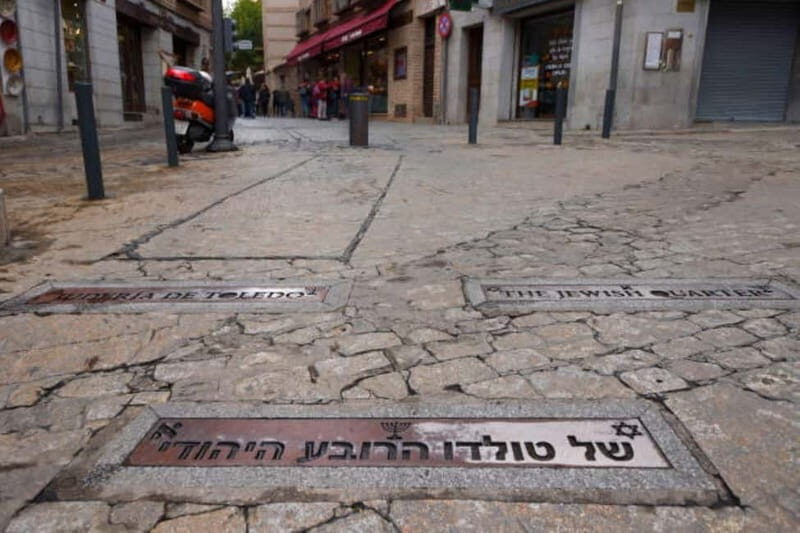
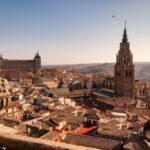
The tour then shifts toward the Jewish quarter story using viewpoints and nearby sightlines, starting from the Mirador del Paseo de San Cristóbal and the higher perspective toward the area. From here you get the sense that Toledo isn’t just a collection of buildings. It’s a city with edges, rises, and sight corridors.
You’ll also learn how the Jewish quarter connects visually to major landmarks, including the Synagogue of El Tránsito, Santa Maria la Blanca, and the Church of Santo Tomé (seen from the viewpoint context the guide provides). Seeing these from above helps. It gives you a spatial understanding that you won’t get if you only approach each site at street level.
One especially helpful detail is that the tour mentions Toledo’s cigarette plantations in connection with the views from this neighborhood area. The phrasing may sound odd, but the practical takeaway is clear: you get to understand Toledo’s surrounding land and how the city sits in relation to nearby estates. When you’ve got that bigger picture, the old town feels less “stuck in time” and more like a lived-in place with a working environment around it.
If you’re sensitive to heights or have trouble with steep viewpoints, this is where you’ll want to decide if you’re comfortable with stairs or uphill sections.



The Legend of the Toledan Night: a darker pause with context
From the same Paseo de San Cristóbal area, your guide brings in the Legend of the Toledan Night. The story is about a macabre event in the ninth century, where many Mozarabs were beheaded, tied in the legend to revenge by the Muladis.
I appreciate that this isn’t just added for drama. It’s part of how the tour explains coexistence and conflict in Toledo. The “three cultures” idea can sound too smooth on a brochure. This legend reminds you that coexistence also meant tension, power struggles, and sudden violence.
Just be ready for the tone. If you don’t want heavy historical moments on a walking tour, know that this stop includes a gruesome story element.
Swords, damascene, and Toledo craft culture: why this tour feels more than sightseeing
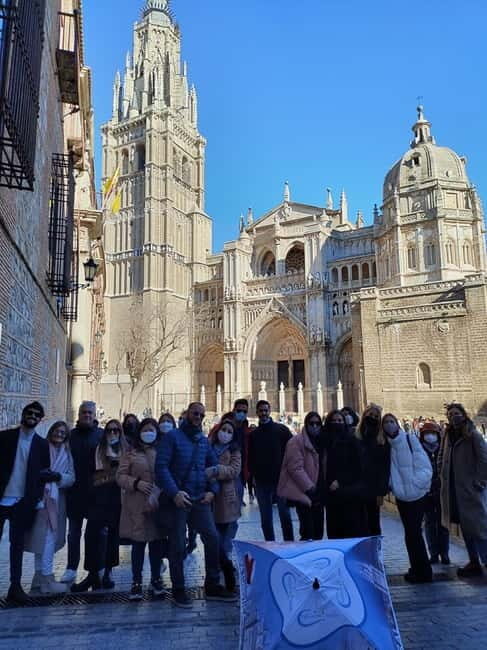
A huge part of the tour’s charm is how it blends monuments with craft history. Your experience points directly to damascene, and the history of swords and Toledan steel, plus the idea that everyday items like cutlery and pottery have carried traditions through time.
Toledo’s reputation for metalwork is often explained in tourist sound bites. Here, the story is tied into the way communities lived and worked. That shift matters. When you connect craft to the people who shaped it, you understand why certain materials and techniques mattered in the first place.
A nice practical bonus: the route includes smaller, human-scale stops like Iglesia del Salvador and Iglesia de los Jesuitas. They’re not just “one more church.” They help show how later Christian influence became visible through institutions and architecture, while the tour keeps returning you to the broader three-culture timeline.
Casa Rodrigo de la Fuente: included entrance and El Greco’s medical connection
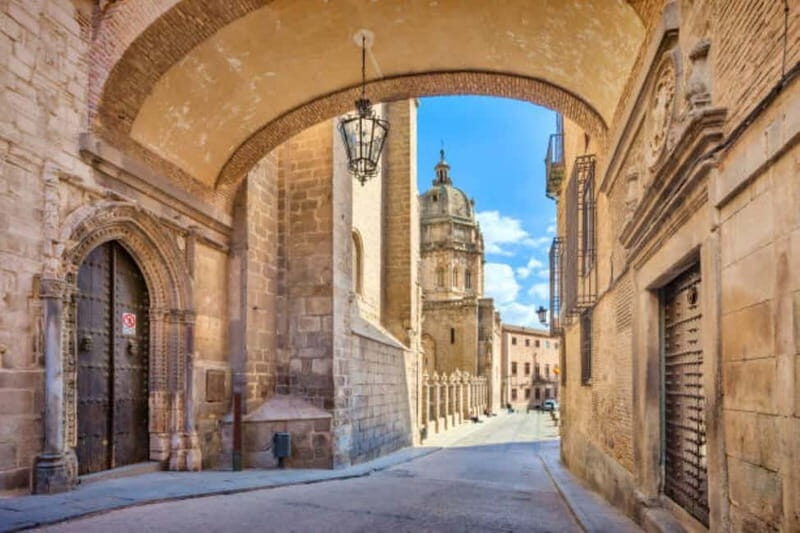
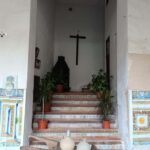
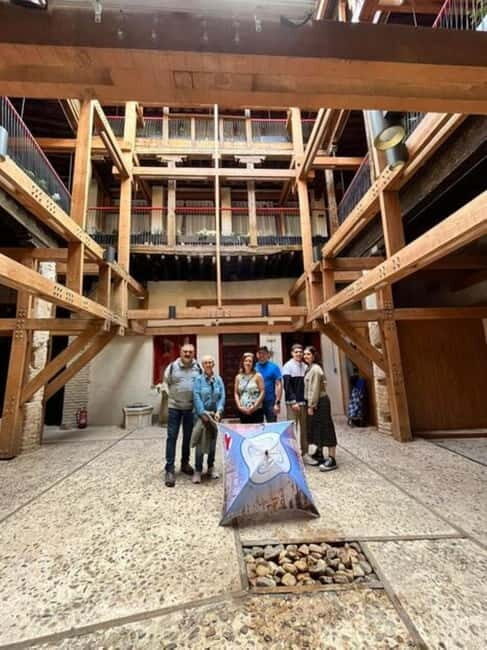
One stop you’ll want to plan for is Casa Rodrigo de la Fuente, the included entrance portion of the tour. This is tied to Rodrigo de la Fuente, described as the famous doctor of El Greco. The connection is clever because it links art history to a real person living in the city’s world.
Even if you’re not a deep El Greco fan, you’ll likely enjoy this angle. Art connects to patronage, professions, and the social network behind famous works. A city like Toledo isn’t just monuments—it’s people with roles that shaped who could create what.
What makes this stop feel valuable for your time: it’s not an optional add-on. It’s part of the paid experience, so you get at least one interior entry without hunting tickets on your own.
Tip: wear layers. House interiors often feel cooler than bright outdoor plazas, and you’ll be switching between sun and shade all tour long.
Finishing near the Cathedral area: Plaza del Ayuntamiento to Zocodover
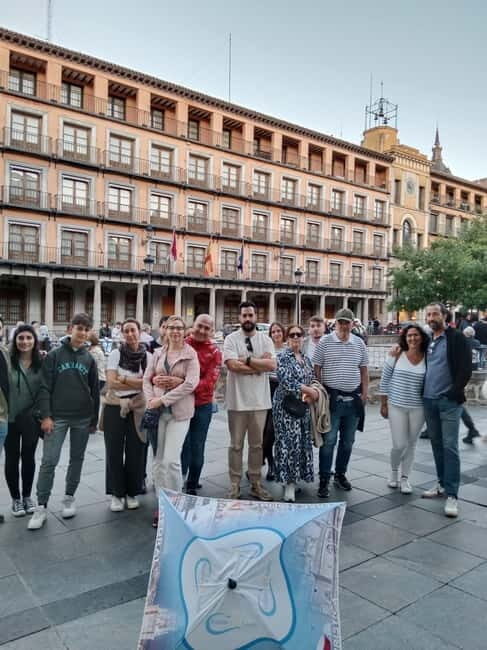
As the walk continues, your route places you in an important setting around the Plaza del Ayuntamiento, surrounded by the Toledo City Hall building and the Archbishop’s Palace, with the Cathedral of Toledo as the big visual endpoint of that segment.
The cathedral stop (and the approach toward it) works well because the tour has already built your timeline. By the time you reach this area, you’re not just thinking about a single religious building. You’re thinking about what changed over centuries: power centers moved, communities shifted, and architecture became a public statement.
The tour then finishes back where you started: Plaza de Zocodover. That’s practical. You’ll have an easy place to orient yourself for your next stop, whether that’s lunch, a self-guided wander, or popping into another monument you want to see longer.
Price and value: what $11 buys you in real terms
At about $11 per person and 105 minutes, this is a bargain if you want structure. You’re paying for an official live guide and for the included entrance to Casa Rodrigo de la Fuente. Even if you pay separate monument tickets elsewhere in the city, the tour format is designed so your guided time focuses on interpretation rather than ticket logistics.
Here’s the value equation I’d use: you’re getting a guided “three cultures” arc with specific locations and dates (like the 11th-century Mezquita de las Tornerías), plus craft and legend storytelling (including the Toledan Night). For a short visit, it can save you hours of research and wandering without direction.
Just confirm one thing before you go: while the overall notes say you don’t need extra entrance fees or additional expenses, the only entrance explicitly listed as included is Casa Rodrigo de la Fuente. So if you want to be extra safe, plan to see the other major sights as guided stops with the access your guide provides on the day.
Who this tour suits best
This tour is a great fit if:
- You want the three cultures idea explained with real Toledo locations, not generic history.
- You like walking tours that move quickly and keep your mind engaged.
- You’re curious about the blend of religion, conflict, and craft in everyday city life.
- You’re traveling with limited time and want one guided framework.
It may be less ideal if:
- You hate walking on older streets and potential uphill stretches.
- You prefer only fully seated, long indoor visits. This one includes viewpoints and streets, and it’s meant to move.
Should you book Tour Toledo 3 Culturas?
If you’re planning a first trip to Toledo, I think this is a smart booking. It gives you a tight storyline, starts at a convenient city center, and includes a meaningful interior stop at Casa Rodrigo de la Fuente tied to the El Greco connection.
Book it if you want to walk away saying you understand how the Christian, Jewish, and Muslim layers relate to each other, and not just that you saw a few buildings. Skip it only if your goal is slow, independent museum-style time. This is a guided walk, paced to tell the story fast.
If you do book, bring good shoes, keep an eye on where your guide is taking you during the viewpoints, and go ready to think about Toledo as a city that kept changing.
FAQ
Where does the tour start and end?
The tour starts at Plaza de Zocodover 5, next to the Koker clothing shop and a pharmacy. It ends back at the same meeting point.
How long is the tour?
The duration is 105 minutes.
What language is the live guide?
The live tour guide speaks Spanish.
What’s included for entrances?
The tour includes entrance to Casa Rodrigo de la Fuente. The activity notes also state that the tour does not require payment of entrance fees or additional expenses.
Is the tour wheelchair accessible?
Yes, the tour is wheelchair accessible.
Are alcohol and drugs allowed?
No. Alcohol and drugs are not allowed during the tour.