REVIEW · MADRID
Alcala de Henares and Cervantes Guided Tour from Madrid
Book on Viator →Operated by Fun and Tickets · Bookable on Viator
Cervantes feels close to the ground.
This half-day bus trip turns Spanish literature into real places: a guided walk through Alcalá de Henares and visits tied to Miguel de Cervantes, including his birthplace museum. I especially like how the experience links story and setting, not just facts.
What I liked most was the pairing of the University of Alcalá with Cervantes’ life. You get to stand in the academic world shaped by Cardinal Cisneros, then shift gears to the house where Cervantes was born in 1547 (now a museum). A big plus is the guide—names like Vicky, David, and Maria Jesús show up in people’s accounts, and they tend to connect details to what you’re seeing.
One drawback to plan around: the schedule is tight. The cathedral stop is brief, and entry there isn’t included, so if you want a longer look inside, you may need a separate ticket.
In This Review
- Key things I’d clock before you go
- From Madrid to Alcalá by air-conditioned bus: the “doable in 5 hours” plan
- Plaza de Cervantes: where the town centers itself around Cervantes
- Colegio de San Ildefonso: the University of Alcalá in full stone-and-stories mode
- Calle Mayor: the medieval commercial street shaped by Jewish and Roman lines
- Museo Casa Natal de Cervantes: where the birthplace debate becomes a museum
- Catedral de Alcalá de Henares: quick stop, separate ticket if you want inside
- What the guide brings (and why it matters more than you think)
- Timing tips, shoes, and how to avoid the common “day trip friction”
- Is this good value at about $54.57 per person?
- Who should book this Cervantes tour from Madrid?
- Should you book this Alcalá de Henares and Cervantes guided day trip?
- FAQ
- How long is the Alcala de Henares and Cervantes tour from Madrid?
- What does it cost per person?
- What’s included in the price?
- Are food and drinks included?
- Do I need a face mask during the tour?
- What group size should I expect?
- Do I receive a mobile ticket?
- Is the cathedral visit included, or do I need another ticket?
- Can I cancel for a full refund?
- What happens if the tour doesn’t meet the minimum number of travelers?
Key things I’d clock before you go
- Birthplace museum with a real “how we know” story: the house was proclaimed the birthplace in 1948 by Luis Astrana Marín.
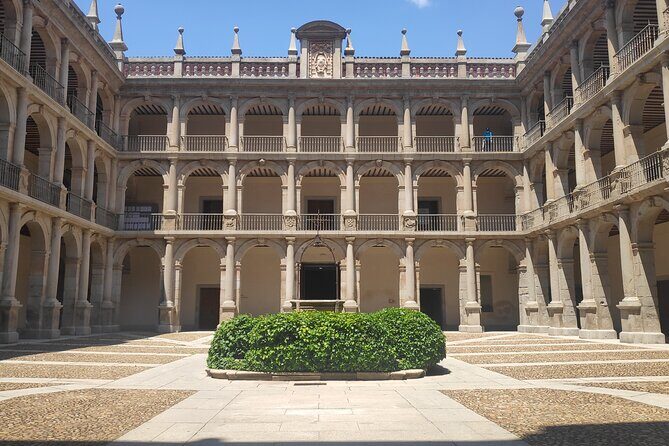
- University architecture tied to specific builders: the Colegio Mayor façade was built in 1537 by Rodrigo Gil de Hontañón and finished in 1553.
- Medieval street layout still visible: Calle Mayor grew from an old Jewish neighborhood (aljama) and the Roman road path.
- Small-group feel (max 50): enough structure for a guided walk, without feeling like a crush.
- Two paid monument entries included: the University of Alcalá site and the Cervantes Museum and Library.
- Masks are mandatory: if you forget, you can buy one for €1 during the tour.
From Madrid to Alcalá by air-conditioned bus: the “doable in 5 hours” plan
This tour is built for people who want a real day trip without turning the day into a logistics headache. You travel by air-conditioned bus, and you get a guided walking route once you’re in Alcalá de Henares. The total time is about 5 hours, which is long enough for a meaningful core visit but short enough that you won’t need a full meal-day plan.
Group size matters here: it runs with a maximum of 50 people, so you still get the sense of a guided experience rather than a free-for-all. You also get a mobile ticket, which keeps things simple at the start.
There’s one rule you should take seriously before you leave Madrid: face masks are mandatory. If you forget yours, the tour offers the option to buy one for €1. That’s worth planning for, because it can save you from scrambling right when you’re meeting the group.
You can also read our reviews of more guided tours in Madrid

Plaza de Cervantes: where the town centers itself around Cervantes
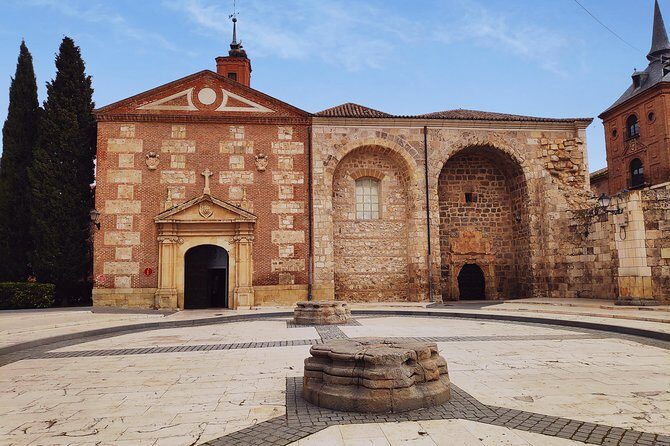
You begin at Plaza de Cervantes, the main and largest square in Alcalá de Henares. The name has changed over time, moving from a market square identity to other designations, and since 1879 it has carried the name of Miguel de Cervantes.
This stop works well as a warm-up because it helps you orient. Squares in historic Spanish towns aren’t just pretty—they’re where community life and landmarks concentrate. From here, the rest of the walk makes more sense, since you’re moving through a compact old-city core.
Admission time is short, but that’s fine because you’re not arriving to “stand around.” You’re arriving to set your bearings, then move on to the academic and literary sites that define the day.
Colegio de San Ildefonso: the University of Alcalá in full stone-and-stories mode
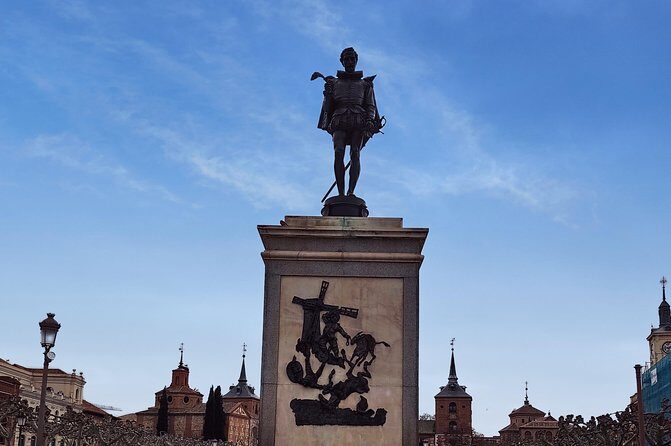
Next comes the star academic site: the Colegio de San Ildefonso, part of the University of Alcalá complex. The university structure was designed under Cardinal Cisneros from 1499, so you’re looking at a building tied to the birth of one of Spain’s major education centers.
What makes this stop more than just a pretty façade is the specific craft and names attached to it. The front was built starting in 1537 by architect Rodrigo Gil de Hontañón, with finishing work completed by Pedro de la Cotera in 1553. That level of detail helps you see the place as a product of people and decisions, not just an old structure.
The visit also focuses on key interior spaces that you can recognize even as a casual visitor. The site includes the Patio de Santo Tomás de Villanueva and features linked to learning and performance, like the university chapel and auditorium (time permitting). Admission is included, so you don’t need to make a separate ticket decision here.
Practical note: this is a “look up and look around” stop. Bring a bit of patience for photos and angles, because the building is meant to be read visually from multiple directions.
Calle Mayor: the medieval commercial street shaped by Jewish and Roman lines
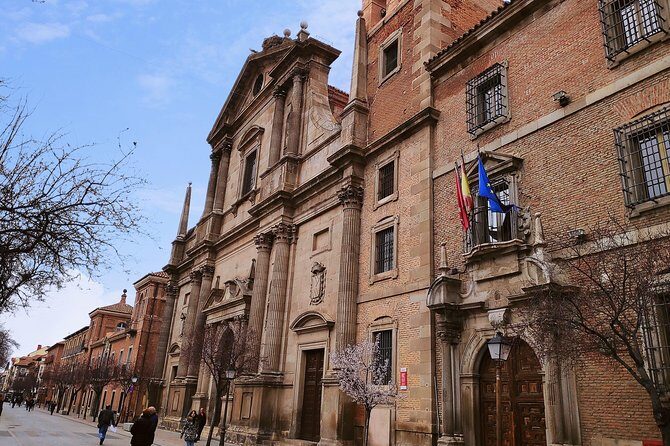
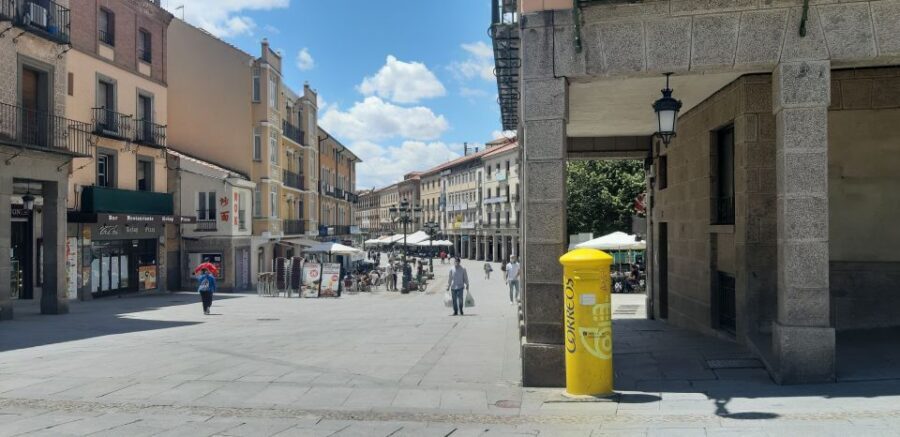
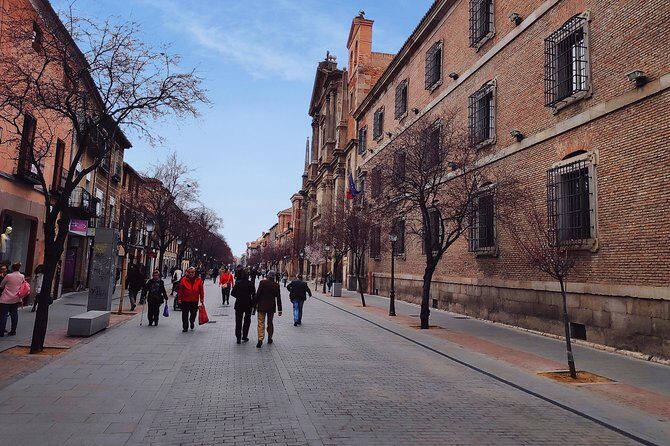
Then you head to Calle Mayor, one of the town’s main historic streets. It started around the 12th century, tied to the old Jewish aljama of the city. The street’s path also connects to the Roman road corridor (the Caesar Augusta route that passed through Complutum).
The street layout is what really sticks with you. Medieval commerce often worked with shops at street level, while upper floors supported daily life and circulation. In Alcalá’s case, the homes originally relied on a system that included galleries allowing inhabitants to move without constantly descending into public space.
This segment is shorter, but it’s valuable because it gives you context. Cervantes is the headline, yet the city’s older social structure helps explain why the university and later cultural life felt so grounded. It turns your walk into a story about how people lived before the books got famous.
Museo Casa Natal de Cervantes: where the birthplace debate becomes a museum
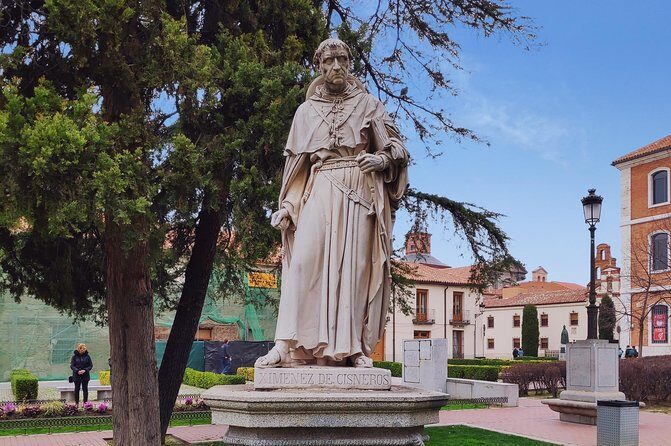
The emotional center of the day is the Museo Casa Natal de Cervantes. This is where you get the sense of why Cervantes’ story kept echoing through centuries.
One detail I think you’ll appreciate: the birthplace was debated for a long time. It wasn’t until 1948 that Luis Astrana Marín declared this building as Cervantes’ birth house. After that, the city council bought the property in 1954 to create a Cervantes museum, and it opened in 1956 as the Cervantes Museum and Library.
Standing here, you’re not just looking at “old stuff.” You’re looking at how a city decides what it believes and then builds a public memory around it. That’s a subtle but important part of cultural tourism: you’re seeing the past and also seeing the effort to preserve it.
The museum also sits near the historic Hospital de Antezana, linked to Cervantes’ father, Rodrigo de Cervantes, who worked there. That connection adds an extra layer of family geography—small, but meaningful.
Admission is included, and you get about 35 minutes at the museum, which is just enough to see the main highlights without turning it into a half-day commitment.


Catedral de Alcalá de Henares: quick stop, separate ticket if you want inside
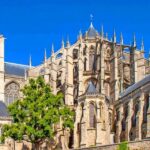
The final big landmark is the Catedral Magistral of Saints Justo and Pastor. The cathedral’s origins connect to the early-4th-century martyrdom tradition of Justo and Pastor, and the cathedral occupies the site tied to their story.
Another detail worth knowing: the cathedral is part of a town-planning idea built around the streets that lead into the walled enclosure, with a concentric circle structure at the core. That makes it feel like the town’s spiritual and civic center were designed to overlap.
Here’s the practical catch: this stop is brief (around 10 minutes), and admission is not included. So if you want a deeper interior visit—time to wander slowly, sit for a moment, or study chapels—you’ll likely need to handle that separately.
What the guide brings (and why it matters more than you think)
A good guide can turn “I saw buildings” into “I understand why these buildings matter.” That’s what this tour seems to aim for, and it shows up in how guides are praised by name—Vicky, David, and Maria Jesús come up in feedback.
People also single out the way the tour connects Cervantes with his wider context. In particular, there’s strong emphasis on the University of Alcalá story—especially the role of Cardinal Cisneros—and how Cervantes fits into the intellectual and family backdrop. When a guide points out how a façade, a patio, or a street path reflects a period’s priorities, you start noticing details you’d otherwise miss.
If your Spanish is rusty, don’t panic. The tour notes that it may run with a multi-lingual guide, and the walking format usually means you’re anchored by what you’re seeing, not only by complex language.
Timing tips, shoes, and how to avoid the common “day trip friction”
Because this tour stays around 5 hours, you’ll feel the pace. I’d plan for comfortable walking shoes, since you’ll do both bus time and a guided walk through central streets.
Also watch the “small logistics” stuff:
- The schedule can be tight between stops, so don’t treat café hunting like a hobby during the tour hours.
- Your mask needs to be ready at the start; it’s mandatory, and the €1 backup is there only if you forget.
A couple of past experiences point to where things can get annoying: pick-up or drop-off points may be very central, and in at least one case someone reported having to walk farther than expected. To keep your stress low, give yourself a little extra buffer time around the meeting point area and stay calm if the group is still collecting people when you arrive.
Is this good value at about $54.57 per person?
For roughly $54.57, you’re paying for more than transportation. You get round-trip bus service and you also include admission for two of the day’s main paid components: the Colegio de San Ildefonso (University of Alcalá) and the Cervantes Museum and Library.
That’s why the price feels reasonable: the tour isn’t just “look at a square and leave.” It’s structured around two big indoor visits that would cost you time (and likely extra ticket hassle) if you did it on your own. The guided walking part also adds value because it helps you read what you’re seeing instead of just scanning façades.
Food and drinks are not included, so you’ll want to plan your own snack strategy—either before you go or after. That’s the one place where you’ll need to budget some extra money and time.
Who should book this Cervantes tour from Madrid?
This tour is a strong match if you:
- Love Cervantes and want his story tied to actual places.
- Prefer a guided route when you have limited time in Madrid.
- Like historical context, especially the connection between the University of Alcalá and Spain’s intellectual life.
It’s also a good fit if you don’t want to manage transit between Madrid and Alcalá while also coordinating museum entry.
If you’re the type who wants a slow, unstructured day with lots of café time, this may feel a bit rushed. The cathedral stop is short and the day is paced, so you might be happier with a DIY half-day where you can linger.
Should you book this Alcalá de Henares and Cervantes guided day trip?
Yes—if you want a focused, high-impact Cervantes day without turning it into a project. The included university + birthplace museum combo gives you more “why it matters” than a casual walk, and the guided component seems to be a major reason people feel satisfied.
Book it especially if you’re planning to visit Madrid’s cultural sites and you want one day to connect Spanish literature to the physical town where it starts. Just go in knowing you’ll move at a steady pace, the cathedral interior isn’t included, and you’ll need to handle your own food breaks.
FAQ
How long is the Alcala de Henares and Cervantes tour from Madrid?
It’s approximately 5 hours.
What does it cost per person?
The price is listed at $54.57 per person.
What’s included in the price?
You get an official guide and walking tour, admission to the College of San Ildefonso (University of Alcalá de Henares), admission to the Cervantes Museum and Library, and round-trip transportation by air-conditioned luxury bus.
Are food and drinks included?
No. Food & drinks are not included.
Do I need a face mask during the tour?
Yes. Face masks are mandatory. If you forget yours, you can buy one for €1.
What group size should I expect?
The tour has a maximum of 50 travelers.
Do I receive a mobile ticket?
Yes. The tour uses a mobile ticket.
Is the cathedral visit included, or do I need another ticket?
The Catedral de Alcala de Henares entry is listed as not included, while the Cervantes Museum and Library and the College of San Ildefonso admissions are included.
Can I cancel for a full refund?
Yes. Free cancellation is available up to 24 hours before the experience starts for a full refund.
What happens if the tour doesn’t meet the minimum number of travelers?
If it’s canceled because the minimum isn’t met, you’ll be offered a different date/experience or a full refund.