REVIEW · MADRID
Architecture tour Gran Vía from its best rooftops 20thC
Book on Viator →Operated by architoursmad · Bookable on Viator
Madrid’s skyline, explained in 3.5 hours.
What makes this tour worth your time is the mix of 20th-century architecture with rooftop views that help everything click into place, from urban planning to street-level details. I love that you get real interior access at key stops, not just photos from the sidewalk. I also love how the guide uses plans and historical photos so the buildings aren’t random names, but part of a bigger Madrid story. The one thing to consider is that it runs outdoors with rooftops and steps, so cold wind or rain can make it less fun than you’d hoped.
This is not a casual stroll where you stop now and then for scenery. You should expect a structured, information-forward walk focused on styles, periods, and how Gran Vía became the stage for Madrid’s modern face.
In This Review
- Key points before you go
- Gran Vía from rooftops: the “why” behind the skyline
- Start at Azotea del Círculo de Bellas Artes and meet Antonio Palacios up close
- Museo Chicote: a quick hit of 1931 Art Deco glamour
- Edificio Telefónica: step inside Madrid’s early skyscraper story
- Edificio Carrion and Plaza del Callao: the 1933 neon moment
- Plaza de España rooftop finish: Royal Palace views and a drink option
- Price and value: what $216.62 buys you (and what it doesn’t)
- How the timing and walking level usually feels
- Weather and comfort: plan like a local on a rooftop day
- Who should book this Gran Vía architecture tour?
- Should you book this tour?
- FAQ
- FAQ
- How long is the tour?
- What does the tour cost?
- What language is the tour offered in?
- Is this a private tour?
- Where do we meet and where does it end?
- What’s included in the price?
- Do I need to buy tickets for the Círculo de Bellas Artes stop?
- Are drinks included on the rooftops?
- Is there an option to finish at a RIU Hotel rooftop?
- What happens if the weather is poor?
Key points before you go
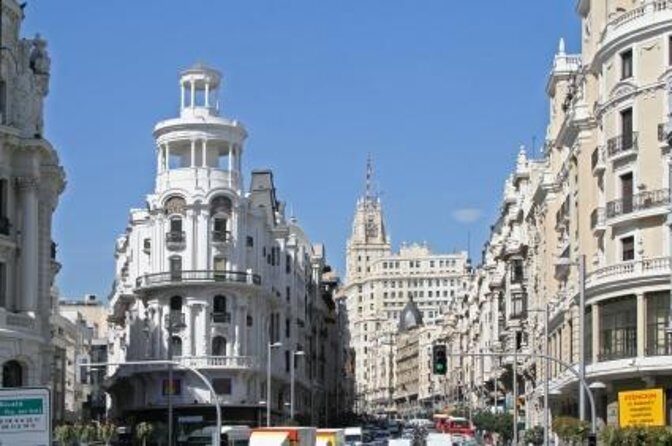
- Rooftop views that frame Gran Vía’s 20th-century growth from start to finish
- Interior access including Fundación Telefónica (and a major building inside Círculo de Bellas Artes)
- An architect-led approach with plans and historical photos that turn viewpoints into meaning
- Fast, focused stops at 1931–1933 Art Deco and early skyscraper landmarks
- English tour with a private group format, so your questions can actually get answered
- Weather matters, because you’ll spend time on terraces and in stair-heavy sections
Gran Vía from rooftops: the “why” behind the skyline
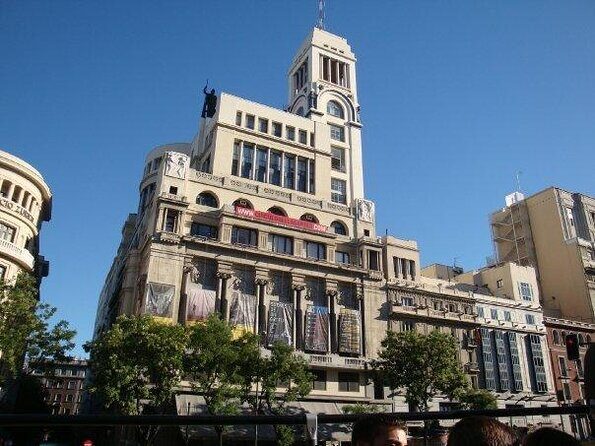
Gran Vía looks like it was built all at once. In reality, it grew up in waves, with different ambitions showing up as styles, materials, and street-floor drama. This tour is designed to teach you how to read that growth.
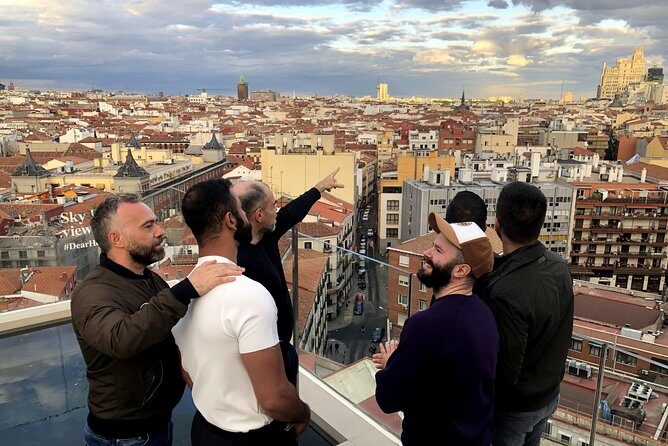
You start with a big-picture viewpoint and a quick architectural sweep. Then you move street-by-street and building-by-building along the corridor, pausing where the architecture changes, where the city makes a statement, and where new technology (like early skyscrapers) shows up. The rooftops aren’t just for Instagram. They’re used like teaching boards—so you can see angles, setbacks, and the way plazas connect to major façades.
The best part is the guide’s method. An architect like Emilio isn’t just tossing facts. He’s tying each building to its time and to what Madrid was trying to become. In the reviews, people repeatedly highlight that this is organized and specific, not a vague “here’s a pretty building” tour.
You can also read our reviews of more tours and experiences in Madrid.


Start at Azotea del Círculo de Bellas Artes and meet Antonio Palacios up close
Your tour begins at the Azotea del Círculo de Bellas Artes, the rooftop where you’ll get your bearings fast. From up there, Gran Vía and the surrounding parts of central Madrid look like a layout, not a maze. That matters because the rest of the walk only works if you understand how things relate to each other—major streets, open spaces, and the way certain buildings dominate sightlines.
After the rooftop orientation, the tour goes down the impressive staircase and into the Antonio Palacios building interior. Palacios is a key name for early 20th-century Madrid, so this stop gives you both the view and the architectural “source code.” Expect it to feel like shifting from seeing the city from above to understanding how the building itself was designed to impress.
Time reality check: this first stop takes about 1 hour 15 minutes, which is a good chunk of the tour. It’s great if you like the “set the scene” phase. It can feel long if you only want short viewpoints and quick photo ops.
Cost note: entry to the Círculo de Bellas Artes building is not included. You should plan on paying €6.00 per booking for that entrance.
Museo Chicote: a quick hit of 1931 Art Deco glamour
Next up is Museo Chicote, with the tour slipping you into the art-deco atmosphere associated with Luis Gutiérrez Soto in 1931. This stop is short—about 5 minutes—so don’t expect a museum-style wander. Instead, it’s more like a scene change: you see how nightlife, film premieres, and modern style clustered around Madrid’s most prominent streets.
The highlight here is the cultural framing. The tour connects the building’s look to celebrity and premieres—references in the tour materials include names from classic Hollywood to modern Spanish cinema. Even in a brief stop, that context helps you understand why certain architectural choices mattered to the public, not just to architects.
How to make it work for you: if you’re the type who likes to soak up atmosphere (and not just architecture jargon), this is a satisfying palate cleanser between bigger, longer interior stops.
Edificio Telefónica: step inside Madrid’s early skyscraper story
Then the tour focuses on something you can’t see from the street. You’ll visit the interior of Edificio Telefónica, described as the first skyscraper in Madrid, built in 1929, then reformed in 2012.
Even if you’re not an architecture nerd, this stop tends to click because you’re learning how the building evolved. Early skyscraper ambition meets later modern needs, and you get to see how a structure adapts rather than just freezing in time. That is exactly the kind of lesson the rooftop-to-street approach is meant to teach: styles and purposes change, but the city keeps stacking layers.
This stop is about 20 minutes and the Fundación Telefónica entrance is included, so it’s one of the more “value-dense” moments on the schedule.
If your only goal were rooftops, you’d miss the point. The Telefónica interior is one of the reasons this tour feels more complete than a sightseeing-only experience.
Edificio Carrion and Plaza del Callao: the 1933 neon moment
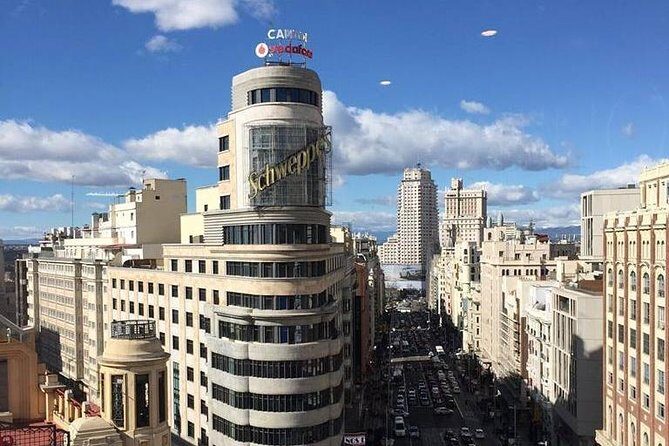
After Telefónica, you move to Edificio Carrion, a 1933 building associated with the famous Schweppes neons and the setting around Plaza del Callao.
This is another shorter stop (about 5 minutes). The value is in the story: neon signage and modern advertising weren’t just decoration. They were part of how cities announced themselves at night and drew people into commercial life.
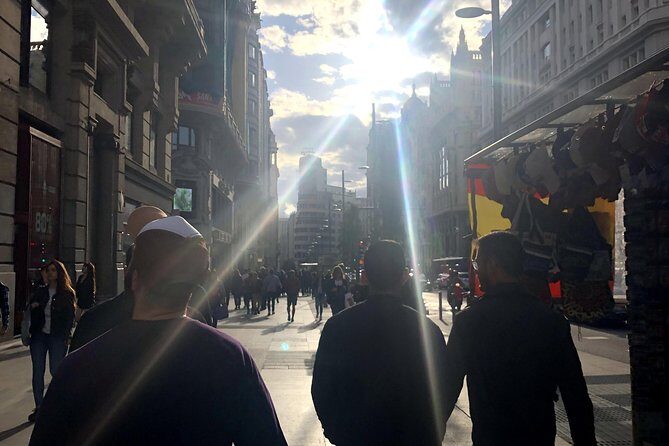
The tour places it in the broader Gran Vía environment, so you’re not just hearing about one façade. You’re learning how the street’s energy was designed into the architecture—how the built environment supports nightlife, shopping, and movement through public space.
If you’re hoping for lots of interior time here, lower expectations. This is more about understanding the external visual punch and the urban context around it.





Plaza de España rooftop finish: Royal Palace views and a drink option
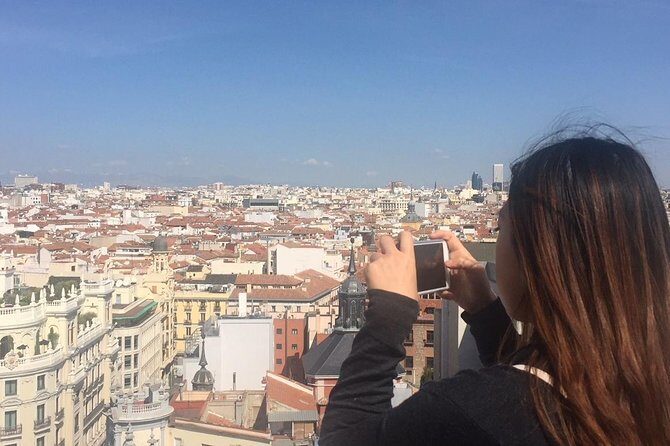
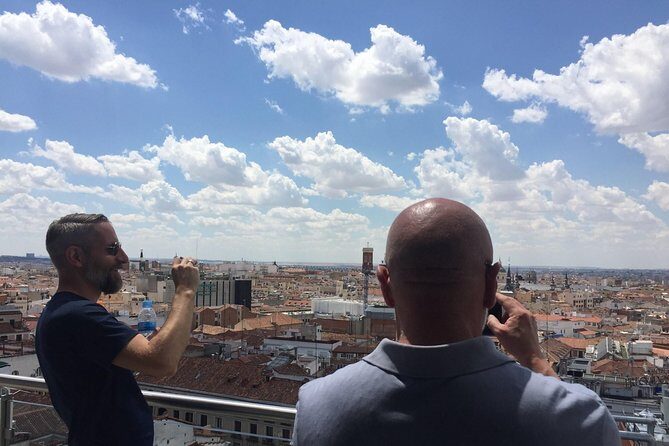
You end at Plaza de España with a rooftop finish that’s basically a “wrap the whole story up” moment. From here, you’re set up to take in big Madrid landmarks in one sweep, including views of the Royal Palace, the Cathedral, the Royal Theater, and the Casa de Campo forest.
This final rooftop segment lasts about 15 minutes. It’s short, but it’s purposeful: you compare what you saw earlier with the wider city picture, and you can finally place the Gran Vía buildings in the larger geography.
There’s also an option to linger. The tour notes mention that you may stay having a drink on the terrace at the finish area, and they’re clear that alcoholic beverages aren’t included. There’s also an extra RIU Hotel rooftop option with added fees depending on the time of day (weekday daytime vs evening vs weekends/holidays). So if you want that sit-down view time, it’s worth factoring that into your planning budget.
Practical tip: bring a layer. Even when Madrid is pleasant earlier in the day, rooftops can feel cooler and windier.
Price and value: what $216.62 buys you (and what it doesn’t)
At $216.62 per person, this isn’t a budget stroll. So the real question is whether you’re paying for time, access, and interpretation—or just scenery.
Here’s what you actually get that supports the price:
- An architect-led guide with context using plans and historical photos, which turns viewing into learning
- A private tour/activity format for your group (not a mixed crowd scramble)
- Included entry at Fundación Telefónica
- Multiple architectural stops that connect 20th-century design to the street-level story
What you should not assume is included:
- Círculo de Bellas Artes entrance costs €6.00 per booking
- Rooftop drinks are not included
- The optional RIU Hotel terrace add-on has separate fees depending on time and day
Duration is listed around 3 hours 35 minutes to 4 hours, which is substantial for a route with rooftops. It’s also why the intro and pacing matter. If you prefer very light, short-and-sweet sightseeing, you might find parts of the commentary run longer than you want.
But if you like architecture, city planning, and how style reflects ambition, the value holds up. You’re paying for someone to help you see instead of just point.
How the timing and walking level usually feels
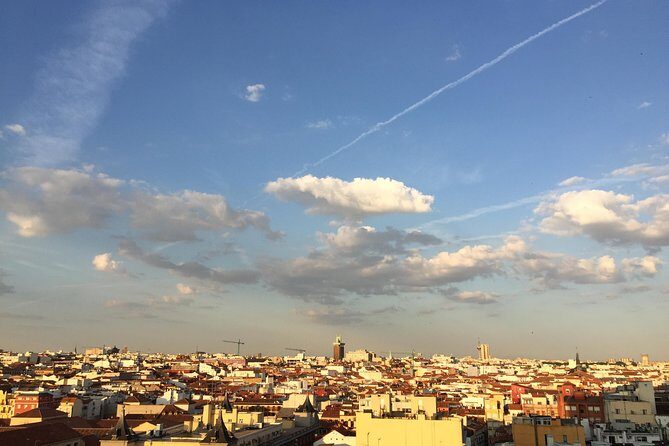
This tour is set up like a sequence: rooftop orientation, interiors, then quick cultural architecture stops, then a rooftop finish. Because you’ll be on terraces and moving between points, you should plan for a medium walking day.
A few practical considerations show up in the tour experience itself:
- The Círculo stop includes stairs as part of the route (reviews warn it’s not ideal for strollers)
- Rooftops mean exposure to wind and temperature, so dress like you’ll be standing outside
- The tour isn’t framed as a casual overview; it’s more specific and detail-oriented
If you’re traveling with mobility constraints, it’s safer to check in beforehand about the stair-heavy parts. If you’re traveling with kids, understand that reviews suggest it’s probably a better fit for older teens and adults rather than younger children.
Weather and comfort: plan like a local on a rooftop day
This experience requires good weather. When skies are bad, the tour can be canceled and you’ll be offered a different date or a full refund. That’s the official rule.
Even when it’s technically “not canceled,” rooftop comfort can still swing. Cold, windy, and even slightly rainy conditions are common enough in winter to make you want a backup plan for layers and warmth.
Here’s what you can do to make it survivable:
- Wear comfortable shoes with grip; rooftops and stair routes demand stable footing
- Bring a warm layer and something wind-resistant
- If rain is possible, carry an umbrella or light rain shell
- Expect that the schedule is tight enough that standing around to warm up isn’t really built in
Who should book this Gran Vía architecture tour?
Book it if you:
- Want 20th-century architecture with a guide who can explain how buildings relate to the city’s growth
- Prefer interpretation and context over random photo stops
- Like rooftops, but also want at least a couple of real interior visits
- Enjoy a guide with enough confidence to answer detailed questions
Skip it (or choose another style of tour) if you:
- Want a relaxed, low-information sightseeing day
- Dislike stair routes or exposure to wind
- Expect lots of interior time at every stop; some stops are intentionally brief
Should you book this tour?
I’d recommend it if you’re the type who looks at Gran Vía and wants a reason behind what you’re seeing. The mix of rooftop viewpoints, architect-led storytelling, and included interior access at Telefónica makes it feel like more than sightseeing.
If you’re sensitive to weather, hate stairs, or want a short easy tour, you might feel annoyed by the time spent outdoors and the pace. For the right traveler, though, this is the kind of Madrid experience that changes how you see the city after you leave the meeting point.
If you’re deciding last-minute, prioritize two things: your comfort with rooftops and your appetite for architectural detail.
FAQ
FAQ
How long is the tour?
It runs about 3 hours 35 minutes to 4 hours.
What does the tour cost?
The price is $216.62 per person.
What language is the tour offered in?
The tour is offered in English.
Is this a private tour?
Yes. It’s listed as a private tour/activity, meaning it’s just your group.
Where do we meet and where does it end?
It starts at Azotea del Círculo de Bellas Artes de Madrid on C. del Marqués de Casa Riera, 2 (Centro) and ends at Plaza de España, Madrid (with the finish on a rooftop/terrace area).
What’s included in the price?
The listed inclusions are Fundación Telefónica entrance plus a visit led by a local architect with plans and historical photos.
Do I need to buy tickets for the Círculo de Bellas Artes stop?
Yes. The Círculo de Bellas Artes entrance is €6.00 per booking and is not included.
Are drinks included on the rooftops?
No. Alcoholic beverages/drinks are not included.
Is there an option to finish at a RIU Hotel rooftop?
There is an optional rooftop finish at RIU Hotel with added fees depending on the time/day, and it’s listed as not included.
What happens if the weather is poor?
The tour requires good weather. If it’s canceled due to poor weather, you’ll be offered a different date or a full refund.