REVIEW · MADRID
Madrid: 1.5-Hour City Highlights Guided Walking Tour
Book on GetYourGuide →Operated by Naturanda Turismo Ambiental · Bookable on GetYourGuide
You’ll get your bearings fast in central Madrid. This 1.5-hour walking tour is built for people who want the main sights and the stories behind them, without spending your whole day in lines. You’ll move through iconic squares and “just around the corner” streets while your guide ties it all together with history and practical context.
What I really liked was the guided flow through landmarks you see all over photos, but learn to read in the real city. I also loved how the walk connects big-name stops like the Royal Palace area with smaller streets that make Madrid feel lived-in, not museum-only.
One drawback to plan for: you need decent walking ability, and the meeting point can be easy to miss if you arrive without checking landmarks up close.
In This Review
- Key highlights to look for
- Where the tour starts: Monumento a San Pedro by the Royal Palace
- Royal Palace area: a guided introduction to Spain’s formal face
- Almudena Cathedral: switching from royal power to sacred Madrid
- Puerta del Sol and Plaza Mayor: Madrid’s daily pulse in two classic squares
- Plaza de la Villa and Barrio de las Letras: the old-city feeling in real streets
- Casa de Cervantes and Plaza de Santa Ana: literature meets theater energy
- Congress of Deputies and Neptune Fountain: the city’s symbols, close-up
- Museo del Prado stop: how a highlights walk sets you up for an art day
- Price and value: $14 for 90 minutes of guided orientation
- Group size, pace, and language: who this works for
- What to wear, what to expect, and what to bring
- Should you book this 1.5-hour Madrid highlights walk?
- FAQ
- How long is the Madrid city highlights guided walking tour?
- How much does the tour cost?
- Where is the meeting point?
- Which landmarks are included on the route?
- Is food or drinks included?
- What languages are available for the guide?
- Is the tour suitable for people with mobility impairments?
- Is there free cancellation?
Key highlights to look for
- Straight-to-the-point route covering top central landmarks in just 1.5 hours
- Royal Palace and Almudena Cathedral orientation so you know what you’re looking at
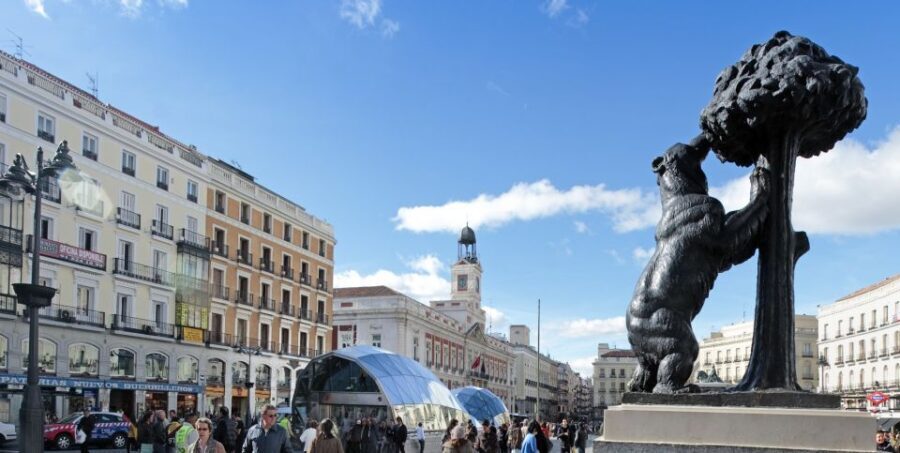
- Squares that actually function (Puerta del Sol, Plaza Mayor) where Madrid’s daily rhythm shows
- Literary Madrid stops around Barrio de las Letras and Casa de Cervantes
- Prado-area context even if you do not enter the museum that day
- Meeting point matters because the tour starts right by the Royal Palace area
Where the tour starts: Monumento a San Pedro by the Royal Palace
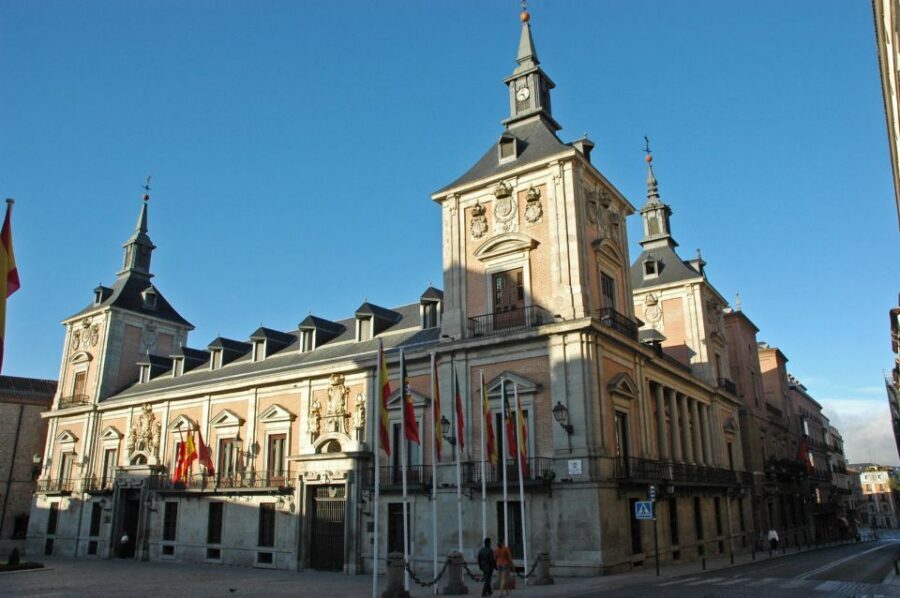
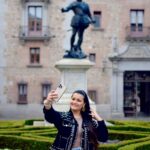
The best way to enjoy a short highlights tour is to start clean and stress-free. Your meet-up point is the Monumento a San Pedro in Plaza de la Armería, right next to the Royal Palace. That location is convenient, because you’re already standing in the right neighborhood for both the palace complex and the religious landmark nearby.
One practical tip: arrive a few minutes early and actually orient yourself first. Plaza de la Armería can feel busy, and it’s easy to assume you’re at the right spot when you’re one street over. In one reported case, the group had a rough start before they found the organizer, so I’d rather you over-check than lose time.
What you get immediately here is momentum. Instead of beginning with a lecture, you start in the exact area where Madrid’s power and grandeur show up in stone and scale. Then the route keeps that energy rolling.
You can also read our reviews of more walking tours in Madrid
Royal Palace area: a guided introduction to Spain’s formal face
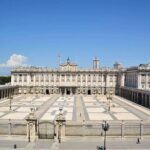
The first major stop on the walk is the Royal Palace of Madrid, with a guided portion. Even if you only see parts from the outside, you’ll understand why this place shapes the city’s sense of authority. The palace sits up in the Royal area, and the surrounding streets feel designed for moving between important spaces.
This is also where the tour’s pacing starts to make sense for first-timers. A lot of Madrid walking tours jump to streets and squares too fast. Here, you begin with a big anchor: you learn what the palace represents, then you’re ready for the later transitions into marketplaces, government buildings, and public art.
The main value for you is context. Once you’ve heard a basic explanation of what you’re looking at, you start noticing details you’d otherwise miss—like how the nearby streets funnel you toward the next stop and how the city’s layout is built around these landmarks.
Almudena Cathedral: switching from royal power to sacred Madrid
Next comes Almudena Cathedral. The tour includes a guided visit here too, and it’s a smart change of gear. In a city like Madrid, you can’t really separate politics and religion, and Almudena helps you see that connection in real space.
I like this stop on a highlights walk because it balances scale. The palace feels monumental in a formal way. Almudena brings a different kind of grandeur, and it also gives you a chance to slow down for a moment and watch how people move around the area.
If you’re the kind of traveler who enjoys looking up—facades, lines, and how buildings sit against the sky—this is a good use of your short time. The guide’s job is to point your attention where it matters, so you’re not just staring, you’re actually reading the building.
Puerta del Sol and Plaza Mayor: Madrid’s daily pulse in two classic squares
Then the tour heads to Puerta del Sol, one of Madrid’s most important public squares. You’ll get guided time here, and it’s one of the best places in the city to understand how Madrid works in day-to-day terms. It’s not a quiet viewpoint. It’s where people meet, move through, and live their errands.
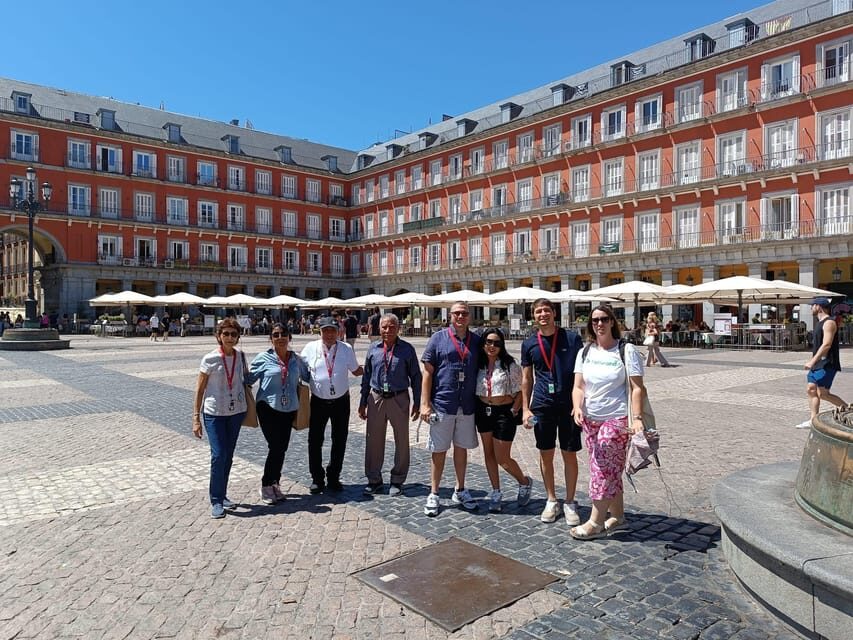
From there you walk into Plaza Mayor. This is the square that makes Madrid look like Madrid. The shape of the plaza, the surrounding facades, and the way the space holds the crowd all create that immediate wow factor—but the real win is that your guide helps you place it historically.
Why this matters on a short tour: squares can be “pretty” but still feel empty if you don’t know what they’ve been used for. With a guide, you connect the dots between Sol’s symbolic role and Plaza Mayor’s identity as a major gathering space.
If you’re planning to come back later for photos, you’ll also know when you’ll enjoy it most. Sol tends to feel like constant motion. Plaza Mayor can feel a little more composed, depending on time of day.
Plaza de la Villa and Barrio de las Letras: the old-city feeling in real streets
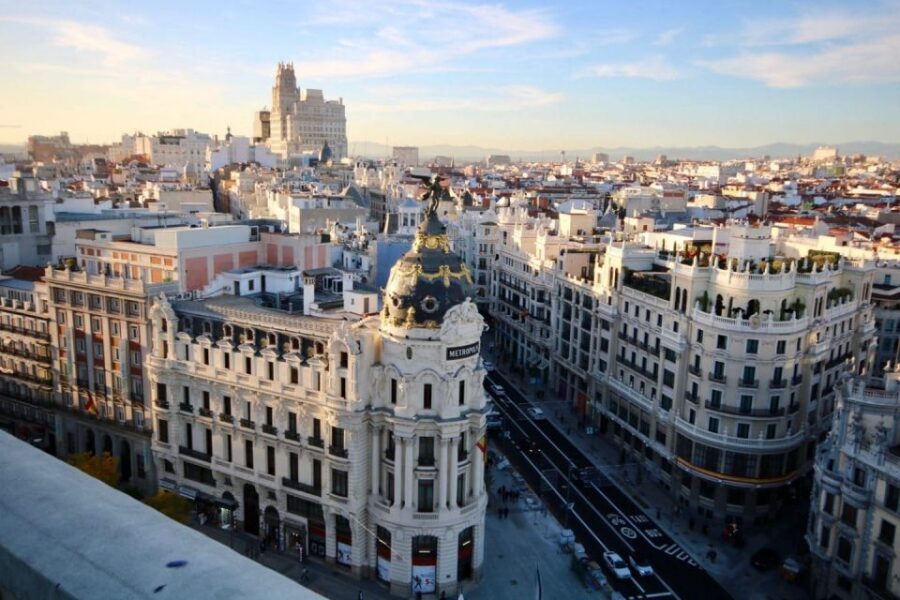
Now you shift into the parts that often make a highlights tour feel more authentic. Plaza de la Villa comes next, followed by Barrio de las Letras. This is where you’ll appreciate the walk more than the individual stops, because the route includes narrow streets and side alleys that add character fast.
Barrio de las Letras is especially fun if you like stories connected to place. This neighborhood is linked to writers and the literary world, and the tour uses that theme to help you see the area as more than a backdrop. You’re walking through the kind of lanes where you can imagine the city’s older days, then you notice how modern Madrid still uses these same connections.
You’ll also get guided time that aims to connect past and present. That connection is valuable because Madrid’s history can feel scattered if you try to learn it only through signs. On this tour, the guide stitches it together as you walk.
You can also read our reviews of more guided tours in Madrid


Casa de Cervantes and Plaza de Santa Ana: literature meets theater energy
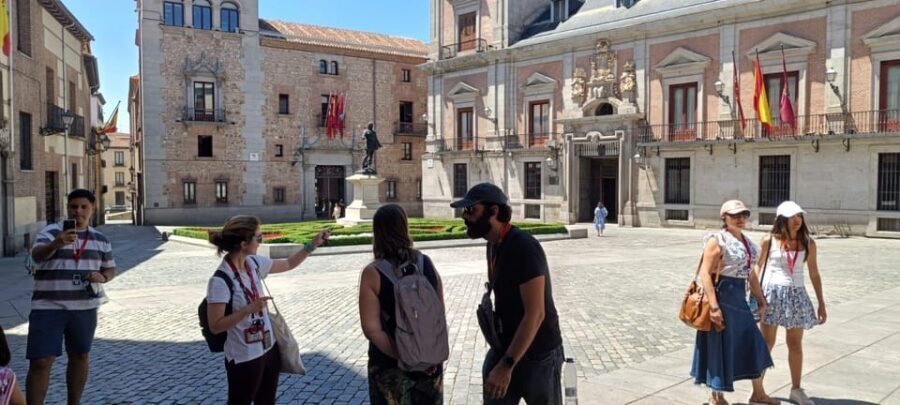
After Barrio de las Letras, you’ll stop at Casa de Cervantes. That name is the clue. This is one of those stops where the guide’s explanation turns a building into a story you can actually picture.
Then you reach Plaza de Santa Ana. This square is known for its theater atmosphere, and even on a short walk you can feel the difference in the vibe. It’s the kind of place where Madrid’s culture seems close by—less “history behind glass,” more “art and life happening in the street.”
I like these two stops because they give variety in a small time window. You’re not stuck only on royal or government buildings. You’re also seeing how Madrid celebrates ideas and performance.
Congress of Deputies and Neptune Fountain: the city’s symbols, close-up
The route continues to the Congress of Deputies and then the Neptune Fountain. This is a strong pairing because it connects two kinds of symbolism: government authority on one hand, and public art/urban icon on the other.
The Congress stop matters because it’s part of how Madrid operates as Spain’s capital. You’re learning the city’s role, not just admiring its architecture. And the Neptune Fountain is a perfect contrast: the kind of landmark that feels playful and memorable, something you recognize even if you forget the exact name until you see it again.
This is also one of those segments where the walking itself pays off. The tour design makes you go from grand institutional space to a landmark moment, so your eyes keep resetting and your brain keeps taking in new cues.
Museo del Prado stop: how a highlights walk sets you up for an art day
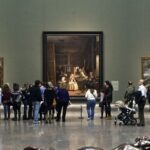
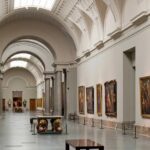
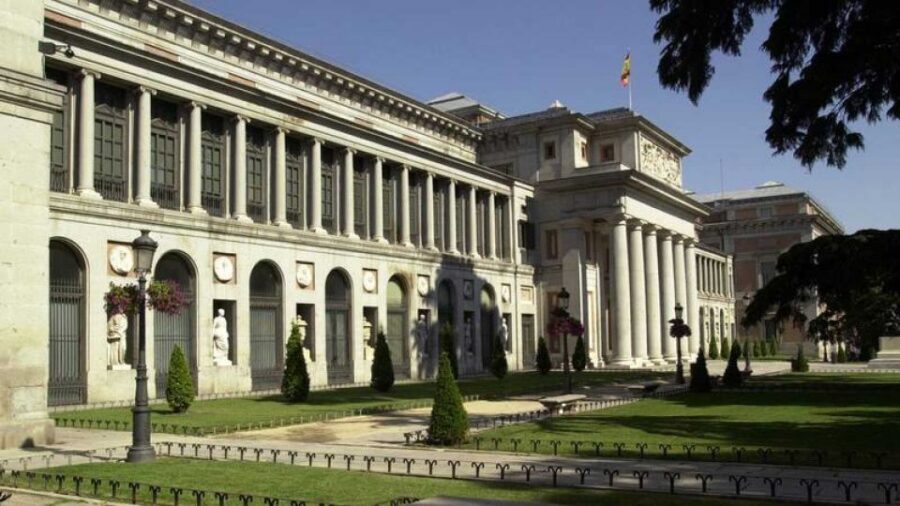
The final major sight on the route is the Museo del Prado. Important note: the tour data does not say your ticket to enter the museum is included, so treat this as a guided stop in the Prado area unless you’ve booked something separate to go inside.
Still, the stop is useful. The guide’s context helps you understand what makes the Prado significant as a destination, and it can change your plan if you were thinking of doing an art visit later. Even a brief look at the museum area can help you decide how you want to approach the building when you do go.
For many people, this is the sweet spot of a highlights tour: you see where the big-ticket attraction is, you get the background, and then you can choose whether to return for a longer museum visit on your own schedule.
Price and value: $14 for 90 minutes of guided orientation
At about $14 per person for 1.5 hours, this walk is priced like a value-focused introduction to central Madrid. You’re paying for a professional local guide, guided walking time, and the taxes and fees that typically get annoying to calculate later.
Is it the cheapest thing in Madrid? Probably not the absolute minimum cost. But it is a smart buy if you’re trying to do two things at once: see the key sights and learn enough to make your self-guided time more meaningful. For a short stay, that’s the real value.
Also, you’re not paying for food here. If you want to keep costs low, this is actually good. Just plan to grab a drink or snack afterward on your own so the tour stays focused on walking and orientation.
One more practical note: it’s a short duration, so expect a brisk pace. This is ideal if you want to cover ground, not ideal if you prefer long, slow sittings.
Group size, pace, and language: who this works for
This is a walking tour with a professional local guide and options for private or small groups. That usually means fewer people to manage, and you can often get more direct answers—especially helpful if you’re traveling with questions about neighborhoods.
Language options include English, Spanish, and French. If you’re choosing between languages, go with whatever you’re most comfortable using. A tour like this lives on explanation, not just pointing.
Who it’s best for:
- First-timers who want a smart route through the center
- People who like history explained in plain language while walking
- Travelers who want to plan their next step after the tour (museum visit, photos, neighborhood wandering)
Who might find it less ideal:
- People with mobility impairments, since it’s not suitable for that
- Anyone who hates walking for 90 minutes even when it’s sightseeing pace
What to wear, what to expect, and what to bring
The tour is simple in equipment needs: bring comfortable clothes. Since it’s an active walking route, wear shoes you trust. Madrid’s central streets can feel crowded, and you’ll want stable footing so you can enjoy the route instead of watching your step.
You should also plan on hydration on a warm day. The tour doesn’t include food or drinks, so if you’re traveling in summer, treat water and a quick snack as your post-tour plan rather than something you rely on during the walk.
Should you book this 1.5-hour Madrid highlights walk?
I’d book it if you want a fast, guided way to connect Madrid’s big landmarks into one clear story. For the money, it’s a practical start: Royal Palace area orientation, key squares like Puerta del Sol and Plaza Mayor, plus literary Madrid and a proper send-off toward the Prado.
I’d hesitate only if your top priority is deep time at one site. This isn’t that kind of tour. It’s designed to cover a lot of ground and give you direction, not to replace longer entry visits.
If you do book, show up at the Monumento a San Pedro with an extra minute or two for orientation, wear good walking shoes, and plan to use the tour as your launchpad for what you’ll do after—photos, a museum ticket later, or a longer wander through Barrio de las Letras.
FAQ
How long is the Madrid city highlights guided walking tour?
It lasts 1.5 hours.
How much does the tour cost?
The price is $14 per person.
Where is the meeting point?
Meet your guide at the Monument to San Pedro in Plaza de la Armería, next to the Royal Palace.
Which landmarks are included on the route?
The tour includes Puerta del Sol, Plaza Mayor, Plaza de la Villa, Barrio de las Letras, Casa de Cervantes, Plaza de Santa Ana, the Congress of Deputies, Neptune Fountain, and the Museo del Prado, along with the Royal Palace area and Almudena Cathedral.
Is food or drinks included?
No, food and drinks are not included.
What languages are available for the guide?
The tour is available in English, Spanish, and French.
Is the tour suitable for people with mobility impairments?
No, it is not suitable for people with mobility impairments.
Is there free cancellation?
Yes. You can cancel up to 24 hours in advance for a full refund.