REVIEW · MADRID
Bike Tour Through Madrid Río and Casa de Campo
Book on GetYourGuide →Operated by Wonder Tours Spain · Bookable on GetYourGuide
Madrid looks different from the saddle.
This 2-hour bike ride takes you from the old-city sights near Plaza Mayor out into one of Europe’s biggest urban parks, then back again with views you usually only get after a longer day. I like how the route mixes big-city architecture with green space, and how the guide ties it together with practical context—so the scenery actually means something. Two things I especially love: the chance to work through landmark areas on a bike (instead of lining up on foot) and the guided “point and explain” moments around the bridges and hilltop outlooks. The one drawback to plan for is effort: the route includes long, steep stretches, and your legs will feel it unless you choose an e-bike.
In This Review
- Key things to know before you go
- How Madrid Río and Casa de Campo fit together in 2 hours
- Meeting up at Wonder Tours (and what to expect for the ride)
- From Plaza Mayor to Plaza de Oriente: royal landmarks at bike speed
- San Vicente Hill, the Manzanares crossing, and why the climbing is part of the story
- Casa de Campo: from kings’ hunting grounds to weekend rowing
- Bridges, Civil War traces, and Serpents Bridge as real route markers
- The highest hill, skyline views, and Huerta de la Partida
- Guides make a difference: Andrea, Andréa, Osumel, Mario
- Price and value: why $41 for 2 hours can work
- Who should book (and who should skip it)
- What to bring and how to ride comfortably
- Quick practical FAQ
- FAQ
- Where is the meeting point for the bike tour?
- How long is the tour?
- Do I need my own bike or helmet?
- What languages is the guide available in?
- What’s included in the price?
- Is an e-bike available?
- Are there restrictions on bags or pets?
- Is this tour accessible for people with mobility impairments?
- Should you book this Madrid Río and Casa de Campo bike tour?
Key things to know before you go
- Old town to royal sights, then straight into nature: You start near Plaza Mayor, work past Plaza de Oriente, and continue into Casa de Campo fast.
- Bridge spotting is half the fun: You’ll marvel at Madrid’s 7 major bridges and the standout Serpents Bridge.
- You’ll get more than scenery: The guide points out Civil War-era trenches and other construction you’d otherwise miss.
- Big views come from real climbing: Expect a serious uphill moment, plus a hilltop skyline view before the descent.
- Local life inside Casa de Campo: There’s a small lake area where you’ll see madrileños and weekend rowing-boat activity.
How Madrid Río and Casa de Campo fit together in 2 hours
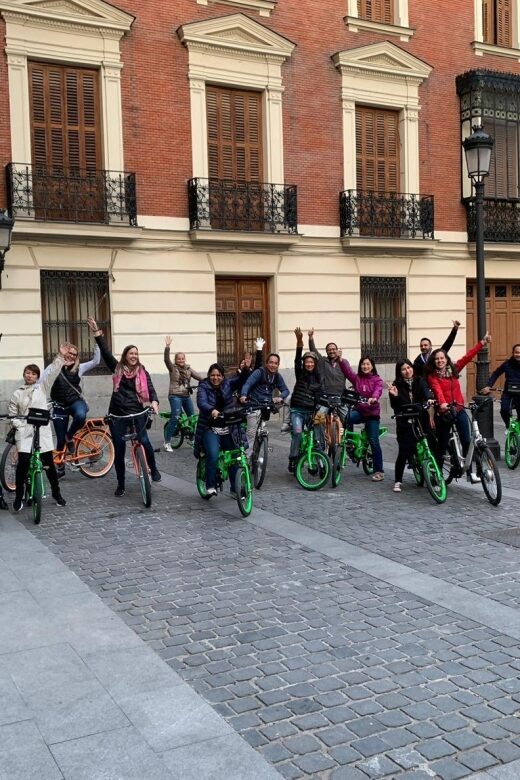
This is a smart short tour because it uses Madrid’s natural “green belt” as the connector. In minutes, you trade lanes and stone for trees and open paths. Madrid Río acts like a calm bike corridor along the Manzanares River, and Casa de Campo gives you the park atmosphere locals actually use on weekends.
If you’ve only seen Madrid from sidewalks, this route changes your sense of scale. The skyline pops in a way you don’t get inside the city grid, and the bridges make you notice how much engineering shapes daily life here.
The other reason this tour works so well is pacing. You’re not doing a giant marathon loop. You’re getting the “greatest hits”: bridges, royal-adjacent sights, the river crossing, a park with hunting-ground origins, and a final return that’s scenic even when your thighs are burning.
You can also read our reviews of more cycling tours in Madrid


Meeting up at Wonder Tours (and what to expect for the ride)
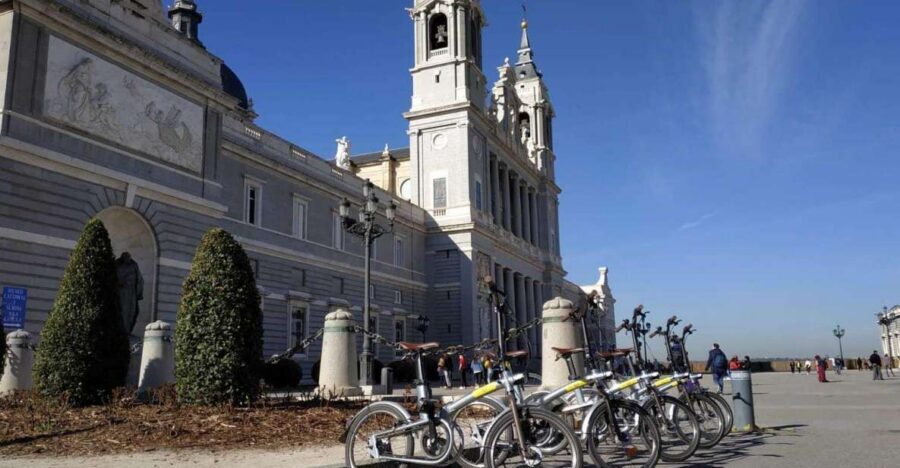
You meet at Wonder Tours Spain, Calle de Santiago, 18. The tour is run in English and Spanish, which helps if you want to follow along closely without guessing.
Included setup is geared for a practical ride:
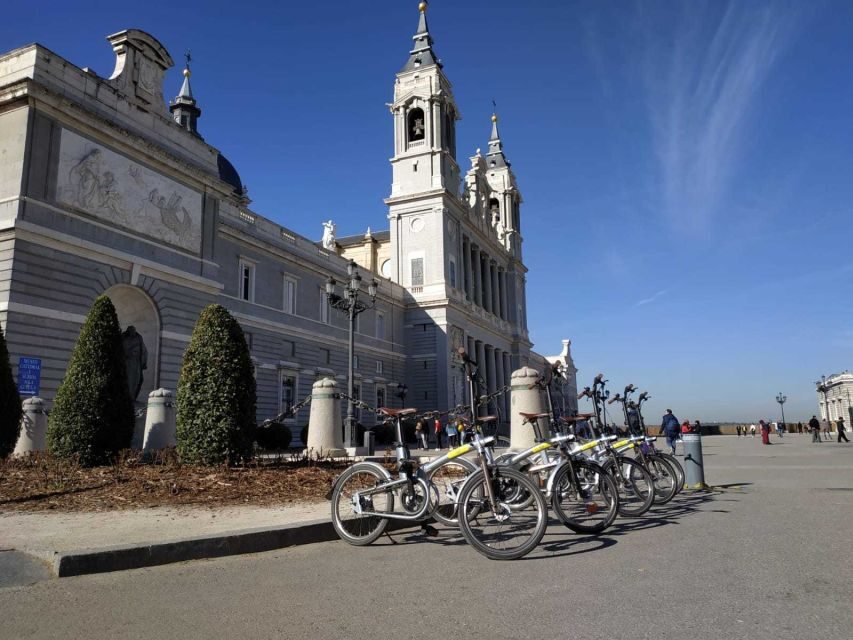
- a bike, plus a helmet (not mandatory)
- a city map
- baskets, locks
- raincoats
That raincoat detail matters in Madrid. Weather can shift quickly, and you don’t want to stop the tour just because the sky gets moody.
One more thing I like: the tour gives you a chance to see the city from multiple angles without the stress of route-finding. You’ll still do real riding, but you won’t be stuck staring at your phone trying to translate streets while cars whiz past.
From Plaza Mayor to Plaza de Oriente: royal landmarks at bike speed
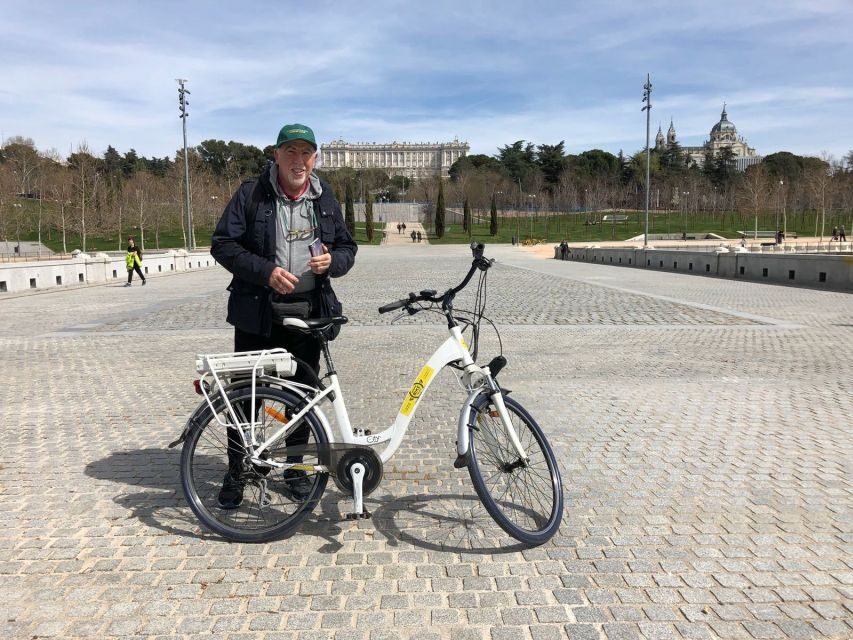
The tour begins in the old city area near Plaza Mayor and works you toward Plaza de Oriente. This matters because it sets your mental map early. If you’re new to Madrid, you’ll start building a “where am I?” framework before the scenery gets greener.
At Plaza de Oriente, you’ll admire the colossal Royal Palace and the Opera House. From a bike, it’s easier to take in scale—big façades are hard to understand when you’re only seeing a corner from street level.
You’ll also glide past Sabatini Gardens. These gardens are a good example of why a guided bike tour feels different than just walking: you can keep moving, but you still get a sense of transitions from palace area to park-side calm.
San Vicente Hill, the Manzanares crossing, and why the climbing is part of the story
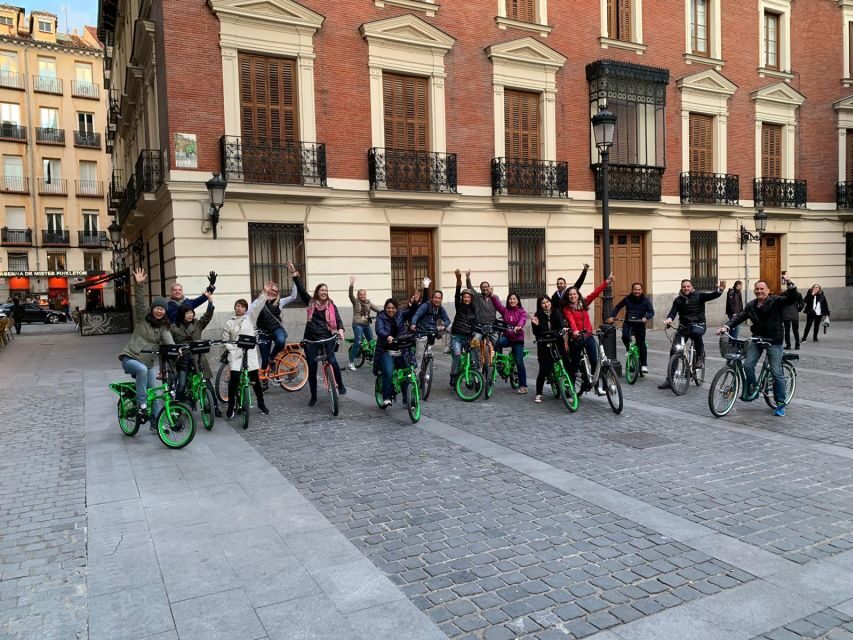
After the gardens, the route takes on one of Madrid’s realities: hills. You’ll ride up San Vicente Hill, described as long and steep, and that’s where you feel the difference between sightseeing and actual transit.
Then comes the crossing of the Manzanares River, which is one of those “small moment, big payoff” changes. River crossings often turn into scenic photo chances, but here the value is broader: the river area is part of how Madrid organizes movement and public space, and it sets you up to reach Casa de Campo without feeling like you’re leaving the city behind.
The climb plus the river crossing also explains why the tour is only about 2 hours. You’re packing in elevation changes and route variety fast, so the timing stays realistic.
Casa de Campo: from kings’ hunting grounds to weekend rowing
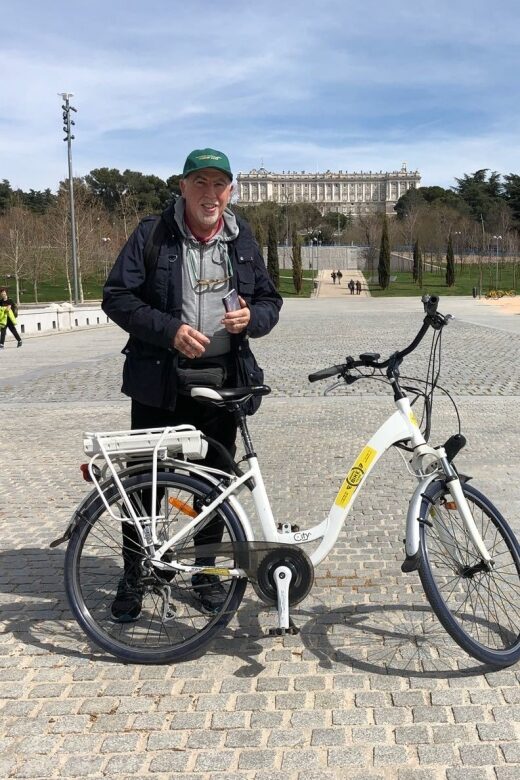
Once you reach Casa de Campo, you’re stepping into a park that used to be reserved for kings and noblemen to hunt. That past explains the feel of the place: it doesn’t read like a theme park. It feels like space that evolved for use, not just decoration.
You’ll cycle toward a small lake area. On weekends, it’s filled with madrileños and rowing boats. That’s a great contrast to the royal palace and opera stop earlier. You’re seeing Madrid in both modes—ceremony and everyday life—on the same afternoon.
If you’re worried about stamina, pay attention to how the tour handles the hilltop moment. The ride includes help from an e-bike’s engine. Reviews also point to the e-bike as a good idea if you want the views without arriving totally cooked.




Bridges, Civil War traces, and Serpents Bridge as real route markers
This tour doesn’t just mention landmarks. It uses them like signposts for understanding Madrid’s layers.
You’ll marvel at the architecture of Madrid and its 7 major bridges. That’s not random trivia; it’s your visual map of the river system and the city’s structure. When you see multiple bridge designs from the bike path, you start noticing how Madrid channels movement and sightlines.
You’ll also see Serpents Bridge, which stands out enough that the tour calls it out directly. And then there are the trenches built during the Civil War. That’s the kind of stop I appreciate because it turns “random ruins” into something legible. Even if you don’t consider yourself a history person, you’ll get the sense of how the city’s landscape carries memory.
One more highlight you’ll work toward is the idea of Madrid’s beach. In this context, think of it as a fun, unusual park-side feature inside the river corridor—one of those “Madrid does things differently” moments.
The highest hill, skyline views, and Huerta de la Partida
At some point, you’ll ride up the highest hill to admire the city skyline. This is the kind of payoff you want after climbing: open sightlines, a wider sense of Madrid’s layout, and that satisfying feeling of reaching the top under your own power—or partly under the bike’s.
On the descent, you’ll shift your focus back toward landmarks. You’ll admire the cathedral and the Royal Palace from the Huerta de la Partida before returning toward the center.
That end stretch is key. It’s easy to judge a bike tour by the first half, but the final moments decide whether you feel like you had a full experience. Here, the downhill isn’t just “getting back.” It’s built to keep sights coming while your energy resets.
Guides make a difference: Andrea, Andréa, Osumel, Mario
One of the strongest signals from the guide feedback is how calmly they manage the ride and the information.
I like that the tour is explicitly bilingual, but more important is the tone. In the guide names I’ve seen attached to this experience—Andrea, Andréa, Osumel, and Mario—the common theme is friendly, relaxed teaching. Guides like this help you feel confident on the bike, and they also help the stops land, not just pass by.
If you’re the type who enjoys hearing what you’re looking at without a lecture, that’s a big plus. And if you’re worried about the steep parts, a good guide makes the effort feel manageable instead of scary.
Price and value: why $41 for 2 hours can work
At $41 per person for about 2 hours, the value comes from three things:
- You’re paying for a guide who connects neighborhoods, architecture, bridges, and park features.
- You get the bike setup plus raincoats, locks, and basic gear handling.
- You compress a “city + park + viewpoints” day into a tight timeframe.
This isn’t a slow, sightseeing-only ride. You’re doing actual cycling, including hills. That makes the price feel more fair because you’re not just paying for someone to walk beside you—you’re paying for routing, interpretation, and the equipment.
If you’re choosing between a standard bike and an e-bike option, be honest with yourself. If you want the views and the bridges more than the workout, pick the e-bike and enjoy the ride.
Who should book (and who should skip it)
This tour is a good fit if you:
- want a fast, structured way to see both Madrid’s old center and Casa de Campo
- enjoy viewpoints and bridges, not only museums
- can handle a ride that includes long climbs (with e-bike help available)
It’s not the best choice if you have mobility impairments, since the tour involves cycling and hill sections.
What to bring and how to ride comfortably
Bring the practical stuff:
- comfortable shoes (don’t rely on sandals)
- sunglasses
- a sun hat
- sunscreen
Also, plan for the fact that you’ll be in the open air. Even in pleasant weather, Madrid sun can hit hard once you’re higher on hills.
On what you shouldn’t bring: pets aren’t allowed, and you can’t bring oversize luggage or large bags. Smoking is also not allowed during the experience. If you pack light, the tour stays smooth.
Finally, even if you choose the e-bike, treat the tour as a real ride. You’ll still control speed and braking, and you’ll want to feel comfortable on a bike before committing to a steep return.
Quick practical FAQ
FAQ
Where is the meeting point for the bike tour?
You meet at Wonder Tours Spain, Calle de Santiago, 18.
How long is the tour?
The duration is about 2 hours, though it may run slightly longer or shorter depending on conditions.
Do I need my own bike or helmet?
No. The tour includes a bike. A helmet is provided, and it’s noted as not mandatory.
What languages is the guide available in?
The guide offers English and Spanish.
What’s included in the price?
In addition to the guide, you get the bike, city map, raincoats, baskets, and locks.
Is an e-bike available?
The ride includes hill climbing with assistance from an e-bike’s engine, and e-bike use is suggested as helpful for the harder parts.
Are there restrictions on bags or pets?
Yes. Pets and oversize luggage (or large bags) aren’t allowed.
Is this tour accessible for people with mobility impairments?
No. It’s listed as not suitable for people with mobility impairments.
Should you book this Madrid Río and Casa de Campo bike tour?
If you want a short, high-reward afternoon with real viewpoints, this is an easy yes. The blend of bridges, Civil War-era trenches, and park variety (including the lake and that unusual park-side “beach” feel) makes it more than a simple nature ride.
Book it if you’re willing to handle a couple of long climbs—and especially if you choose an e-bike to keep the focus on the views. Skip it if you need a more level, low-effort option.
Overall, for the time and price, I think it’s a smart way to see Madrid from two angles: the old-city grandeur near Royal Palace territory, and the calmer, local rhythm of Casa de Campo.