REVIEW · MADRID
10 Tapas Cooking Class Experience in Madrid with Sangria
Book on Viator →Operated by A Punto Cooking School · Bookable on Viator
Sangria tastes better when you make it. This Madrid tapas cooking class turns the late-afternoon food rush into hands-on cooking with a pro chef and a small group capped at 15. I love the chef-led stations where you actually prep dishes, and I love that you finish with a home-cooked dinner that matches what you built. One thing to consider: they do not adapt the whole menu for dietary needs, and there is no full vegetarian option for the entire menu.
You meet in Centro at C. de la Farmacia, 6, right by public transportation, and the class starts at 4:00 pm for about 2 hours 30 minutes. You’ll get a souvenir apron, too, and sangria is included for those who meet the 18+ drinking age rule. It’s a fun way to spend a Madrid evening without hunting for reservations.
In This Review
- Key Things I’d Highlight Before You Go
- Madrid Tapas at 4 pm: The Sweet Spot Timing
- The Kitchen Setup: 15 People, Multiple Stations, Real Participation
- Chef Gustavo (Gus) and the Crew: English Clarity and Friendly Energy
- What You Actually Cook: A Guided Tour of the Tapas Menu
- Salmorejo: Cold Comfort Before You Turn Up the Heat
- Idiazabal Lollipops: Sheep Cheese Goes Playful
- Coca with Sobrasada (or Vegetables): A Spanish Pizza-Style Bite
- Ajillo Shrimps: Garlic and Olive Oil, The Spanish Way
- Horchata Torrijas: Dessert That Uses Local Flavors
- Spanish Omelette: The Potato Question
- Gilda Skewers: Classic Pintxo Attitude
- Squid Sandwich: Madrileño Street Comfort
- Patatas Bravas: The Spicy Tomato Sauce Lesson
- Sangria: The One You’ll Be Pouring With Confidence
- Eating What You Made: Dinner Rhythm and Drink Pairing
- Vegetarian Reality Check (and Who Will Love This Anyway)
- Price and Value: Why $82.24 Can Make Sense in Madrid
- Who Should Book This Madrid Tapas Cooking Class (and Who Might Skip)
- Should You Book This Madrid Tapas Cooking Class?
- FAQ
- What time does the tapas cooking class start?
- Where is the meeting point in Madrid?
- How large is the group?
- Is English available during the class?
- What’s included in the price?
- Is there a vegetarian option?
- What are the age and drinking rules?
Key Things I’d Highlight Before You Go
- Up to 10 tapas cooked as a team: you’ll be active, not just watching.
- Small-group cap of 15: easier questions, less waiting around.
- Gustavo (Gus) and the crew teach in English: clear directions and real explanations.
- A real menu mix, including classic Madrid bites like patatas bravas and squid sandwich.
- Sangria and a dinner finish: you’ll eat what you made, not snack and leave.
Madrid Tapas at 4 pm: The Sweet Spot Timing
If your Madrid schedule has you eating dinner at 9 pm like everyone else, this class is a smart fix. It starts at 4:00 pm, so you’re basically turning the awkward “what do we do before dinner?” gap into something delicious. After about 2.5 hours, you’ll be ready to continue your evening with less stress and more confidence (and a fuller stomach).
Also, because it’s in the Centro area and near public transport, you’re not burning time crossing the city. The meeting point is straightforward: C. de la Farmacia, 6, Centro, 28004 Madrid. No hotel pickup is offered, so you’ll want to build your day around getting yourself there easily.
You can also read our reviews of more cooking classes in Madrid


The Kitchen Setup: 15 People, Multiple Stations, Real Participation
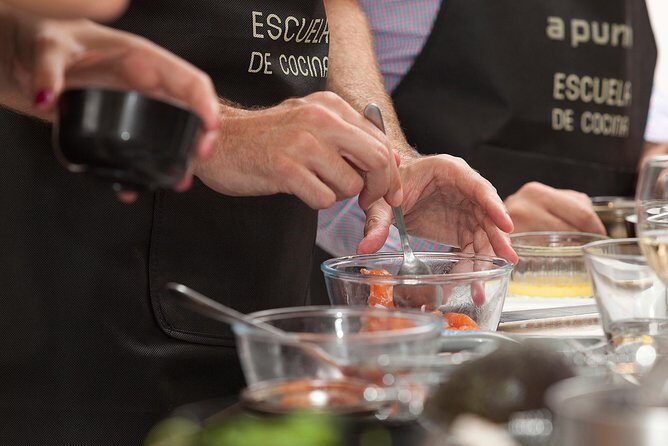
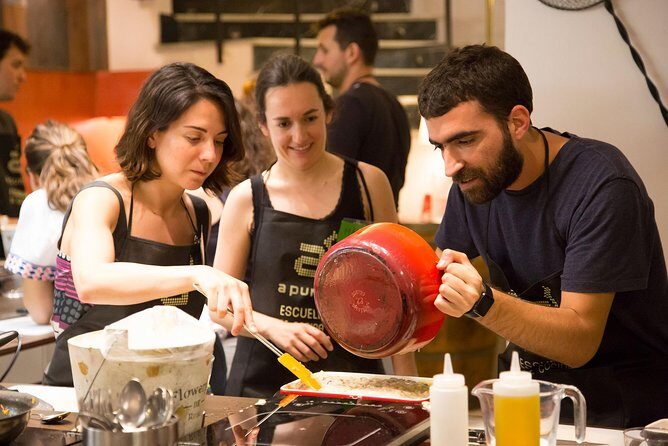
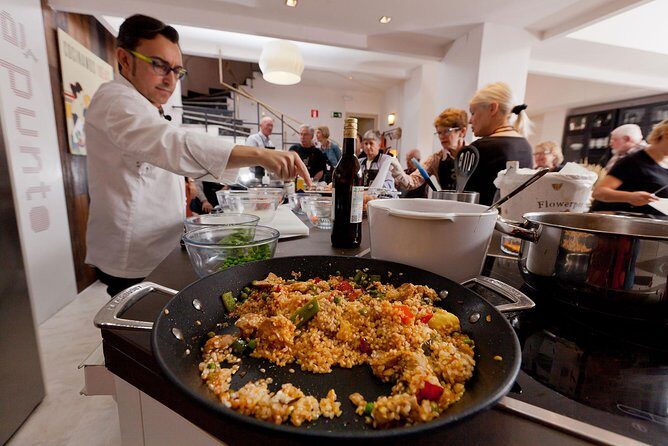
This isn’t a sit-and-listen cooking talk. It’s a working kitchen experience where the group splits into stations. The best part for most people is that you’re not stuck doing one tiny task. In practice, you’ll pick what you want to learn most and then you’ll take on cooking steps across the meal as a team.
One detail I really like is that the space is set up so multiple groups can work at once. You may even cook a single dish across different stations, which keeps the flow moving and avoids long downtime. That said, there can be a quick rhythm at the start while everyone gets organized and instructions get handed out. If you’re the type who learns best by writing things down immediately, pay attention early and don’t hesitate to ask questions once the cooking gets going.
Because it’s capped at 15 travelers, you get a more personal feel than larger classes. You’ll also notice the kitchen assistant style: keeping things stocked, keeping the workspace tidy, and helping you stay productive while the chef supervises.
Chef Gustavo (Gus) and the Crew: English Clarity and Friendly Energy
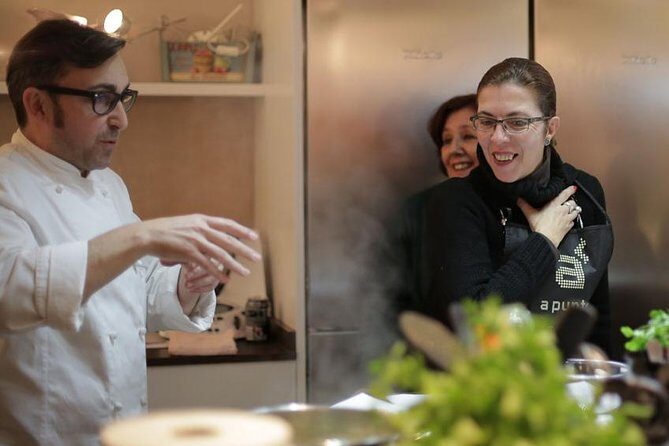
This class has strong teaching energy, and the names in the mix matter because you can feel the difference when the instruction is clear. Many sessions are led by Gustavo (Gus), and multiple people praised him for being both engaging and professional. The English instruction comes through well, with specific comments that he speaks English clearly so everyone can follow along.
You may also meet other team members depending on the day. People mentioned Carmencita as attentive, and Rosa as energetic and helpful with practical cooking tips. There’s also mention of Sandra keeping the vibe fun. In other words, you’re not just getting a chef behind a counter. You’re getting a small team that keeps the class running smoothly while you cook.
The style is active and friendly: you’re expected to work, but you’re not thrown to the wolves. If you want a class where questions are welcomed and you don’t feel silly asking basics, this setup is a good match.
What You Actually Cook: A Guided Tour of the Tapas Menu
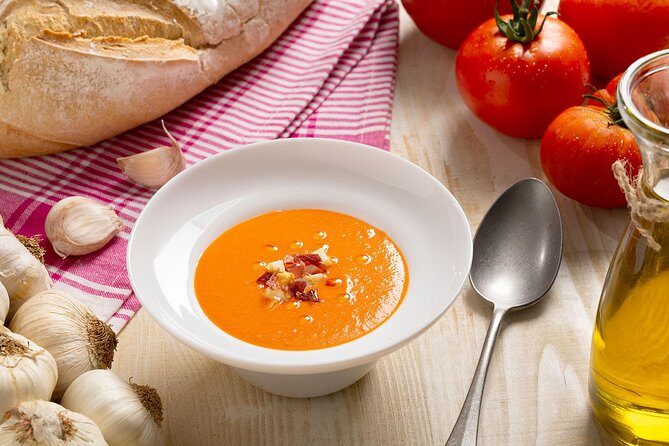
The class description says you’ll craft up to ten tapas dishes. The exact set can vary by session, but the sample menu gives a solid picture of what you’ll be cooking and eating. Here’s how the menu pieces come together, and why they’re fun to learn.
Salmorejo: Cold Comfort Before You Turn Up the Heat
You start with Salmorejo, a classic cold tomato soup. It’s a good warm-up dish because it teaches you a texture goal. You’re working with ingredients that need to blend into something thick and creamy rather than watery. It also gives you a taste of Spanish home cooking that’s very different from typical bread-and-cheese appetizer culture.
You can also read our reviews of more tours and experiences in Madrid
Idiazabal Lollipops: Sheep Cheese Goes Playful
Next are Idiazabal lollipops, made from Idiazabal sheep cheese. This is the kind of dish that sounds fancy, but the teaching focus is practical: how to shape, portion, and handle something that’s flavorful but not something most people cook with at home.
Coca with Sobrasada (or Vegetables): A Spanish Pizza-Style Bite
You’ll learn Coca with sobrasada or vegetables. Think of coca as a Spanish cousin to pizza, especially common in certain regional traditions. If you get the sobrasada version, you’ll taste the smoky, rich profile that makes it distinct. If it’s the vegetable option, it’s a lighter way to balance the cheese and fried items later.
Ajillo Shrimps: Garlic and Olive Oil, The Spanish Way
For Ajillo shrimps, you’re working with fresh shrimp plus garlic and lots of olive oil. The value here is technique: you learn how quick cooking can still produce bold flavor. This is also a dish that rewards timing. Too early and the shrimp can feel underdone. Too late and you lose the sweetness.
Horchata Torrijas: Dessert That Uses Local Flavors
For dessert, you get Horchata torrijas. Torrijas are Spain’s version of French toast, and the twist is that horchata gives it a Levante-style flavor identity. You’re basically learning how local drinks become local desserts. It’s a fun payoff because it explains why horchata isn’t just something you sip.
Spanish Omelette: The Potato Question
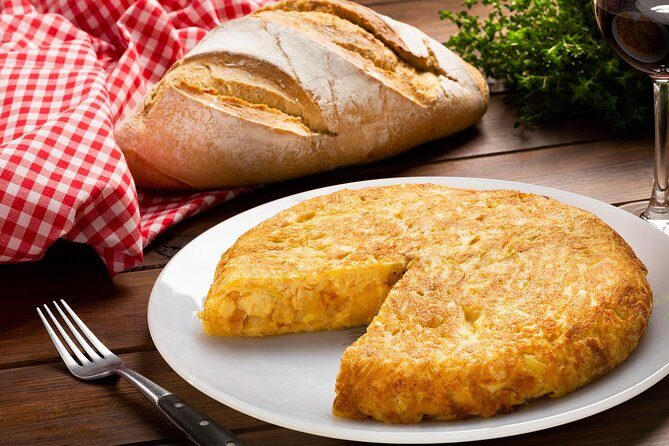
You’ll also make Spanish omelette with potatoes and you decide on onion or no onion. This is more than a recipe step. It’s a lesson in how ingredient choices change the final bite. You’ll see how egg and potato come together into a structure that’s hearty but not heavy.
Gilda Skewers: Classic Pintxo Attitude
Gilda skewers bring olives and anchovies into a bite-size format. This is one of those tapas that shows how simple things can hit hard when the flavors are salty, briny, and balanced. It’s also the kind of dish you can recreate later if you keep good anchovies and assemble neatly.
Squid Sandwich: Madrileño Street Comfort
A big crowd-pleaser is the squid sandwich, a very typical Madrid style with fried squid and alioli sauce. The teaching point is the contrast: fried squid needs crispness, while aioli needs smooth richness. When the two come together, you understand why tapas people don’t always chase sweet or spicy first. They chase texture and balance.
Patatas Bravas: The Spicy Tomato Sauce Lesson
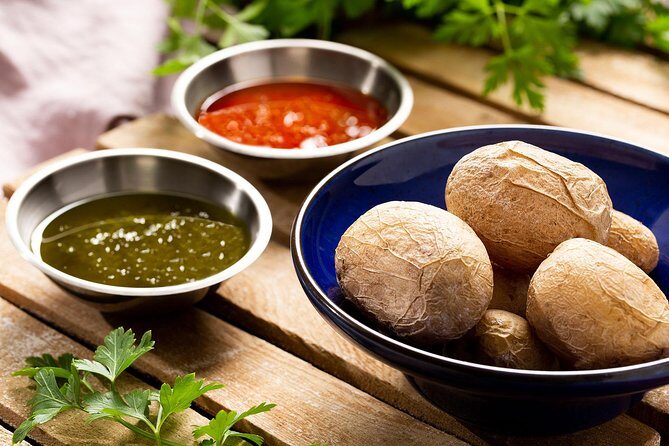
Finally, you get Patatas bravas with a special spicy tomato sauce. Bravas is often the gateway dish for people who thought potatoes were boring. Here, the key is the sauce personality. It’s not just heat. It’s tomato, spice, and richness that makes the potatoes feel like a full plate, not a side.
Sangria: The One You’ll Be Pouring With Confidence
And yes, there’s sangría. The class includes making it at least as part of the experience, described as home made with fresh fruit and spices. Even if you’re not a big drinker, sangria is part of the event energy. If you are a non-drinker, you should ask what you get instead, because at least one person reported a soft drink replacement that felt less satisfying for the cost.
Eating What You Made: Dinner Rhythm and Drink Pairing
The end of class matters. You don’t just leave with recipes in hand and food memories that fade quickly. You finish with a home-cooked dinner that centers on the tapas you prepared. That means you can taste the results right away, connect technique to flavor, and correct your mental notes for next time.
The overview also mentions regional wines paired with the meal. Even if you stick to sangria, that pairing idea is part of the Spanish eating style: a meal built around shared plates and drinks that keep conversation going.
Also, since the class is only 2 hours 30 minutes, the meal pace stays lively. You’ll eat during the experience, not hours later, which helps if your Madrid day is packed.
Vegetarian Reality Check (and Who Will Love This Anyway)
This is the one practical warning I’d take seriously. There is no vegetarian option for the whole menu, and the info says they do not adapt the whole menu for dietary restrictions. That sounds harsh, but here’s the nuance: almost half of the tapas proposed are vegetarians. So if you eat a mostly vegetarian diet and you’re comfortable choosing the vegetarian-friendly pieces, you may still be satisfied.
What you should do:
- Tell them your dietary needs at booking so they can flag what’s possible.
- Plan for a mix of vegetarian and non-vegetarian dishes.
- If you need a fully vegetarian meal, this may not match your needs.
One more consideration: minimum age is 14, and the minimum drinking age is 18. If you’re traveling with teens, the class can still be a good choice because the main structure is cooking and eating. Just remember alcohol rules apply.
Price and Value: Why $82.24 Can Make Sense in Madrid
At $82.24 per person, this class is not “cheap eats.” But the value isn’t just that you eat tapas. You’re paying for:
- A pro chef and team guiding multiple stations
- All ingredients
- A home-cooked dinner finish
- Included sangria
- A souvenir apron
And that’s the key: cooking classes like this are closer to a guided food experience plus a full meal than a light activity. Some people even call it expensive but say it’s a great memory, especially when cooking with a family member or close travel partner.
If you were planning to buy multiple tapas plus drinks separately, you might spend similar money in a few rounds anyway. The difference here is you also learn how the dishes come together. That’s the part that pays off later when you cook at home and realize you can repeat at least several of the flavors.
Who Should Book This Madrid Tapas Cooking Class (and Who Might Skip)

I think this is best for people who want an interactive food evening, not a passive tour. It’s also a great solo activity because you work in a small group and you’ll meet friendly cooking partners along the way.
It’s a good fit if you:
- Like hands-on cooking and don’t mind getting a little messy
- Want an English instruction experience
- Enjoy Spanish classics like salmorejo, patatas bravas, and squid sandwich
- Want a meal that feels like a local dinner rather than just tasting bites
You might skip it if:
- You need a fully vegetarian meal (the menu isn’t adapted that way)
- You’re sensitive to alcohol-related rules or drink replacement quality
- You want a no-cooking activity (this is built for doing)
One more note from the class guidelines: it’s not meant for large celebration parties. If you’re planning a bigger group outing, you’ll want to check whether your format fits their no-parties-beyond-a-point rule.
Should You Book This Madrid Tapas Cooking Class?
Yes, if you want a reliable, hands-on Madrid tapas cooking class with sangria that ends with a satisfying dinner. The combination of a small group (up to 15), strong instruction from Gustavo (Gus) in English, and a menu that spans cold starters, hot plates, and dessert makes it a well-rounded evening.
Book it especially if you like the idea of learning dishes you’ll actually recognize, like patatas bravas and the Spanish omelette. If your dietary needs require full menu adaptation, or you strictly need vegetarian-only food, pause and double-check what’s possible before you commit.
If you’re flexible, hungry, and ready to cook, this is one of those Madrid experiences that feels like a smart shortcut to local flavor.
FAQ
What time does the tapas cooking class start?
It starts at 4:00 pm and runs for about 2 hours 30 minutes.
Where is the meeting point in Madrid?
The class meets at C. de la Farmacia, 6, Centro, 28004 Madrid, Spain.
How large is the group?
The activity has a maximum of 15 people, which keeps it small-group and interactive.
Is English available during the class?
Yes. The experience is offered in English, and the chef speaks English well.
What’s included in the price?
It includes the cooking class and all ingredients, a home-cooked dinner, free sangria, and a souvenir apron.
Is there a vegetarian option?
There is no vegetarian option for the whole menu. The info says almost half of the tapas are vegetarians, but they do not adapt the whole menu for dietary restrictions.
What are the age and drinking rules?
The minimum age is 14. The minimum drinking age is 18. Service animals are allowed.