REVIEW · MADRID
Madrid Tapas & Paella Cooking Experience with Local Market Visit
Book on Viator →Operated by Devour Madrid Food Tours · Bookable on Viator
Madrid’s food lessons start where locals shop. This 3.5-hour Madrid market and cooking class pairs a Mercado de Antón Martín walk with a real cooking session in the Huertas area, so you see where Spanish staples come from and then use them right away. I like the small-group setup (12 or fewer) because it keeps things friendly and focused, and you get more time with your guide and the kitchen team.
I also like that you do not need to bring ingredients or gear—everything is included, from the market picks to the lunch components and drinks. The one thing to consider is the experience is hands-on but not always fully hands-on for every dish, so if you want to do every step yourself, ask your guide about how much participation your day will include.
In This Review
- Key highlights to clock fast
- Mercado de Antón Martín: where your shopping actually teaches Spanish food
- From market to kitchen at Ferretería Restaurante (Huertas time)
- Aperitivo and the cooking rhythm: what happens before the first pan goes on
- Tapas, croquetas, and patatas bravas: the real skills you’re paying for
- So where does paella fit, and how should you plan your appetite
- Lunch, seasonal fruit dessert, and beer or wine
- Small group size: 12 people or fewer, but hands-on varies
- Price and value: is $114.93 really fair for this 3.5-hour class?
- Who should book this Madrid tapas and paella experience
- Dietary notes you should take seriously
- Practical tips to make your morning smoother
- Should you book this tour? My take
- FAQ
- How long is the Madrid tapas and paella cooking experience?
- Where do I meet and where does the tour end?
- What’s included in the price?
- Is transport included?
- Can this tour accommodate dietary restrictions?
- Is the tour suitable for children?
- Is it private?
Key highlights to clock fast
- Mercado de Antón Martín first: pick fresh ingredients while your guide explains what matters and why
- Huertas kitchen time (Ferretería Restaurante): cook in a reserved space built for classes
- Aperitivo sweet vermouth before cooking: a proper start, not just “snacks”
- You leave with repeatable techniques: the focus is learning method, not only following a script
- Lunch + dessert + drinks: seasonal fruit plus beer or wine keeps the value high
Mercado de Antón Martín: where your shopping actually teaches Spanish food
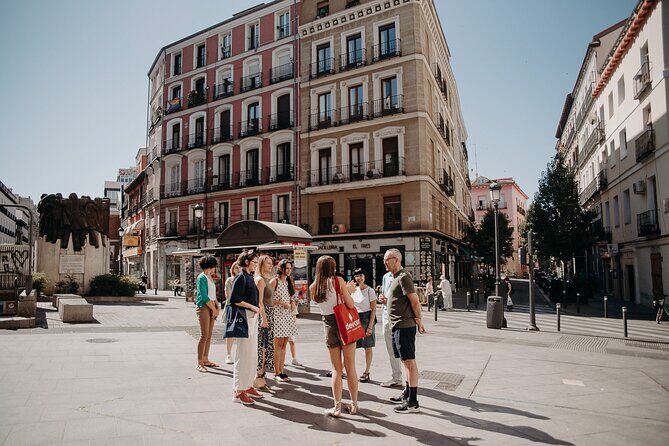
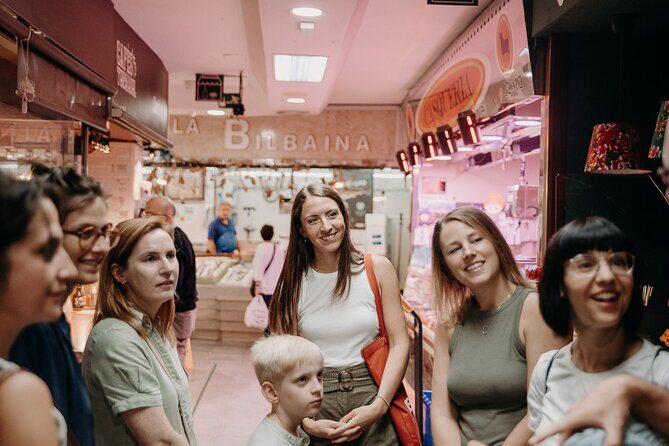
Start at Plazuela de Antón Martín (10:30 am). You’ll meet your guide near the Mercado de Anton Martin, one of the historic markets Madrid locals have used for generations. The point isn’t just sightseeing. It’s learning the shopping logic behind Spanish cooking: what to buy, what to look for, and how good ingredients make the whole dish easier.
Inside, you’ll chat with vendors and pick up ingredients that later become your lunch. This is the “aha” moment for many people. When you see the quality of produce, seafood, cured items, and pantry staples up close, recipes stop feeling like vague instructions and start feeling like real decisions you can make at home.
One practical win: because the cooking part relies on the market ingredients you selected, you get a stronger sense of flavor and texture. That helps when you’re recreating dishes later and wondering why your result tastes different.
You can also read our reviews of more shopping tours in Madrid


From market to kitchen at Ferretería Restaurante (Huertas time)
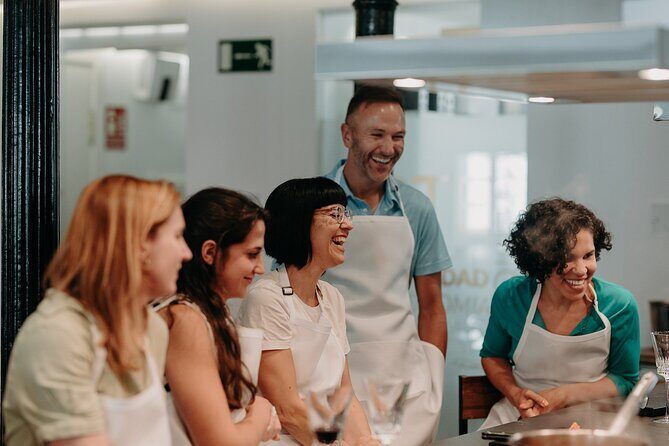
After the market, you head to the restaurant kitchen area in Huertas, specifically Ferretería Restaurante, where your small group gets set up in a class space. This change of setting matters. The market teaches what Spain buys. The kitchen teaches how Spain transforms it.
Also, timing works in your favor. The full experience runs about 3 hours 30 minutes, so you’re not spending half a day walking and the other half waiting around. You’re moving from shopping to cooking in a way that keeps energy up.
A small note that affects your planning: transport isn’t included. The good news is the meeting point is near public transportation, so you can keep your day easy without locking into a taxi plan.
Aperitivo and the cooking rhythm: what happens before the first pan goes on
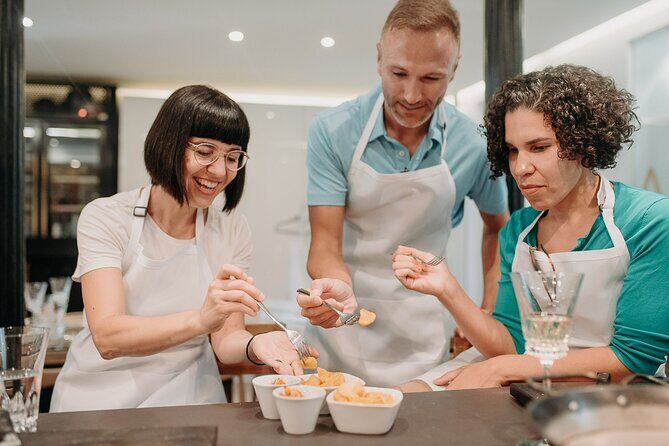
Right after you arrive at the cooking space, you get a traditional aperitivo—a sweet vermouth drink with product-snack items from the market. It’s a very Spanish way to start: relax, nibble, then switch gears to serious food work.
Then the kitchen rhythm kicks in. You’ll work with your group to prepare classic Spanish dishes. Based on the program description and the dishes guests talk about afterward, you’ll focus on:
- Homemade tapas
- Homemade croquetas
- Patatas bravas with two homemade sauces
This is where the class earns its name. You’re not just tasting. You’re learning how those dishes come together—like how to build flavor in sauces and how to manage texture in fried or pan-friendly steps.
Tapas, croquetas, and patatas bravas: the real skills you’re paying for
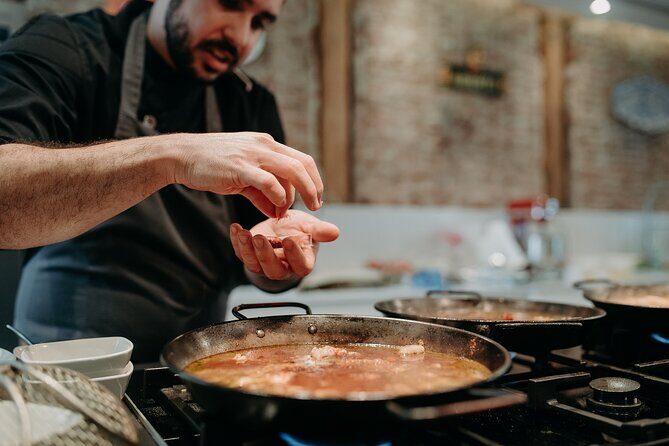
Most cooking classes teach recipes. This one leans harder into techniques, which is what you’ll use later when you cook without a guide beside you.
Croquetas are a great example. They look simple, but the texture depends on timing, heat control, and how you thicken and cool the mixture. Once you see that process explained in a kitchen setting, you’re better prepared to make them at home without turning them into a lumpy mess.
Patatas bravas, too, is more than ketchup-plus-chips in Spanish cooking. Your program includes two homemade sauces, which means you’re tasting and learning how sauce style can change the whole dish. That’s the kind of lesson that sticks, because you can recreate it with different potatoes, different spice levels, and different sauce balances.
Aperitivo to lunch is also a smart arc. You start with the flavors that shape Spanish casual dining—sweet, salty, tangy—then you build into lunch dishes that use similar flavor thinking.
So where does paella fit, and how should you plan your appetite
The experience is billed as Madrid Tapas & Paella, and the meal is clearly a highlight for many people. Multiple guides and cooks get credited for the paella itself, and you’ll also be eating the food you prepare as a lunch.
One thing to plan for: the class runs fast. There can be a lot going on at the table when lunch is served, and plates don’t linger forever. If paella is your must-have, you’ll get more out of the experience if you pace yourself and ask your guide how servings are handled.
If you’re the type who hates leaving food behind, ask early about taking leftovers if that’s an option that day. That simple question can save you from the usual travel-kitchen disappointment of watching a great portion vanish before you’ve properly tasted it.
You can also read our reviews of more tours and experiences in Madrid
Lunch, seasonal fruit dessert, and beer or wine
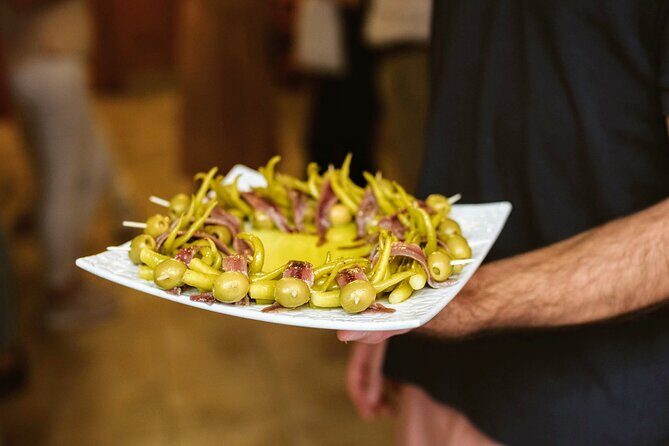
After cooking, you sit down to eat. The program includes enough food for lunch and dessert, plus seasonal fruit for dessert. Drink-wise, you can choose beer or wine with your meal.
This matters for value. You’re paying for instruction and ingredients, but you’re also getting a full sit-down food experience. It’s not just “sample-size tasting.” You actually eat what you made, and the dessert keeps the meal feeling complete instead of rushed.
Some people also connect quickly in the room because you cook together, then sit together. That social piece can turn a class into an easy win for meeting people in Madrid without needing a busy nightlife plan.
Small group size: 12 people or fewer, but hands-on varies
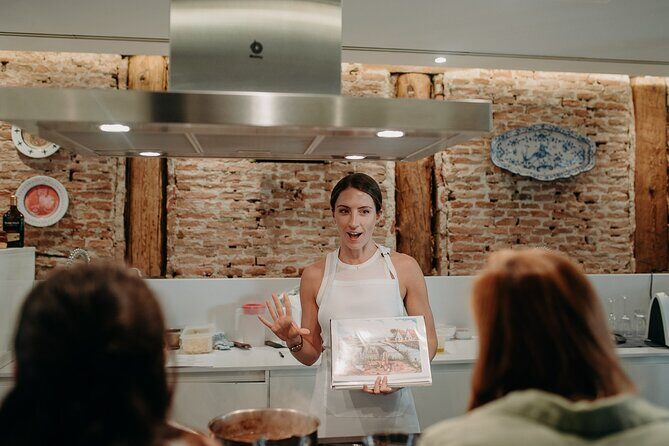
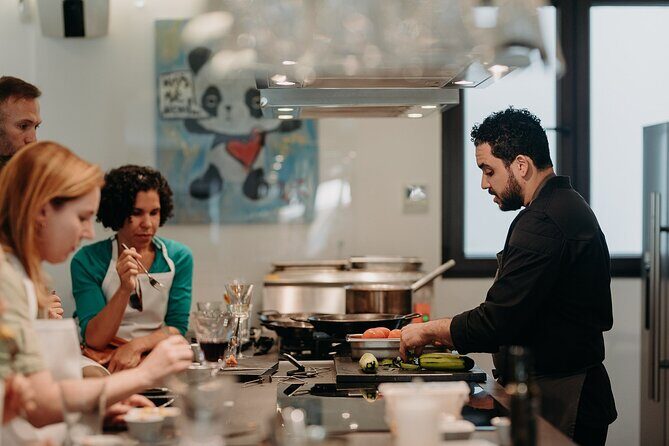
The class caps at 12 travelers (or fewer), and that’s one of the best parts. In a kitchen, group size can make or break the experience. With fewer people, it’s easier to ask questions, get feedback, and stay moving.
That said, hands-on participation can vary by the day and by the flow of the kitchen. Some participants describe a class where you do plenty like chopping and stirring alongside the chef’s main tasks. Others want more direct control over each dish.
My practical advice: go in ready to participate, but also be ready to learn from watching. If you want maximum involvement, tell your guide at the start that you’d like to do more hands-on work and ask where they need extra help during the busiest steps.
Price and value: is $114.93 really fair for this 3.5-hour class?
At $114.93 per person for about 3 hours 30 minutes, the big question is what you’re actually getting besides the cooking itself.
You’re getting:
- Market time that teaches ingredient choice
- A small-group cooking class (12 or fewer)
- Ingredients included (so no extra grocery stop)
- An aperitivo (drink and snack)
- Drinks with the meal
- Enough food for lunch and dessert
That’s a lot bundled into one morning. Many cooking classes charge for instruction but leave you to buy ingredients and chase extra costs. Here, the ingredients and meal are part of the package, which is why the value tends to land well.
The “value” also depends on what you want from the class. If you want a quick tasting tour, this might feel like more time than needed. If you want a practical way to learn how Spanish dishes work, it’s priced like an activity with a clear payoff.
Who should book this Madrid tapas and paella experience
This is a strong fit if you want:
- A hands-on intro to Spanish home-style cooking
- A way to learn ingredients by shopping in a local market
- A group experience that still feels intimate
It may be less ideal if you:
- Need a fully private, one-on-one cooking format (this runs as a small group; private is only if that option is selected)
- Are traveling with kids under 12, since the class is not suitable due to sharp knives, hot stoves, and hot surfaces
- Have lactose intolerance, or need a celiac-safe gluten-free setup
Dietary notes you should take seriously
The experience can be adapted for:
- Vegetarians
- Pescatarians
- Gluten free (but not celiac)
- Non-alcoholic options
- Pregnant women
It is not suitable for:
- Vegans
- Those with celiac disease
- Those with lactose intolerance
If you have allergies or restrictions, email the guest experience team after booking so they can arrange ingredients.
Practical tips to make your morning smoother
A few small moves will help you get more from the class.
- Arrive a few minutes early at Plazuela de Antón Martín so you’re not stressed. The start time is 10:30 am.
- Wear comfortable shoes. Even though this is a short tour, market walking adds up.
- Bring a notebook or use your phone notes. You’ll likely want to remember sauce and timing tips.
- If you want recipe cards, ask your guide when they’re provided. One recurring theme from past participants is that timing for recipes can be missed or handled differently on the day.
And if you’re hoping for particular dishes to get your hands in the mix, speak up early. The best results tend to happen when you communicate your comfort level and preferences at the start.
Should you book this tour? My take
Book it if you want a morning in Madrid that connects the dots: market shopping → cooking techniques → lunch you actually eat. The small group size and the ingredient-included format are what make it feel worth it, and the market-to-kitchen flow is a smart way to learn.
Skip it if you are traveling with young kids, have celiac disease, or need lactose-free cooking. Also skip or adjust expectations if you want a purely do-it-all, every-step class. This is hands-on, but some days follow a “you participate + the chef leads key steps” rhythm.
If tapas and classic Spanish comfort food are on your list, this is one of the more practical ways to learn them. You leave with techniques you can repeat, not just a full stomach.
FAQ
How long is the Madrid tapas and paella cooking experience?
It runs about 3 hours 30 minutes.
Where do I meet and where does the tour end?
You meet at Plazuela de Antón Martín, Centro, 28012 Madrid, Spain (start time 10:30 am) and it ends back at the same meeting point.
What’s included in the price?
The price includes a traditional aperitivo (drink and snack), a small group cooking class (12 people or fewer), drinks, enough food for lunch and dessert, fresh ingredients from a local market, and a fully guided experience in English.
Is transport included?
No. Transport is not included.
Can this tour accommodate dietary restrictions?
It can be adapted for vegetarians, pescatarians, gluten free (not celiacs), non-alcoholic options, and pregnant women. It is not suitable for vegans, celiac disease, or lactose intolerance. If you have restrictions or allergies, you need to email the guest experience team after booking so ingredients can be arranged.
Is the tour suitable for children?
No. It’s not suitable for children under 12 due to sharp knives, hot stoves, and high surfaces.
Is it private?
A private tour is available if you select that option. Otherwise, it runs as a small group with a maximum of 12 travelers.