REVIEW · MADRID
Escape the Inquisition in Madrid Exploration Game
Book on Viator →Operated by Questo · Bookable on Viator
Madrid turns into a clue hunt.
Escape the Inquisition is an alternative to the usual sightseeing tour. You follow prompts, solve puzzles, and get directions to the next stop, all while learning a bit about each place you land on. Self-guided means you can start when you like and pause mid-walk, and offline play means you’re not stuck hunting for signal in busy central streets.
One big caution: this is no physical pickup and there’s no guide waiting for you. A couple of mixed experiences point to a common problem: people who expect someone in person get surprised, and the puzzle difficulty can feel uneven depending on the group and kid-adult mix.
In This Review
- Key points before you go
- Madrid at puzzle-speed: what Escape the Inquisition is
- Price and value for $7.14: why it feels like a bargain
- The self-guided format: what you’re actually buying
- Your route through Madrid: from Calle de San Bernardo to Calle de la Ventosa
- Stop-by-stop: what happens when you arrive at each place
- 1) Calle de San Bernardo (first clue and first win)
- 2) Calle de Isabel la Católica (direction-finding practice)
- 3) Tribunal del Santo Oficio de la Inquisición (the theme anchor)
- 4) Plaza Mayor (a quick puzzle sprint)
- 5) Mercado San Miguel (food-area fuel for the next steps)
- 6) Plaza de la Cruz Verde (another short hop)
- 7) Restaurante La Muralla (puzzle in a real-world setting)
- 8) Plaza de la Cebada (end-of-route energy check)
- 9) Real Basilica de San Francisco el Grande (finishing stretch)
- What I’d expect in the experience flow (and what can trip you up)
- Practical tips so the app doesn’t ruin your day
- Who should book this Escape the Inquisition game
- Should you book it?
- FAQ
- Do I need internet to play?
- Is there a physical tour guide at the start?
- Can I start at any time?
- How long does the game take?
- What language is the game available in?
- Where do I start and where does it end?
- What’s the cancellation policy?
Key points before you go

- Start anytime within the window and take breaks, then resume when you want
- Offline game play so you can keep moving without internet anxiety
- Private group, no human contact which helps you avoid crowd wrangling
- Multiple central landmarks paced as short puzzle stops
- Very low price for a full self-paced route in the Centro area
Madrid at puzzle-speed: what Escape the Inquisition is

This isn’t a guided lecture with a microphone and a timetable. It’s a smartphone-based exploration game set in central Madrid, built around short “arrive, solve, move on” moments. You’ll hit a sequence of streets and landmarks tied to the theme of the Inquisition, and at each stop you’re given clues to continue plus some information about where you are.
The appeal is simple: you get to explore at walking pace, not bus pace. And because the format is private and self-guided, you’re not waiting on strangers to finish photos or argue over where to stand.
It’s also a fun way to “be active” during a day when Madrid is already stuffed with museums. If you like travel that involves your brain as well as your eyes, this fits the bill.
You can also read our reviews of more tours and experiences in Madrid


Price and value for $7.14: why it feels like a bargain
At about $7.14 per person, this is priced more like an affordable activity than a premium tour. You’re paying for a route, a puzzle system, and a digital experience that runs on your phone—without needing a guide.
For me, the value comes from three places:
- Time flexibility: you can start at any hour during the operating window and stop whenever you need a breather.
- Offline play: you’re not burning data or relying on connection stability.
- Lots of stops close together: it’s designed as a walking loop across multiple well-known central points.
That said, value depends on whether you enjoy puzzle solving. If you hate apps and prefer a human narrator, you may feel underwhelmed for the small cost. If you like self-paced discovery, this price is hard to beat.
The self-guided format: what you’re actually buying

You’re getting a mobile ticket and a game experience that you run on your own device. The key operational detail is that there’s no physical tour guide and no “someone will meet you here” structure.
Instead, you’ll rely on instructions delivered digitally. The experience is designed so you can start from the meeting address and follow the game prompts. Because it’s private, only your group participates.
This format is also why the experience is flexible in real life. You can:
- start at any time within the posted hours (not a fixed meetup)
- pause whenever you want
- resume later without losing the whole thing
That flexibility matters in Madrid, where one wrong turn at rush hour can wipe out your energy. With this game, you control the rhythm.
Your route through Madrid: from Calle de San Bernardo to Calle de la Ventosa

The timing is listed as about 1 hour 10 minutes. The route is divided into short puzzle pauses, mostly around 5 minutes each, with one stop listed as 10 minutes. In other words, it’s built for short attention cycles—arrive, read, solve, get the next pointer.
You start in Centro at:
- Start: C. de San Bernardo, 1, Centro, 28013 Madrid
And you end at:
- End: Calle de la Ventosa, 21, Centro, 28005 Madrid
That end point matters. It’s not a loop that brings you back to your starting door. Plan your return transit accordingly, or you can just treat it as a one-way stroll into your next Madrid stop.
The route includes these named stops:
- Calle de San Bernardo
- Calle de Isabel la Católica
- Tribunal del Santo Oficio de la Inquisición
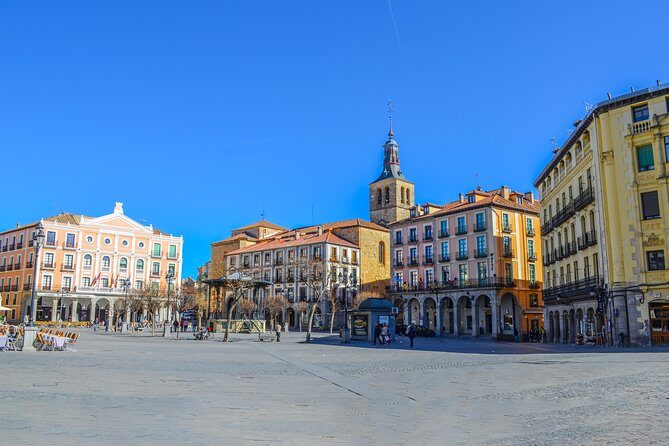
- Plaza Mayor
- Mercado San Miguel
- Plaza de la Cruz Verde
- Restaurante La Muralla
- Plaza de la Cebada
- Real Basilica de San Francisco el Grande
There’s also an additional puzzle stop listed without a street name in the details you’re given. Functionally, it’s still just another “find the clue, solve, move on” moment.
Stop-by-stop: what happens when you arrive at each place
At every stop, the pattern is the same: you follow a clue, solve a puzzle, and then receive indications for the next part of the game. You also get some information about the place you’ve discovered.
Here’s how to think about each location on the route.






1) Calle de San Bernardo (first clue and first win)
You begin by using a clue system to get to Calle de San Bernardo, then solving a puzzle to unlock what comes next. This opening stop is where you figure out the game flow—how it phrases prompts, how it expects you to interact, and how quickly you can move once you’re confident.
If you’re traveling with kids or first-time app users, this is the moment to slow down. Do the first puzzle carefully so the rest of your walk goes smoother.
2) Calle de Isabel la Católica (direction-finding practice)
At Calle de Isabel la Católica, you do the same arrive-and-solve rhythm. This stop is useful because it keeps the game moving without dragging you into a long waiting period.
If you’re trying to judge difficulty, this is where you’ll feel whether the puzzles are your style.
3) Tribunal del Santo Oficio de la Inquisición (the theme anchor)
This is the standout name on the list: Tribunal del Santo Oficio de la Inquisición. You’ll spend a bit more time here (listed as 10 minutes), and the game treats it as a key checkpoint before continuing.
It’s also a good spot to pause and reset. If your group’s energy dips, this stop gives you a natural break.
4) Plaza Mayor (a quick puzzle sprint)
Then you move to Plaza Mayor. The timing here is short, listed at about 5 minutes, so expect a quick solve and a quick handoff to the next clue.
If your group tends to get sidetracked by photo stops, try to keep the picture-taking for after you clear the puzzle. Otherwise, the game rhythm can feel tight.
5) Mercado San Miguel (food-area fuel for the next steps)
Mercado San Miguel is on the route, and the stop length is again listed around 5 minutes. Even if you’re not shopping, this kind of area can recharge you—Madrid walking is easiest when you can plan a snack on your terms.
Just remember: you’re not there for a guided food tour. You’re there to solve the next step and learn the game’s mini-info about the location.
6) Plaza de la Cruz Verde (another short hop)
Plaza de la Cruz Verde continues the short-stop pattern. These shorter segments are useful because they keep you moving without forcing a museum-length commitment.
If the app gives you a question that feels confusing, treat it as a team problem. It often works better when everyone has a role, like one person reading prompts and another checking phone details.
7) Restaurante La Muralla (puzzle in a real-world setting)
Restaurante La Muralla appears as a stop. That’s a reminder that this game isn’t only about big monuments—it places puzzles at everyday points in central Madrid.
This kind of location can be either charming or confusing depending on your expectations. If you go in knowing it’s a streets-and-places scavenger hunt, you’ll likely enjoy it more.
8) Plaza de la Cebada (end-of-route energy check)
By the time you reach Plaza de la Cebada, you’ve already done enough walking to feel the day’s pace. It’s still listed as short (about 5 minutes), so keep your group together for the solve.
This is also where you’ll know if your phone battery is going to survive the game. Don’t wait until the end to realize your screen brightness is set too high.
9) Real Basilica de San Francisco el Grande (finishing stretch)
Your final named stop is Real Basilica de San Francisco el Grande. After the last puzzle indications, the game ends with your route continuing to the listed end address on Calle de la Ventosa, 21.
If you like closure, use this last stretch to stand still for a moment and let the final clue “land.” When you finish, you can decide whether to head back toward transit or keep exploring nearby streets on your own.
What I’d expect in the experience flow (and what can trip you up)
The intended experience is: puzzle solving + short informational snippets + next clue to keep you walking. The off-ramp is that not everyone enjoys the same style.
Here are the practical patterns I’d plan around:
- If your group loves puzzles, you’ll likely feel like you’re getting more from Madrid than just photos.
- If your group hates ambiguity, the “read, figure, solve” parts might feel frustrating.
- If you’re traveling with kids, the pace is broken into short steps, but the game also includes historical-style information between puzzles, which can feel long for some children.
Difficulty is where expectations can collide. The game is marketed as something most people can participate in, but real groups vary. Some find the challenges too straightforward for kids. Others find the puzzles tricky enough to stop them from reaching the end. Your best bet is to treat it as a flexible activity: if you don’t finish, you still walked a themed Central Madrid route and got a structured way to move.
Practical tips so the app doesn’t ruin your day
This is still Madrid, so bring basic travel common sense and you’ll be fine.
1) Charge your phone before you leave
You’re using a game on-screen for most of the route. A fully charged battery is not optional.
2) Read instructions at home
Because this is no human pickup, the biggest failure point is arriving without the game ready on your device. Make sure your ticket and instructions are accessible before you start at C. de San Bernardo.
3) Plan for one-way ending
You start on Calle de San Bernardo and end on Calle de la Ventosa. Don’t schedule a hard-to-reach museum right after unless you’re sure you can transit back easily.
4) Give yourself time buffer
The listed duration is about 1 hour 10 minutes, but puzzles and group styles affect timing. Build in wiggle room, especially if kids or mixed ages are involved.
5) Use teams, not solo frustration
If you’re in a group, split roles. One person can read the clue, another can check what the app shows, and you’ll solve faster than everyone staring at the same screen.
Who should book this Escape the Inquisition game
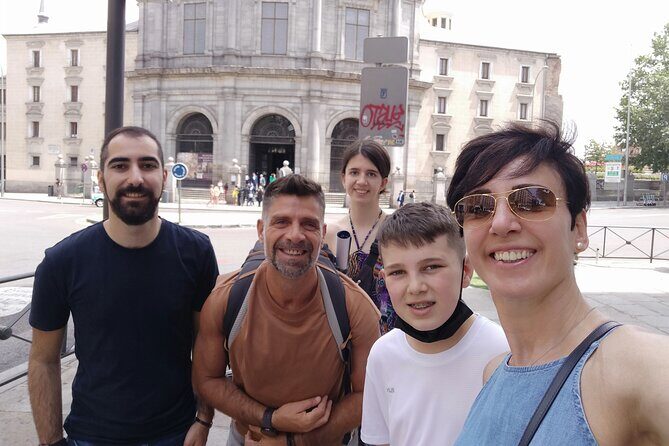
This experience suits people who like exploring with a structure but without a guide.
It tends to fit best if you:
- enjoy puzzle games and walking at your own speed
- travel as a family or group and want a shared activity
- want a low-contact option because it’s private with no human interaction
- like the idea of offline operation while wandering Central Madrid
It may not be ideal if:
- you want a traditional guided tour with a real person explaining what you’re seeing
- you dislike app-based instructions
- your group gets stressed by puzzles and prefers straightforward sightseeing
Also, if you’re sensitive to difficulty mismatch, keep the expectations flexible. The game can feel very doable for some groups and too hard for others.
Should you book it?
Yes, I think you should book if you’re the type of traveler who enjoys self-guided walking games. For $7.14, the offline flexibility and the clear stop sequence give you a low-stress way to explore Centro without booking a standard tour.
I’d skip it if you’re expecting a guide to meet you in person or you strongly prefer clear, teacher-style storytelling. This game is about solving and moving. When that matches your style, it’s a fun, different way to see Madrid.
FAQ
Do I need internet to play?
No. The game is designed to work offline, so you do not need an internet connection to play.
Is there a physical tour guide at the start?
No. This is a self-guided private activity with no human contact, so there is no physical guide waiting at the meeting point.
Can I start at any time?
Yes. You can start at any hour, and the experience is open Monday–Sunday from 5:00 AM to 9:30 PM.
How long does the game take?
It’s listed at about 1 hour 10 minutes (approx.).
What language is the game available in?
It’s offered in English.
Where do I start and where does it end?
Start at C. de San Bernardo, 1, Centro, 28013 Madrid. End at Calle de la Ventosa, 21, Centro, 28005 Madrid.
What’s the cancellation policy?
You can cancel for a full refund if you do it up to 24 hours in advance. If you cancel less than 24 hours before the start time, the amount is not refunded.