REVIEW · MADRID
Essential Madrid: Walking Tour
Book on Viator →Operated by Naturanda Turismo Ambiental · Bookable on Viator
Madrid is best seen on foot.
This is a compact way to get your bearings with a guided loop through major sights. You get a professional guide plus headsets so you can actually hear the stories while you walk, and it’s built around a “can’t-miss” checklist that runs from Goya’s statue all the way to the Royal Palace area.
Two things I really like about it: first, the headset setup removes the usual street-noise guessing game. Second, the route strings together landmarks that most people want to see anyway—Puerta del Sol, Plaza Mayor, and the Almudena Cathedral zone—so you spend your time sightseeing instead of figuring out transport.
One drawback to consider: the whole experience is tight and short (about 90 minutes with roughly 10 minutes per stop), so photo time and extra questions can feel limited. Also, some people have run into start-time or meeting-point changes, so it pays to double-check your day-of instructions before you leave.
In This Review
- Key Highlights You’ll Actually Notice
- A Good Walking Tour Starts With Good Orientation
- Meet-Up, Headsets, and the Real-World Timing
- Stop-by-Stop: What You’ll See, and What to Pay Attention To
- Francisco de Goya Statue: The Opening Hook
- Neptune Fountain at Cánovas del Castillo Square
- Paseo del Prado: Museum-Lined Promenade
- Congress of Deputies: Spain’s Political Center
- Casa de Cervantes: Where the Writer Lived and Died
- Plaza de Santa Ana: Romantic-Era Legends
- Puerta del Sol: Bear, Tree, and the Famous Clock
- Plaza Mayor: The Heart of the Austrias Quarter
- Plaza de la Villa: Madrid’s Older Core
- Almudena Cathedral: Madrid’s Main Religious Landmark
- Royal Palace of Madrid: The Big Finish
- How Much You Get for $17.87 (and When It Feels Tight)
- Pacing and Guide Clarity: Why Headsets Are Non-Negotiable
- Who This Tour Fits Best
- Should You Book This Essential Madrid Walk?
- FAQ
- How long is the Essential Madrid Walking Tour?
- Is the tour offered in English?
- What’s included with the tour price?
- Are admission tickets included for the stops?
- Where does the tour start and where does it end?
- How many people are in the maximum group?
- Can I get a refund if I cancel?
Key Highlights You’ll Actually Notice
- Headsets included, which makes the guide’s narration easier to follow outdoors
- 90-minute “best of” route with major stops like Puerta del Sol and Plaza Mayor
- Mobile ticket for check-in convenience
- Small groups up to 30 people, so it’s not a cattle-car tour
- Many stops are free to view, but not all sites include admission
A Good Walking Tour Starts With Good Orientation
Madrid can feel big at first—street names, squares, and neighborhoods all blur together. This tour is designed to fix that fast. In about 1 hour 30 minutes, you get a guided path that links several of the city’s most famous public spaces, from the grand, formal end near the Royal Palace to the classic postcard corners around Sol and Plaza Mayor.
The biggest value here is not that you’re visiting fewer places. It’s that you’re visiting the right places in the right order. When you see Cánovas del Castillo Square’s monuments, then walk straight toward Paseo del Prado, you start to understand how Madrid’s main cultural and political zones connect.
And because it ends in the Retiro/Prado area (based on the listed end point), you can keep your momentum. If you want, you can roll into time at the Museo Nacional del Prado right after, without fighting logistics.
You can also read our reviews of more walking tours in Madrid
Meet-Up, Headsets, and the Real-World Timing
The tour starts at Monumento a San PedroPalacio, Centro, 28013 Madrid. The listed start time is 11:30 am, and the end point is listed as Museo Nacional del Prado, Retiro, 28014 Madrid.
You’ll be handed—or at least equipped with—devices to hear the guide properly. That matters, because Madrid streets can be loud and windy, and short stops mean you don’t have time to keep leaning in and guessing what was said.
Here’s the practical caution: some experiences have involved changes to start times or starting locations, and in one case the tour was canceled at short notice. I can’t predict whether that happens on your day, but you should treat it like a normal travel pro habit: check your confirmation message close to departure, and plan a little extra buffer so you’re not rushing from another commitment.
Group size is capped at 30, which helps. You’re likely to stay together, hear instructions, and move as a unit—especially useful when the route is packed with famous landmarks.
Stop-by-Stop: What You’ll See, and What to Pay Attention To
This walk moves roughly every 10 minutes per stop. That’s great for coverage, but it also means your best strategy is to decide in advance what you want from each spot: quick photos, or a few key facts you’ll remember later.
Francisco de Goya Statue: The Opening Hook
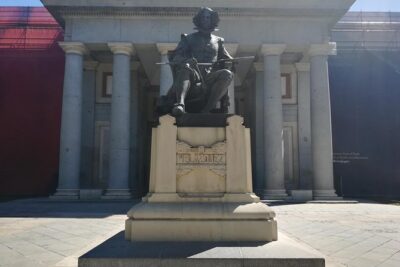
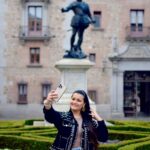
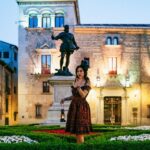
The first stop is the Estatua de Francisco de Goya. It’s a logical warm-up point because it sets a tone: Madrid isn’t only about kings and lawmakers. It’s also about writers, artists, and the people who shaped Spanish culture.
Tip: use this first stop to get comfortable with your headset volume and to confirm where your group is gathering before you start moving.
Neptune Fountain at Cánovas del Castillo Square
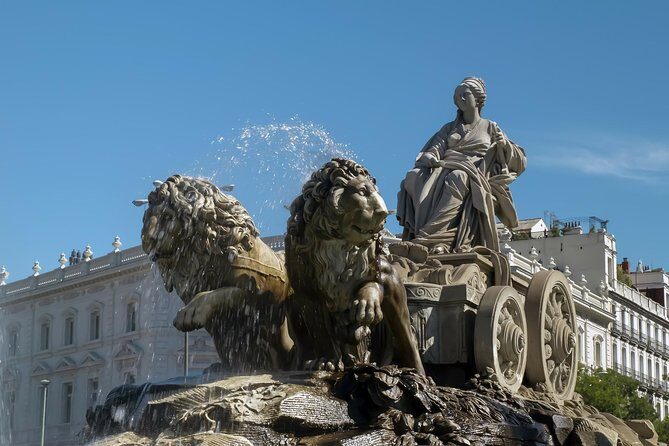
Next you’ll see the Fuente de Neptuno, right in the middle of Cánovas del Castillo Square, surrounded by important buildings. Even if you’ve walked past fountains before, this one usually grabs attention because it feels theatrical—classic “Madrid monumental” energy.
Tip: stand still for 30 seconds. Let your eyes adjust to the scale, and you’ll understand why it’s a central meeting point in the area.




Paseo del Prado: Museum-Lined Promenade
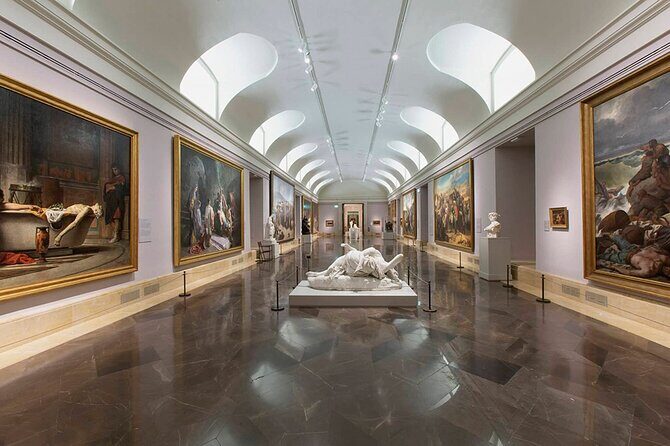
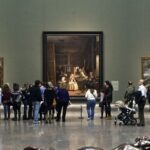
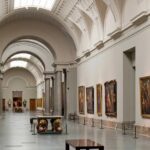
Then you’ll walk along Paseo del Prado, a famous garden-like promenade filled with vegetation, monuments, and buildings. The Prado National Museum sits here, so even if you don’t go in that day, you’re in the right zone to connect the dots between Madrid’s culture and its geography.
This is one of the calmer stretches of the tour. If you need a moment to breathe while still seeing something important, this is it.
Congress of Deputies: Spain’s Political Center
The tour continues to the Congreso de Los Diputados, the headquarters of one of Spain’s legislative chambers. This stop shifts your focus from art and leisure to governance and power.
Practical note: because it’s tied to a major institutional building, expect the moment to be mostly about exterior sightlines and orientation rather than lingering.
Casa de Cervantes: Where the Writer Lived and Died
Then comes Casa de Cervantes, described as the home of Miguel de Cervantes. This stop matters because Cervantes is not just a name on a school syllabus. He’s part of how Spain tells its stories, and Madrid has a way of keeping that literary thread visible in the street-level world.
Tip: if your goal is to remember something later, try to connect Cervantes with the rest of the tour’s culture stops—this makes the city feel like one story instead of disconnected points.
Plaza de Santa Ana: Romantic-Era Legends
At Plaza de Santa Ana, the tone turns romantic and story-driven. You’re walking into a square tied to histories and legends from Madrid’s romantic period.
In a short tour, squares are where you should listen carefully. Buildings change slowly in your vision, but a good square story makes the place stick in your memory.
Puerta del Sol: Bear, Tree, and the Famous Clock
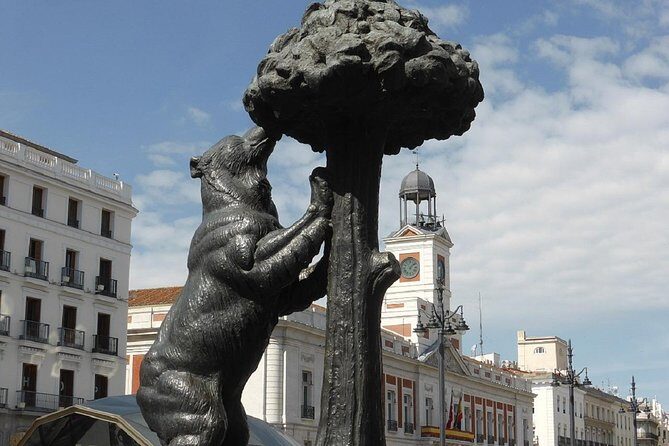
Then you reach Puerta del Sol, Madrid’s most famous public square. This stop includes the Bear and the Arbutus symbol and the clock known for the end-year chimes.
This is the moment where you’ll probably notice more crowds and more people trying to take photos at once. With the headset on, listen for what the symbols mean and why the clock became a tradition focal point.
Practical tip: don’t get stuck directly in front of the loudest cluster. Move a few steps to get both a good view and clearer audio from the guide.
Plaza Mayor: The Heart of the Austrias Quarter
Next is Plaza Mayor, one of Madrid’s best-known squares, described as the heart of the Austrias neighborhood. This is the kind of place that looks like it’s built for stories—people used to gather here, and the square layout helps explain why.
Short-stop reality check: you won’t have time to fully wander. Use this as your “see it, understand it, move on” moment.
Plaza de la Villa: Madrid’s Older Core
You’ll continue through Plaza de la Villa and smaller streets that connect you with Madrid’s oldest corners. The idea here is medieval center energy—less about monumental facades and more about the city’s older street texture.
If you like the feel of old neighborhoods, this stop is a nice contrast to the more polished major squares.
Almudena Cathedral: Madrid’s Main Religious Landmark
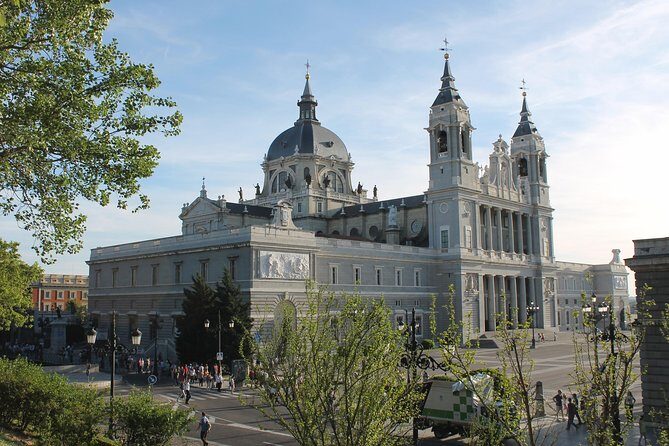
The tour then includes Catedral de Sta Maria la Real de la Almudena, described as the most important religious building of Madrid. This stop adds scale and spiritual gravitas to the route.
Even if you don’t go inside, the exterior and its relationship to surrounding structures helps complete your mental map. It’s one of those sights that makes the city feel layered.
Royal Palace of Madrid: The Big Finish
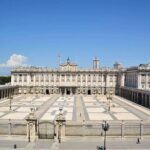
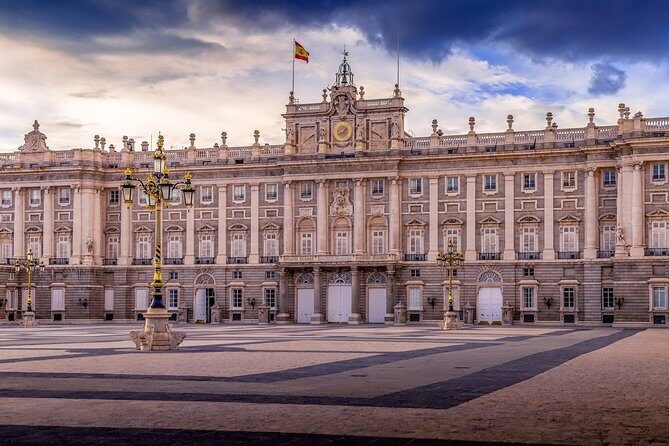
Finally, you end at the Royal Palace of Madrid, described as the largest in western Europe. This is your grand finale stop—Madrid’s royal stage, seen from the outside as part of the walking loop.
Important value note: the tour lists admission for this stop as not included, so the experience you’re buying is the guided sightseeing component, not a guaranteed palace interior visit. If you want to go in, plan to get your own entry tickets separately and consider adding extra time.
Also note the listing says the end point is near Museo Nacional del Prado, while the itinerary ends at the Royal Palace stop. Either way, you’ll finish in a central area where you can keep exploring without crossing the whole city.
How Much You Get for $17.87 (and When It Feels Tight)
At $17.87 per person, this tour sits in the value category—mainly because so many stops are famous exterior sights you can see without major ticket costs. What you’re paying for is guided interpretation, the headset system, and the fact that someone handles the “where to go next” problem.
But the math flips if you expected a slower, more detailed experience. The schedule is built for coverage, not lingering. If you like deep conversation at each site, you might feel pushed.
This also matters for photo lovers. Some stop windows are short enough that you’ll want to be ready:
- know where you want to stand for a photo
- travel light so you don’t fight your bag while stopping
- keep expectations realistic for crowd-heavy squares like Puerta del Sol and Plaza Mayor
Pacing and Guide Clarity: Why Headsets Are Non-Negotiable
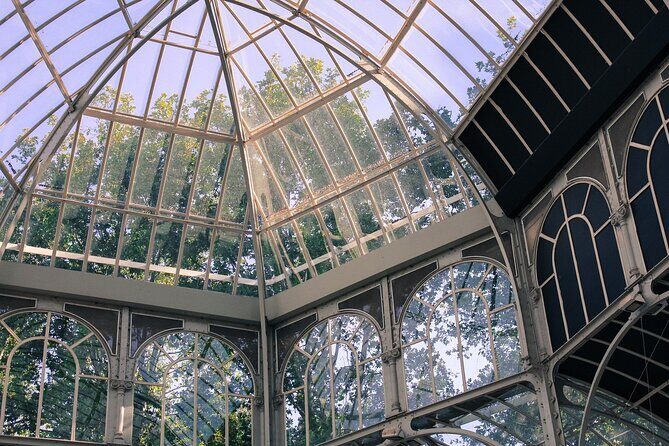
Headsets are included, and in practice that can be the difference between a fun walk and a frustrating one. Outdoors, with quick stops and crowds, hearing the guide’s explanation is half the point.
Still, not every run is perfect. Some people have reported issues like difficult communication, limited time at stops, or even waiting due to changes with other participants. So if you’re booking this on a packed day, I’d treat it as a “morning orientation or early afternoon reset” rather than a once-in-a-lifetime must-hit with zero backup time.
If clarity is a top priority for you, arrive a few minutes early and stay close to the group once the guide starts moving. Your best chance of hearing everything is being in the right spot when the narration begins.
Who This Tour Fits Best
This is a strong fit if you want:
- an efficient route through Madrid’s major public landmarks
- a guided narrative that helps connect squares, symbols, and institutions
- headset audio support for street-level walking
It may not be ideal if you:
- need a lot of time at each stop for photos or personal exploration
- have serious medical conditions (the tour isn’t recommended for that)
- have a tight schedule where a delayed start would ruin your day
If you’re traveling with kids who can handle short outdoor segments, it can work—just keep expectations aligned with the fast pace.
Should You Book This Essential Madrid Walk?
My take: book it if you want fast orientation and you’re okay with a short visit at each major stop. At $17.87, the value is real when the headset audio and timing are on track, because you get a guided loop through Madrid’s biggest “I’ve seen it in photos” locations.
Skip it (or book with extra caution) if you’re the type who needs long stops, slow storytelling, or zero tolerance for schedule friction. Given the possibility of start-time or meeting-point changes in some experiences, keep a buffer on your calendar and confirm details the day of.
If you can plan with that in mind, this walk is a practical way to understand Madrid quickly—and then spend the rest of your trip going deeper on what you actually liked.
FAQ
How long is the Essential Madrid Walking Tour?
It’s listed as approximately 1 hour 30 minutes.
Is the tour offered in English?
Yes, it’s offered in English.
What’s included with the tour price?
The tour includes a professional guide and provided headsets to hear the guide properly. You also get a mobile ticket.
Are admission tickets included for the stops?
Admission tickets vary by stop. Some stops are listed as free, while others are listed as not included.
Where does the tour start and where does it end?
It starts at Monumento a San PedroPalacio, Centro, 28013 Madrid, and it ends at Museo Nacional del Prado, Retiro, 28014 Madrid.
How many people are in the maximum group?
The maximum group size is 30.
Can I get a refund if I cancel?
Yes. You can cancel up to 24 hours in advance for a full refund. Cancellation changes made less than 24 hours before the start time are not refundable.