REVIEW · MADRID
From Madrid: Guided Day Trip to Segovia and Toledo
Book on GetYourGuide →Operated by Big Bus Tours - Madrid · Bookable on GetYourGuide
Segovia and Toledo in one day feels like a magic trick. You get UNESCO-level sights plus local commentary, not just photo stops, with time to wander each city at your own pace. I like the way the day is structured: Segovia first (Aqueduct, Plaza Mayor, Alcázar), then Toledo (cathedral, Jewish Quarter, viewpoints).
Two things I especially like: you’re guided through the key sights in both cities, and you also have breathing room to explore on your own. The Roman Aqueduct of Segovia is the kind of landmark that instantly makes the trip worth it, and Toledo’s setting—high above the Tagus River—adds drama even when you’re just walking.
One possible drawback: it’s a packed day, and a few stops can feel rushed, especially if you want extra time for cathedral interiors or shopping. Also, the sword-making workshop is included, and not everyone loves that use of time.
In This Review
- Key things to know before you go
- A one-day Segovia + Toledo plan that actually makes sense
- From Madrid meet-up to the Segovia start line
- Segovia’s Aqueduct: the landmark that makes the whole city click
- A small but useful timing tip
- Plaza Mayor and Santa María: the Gothic pause in a Roman setting
- Canaleja viewpoints and the Alcázar de Segovia
- What to do during the Alcázar time
- The sword-making workshop stop: cultural, but check your priorities
- Toledo’s hilltop setting and the “three cultures” story
- Toledo Cathedral and the Jewish Quarter
- Alcázar de Toledo and panoramas that reward slower steps
- How I’d use your free time in each city
- Guides and group pace: what to expect from the English narration
- Value check: does $75 deliver real worth?
- Should you book this Madrid day trip to Segovia and Toledo?
- FAQ
- How long is the tour?
- Where do I meet the tour?
- What language is the tour guide?
- What’s included in the price?
- Are monument entrance tickets included for everything?
- Do you get free time to explore?
- Are there photo viewpoints during the day?
- What’s the sword-making workshop stop?
- Is there any concern with bus comfort?
Key things to know before you go
- Segovia Aqueduct + Gothic Santa María: fast access to the two biggest “must-see” icons.
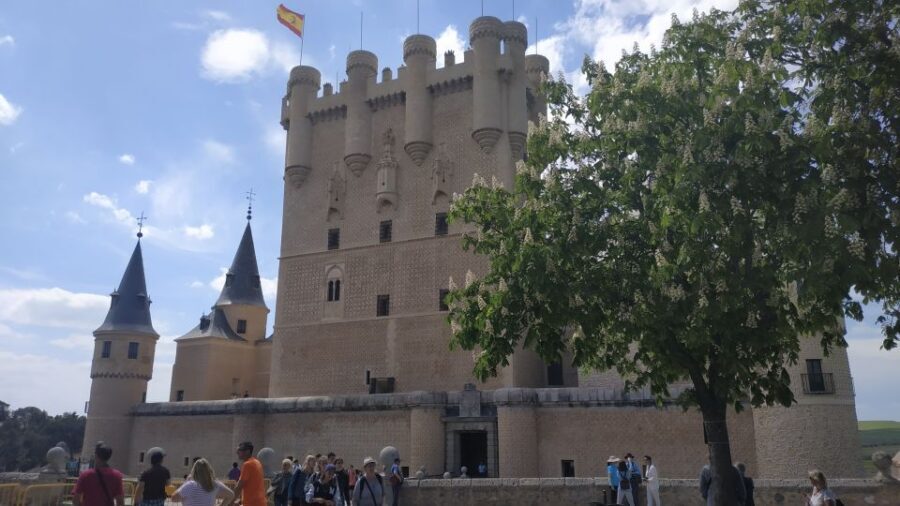
- Alcázar de Segovia included: you get entrance as part of the experience option.
- Toledo’s Jewish Quarter: a real labyrinth of streets, not a quick photo moment.
- Mirador del Valle photo stop: a simple add-on that can pay off with strong city views.
- Guides vary by departure: some run extremely smoothly in English; others may feel harder to follow.
- Sword workshop stop: cultural flavor for some, time-waster for others.
A one-day Segovia + Toledo plan that actually makes sense
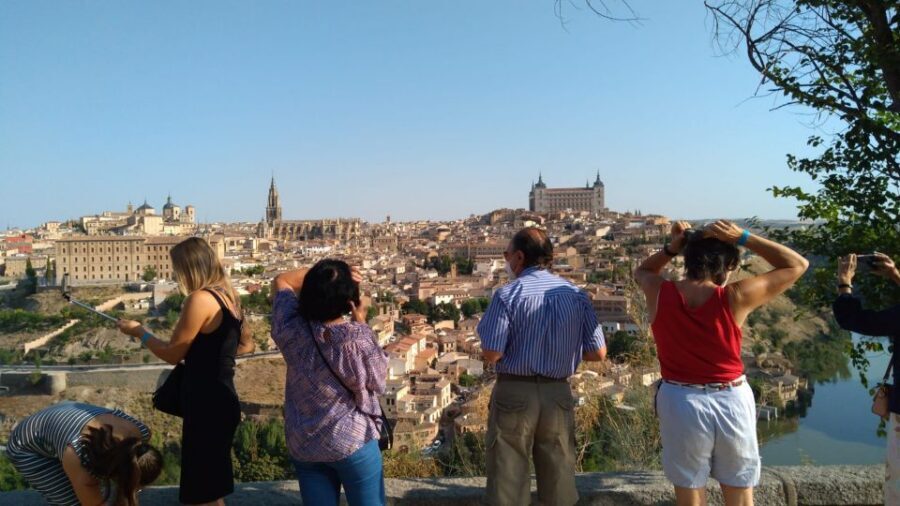
This is a smart way to see two UNESCO cities without turning your trip into a logistics headache. Madrid to Segovia is roughly an hour and a half each way by bus, so the tour gives you just enough time in each place to understand the layout, hit the top sights, and then still wander.
Segovia and Toledo are different in personality. Segovia feels crisp and theatrical, with the Aqueduct and Alcázar acting like bookends. Toledo feels layered—church, mosque history, synagogues, and Christian monuments all stacked into the same hilltop city. If you like “how did this place become this?” more than “look at this postcard,” you’ll enjoy the narration.
The big value here isn’t only the destinations. It’s the local guide commentary that connects buildings to daily life and to what came before. You’re also not left to figure everything out by yourself, which matters when you only have one day.
You can also read our reviews of more guided tours in Madrid



From Madrid meet-up to the Segovia start line
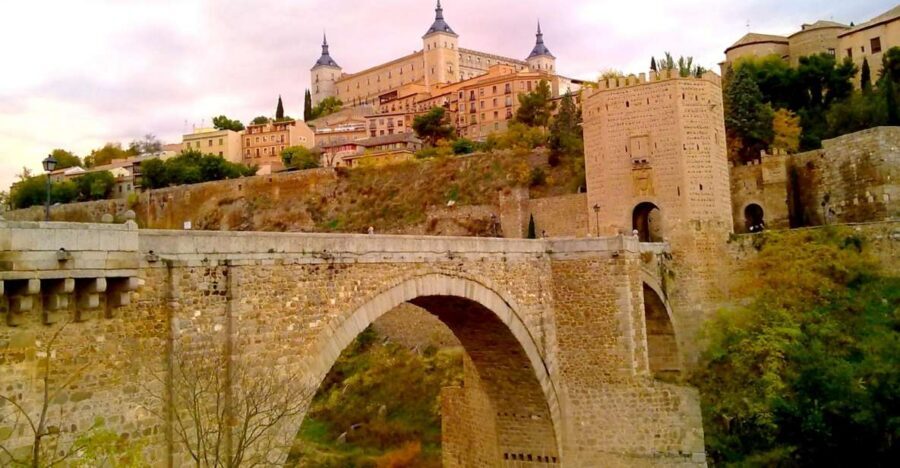
You’ll meet at the Big Bus Madrid Welcome Centre inside Centro Comercial Gran Galeria (Calle de San Bernardo 5). The closest metro stop is Santo Domingo. That’s a practical starting point because you’re in a transit-friendly area, not across town in a random neighborhood.
Plan for the schedule to feel “tight but doable.” The day runs long because it includes round-trip travel time. You’ll get a coach ride to Segovia, then walking and sightseeing, then another ride to Toledo and a final return.
One thing I’d keep in mind: if you care about capturing photos without rushing, show up early and be ready when the group moves. Several people have noted that timing can be rushed, and with a group of about 60, the easiest way to keep stress low is to move when the group moves.
Segovia’s Aqueduct: the landmark that makes the whole city click
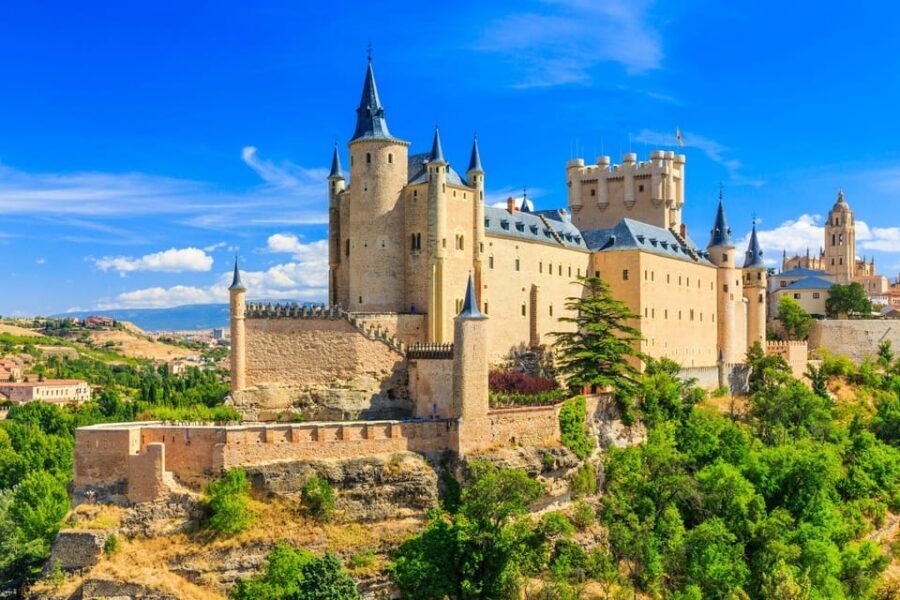
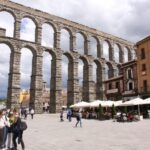
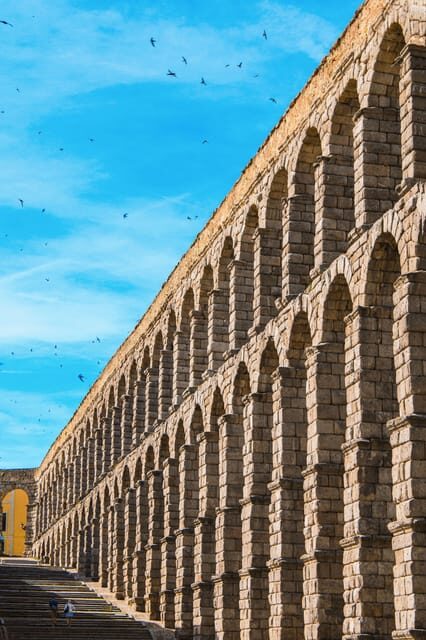
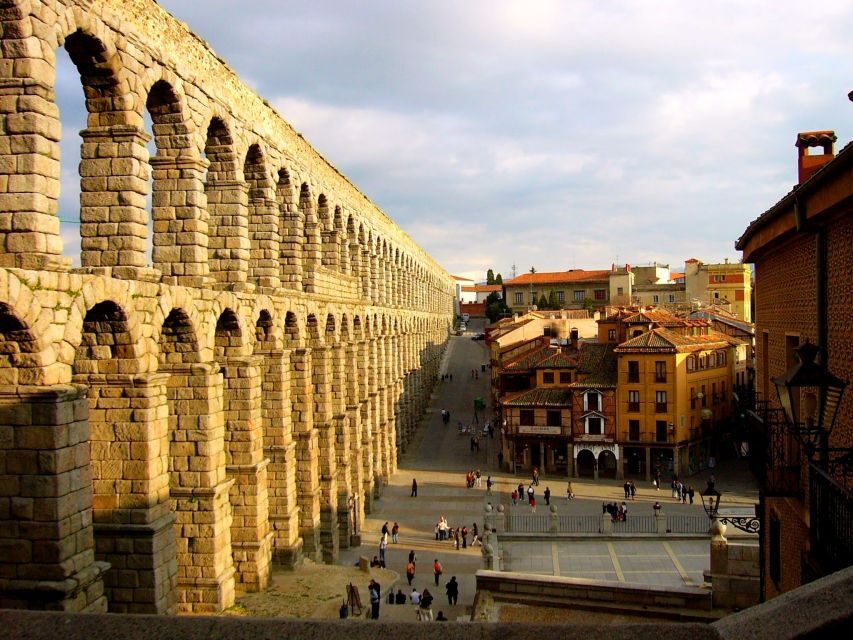
Segovia’s UNESCO status isn’t abstract. It’s right there in your first major stop: the Aqueduct of Segovia. Even if you’ve seen Roman ruins before, this one hits differently because it’s still so visually dominant. It’s a rare Roman engineering relic that also functions as a city icon.
As you stand there, the guide’s job is to help you understand why it matters. This isn’t just a big structure; it’s a clue to how Segovia supported water, growth, and power. If you like context, this is one of the most satisfying stops of the day.
After the Aqueduct, you’ll continue with a guided walk that introduces the key “enclave + viewpoint” rhythm Segovia is famous for. You’ll also see Plaza Mayor and the Gothic church of Santa María as part of the core monuments.
A small but useful timing tip
If you want photos without constant jostling, take a moment at the Aqueduct area before the group bunches up. The crowd dynamics can change fast once people realize the best angles are limited to a few spots.
Plaza Mayor and Santa María: the Gothic pause in a Roman setting
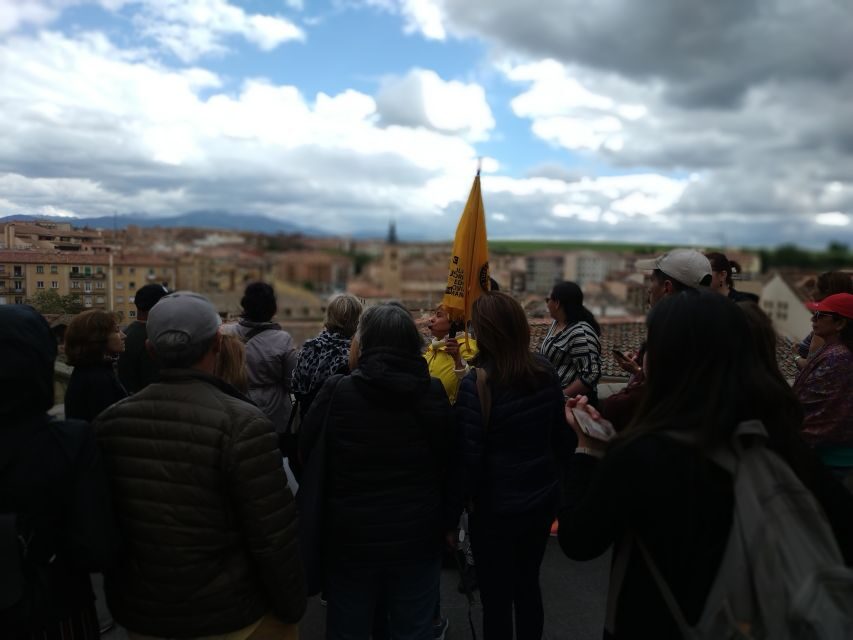
Segovia’s Plaza Mayor gives you a public-squares feeling—walkable, lively, and easy to reset your brain after the Aqueduct. It’s also where the Gothic Cathedral of Santa María anchors the skyline.
This is where a guide helps most: the buildings don’t just look pretty; they tell you how wealth, faith, and politics shaped the city. A few people noted the guides can sometimes move fast on explanation, so if you want details, jot questions on your phone and ask at a moment when the group is standing still.
If you hit the right season, you may even catch local festivities. One guest mentioned seeing the Easter procession in Segovia, which is the kind of bonus that can make the city feel alive beyond the monuments.
You can also read our reviews of more tours and experiences in Madrid



Canaleja viewpoints and the Alcázar de Segovia
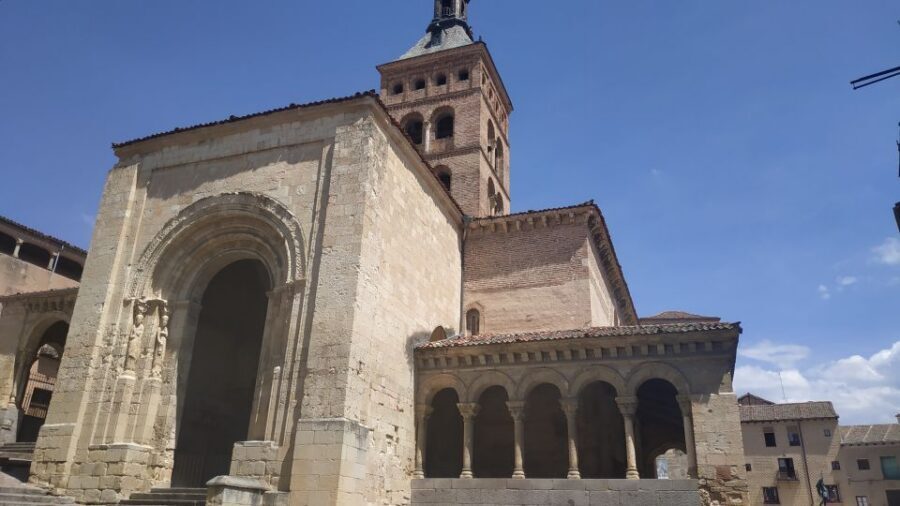
Segovia’s viewpoint stops are not just for Instagram. They help you understand why the city looks the way it does—where it sits, how it was defended, and how the monuments relate to the streets below. You’ll see the viewpoint of Canaleja, which is one of those spots that makes you pause and look longer than you planned.
Then comes the star: Alcázar de Segovia. This castle has that fairytale quality people talk about for a reason. It looks dramatic from multiple angles, and from up close it feels like a place designed to impress.
The tour includes entrance to the Alcázar de Segovia (either with or without a guide depending on the option you select). If you’re choosing what to prioritize, I’d treat the Alcázar as a must. It’s the most “Segovia-specific” monument of the day and the one that most people associate with the city immediately.
What to do during the Alcázar time
Take a quick loop through key viewpoints, then slow down. The castle is less about one view and more about how views stack: from towers to stonework details to the way it sits above the city.
The sword-making workshop stop: cultural, but check your priorities
Between Segovia sights, you’ll visit an ancestral sword making workshop. This is one of those stops that can shift the whole day’s vibe.
Here’s what to expect: it’s a hands-on style experience centered on the craft and tradition of sword making. For some people, it’s a memorable cultural detour that adds something human to the stone-and-stone monuments.
For others, it feels like a time trade. A few comments call it skippable and suggest that the schedule would feel better with extra time in Toledo instead. If you’re the type who values live demonstrations and craft traditions, go in curious. If you’d rather maximize cathedral and street time, be mentally prepared for this to feel optional.
Toledo’s hilltop setting and the “three cultures” story
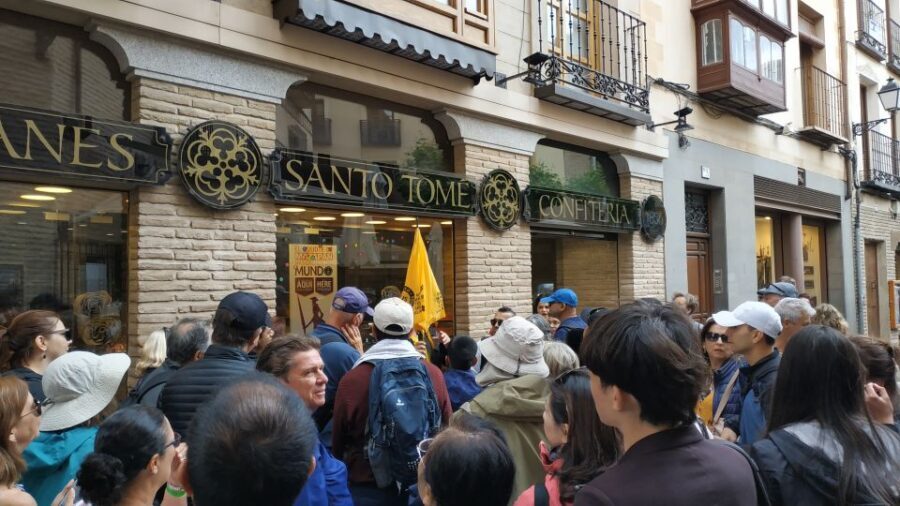
Toledo is where the day turns from stone landmarks to a layered city walk. You’ll arrive after a scenic drive, and there’s even a short photo stop at Mirador del Valle that gives a wide view before you descend into the streets.
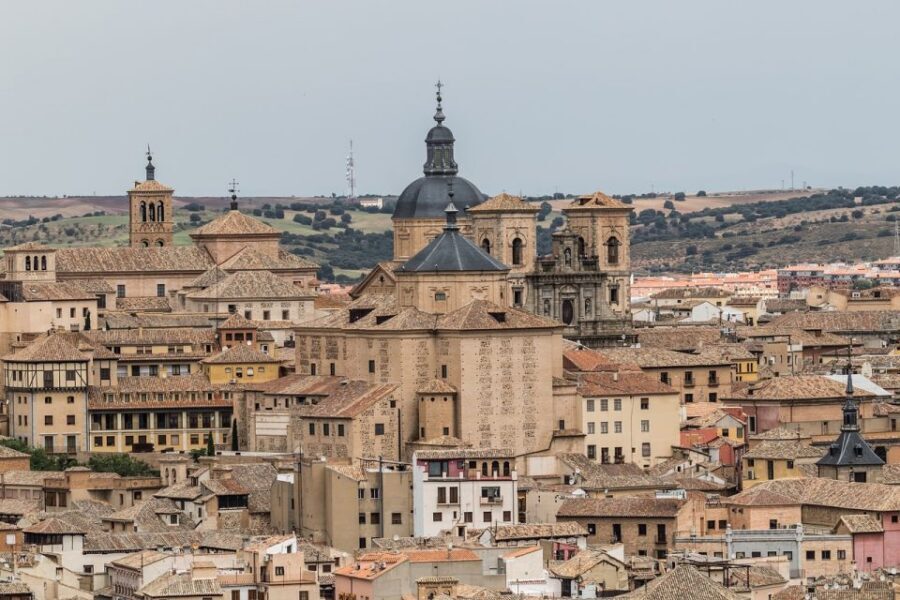
Toledo’s big theme is the legacy of the three cultures that shaped the city. The tour’s guidance is aimed at helping you spot that story in the streets: churches and towers alongside the surviving shapes of earlier communities, plus the way the city is wrapped by walls overlooking the Tagus River.
Toledo Cathedral and the Jewish Quarter
You’ll see Toledo Cathedral and visit the Jewish Quarter, often described as a labyrinth. That’s accurate in the sense that you don’t experience it as a single straight route—you explore it step by step, turning corners and discovering little passageways.
This is also where walking with a guide can save you time. If you’re trying to understand what you’re seeing without a lot of reading, the guide narration can help you connect the dots quickly.
Alcázar de Toledo and panoramas that reward slower steps
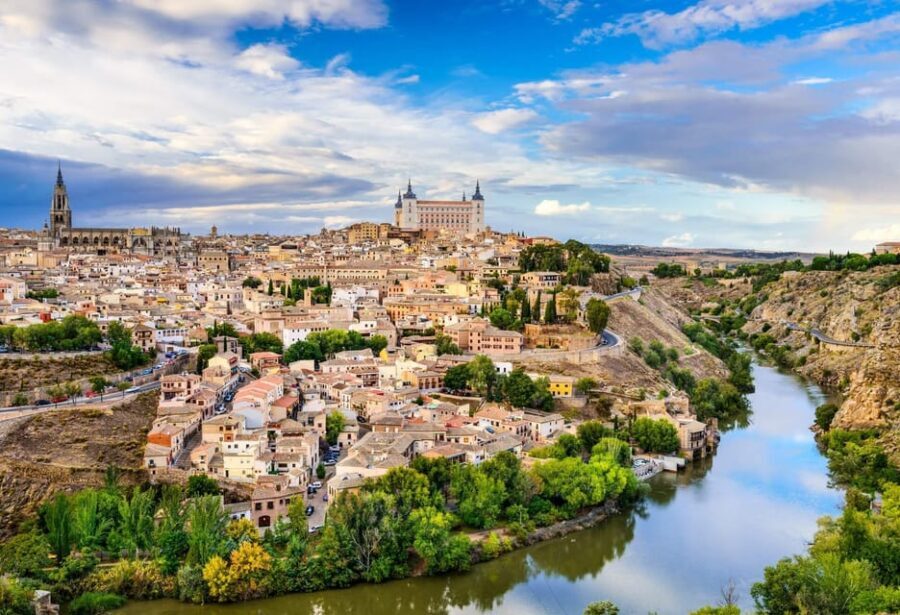
Toledo’s Alcázar de Toledo is part of the experience, and it adds that “seat of power” feeling. Even if you don’t spend forever there, the key is that Toledo’s monuments don’t float in isolation—the city’s geography frames everything.
The tour also includes a panoramic tour in Toledo, which is useful when you’re short on time. Panoramas tell you where you are in relation to the walls and the river, so when you later walk the streets, it feels less confusing.
If you want to shop, this is where you’ll feel the time pressure. One guest said there wasn’t enough time for more souvenirs, which is typical on a one-day route through two cities. If shopping is your priority, keep the free time focused and don’t wait until the end.
How I’d use your free time in each city
The tour includes free time in both places, and that matters. Not everyone wants the same thing: some people want photos and viewpoints, others want coffee breaks and small shops.
In Segovia, free time helps you do two practical things: find something simple to eat and take slower photos around the center. One guide-led walk is never enough to absorb a city like Segovia, especially if you’re watching the viewpoints and not just chasing monuments.
In Toledo, free time is your chance to wander the Jewish Quarter streets and soak in the atmosphere without group pacing. Toledo can feel busy even when it isn’t crowded because the streets are narrow and the sights appear suddenly around corners.
A final practical tip: use the guided time for navigation and context. Use the free time for whatever you’ll regret missing—usually either a deeper look at the cathedral area or extra browsing in the quieter lanes.
Guides and group pace: what to expect from the English narration
The quality of a day like this often comes down to the guide. The good news: the names that pop up in praised experiences suggest strong local storytelling. People mentioned Segovia guide Alvaro (born and raised in Segovia) and Toledo guide Mariano as standouts, and other guides like Sara, Alex, Enrique, Vanessa, Miguel, and Alberto were also described as helpful and friendly.
The not-so-perfect side: a few notes mention English can be hard to follow on certain departures, pronunciation varies, and sometimes explanations lack context. In a bilingual English and Spanish tour, you can improve your experience by sticking close to the front if you’re able and asking questions when the guide pauses.
Pace is another issue. Some people felt it was rushed and wished they’d had more time in each city, especially for extra souvenirs or longer cathedral viewing. If you’re the type who likes to sit in a square for an hour, consider whether a split visit (one day per city) might fit you better. But if you want a high-impact overview, this one-day format can work.
One more practical caution: a passenger reported the A/C didn’t work well on their bus and that it was hot. If you’re sensitive to heat, dress for warm conditions and carry water.
Value check: does $75 deliver real worth?
At about $75 per person, this tour competes well with the cost of getting there on your own when you add what you receive: round-trip transportation, live bilingual guiding, guided walking time in both cities, and an included entrance to the Alcázar de Segovia.
The biggest value lever is guidance. Tickets for major sights can stack up quickly if you’re doing everything solo, and navigation in old-city layouts isn’t as simple as it looks on a map. This tour gives you a structure so you don’t waste hours figuring out where to go first.
The main thing not included is entrances to the monuments beyond what’s specified, plus food and drinks. If you’re planning cathedral interiors or other paid sites, budget extra. Also note that the tour time is limited, so you may not want to schedule extra ticketed stops beyond what the tour already covers.
In plain terms: it’s a good value if you want guided highlights and you accept that it’s a day trip pace. If you want a relaxed, slow-city experience, the price won’t fix the time limits.
Should you book this Madrid day trip to Segovia and Toledo?
Book it if you want a compact, guided introduction to two UNESCO cities in one shot, and you’re excited by Roman engineering, Gothic architecture, and Toledo’s three-culture layers. This is especially appealing if you’d rather pay for organization than spend your day managing routes, meeting points, and timing.
Skip or rethink it if sword-making demos feel like filler for you, if you hate group pacing, or if you’re the kind of traveler who wants long cathedral hangs and hours of shopping in one city. A one-day split between two places sounds simple, but it does mean you’ll move on before your curiosity runs out.
If you’re on the fence, my advice is simple: choose this when you want highlights with guidance. Choose two separate days when you want depth and time to wander without checking your watch.
FAQ
How long is the tour?
The duration is 1 day, and that includes the round-trip journey to and from the destinations.
Where do I meet the tour?
You’ll depart from the Big Bus Madrid Welcome Centre inside Centro Comercial Gran Galeria on Calle de San Bernardo 5, Madrid (near the Santo Domingo metro station).
What language is the tour guide?
The tour is bilingual, with live guides in English and Spanish.
What’s included in the price?
Included are live English- and Spanish-speaking guides, transportation from Madrid to Segovia and Toledo and back, a walking tour in Segovia plus free time there, free time in Toledo plus a walking tour there, a panoramic tour in Toledo, scenic drive time, and entrance to the Alcázar de Segovia with or without a guide depending on the option.
Are monument entrance tickets included for everything?
No. Entrance tickets to the monuments are not generally included unless specifically listed, and the tour includes entrance to the Alcázar de Segovia.
Do you get free time to explore?
Yes. You’ll have free time in Segovia and free time in Toledo for sightseeing at your own pace.
Are there photo viewpoints during the day?
Yes. You’ll have viewpoints in Segovia and a photo stop at Mirador del Valle.
What’s the sword-making workshop stop?
It’s a visit to an ancestral sword making workshop as part of the day’s program.
Is there any concern with bus comfort?
The tour doesn’t state specifics about bus comfort, but one guest reported the A/C did not work well and the ride was hot.