REVIEW · TOLEDO
Guided Visit to the Toledo Underground
Book on Viator →Operated by Rutas Guiadas Toledo A Pie - Guías Oficiales Locales · Bookable on Viator
Toledo has a secret under your feet. This guided underground route connects five layers of the city’s past—Roman, Islamic-era, and Jewish life—through places you can’t reliably access on your own. I like that the explanations come from official local guides such as Luis and Mónica, who focus on archaeology and legends, not just dates.
I love the practical way the tour ties everyday life to what you see underground: baths for cleaning and rituals, and water storage systems that mattered on the Toledo rock. I also love the access value—some spaces are only visitable with an official guide, which turns a ticket into real entry, not just a viewpoint. One consideration: the route includes stairs and descents, so you’ll want moderate physical fitness and good shoes.
If you want a different Toledo experience, this is one of the best ways to see it. The group stays small, capped at 20 people, and it’s scheduled to start at 6:30 pm from Plaza de Zocodover—easy to pair with dinner near the historic center afterward.
In This Review
- Key highlights before you go
- Toledo Underground: what this tour actually does well
- Price and timing: planning around the 6:30 pm start
- Your route in five acts: the underground you’ll see
- Entering the Posada de la Hermandad dungeons of the Holy Brotherhood
- Roman baths at the Plaza de Amador de los Ríos: daily life under Toletum
- Baños del Ashen and the 10th-century hamman: hygiene, ritual, and social life
- Pozo del Salvador: well vs cistern and the logic of drinking water
- Casa del Judío and the miqveh: a 14th-century Jewish bath experience
- Roman baths as the finishing touch: connecting the final thread
- Guides: why the commentary makes the underground click
- What to wear and expect on the stairs
- Value check: who gets the most out of this ticket
- Should you book the Toledo Underground visit?
- FAQ
- How long is the Guided Visit to the Toledo Underground?
- How much does the Toledo Underground guided visit cost?
- Where do I meet, and where does the tour end?
- What underground sites are included in the tour?
- What is included in the price?
- Is there any weather or fitness requirement?
Key highlights before you go
- Five underground stops that connect Roman, medieval, and Jewish heritage into one walk
- Official-guide access to places that are not open like normal museum rooms
- Water stories that explain how Toledo managed drinking water from its height
- Bath culture across eras, from Roman baths to a 10th-century hamman and a 14th-century miqveh
- Small groups (max 20) with time for questions and clear explanations
- A fun, dynamic route with stairs and temperature relief underground on hot days
Toledo Underground: what this tour actually does well
This is not a generic “dark tunnels” experience. The value here is that you move through five specific underground spaces and leave with a better sense of how different civilizations lived side by side—or followed each other—under the same city.
You’ll walk into preserved underground areas and then get guided context that makes them make sense. Instead of treating them like isolated curiosities, the tour connects function and culture: hygiene, rituals, water supply, community life, and daily routines. That’s why it tends to land well with people who think they already know Toledo. It gives you a new lens, not just new sights.
Also, this is priced at $14.24 per person for about 2 hours with guided entrances. When a tour includes official access and multiple sites, that math usually works in your favor—especially in a city where many interesting spaces are protected or restricted.
You can also read our reviews of more guided tours in Toledo



Price and timing: planning around the 6:30 pm start
The tour starts at 6:30 pm in Plaza de Zocodover. That matters more than it sounds. Late afternoon and early evening often means you can avoid the worst walking heat in central Toledo, and you’ll also be spending time underground where temperatures typically feel more comfortable.
It’s also a smart schedule if you’re trying to build a simple day: do this early evening, then finish near the Cathedral area. The tour ends at Callejón Nuncio Viejo, very close to the Cathedral, so you’re not stuck crossing the city afterward.
One more planning note: the tour is usually booked ahead (on average about 24 days in advance). If your dates are firm, grab your spot rather than hoping for walk-up availability.
Your route in five acts: the underground you’ll see
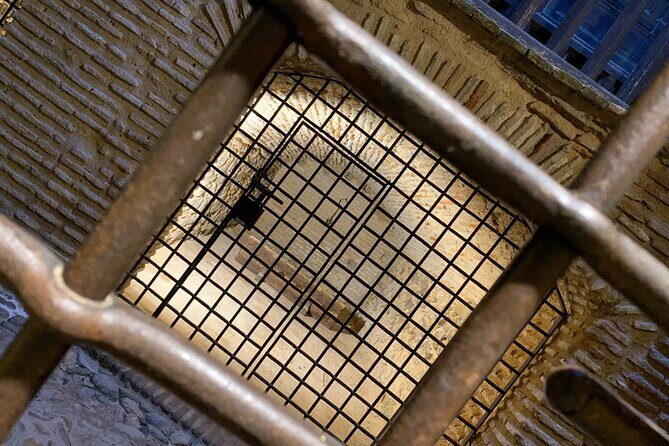
This circuit visits five underground sites, each tied to a different aspect of Toledo’s past. Some are still preserved, some are accessed in ways you can’t easily manage alone, and all are explained by an official guide with a focus on context—history, archaeology, and the human reasons these spaces existed.
You’ll start with the Holy Brotherhood dungeons, then move through Roman-era baths, a medieval hamman setting, a water system lesson at a well/cistern site, and finally a Jewish bath (miqveh) connected to the Casa del Judío, with Roman baths serving as the finishing Roman thread to the experience.
Entering the Posada de la Hermandad dungeons of the Holy Brotherhood
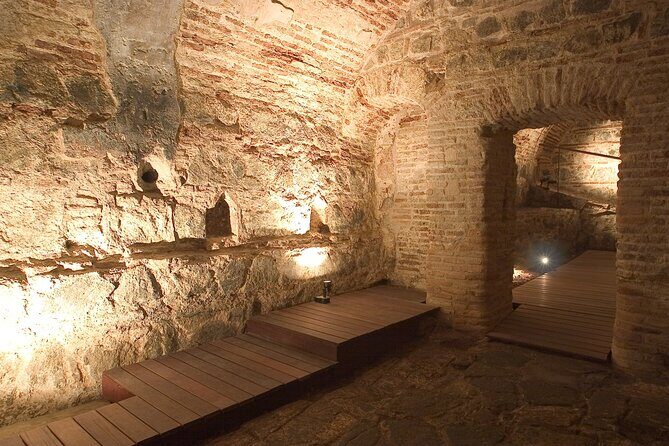
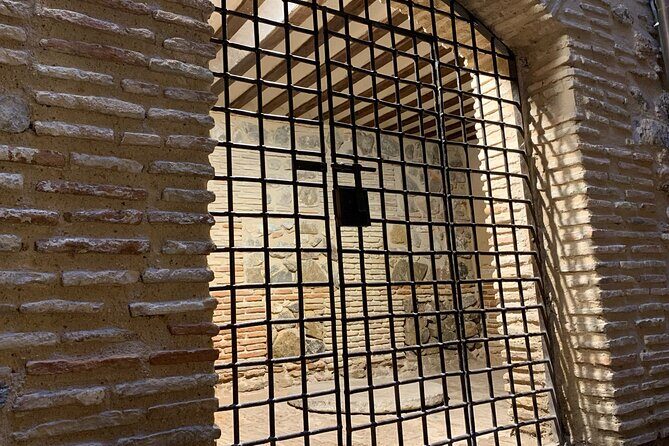
Your first stop takes you into Posada de la Hermandad, where you see the dungeons of the Holy Brotherhood—described as the only ones still preserved in the city. The fun part of this stop is that you’re not just looking at stone. You’re learning how groups organized, how power and protection worked, and what life looked like in spaces meant to hold people out of public view.
You’ll also hear the kind of story that makes underground places stick in your mind. One example: the guides explain who the green mangas were. That detail is exactly the kind of added layer that turns a dark chamber into something readable.
Practical note: this is a great opening because it gives you orientation. Once you’re underground and understand how the guide frames each era, the later stops land even better.
What to watch for: lighting and stone surfaces can make footing tricky. Go slow, and keep an eye on your step right after you descend.
Roman baths at the Plaza de Amador de los Ríos: daily life under Toletum
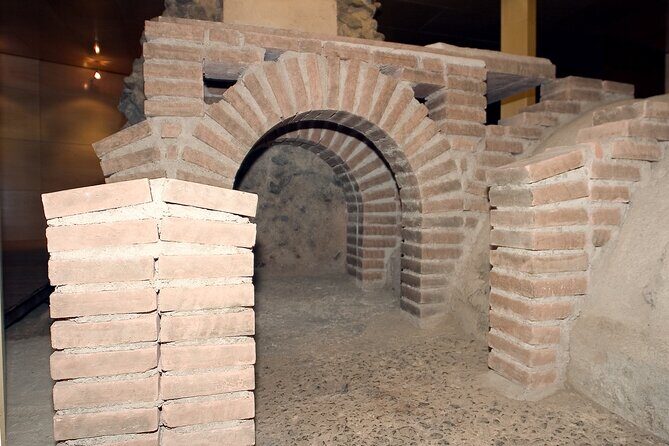
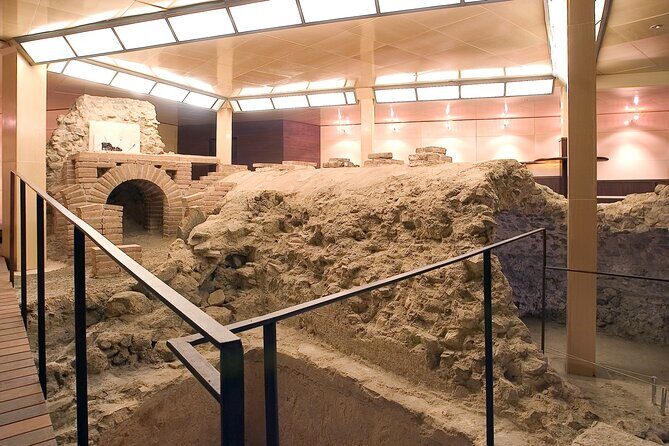
Next, you’ll visit the Roman baths at Las Termas Romanas de la Plaza de Amador de los Ríos. This stop is where you start connecting underground architecture to real routines. You’ll learn how the baths worked and how much time Romans spent there, plus what their daily life looked like with these spaces as part of the rhythm.
Another helpful angle: the guide looks at different stages through the archaeological remains. That matters because Roman-era buildings in a city like Toledo didn’t stay frozen in time. They were altered, reused, and reinterpreted as centuries passed.
If you like history but get bored by dates, this is your stop. It’s the most “this is how people lived” portion of the tour, and it sets up the contrast with medieval bathing and ritual spaces.
Possible drawback: this section can feel more explanatory and less story-driven than the first dungeon stop. If you enjoy guided narration and archaeology-style detail, you’ll be fine. If you prefer action-heavy storytelling only, you might want to ask questions to keep engaged.



Baños del Ashen and the 10th-century hamman: hygiene, ritual, and social life
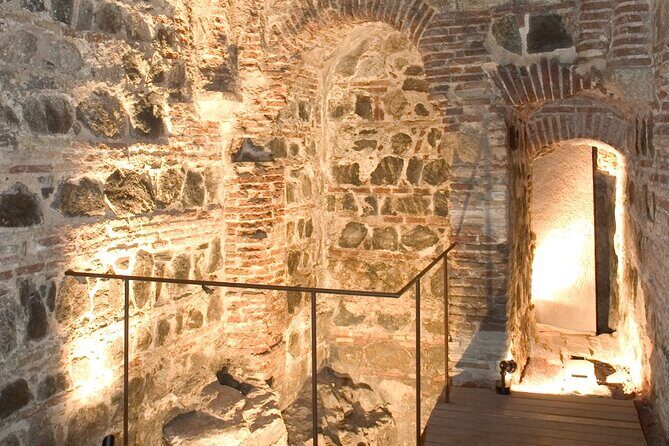
Then you move to Baños del Ashen, presented as a way to transport you to the 10th century. This is the hamman stop, and it’s one of the best “function meets culture” moments on the whole route.
The big idea here is that the hamman wasn’t only about getting clean. You’ll learn how hygiene practices, religious rituals, and social relations could happen in the same place. That connection is the point: bathing as both body care and community space.
This stop tends to feel especially rewarding if you’re the type of traveler who likes the everyday side of history. It’s not just about who ruled; it’s about what people did, what they valued, and where they gathered.
What to expect underground: the atmosphere can feel tighter than you’d expect, so give yourself time to look, then listen. The guide’s pacing is key here.
Pozo del Salvador: well vs cistern and the logic of drinking water
At Pozo del Salvador, you’ll get a practical lesson with serious stakes: the difference between a well and a cistern, and why both mattered for getting drinking water at the top of Toledo’s rock.
This is one of those stops that surprises people because it’s not purely cultural. It’s engineering and survival disguised as heritage. You’ll understand that water access wasn’t a detail—it shaped settlement life, health, and daily decisions.
If you’re the kind of visitor who likes “how did they actually do it,” this is your moment. Even if you don’t consider yourself a history nerd, the well/cistern comparison helps you see the city as a system, not just a collection of monuments.
Casa del Judío and the miqveh: a 14th-century Jewish bath experience
The tour continues with a visit to a miqveh, a traditional Jewish bath, in Casa del Judío, dating from the 14th century. This is where you see how ritual and community space connect to physical preparation.
A miqveh isn’t just a bath in the casual sense. The guided explanation gives you context for why these spaces were meaningful and how they fit into community life. It’s a powerful stop because it reminds you that different cultures can share similar building types—yet use them in distinct ways.
What makes this stop work: your guide ties architecture to intention. That’s the difference between just seeing old rooms and understanding why they mattered.
Roman baths as the finishing touch: connecting the final thread
The tour’s end leans back into the Roman theme, with Roman baths of ancient Toletum as the finishing touch. Even if you already saw Roman bathing earlier, this end placement helps you frame the whole experience as a continuous timeline rather than five unrelated rooms.
Think of it like returning to a reference point. After hamman and miqveh context, the Roman bath stops feel even more complete, because you’ve already been taught what bathing could mean across cultures.
Guides: why the commentary makes the underground click
The strongest praise across the experience is consistent: the guides are clear, friendly, and show real passion for Toledo. Names you’ll hear in guide praise include Monica/Mónica, Luis, Estefanía, and Diego, and the standout theme is how well they connect archaeology, history, and legends without turning it into a lecture.
You’ll also benefit from the format. Since the group is capped at 20, you’re more likely to get your questions answered instead of being rushed past your curiosity.
One more thing I appreciate about this style: it’s not only about the places. It’s about teaching you how to see them. By the end, you’ll walk aboveground with a better sense of what city life likely required to function just under your feet.
What to wear and expect on the stairs
This tour lists moderate physical fitness as the right level. That matches what you should plan for: the route is dynamic, with stairs, climbs, and descents.
Practical packing advice:
- Wear closed-toe shoes with good grip
- Bring a layer if you run cold in cooler underground spaces
- If you’re visiting in summer, expect it to be warm on the streets before you descend
One of the best “real life” benefits is temperature. On hot days, underground spaces can feel like a relief. If the city is cooking outside, you’ll likely feel the difference once you start moving below street level.
Value check: who gets the most out of this ticket
This is a strong fit if you want:
- Access to underground areas that you can’t simply stroll into
- A guided explanation linking culture and function
- History that focuses on daily life—water, hygiene, community rituals
- A small-group experience that keeps the route manageable
It can also work for families, based on guide feedback that the tour can be entertaining for children. The caveat is still the stairs and moderate fitness requirement.
If you’re traveling only with a stroller or you expect fully flat ground, you’ll want to rethink the match. The tour isn’t described as wheelchair-friendly in the information provided, and stairs are part of the experience.
Should you book the Toledo Underground visit?
I’d book it if you care about Toledo as a layered city and you like guided context that makes spaces understandable. The $14.24 price point is hard to ignore when you’re getting access to preserved underground areas and multiple eras in about two hours.
I’d hesitate only if you dislike stairs, or if you want a mostly flat, quiet museum-style visit. Also, if you’re heat-sensitive, plan your day so you’re meeting at 6:30 pm and you’re not walking long distances at peak afternoon.
For most people who want a memorable Toledo experience beyond the obvious monuments, this is a smart choice.
FAQ
How long is the Guided Visit to the Toledo Underground?
The tour lasts about 2 hours.
How much does the Toledo Underground guided visit cost?
It costs $14.24 per person.
Where do I meet, and where does the tour end?
You start at Plaza de Zocodover (Pl. de Zocodover, 45001 Toledo) and end at Callejón Nuncio Viejo (Cjón. Nuncio Viejo, 45002 Toledo), very close to the Cathedral.
What underground sites are included in the tour?
You’ll visit five underground areas, including the Holy Brotherhood dungeons at Posada de la Hermandad, Roman baths at Las Termas Romanas, Baños del Ashen with a 10th-century hamman experience, Pozo del Salvador (well vs cistern and drinking water), and a miqveh at Casa del Judío (14th century).
What is included in the price?
The price includes the underground entrances. Tips are not included.
Is there any weather or fitness requirement?
The experience requires good weather, and you should have a moderate physical fitness level, since the route includes stairs and descents.