REVIEW · MADRID
Learn to Make an Authentic Paella!
Book on Viator →Operated by Buzziler · Bookable on Viator
Paella is harder than it sounds. This Madrid class turns that reputation into something doable by teaching the classic Valencian recipe in a local home kitchen, then letting you enjoy the result right away.
I especially love the small-group size (10 people or fewer) and the way the experience mixes cooking with real Spanish hospitality—chatting while sipping Rioja or sangria, not just following a cookbook. The meal also comes with beer, wine, and soft drinks, so you’re not juggling budget mid-class.
One possible drawback: it’s a midday commitment. With a 2 hours 30 minutes session starting at 12:00 pm, it’s best if your day in Madrid can handle a proper food-focused block.
In This Review
- Key highlights at a glance
- A Madrid Paella Lesson in Someone’s Real Home Kitchen
- Why Valencian Paella Is the Hard Mode of Spanish Cooking
- Welcome Drinks and Conversation With Rioja or Sangria
- Small Group Cooking: Getting Hands-On Without Getting Lost
- The Meal You Sit Down to: Eat Your Paella, Not Just Learn It
- Hosts Paloma and Pilar: Hospitality Makes the Difference
- Price, Drinks, and Time: Is $86 Fair Value
- Who This Class Fits Best (and When to Skip)
- Should You Book This Madrid Paella Class?
- FAQ
- Where is the meeting point for the paella class?
- What time does the experience start?
- How long does the experience last?
- How big is the group?
- Is food and drink included?
- Does it use a mobile ticket?
- What if I need to cancel?
- What happens if the minimum number of travelers isn’t met?
Key highlights at a glance
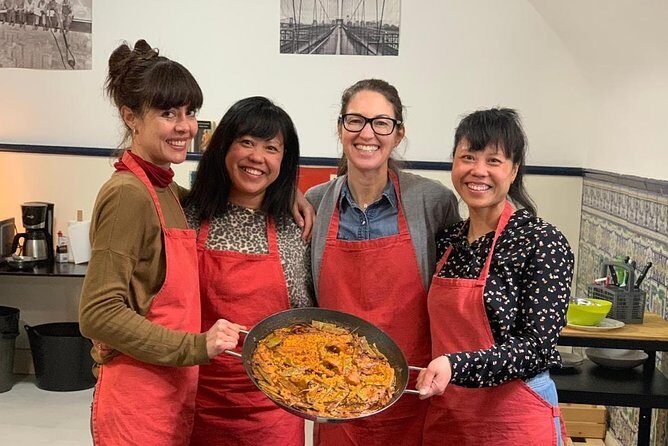
- Authentic Valencian paella focus: You’re taught the classic recipe, not generic seafood rice.
- Hosted in a local Madrid home: The setting feels personal and lived-in, not like a classroom.
- Small group of 10 or fewer: More attention while you cook, and easier conversation at the table.
- Drinks with your meal: Beer, wine, and soft drinks are included, plus Rioja or sangria is part of the vibe.
- You eat what you cook: The goal isn’t just learning technique—you get a shared “made it together” meal.
- Friendly, food-loving hosts: The experience is praised for warmth and passion, including hosts named Paloma and Pilar.
A Madrid Paella Lesson in Someone’s Real Home Kitchen
If you’ve ever tried to make paella at home, you know it has a reputation. It’s not just about ingredients—it’s about getting the recipe to work as a whole. That’s why I like this setup: instead of being stuck in a large group kitchen, you’re cooking in a local Madrid home, which changes the whole feel of the class. It’s calmer. More personal. Less like a production line.
The meeting point is C/ de Hortaleza, 90, Centro, 28004 Madrid. From there, you move into the home setting and settle in as the class gets rolling. The experience ends back at the meeting point, so you’re not guessing where you’ll end up later.
The session starts at 12:00 pm and runs about 2 hours 30 minutes. That timing matters. You’re not doing a quick tasting lesson—you’re doing a full “learn, cook, then eat” experience. If you like a structured day (and not bouncing between attractions nonstop), this kind of cooking class can be a great anchor.
You can also read our reviews of more tours and experiences in Madrid.


Why Valencian Paella Is the Hard Mode of Spanish Cooking
Paella gets treated like a single dish, but the phrase classic Valencian paella is key. This class leans into the authentic version and the parts people often get wrong when they try paella on their own.
The biggest value here is that you’re not just getting steps. You’re learning the secrets to a classic Valencian paella from your host. That matters because paella is famous for being “tricky,” and the difference between tasty and excellent usually comes down to the recipe approach—how you treat the process and how everything comes together as one.
You also get cultural context along the way. In the experience’s feedback, hosts are specifically praised for sharing history and culture connected to the food and the dishes. Even if you already like Spanish cuisine, that angle helps you understand what you’re making beyond the mechanics.
And because you cook it together, you get an immediate payoff. You can taste what works and compare that to what you thought you might need to do differently at home.
Welcome Drinks and Conversation With Rioja or Sangria
One of the best parts of Spanish food experiences is that the meal often starts before the food hits the table. Here, that vibe shows up early. You chat with your group and sip Rioja or sangria as the lesson begins.
This isn’t just “drink while you wait.” The way it’s described, the drinks and conversation run alongside learning the recipe. That’s a small but real difference: it keeps the class social without turning it into a party where learning disappears.
Then there’s the meal-time bonus: beer, wine, and soft drinks are included with your food. That’s useful information for your budget in Madrid. Instead of estimating what you’ll spend on drinks during a midday activity, you already know the beverage side is covered for the meal you cook and eat.
If you’re a careful planner, this also helps you build a more realistic day. Cooking classes can be unpredictable, but a set duration and included drinks makes the experience feel more complete.
Small Group Cooking: Getting Hands-On Without Getting Lost
The class caps at a maximum of 10 travelers. That is the practical heart of why this feels different from larger cooking tours.
In a big group, you often become a spectator. You watch someone else work, take the occasional turn, and hope you remember enough afterward. With 10 people or fewer, you’re more likely to stay engaged and actually participate in the cooking process.
The experience also frames cooking as more than just output. You cook together to eat together, and the group work is part of getting to know each other. That’s a good match for solo travelers who want social time but don’t want a generic pub crawl feel. It also works well for couples or small groups that want conversation at the table, not background noise.
Practical tip from how these classes tend to flow: arrive ready to engage. The experience asks you to bring an appetite. That’s not just about food—it’s about energy. If you walk in hungry and focused, the class moves better and the shared meal hits harder.
The Meal You Sit Down to: Eat Your Paella, Not Just Learn It
After the teaching portion, you sit down with your small group to eat the masterpiece you helped make. That one line is a big deal.
I love classes where the meal is part of the point. It’s not always true. Some cooking tours end with a small tasting portion and you’re still hungry after. Here, the structure is built around cooking and then eating together, so you leave with a full experience and a full stomach.
The setting is also clearly meant for sharing. Cooking in a group is described as a way to get to know each other, and then the meal becomes the reward. That means you’ll likely spend more time at the table than you would in a quick demo class.
Also, because paella is notoriously difficult to get right, eating the final result gives you a confidence boost. Even if you don’t recreate it perfectly at home next week, you’ll understand what the “classic” outcome should taste like—and you’ll have a clearer sense of how the process comes together.






Hosts Paloma and Pilar: Hospitality Makes the Difference
Two host names show up in the experience feedback: Paloma and Pilar. Both are praised for being friendly, kind, and passionate about food, and that personality piece is not a minor detail.
In cooking classes, the best hosts do two things at once: they teach and they manage the group. Passion helps with the teaching. Warmth helps everyone feel comfortable enough to ask questions and stay involved. The feedback highlights how much people enjoyed learning not just the recipe, but also the history and culture connected to the dishes.
That kind of host energy matters because paella can make people anxious. If you’re worried you’ll do it wrong, you stop paying attention. A welcoming guide keeps you calm enough to learn the right habits—and then enjoy the meal together.
If you’re trying to choose between a generic paella demo and a class with real hospitality, this is the deciding factor. You’re paying for instruction, yes. But you’re also buying the tone of the experience: relaxed, friendly, and focused on getting everyone through the cooking stage successfully.
Price, Drinks, and Time: Is $86 Fair Value
At $86 for about 2 hours 30 minutes, this isn’t the cheapest way to eat Spanish food in Madrid. But the price does make sense when you break down what’s included.
You’re getting:
- A small-group cooking class (10 or fewer)
- Instruction on the secrets to classic Valencian paella
- A full seated meal that matches what you cooked
- Drinks included with the meal: beer, wine, and soft drinks
- A social welcome that includes Rioja or sangria
Food-focused tours can be expensive when they’re mostly sightseeing. This one is different. The value is tied to something tangible: cooking, then eating, then having drinks with it. You’re not paying mainly for a story. You’re paying for a real meal and real guidance—plus the home setting and the group size.
Where the $86 may feel less worth it is if you already cook frequently and just want to taste paella without participating. In that case, you might prefer a simple restaurant meal. But if you want the recipe knowledge and the hands-on learning, the price becomes more reasonable fast.
One more practical thought: because the class is 2.5 hours, it can replace parts of your day that would otherwise take time and money. You’re combining food, drinks, and a structured experience in one block.
Who This Class Fits Best (and When to Skip)
This experience is a great match if you want:
- An authentic Spanish food activity in Madrid, not a touristy performance
- A class that actually feels interactive (small group, cooking together)
- Drinks and a shared meal built into the plan
- A host-led focus on Valencian paella, plus some food culture context
It can be a less perfect fit if:
- You hate schedule blocks and prefer to wander without commitments
- You’re looking for a longer evening meal experience instead of a 12:00 pm start
- You only want a quick tasting and no real instruction
If you’re traveling solo, the small group format can be a big win. If you’re a couple, it offers a fun shared activity and then a relaxed meal afterward. If you’re with friends, it’s one of those trips where everyone ends up talking about the same dish.
Should You Book This Madrid Paella Class?
I’d book it if your ideal day includes learning a serious Spanish dish in a local home, meeting people at the table, and leaving with a meal you helped make. The combination of small group size, included drinks, and an authentic Valencian paella focus is exactly the kind of value that makes cooking classes memorable.
Before you book, just sanity-check one thing: you need to be okay with a midday start at 12:00 pm. If that works for your Madrid plan, this is one of the more satisfying food experiences you can choose.
If you’re on the fence because $86 sounds high, remember what you’re actually buying: instruction, cooking, a proper meal, and drinks—not just a sample.
FAQ
Where is the meeting point for the paella class?
The meeting point is C/ de Hortaleza, 90, Centro, 28004 Madrid, Spain.
What time does the experience start?
The start time is 12:00 pm.
How long does the experience last?
It’s listed as approximately 2 hours 30 minutes.
How big is the group?
The experience has a maximum of 10 travelers.
Is food and drink included?
Yes. You’ll sit down with your small group to eat the paella you helped make, and beer, wine, and soft drinks are included with your meal. Rioja or sangria is also part of the experience.
Does it use a mobile ticket?
Yes, the tour includes a mobile ticket.
What if I need to cancel?
You can cancel for a full refund if you cancel at least 24 hours before the experience’s start time.
What happens if the minimum number of travelers isn’t met?
If it’s canceled because the minimum isn’t met, you’ll be offered a different date/experience or a full refund.