REVIEW · MADRID
Madrid: Afternoon Prado Museum Tour with Skip-the-Line Entry
Book on GetYourGuide →Operated by Satguru Experiences · Bookable on GetYourGuide
Two hours at the Prado can change your eye. I love the skip-the-line entry that gets you through the hassle fast, and I love how an official guide points out what to actually look for in the big-hitters. The only real drawback: the museum is enormous, so a 2-hour tour can leave you wanting more rooms after you walk out.
This afternoon format works well if you already feel a little museum fatigue from morning plans. You meet at the Monument to Velázquez on Paseo del Prado, then step straight into a small group tour led in English, with guides in the feedback including people like Blanca, Ruben, and Juan.
In This Review
- Key highlights at a glance
- Why the Prado works best with a focused game plan
- Skip-the-line at the Prado: what it saves you, and why it matters
- Your 2-hour afternoon circuit (and what each stop is really for)
- Meeting point: Paseo del Prado, Velázquez Monument (quick orientation)
- Prado Museum guided time: a curated walking story
- Returning to P.º del Prado, 11
- Goya’s Spain: emotion, war, and faces that won’t let go
- Velázquez and Las Meninas: the perspective puzzle made simple
- El Greco’s The Burial of the Count of Orgaz: heaven meets earth
- Rubens brings the Baroque energy: movement, myth, and faith
- Group size, pace, and whether you can ask questions
- Who this Prado afternoon tour fits best
- Price and value: is $67 worth it?
- Should you book this Prado afternoon tour?
- FAQ
- FAQ
- How long is the Prado museum tour?
- Where do I meet for the tour?
- Is skip-the-line entry included?
- What language is the tour guide?
- Which artists and artworks are featured?
- Is the tour wheelchair accessible?
- Are there any cancellation details I should know?
Key highlights at a glance
- Skip-the-line entry: Use a separate entrance and spend more time inside the galleries
- Small-group feel: Easier pace and more chances to ask questions than on bigger tours
- Major Spanish masters: Goya, Velázquez, and El Greco are the core focus
- Practical time-box: A 2-hour plan that helps you see the most important works without getting lost
- Strong storytelling: Guides in feedback often made details feel simple and fun
Why the Prado works best with a focused game plan
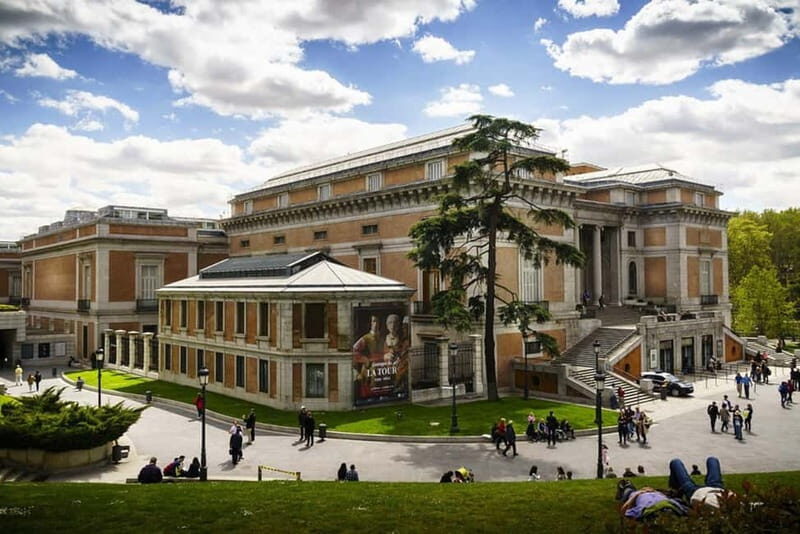
The Prado can feel like information overload. You walk in and suddenly there’s art everywhere—great art—so your brain starts doing that thing where it freezes and you end up staring at the same painting longer than you planned.
This tour gives you a path and a lens. Instead of wandering, you follow your guide through a logical sequence of works, with explanations tied to what you’re seeing right there in front of you. I also like that the tour is built around a handful of famous paintings, so you leave with real takeaway memories, not just a blurry feeling of having visited a museum.
Guides mentioned in the feedback brought the art down to earth. People like Blanca, Alejandra, and Eva were praised for making details accessible—like pointing out specific choices in a face, posture, or composition. That’s how you actually start reading a painting, not just looking at it.
One more plus: the tour is an afternoon slot, which often means you’re not forced into the earliest rush. You can still enjoy the museum light and energy, without burning your whole day.
You can also read our reviews of more museum experiences in Madrid

Skip-the-line at the Prado: what it saves you, and why it matters
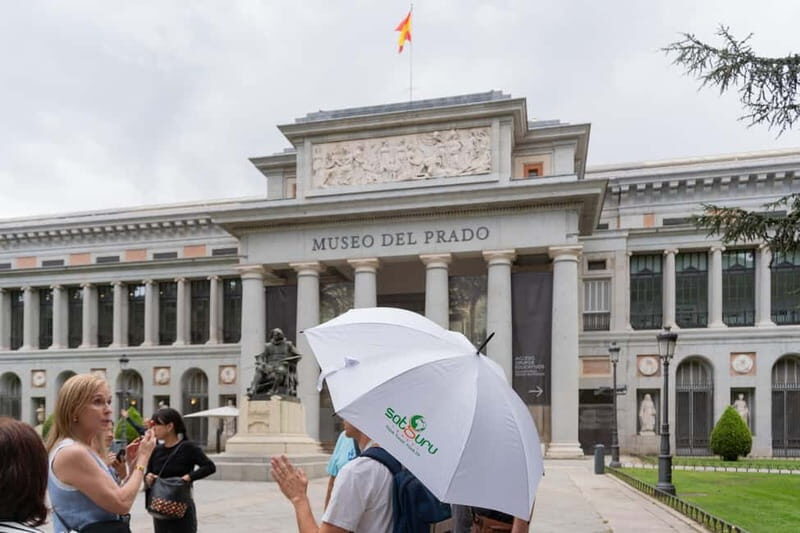
The headline feature here is skip-the-line tickets. At this museum, the time cost of standing around can be brutal, and at least one guide’s group in the feedback mentioned the alternative was waiting for hours to get in.
What you’re buying with skip-the-line is simple: time and attention. That matters because the Prado isn’t just a place to “see paintings.” If you lose your energy on queues, your viewings suffer. With the separate entrance, you get inside and start learning while you’re still fresh.
There’s also a psychological benefit. If you arrive already annoyed, you’ll skim. If you arrive already inside, you’re ready to focus. The best museum days aren’t about speed; they’re about concentration, and skip-the-line protects that.
Your 2-hour afternoon circuit (and what each stop is really for)
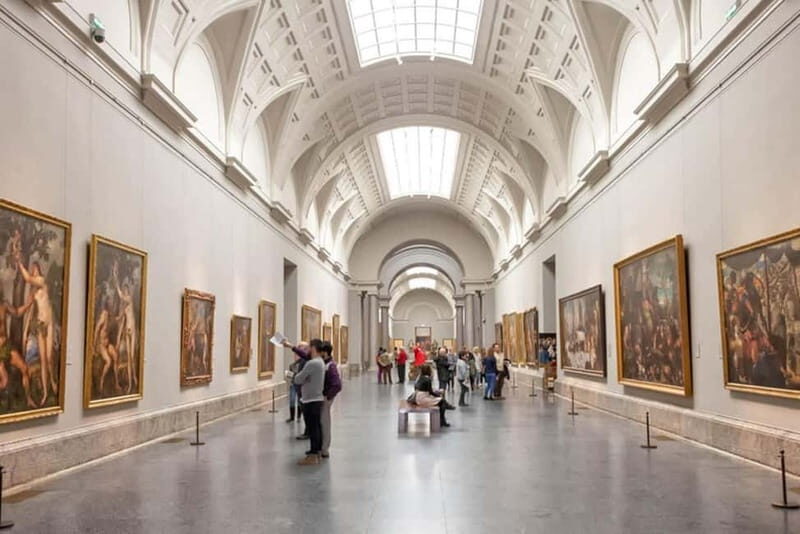
Your tour is designed as a tight loop—about 2 hours inside the Prado. You start at P.º del Prado, 11, and your guided time is centered on a set of core masterpieces before you return to the same meeting area.
Even though the schedule looks simple on paper, what you should notice is the purpose of the stops: each major work acts like a chapter. Your guide uses each painting to teach a theme—war and morality, perspective tricks, spiritual storytelling, or Baroque drama.
Here’s how the experience plays out:
Meeting point: Paseo del Prado, Velázquez Monument (quick orientation)
You meet by the Monument to Velázquez on Paseo del Prado (P.º del Prado, 11). This is helpful because the area sets you up for understanding the museum’s context; you’re not stumbling in from the street trying to figure out where to go.
The tour also includes a real-world timing rule: there’s a 10-minute courtesy waiting time. So I’d treat that as a hard nudge to arrive on time, not late by a few “just in case” minutes.
Prado Museum guided time: a curated walking story
Inside, the guide takes you to the key works and keeps a steady pace. A couple of people in the feedback specifically liked that the tour covered the “most important” paintings without overwhelming them—exactly what you want when you have a limited afternoon.
The guided tour format means you’re not just seeing famous names. You’re getting cues for what to notice, like:
- how an artist handles expression and emotion
- how composition pulls your eye
- how symbolism works in religious or historical scenes
One practical note: some guides in feedback did bilingual explanations (English and Spanish back-to-back). If that happens in your group, it can be a nice way to double-check a detail without slowing down the whole tour.
You can also read our reviews of more tours and experiences in Madrid




Returning to P.º del Prado, 11
The tour ends back at your meeting point. That’s convenient because you can keep your day moving—cafés, a walk along the Prado area, or pairing this with another nearby stop—without another complicated “where do we meet again?” moment.
Goya’s Spain: emotion, war, and faces that won’t let go
The Prado’s Goya section is the kind of start that resets your expectations. Even if you think you already know Goya from posters, seeing the work in person tends to hit differently.
The tour highlights Goya through paintings including The Third of May 1808 and works grouped under the Black Paintings category. The big lesson your guide should help you see is that Goya isn’t painting distance; he’s painting impact. You watch history become human-scale.
Look for how your guide explains:
- how faces carry fear, defiance, and confusion
- how darkness and contrast change your reading of the scene
- why these images still feel urgent
What I like about having a guide start here is that it gives you a baseline for Spanish art at the Prado. Once you understand what Goya is doing emotionally, the next artists feel less like separate stops and more like a conversation across time.
People in the feedback repeatedly praised guides like Juan and Jorge for storytelling that made this art feel clear, not intimidating. That’s what you want early in a museum visit: confidence before the crowd of masterpieces.
Velázquez and Las Meninas: the perspective puzzle made simple
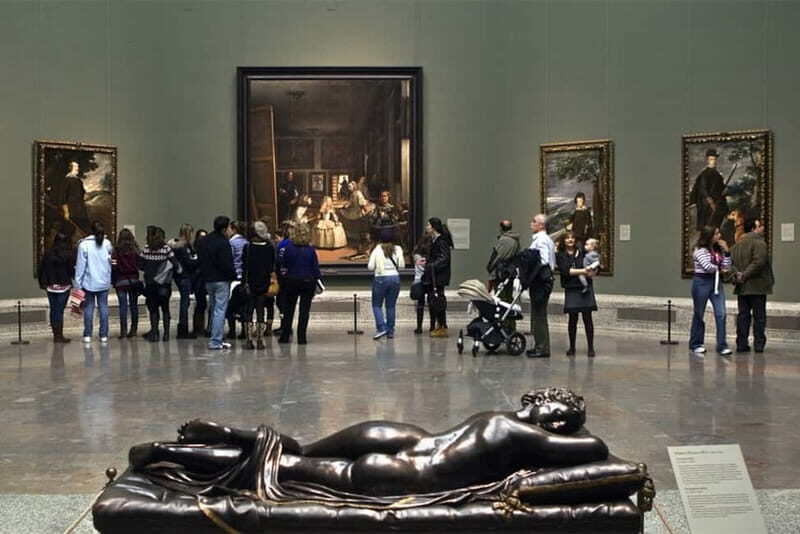
If you want one painting that can keep you thinking long after you leave, it’s Las Meninas (spelled that way in many English references). This tour places it as a centerpiece because it’s famous for a reason: it plays games with what you think you’re seeing.
Your guide will likely focus on how perspective and reality get tangled. The painting feels like a royal scene, but it also behaves like a question. Your guide’s job is to give you the tools to answer that question without turning it into a math exercise.
In plain terms, you should walk away with at least a few things you now know how to notice:
- where your eye is being directed
- how the arrangement creates tension between inside and outside
- how the court portrait works as both display and interpretation
In the feedback, people often said the guide’s explanation made art “accessible,” and that the tour helped them understand why the painting still matters. With Velázquez, that’s not just nice—it’s the difference between admiring skill and actually understanding the idea behind the skill.
El Greco’s The Burial of the Count of Orgaz: heaven meets earth
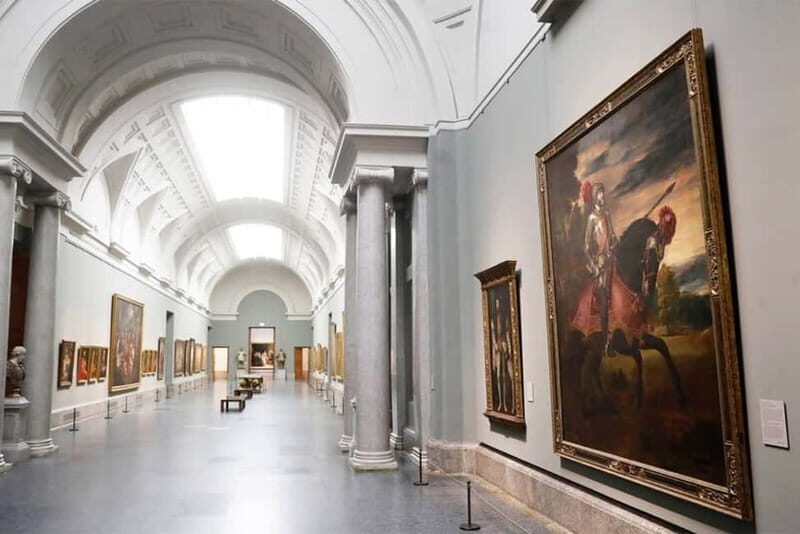
Next comes El Greco, and the tone shifts. El Greco’s figures are elongated and expressive, and the colors and attitudes tend to feel spiritually charged even to people who usually skip art explanations.
The tour specifically highlights The Burial of the Count of Orgaz. That painting is a great pick for a guided route because it contains multiple layers—religious story, symbolism, and composition—packed into one scene.
What to watch for while your guide talks:
- how the painting separates divine and earthly space
- how faces and gestures carry meaning
- how the work blends real people with spiritual message
Guides in feedback were praised for encouraging questions and for keeping the experience engaging rather than lecture-heavy. If you’re the type who wonders what you’re supposed to look for, this is where a guide helps the most. El Greco can be overwhelming on your own; with guidance, the painting starts acting like a readable story.
Rubens brings the Baroque energy: movement, myth, and faith
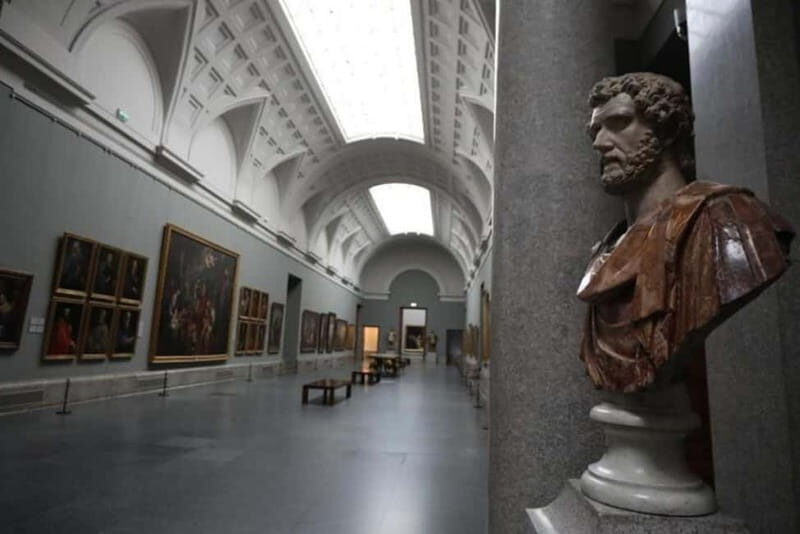
Then you get Peter Paul Rubens, and the experience turns more physical. Rubens is known for motion and drama—paint that feels like it’s leaning toward you.
The tour highlights works including Descent from the Cross, plus references to Rubens’s mythological and biblical themes. Your guide should point out how Rubens uses color, movement, and emotion to keep the viewer engaged.
A helpful way to approach this part is to ask yourself: what is the painting trying to make me feel? Rubens often aims for strong reaction—grief, awe, intensity—and the guide’s explanation helps you connect feeling to technique.
In the feedback, people said guides made the art “come alive” with vivid description. That’s exactly what you want here. Rubens is where your museum visit starts to feel like a scene, not just a viewing.
Group size, pace, and whether you can ask questions
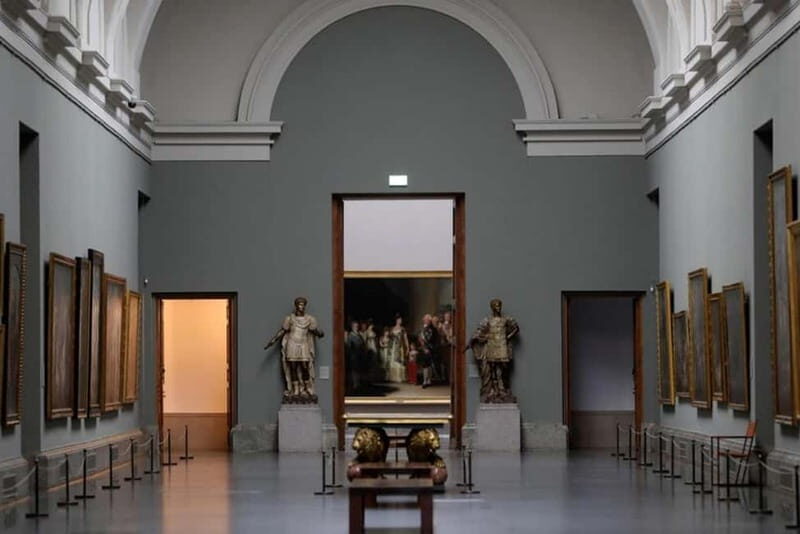
This tour is listed as small group, and the feedback supports that. One person noted a group of about six, which is a great size: you’re close enough to see what the guide points to, but the group still feels calm.
The pace is built for an afternoon overview. That’s why 2 hours works. You avoid the doom loop of wandering through the Prado for four hours and then realizing you’ve done nothing except walk.
You also get interaction time. Many of the reviews praised guides for being open to questions and for handling situations professionally, like when people briefly went off-script and the guide regrouped them. That’s a good sign for how your guide will run the flow if your attention is drawn to one detail longer than planned.
If you’re worried about being dragged forward too fast, the consistent praise in feedback suggests this tour focuses on the right hits rather than rushing through everything. Still, the structure is tight—so if you’re the kind of person who wants to linger for an hour with one painting, you might want extra unstructured time after the tour.
Who this Prado afternoon tour fits best
I think this works best for you if:
- you want the Prado’s strongest masterpieces in a short window
- you feel overwhelmed by huge museums and want a ready-made path
- you like learning what to notice without turning the visit into homework
It’s also a smart choice if you don’t have a full day. The Prado can consume a day quickly, and a focused tour can help you leave satisfied instead of exhausted.
You might enjoy it most if you’re interested in Spanish masters. The tour’s core names—Goya, Velázquez, El Greco, and Rubens—cover major styles and eras. That gives you a quick sense of how the Prado’s collection developed and why these works matter.
If you’re already a Prado regular or an art historian who wants everything, you might find 2 hours limiting. But as an intro, this is a strong way to get oriented and build your own next step.
Price and value: is $67 worth it?
At $67 per person for about 2 hours, you’re paying for three things:
- skip-the-line museum entry
- an official live guide
- a guided route centered on the museum’s biggest works
That price starts to look reasonable when you factor in time. If you’ve ever walked into a major European museum and then stared at a queue, you know the stress isn’t trivial. Here, the skip-the-line benefit can protect your afternoon.
You’re also not just buying access. You’re buying interpretation: explanations tied directly to the paintings you’re standing in front of. People in the feedback repeatedly said the guides made art easier to understand and that seeing key works with a guide saved them from missing important points.
So my take: this is good value if you want a clear Prado hit list with meaning. If you’d rather explore alone at your own pace and spend hours in the galleries, then you may not need the guide.
Should you book this Prado afternoon tour?
Book it if you want a smart, time-friendly way to see the Prado’s most famous paintings with context. The skip-the-line entry helps you avoid wasted waiting, and the short guided plan makes it harder to lose your bearings in a museum this size.
Skip it if you plan to spend the whole day in the Prado and want to roam freely without a schedule. In that case, you’ll likely want a self-guided visit first, then maybe add a short guide session later if you feel like you missed the story.
FAQ
FAQ
How long is the Prado museum tour?
The tour lasts about 2 hours.
Where do I meet for the tour?
You meet at the Monument to Velázquez, Paseo del Prado, 11, 28014 Madrid, Spain. The tour ends back at the meeting point.
Is skip-the-line entry included?
Yes. The tour includes skip-the-line tickets to the Prado Museum.
What language is the tour guide?
The live tour guide is listed as English.
Which artists and artworks are featured?
The highlights include works by Velázquez, Goya, and El Greco, with specific works mentioned such as Las Meninas, The Third of May 1808, The Burial of the Count of Orgaz, and works by Peter Paul Rubens including Descent from the Cross.
Is the tour wheelchair accessible?
Yes, it is wheelchair accessible.
Are there any cancellation details I should know?
Free cancellation is available up to 24 hours in advance for a full refund, and you can reserve now and pay later.