REVIEW · MADRID
Madrid: Consuegra Molinos del Quixote Tour
Book on GetYourGuide →Operated by AGIDAY TRAVEL · Bookable on GetYourGuide
Cervantes’ windmills are closer than you think. This tour links the Don Quixote setting to real, visitable places: Cerro Calderico and the windmills of Consuegra. I love the story-driven guiding that explains how La Mancha scenes fed Cervantes’ imagination, and I love getting into Molino Rucio instead of only seeing the mills from outside. The one catch is that the castle guided portion is conducted only in Spanish, and the day includes some hilly walking, so it’s not ideal if you get nervous with heights or have mobility limits.
You’ll start from Museo Naval and ride comfortably by minibus to Toledo province, with a brief stop in Consuegra for atmosphere time. After the hill visit and mill entrance, you’ll finish with free time at the Castillo de la Muela to roam the walls and take in the wide views at your pace. It’s a classic day trip structure: guided where it matters, then space to wander.
Small group helps here. The group is capped at 8 people, and you’ll also get photos after the tour wraps up. For value, the main thing I like is that the price covers transport plus the two key entrances, not just a bus ride and a quick glance.
In This Review
- Key things I’d prioritize before you go
- From Museo Naval to Consuegra: a clean, efficient day trip
- Cerro Calderico and the windmills: where Don Quixote meets real geography
- Molino Rucio: the inside view that makes the mill make sense
- Castillo de la Muela: fortress walls plus panoramic time
- What the small-group format really changes
- Price and value: what you’re paying for
- Who this tour suits best (and who should skip it)
- Should you book the Madrid to Consuegra windmills tour?
- FAQ
- Where does the tour start from?
- How long is the Consuegra windmills tour?
- What’s included in the ticket price?
- Are meals included?
- What languages are available during the tour?
- What should I bring, and is there anything I can’t bring?
Key things I’d prioritize before you go
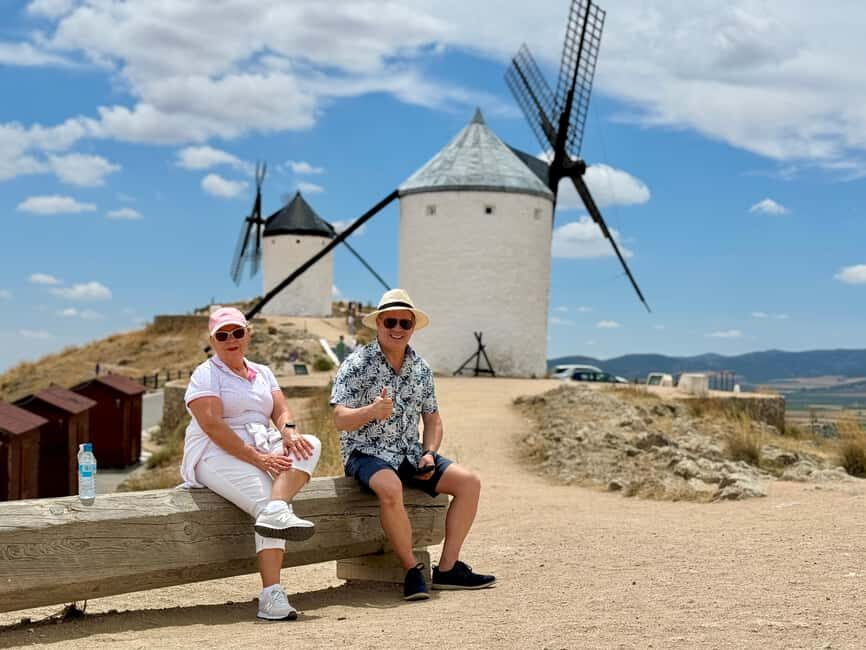
- Cerro Calderico windmill views with real context: You get the Cervantes connection while you’re actually standing where the story gets its setting.
- Inside Molino Rucio: Entrance included, so you can understand how the mill worked, not just what it looks like.
- Castillo de la Muela free time: Guided visit plus room for your own slow walk on walls and around outbuildings.
- Skip-the-line access: A separate entrance helps you lose less time at the sites.
- Max 8 people: This keeps the guiding human-scale, especially on the hill.
- Photos at the end: Handy if you want images without managing every shot yourself.
From Museo Naval to Consuegra: a clean, efficient day trip
The day is designed like a proper excursion, not a rushed sightseeing shuffle. You meet at Museo Naval in Madrid, then travel by minibus to Consuegra in Toledo province. Since the schedule can vary by starting time, it’s smart to check availability first so you pick the departure that fits your Madrid plans.
One detail I appreciate: you’ll receive WhatsApp contact about the meeting point about 24 hours before you go. It keeps the start calmer, especially in a city like Madrid where meeting points can be a bit tricky if you’re arriving from different hotels or neighborhoods.
In Consuegra, you get a short stop at Plaza de España with free time. This is the moment to grab breakfast or simply settle in with the town’s pace. It’s not a long meal break, so treat it like a chance to top up before the guided climbs and visits.
Timing-wise, the active pieces are clustered so you’re not constantly packing and unpacking. The whole excursion runs around 6 hours, but the way the day is laid out matters more than the number: guided time on the key sites first, then your own time at the fortress.
You can also read our reviews of more tours and experiences in Madrid.


Cerro Calderico and the windmills: where Don Quixote meets real geography
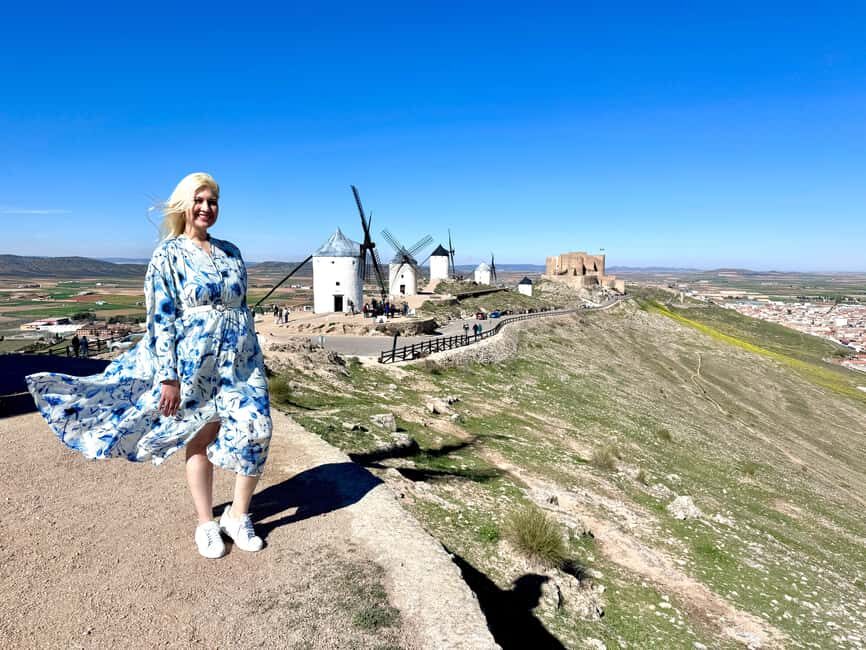
Cerro Calderico is the heart of this trip, and the guiding approach is what makes it work. You’ll head to the hill where the windmills sit, and you’ll get a clear explanation of why these structures became so iconic for Don Quixote. This is one of those moments where literature turns into something you can look at and understand spatially.
You’ll admire the gigantic windmills from the vantage point where they’re meant to be seen. The tour also connects what you’re seeing to how Don Quixote mistook them for giants. It’s a small storytelling detail, but it changes your perception instantly. Instead of admiring windmills as scenery, you’re reading them like part of a scene.
The guide ties the view to Cervantes’ creative process—how these La Mancha surroundings helped shape the atmosphere of the novel. I like this because it stays practical: you’re not just hearing a lecture. You’re standing there, looking out, and your brain starts mapping the story to the terrain.
What to expect here: the hill is where you’ll do most of the walking on uneven or sloped areas. Wear comfortable shoes (the tour asks for it for a reason). Also, if you’re someone who doesn’t love heights or exposure, you’ll want to be honest with yourself about how you feel on elevated viewpoints.
Molino Rucio: the inside view that makes the mill make sense
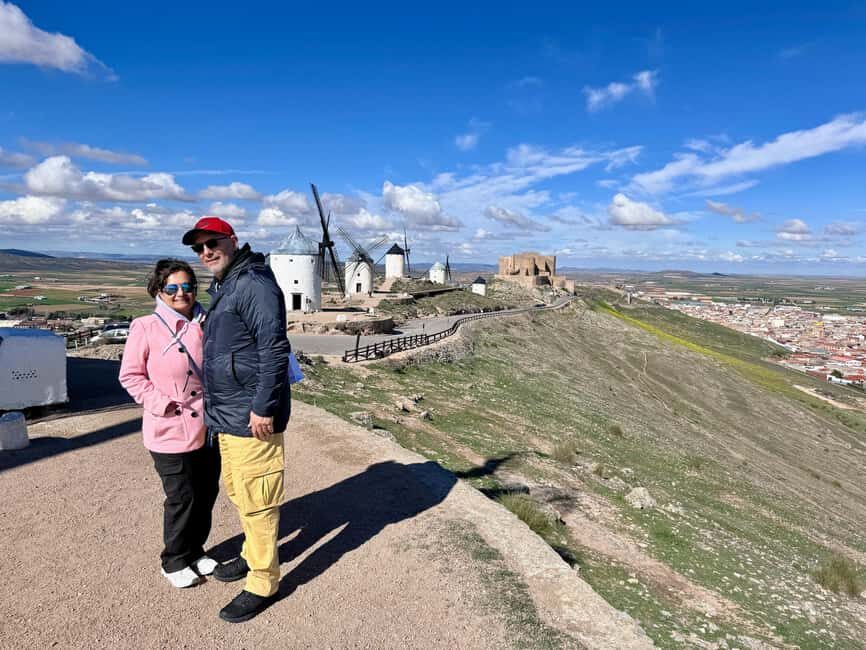
Seeing windmills from outside is nice. Seeing one from inside is better, and that’s exactly where this tour adds value: entrance to Molino Rucio is included.
Molino Rucio is one of Consuegra’s representative mills, and the entrance is where you learn how these mills worked at the time, and why they mattered for the region. The big win for me is that you come away with a mental picture of the mechanism and the purpose—how wind becomes turning power, and turning power becomes work.
If you’re the kind of traveler who likes your history with cause-and-effect (instead of only dates and names), you’ll get a lot from this stop. The tour doesn’t just point; it explains what you’re looking at, so the interior visit feels like more than a quick room check.
Practical note: the inside of a historical mill can mean steps, narrow spaces, or changes in footing. The tour is not positioned as an easy, flat stroll kind of experience. If you have back issues or mobility limitations, keep that in mind from the start.
Castillo de la Muela: fortress walls plus panoramic time
After the mills, you head to Castillo de la Muela, a medieval fortress set on a hill. This place isn’t just photogenic. It’s strategic, and the guiding portion touches on its role as a key stronghold during the Reconquest, helped along by its location.
The structure here gives you a sense of why castles mattered. From an elevated position, you can see how defenders would gain advantage: watch, control routes, and hold ground.
Then comes the best part for many people: free time. You’ll have time to explore the interior areas, walls, and outbuildings at your own pace. This is where you can linger for views, take photos, or simply walk it like you mean it. I like this balance because it lets you match your energy level. One person will want to read and wander; another will want photos and quick stops.
Important language detail: the guided tour in the castle is only conducted in Spanish by Consuegra’s tourism. The rest of your tour experience includes a guide in Spanish and Italian, but that castle guiding portion specifically is Spanish-only. If Italian is your comfort language, you can still enjoy the castle visit, but you may rely more on the self-guided time than the formal narration here.
Also, this is another hilltop stop, so the “afraid of heights” note isn’t just paperwork. Take it seriously.
What the small-group format really changes
This tour limits groups to a maximum of 8 people. That number matters more than it sounds. With a smaller group, you’re less likely to get lost behind a wave of people, and the guide can keep the pacing aligned with everyone. On a day that includes hill walking and interior access, that makes a difference.
Another small win: you get skip-the-line access via a separate entrance. That reduces the time you spend waiting around while other groups funnel in. It doesn’t turn the day into a time trial, but it helps you keep momentum.
You also receive photos after the tour ends. That’s not essential, but it’s a nice convenience if you’d rather enjoy the moment than constantly manage your camera while on the move.
Language support: the tour mentions live guide language options in Spanish and Italian. Just remember the castle guided portion is Spanish-only for the formal visit.






Price and value: what you’re paying for
At $111 per person, this isn’t an ultra-cheap bus tour, and that’s fine. The value comes from what’s included. Your ticket includes:
- Round-trip transportation from the meeting point in Madrid
- A Spanish (and Italian) live guide
- Entrance to Molino Rucio
- Entrance to Castillo de la Muela
- Skip-the-line access via a separate entrance
- Photos after the tour
So you’re paying for access and guidance at the two main sites, not just transport. The hill visit at Cerro Calderico is guided as part of the experience, and the time at the fortress is partly guided and partly free.
Not included: meals and beverages. That’s pretty normal for day trips, but it means you should plan for breakfast or snacks during the free time stop in Plaza de España, and then your return to Madrid for a proper meal.
If you’re comparing options, I’d focus on whether entrances are included and whether you’re actually going inside Molino Rucio. That interior visit is a big part of why the tour feels complete.
Who this tour suits best (and who should skip it)
This trip fits best if you want a literary connection with real-world sites. If you enjoy seeing how novels and settings overlap, you’ll probably like the way this one ties Don Quixote to Consuegra’s windmills and Cervantes’ creative inspiration.
It’s also a good fit if you like structure with flexibility. You get guided time where context helps (Cerro Calderico, and the general guided portions), then you get free time where you can set your own pace (the fortress).
It’s less suitable if:
- You have back problems
- You have mobility impairments or use a wheelchair
- You’re afraid of heights
- You’re dealing with altitude-sickness concerns
- You’re trying to keep the day completely flat and easy on the body
The walking and viewpoints are part of what makes the places meaningful. If you know you can’t handle that, look for a different format.
Should you book the Madrid to Consuegra windmills tour?
I’d book it if you’re excited by Don Quixote and want more than a photo stop. The mix here is smart: guided explanation on Cerro Calderico, an included interior visit to Molino Rucio, and then enough time at Castillo de la Muela to enjoy the fortress at your own pace. The small group size and included entrances also push it toward good value.
I’d think twice if Spanish is your only comfort language and you’re counting on the castle guide in Italian—because the castle guided visit is only Spanish. And if heights or uneven footing make you uncomfortable, skip this one in favor of a flatter option.
If you want one day trip from Madrid that feels distinctly Castilla-La Mancha and not just “another day out,” this is a strong choice.
FAQ
Where does the tour start from?
The tour starts at Museo Naval in Madrid, and you’ll get WhatsApp contact about meeting point details 24 hours before.
How long is the Consuegra windmills tour?
The experience is listed as 6 hours. Starting times can vary, so you’ll need to check availability.
What’s included in the ticket price?
You get round-trip transportation, a live tour guide (Spanish and Italian), entrance to Molino Rucio, entrance to Castillo de la Muela, and skip-the-line access through a separate entrance. Photos are also provided after the tour.
Are meals included?
No. Meals and beverages are not included, though there is free time in Plaza de España in Consuegra where you can grab breakfast or snacks.
What languages are available during the tour?
The live tour guide is available in Spanish and Italian. The guided tour inside the castle is conducted only in Spanish by Consuegra’s tourism.
What should I bring, and is there anything I can’t bring?
Wear comfortable shoes. The tour notes that food and drinks are not allowed on the vehicle, and it restricts things like weapons or sharp objects, pets (assistance dogs allowed), and items such as bikes, strollers that don’t fold, and alcohol/drugs.