REVIEW · MADRID
Madrid: Prado Museum Masterpieces Tour with Entry Ticket
Book on GetYourGuide →Operated by Madrid with Delfi · Bookable on GetYourGuide
Big museum, calm plan.
This Prado Museum tour turns an overwhelming building into a clear story, moving chronologically through European art from the 15th to the 19th century. You start outside at the Monumento a Goya, then go inside with a guide who shares context around the artworks and the people who shaped them, including the Hispanic Monarchy. It’s built around seeing how paintings connect to each other, not just ticking off names.
I especially love the art-restorer angle. It helps you look at the works with fresh eyes, because you’re not only hearing what to notice, you’re learning why the details matter. I also love the small-group setup (up to 7) because questions don’t get lost, and the tour uses headsets so you can hear clearly even when rooms get crowded.
One possible drawback: you’ll spend about 3 hours walking and standing inside the museum. That’s great for a focused highlights tour, but if you want long, slow wandering or you like taking photos inside, this format can feel restrictive.
In This Review
- Key things to know before you go
- Start at the Goya Monument, then walk straight into the story
- A Prado lesson in order: from 15th-century roots to Goya
- The art-restorer viewpoint: why technique changes your attention
- Delfi’s small-group pacing: hearing clearly and staying engaged
- Inside the itinerary: what each stage is really for
- Price and value: $74 for entry, guidance, and time you actually save
- Practical tips: ID, X-rays, and what to avoid inside
- Who should book this Prado highlights tour
- Should you book this Prado Museum Masterpieces Tour with entry ticket?
- FAQ
- How long is the tour?
- Where do we meet the guide?
- What language is the tour in?
- What’s included in the price?
- Is the group small?
- Is photography allowed inside the museum?
- Do I need to bring ID?
- Are large bags or luggage allowed?
- Is the tour wheelchair accessible?
- Is there free cancellation?
- Is reserve & pay later available?
Key things to know before you go
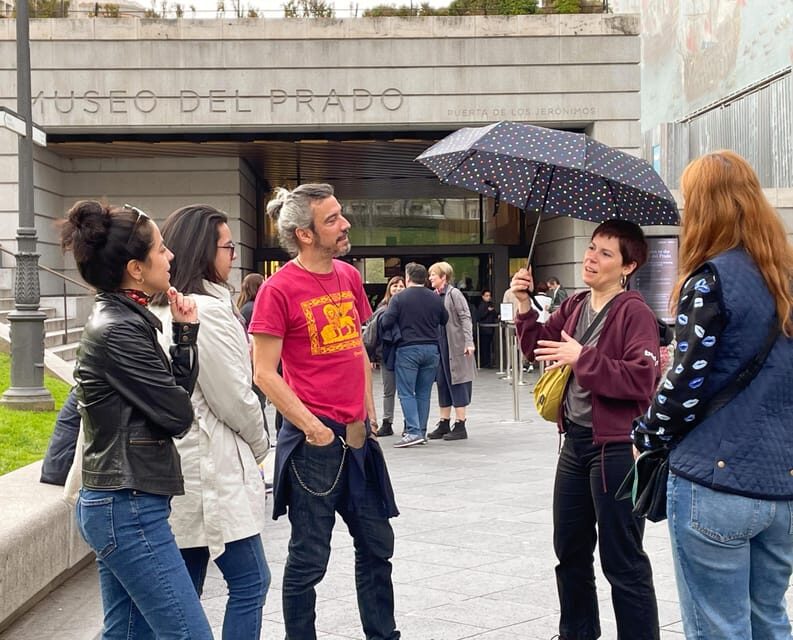
- Meet at Monumento a Goya and spot the guide by a dark grey umbrella with colorful polka dots
- Small group (max 7) means more time for questions and closer pacing
- Chronological route from the 15th to the 19th century, with emphasis on Spanish-linked artists and the Hispanic Monarchy
- Art-restorer perspective helps you read technique and context, not just subject matter
- Headsets can make listening easier in busy galleries
- No photography inside and no food or large bags, so plan light
Start at the Goya Monument, then walk straight into the story

You begin at the Monumento a Goya, outside the museum area. The meeting is easy to find: your guide carries a dark grey umbrella with colorful polka dots, so you won’t have to scan the crowd for a sign.
From there, you’re not thrown into paintings right away. The tour starts with the origins of the building and the origins of the collections, which matters more than you’d think. When you understand what the museum is built to hold, you interpret the art with fewer blank stares.
This opening also sets the tone for the rest of the walk: guided and purposeful. It’s the difference between “I saw a lot” and “I understood what I saw.”
You can also read our reviews of more tours and experiences in Madrid


A Prado lesson in order: from 15th-century roots to Goya
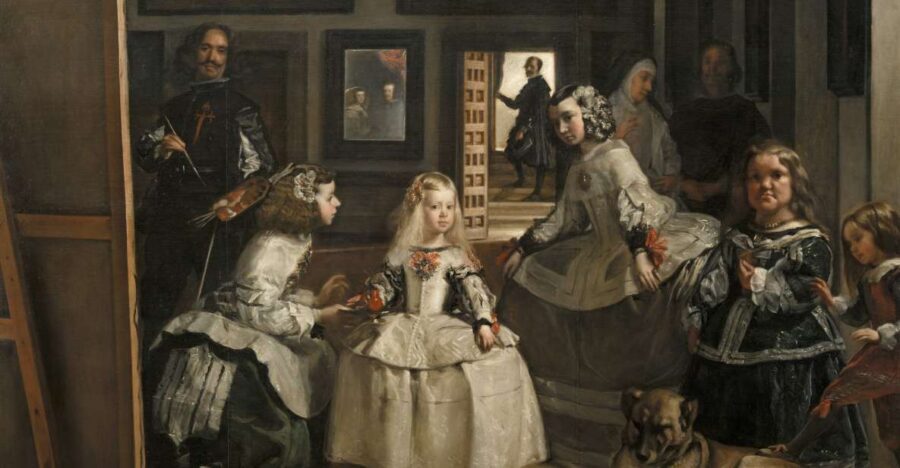
The heart of the experience is a guided route through centuries of European painting, between the 15th and 19th. You move in chronological order, so the tour doesn’t feel like a random greatest-hits playlist. You’ll see how styles shift, how themes evolve, and how artists react to what came before.
The tour gives special attention to artists who worked in Spain or for the Hispanic Monarchy. In the spotlight you’ll hear names like Titian, El Greco, Rubens, Velázquez, and Goya. If those names are familiar from school or art books, this is where they stop being just names.
One underrated payoff of this structure: you start noticing patterns. Religious themes, mythological subjects, and political power all show up differently as time passes. With the tour’s ordering, those changes become easier to track.
And yes, the museum is huge, so having a route that follows time helps you avoid the “where am I supposed to be” problem.
The art-restorer viewpoint: why technique changes your attention
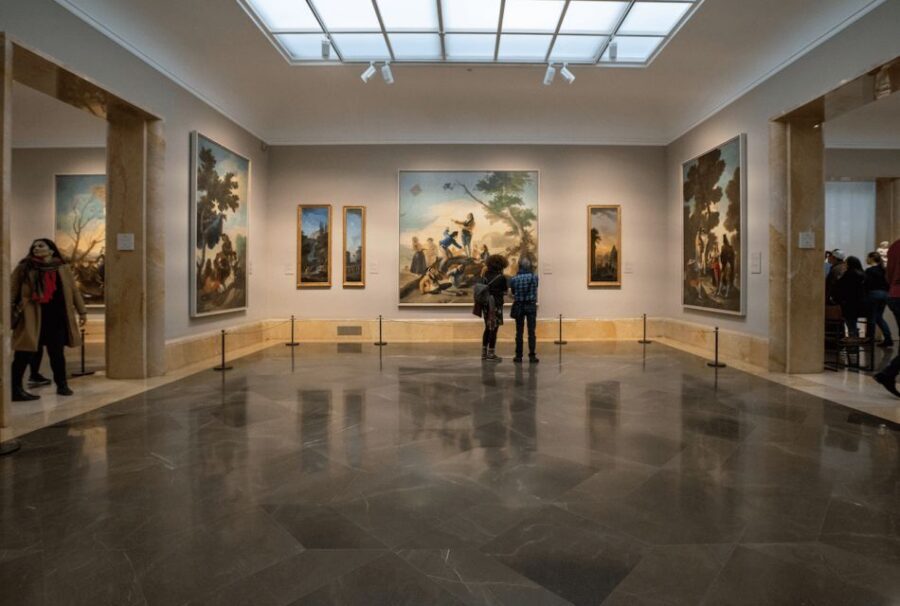
This tour is guided by a professional who brings an art-restorer perspective, and that changes how you read what’s in front of you. Instead of treating paintings like sealed objects, you’re encouraged to think about how works are made and preserved—at least at a level the guide can explain during the walk.
The tour is designed for an interaction between art and craft. You’re not just told what a painting shows; you’re taught to look at details in a way that supports understanding. That’s especially helpful at the Prado, where many masterpieces reward close viewing but can also overwhelm your senses if you don’t know where to focus.
Because the tour is prepared by a visual artist and art restorer, the explanations often land on the practical parts of seeing. You’ll get help understanding the relationship between one work and another, which is how museum visits become more than snapshots.
If you’ve ever walked out of a museum thinking you liked the most famous painting and ignored the rest, this approach gives you a better map for your eyes.
Delfi’s small-group pacing: hearing clearly and staying engaged
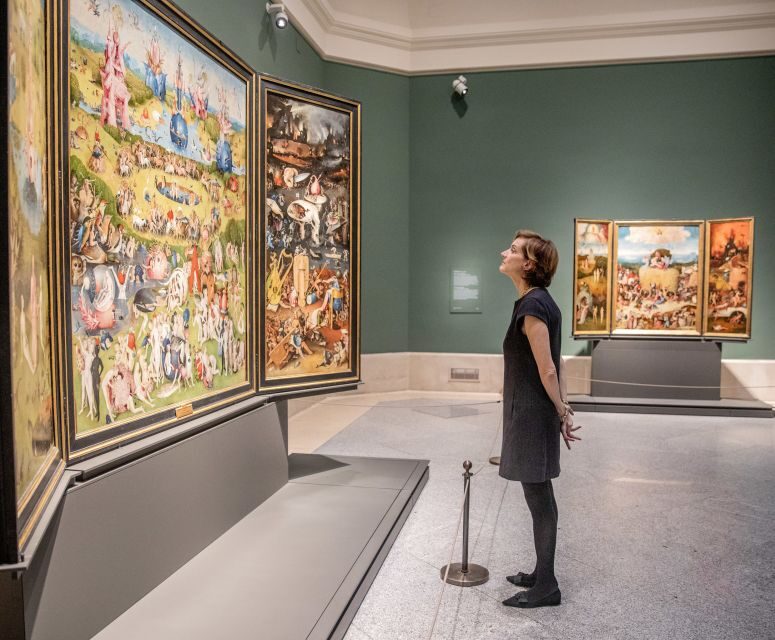
This is a small-group tour capped at 7 participants, and the benefit shows up immediately in how the tour feels. With fewer people, your guide can keep the group together without rushing. It also makes it easier to ask questions when something clicks—or when something doesn’t.
The tour is in English, and the guide uses headsets so you can hear clearly in crowded rooms. That little detail matters at the Prado, where people form slow-moving crowds in front of popular paintings. With headsets, you don’t have to strain or rely on luck to hear every word.
I also like that the pacing doesn’t feel rigid. You’re taken through a chronological story, but you’re also given room to ask and to look longer when something stands out. That’s one of the main reasons many people enjoy this tour even if they’re not “museum people.”
At the same time, you should be ready for a guided standing/walking experience. The Prado isn’t a sit-and-listen museum for most visitors, and this format keeps you moving through key stops.
Inside the itinerary: what each stage is really for
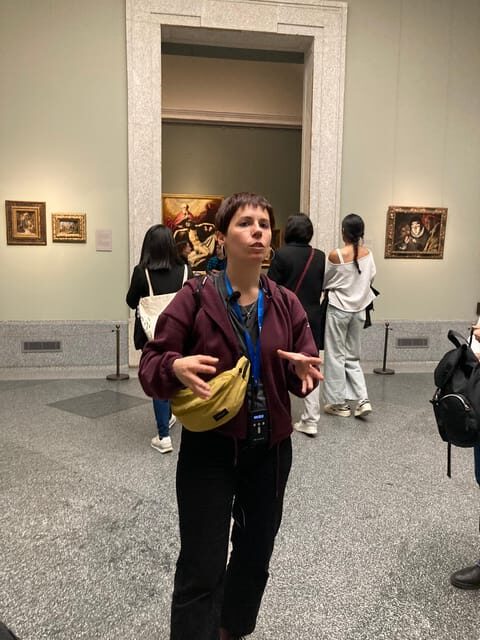
The experience is short—about 3 hours—so every stage has a job.
Before you enter the Prado, you get quick grounding: the origins of the building and the collections. That framing helps you understand why the museum feels the way it does. You’re basically being given a lens before you start looking through it.
Once inside the museum, the guided tour runs through the core centuries in order. You’re guided to the most outstanding works connected to the time periods and to artists tied to Spain and the Hispanic Monarchy. The idea is to let the paintings explain the era, and let the era explain the paintings.
You also focus on relationships between works. That means you’re not only learning facts about individual artists, you’re building connections across the collection. It’s how you start understanding artistic influence and historical context as something active, not just background.
The tour finishes at the Museo Nacional del Prado, so you end still in the museum area. That’s helpful because you can continue exploring afterward with a better sense of what matters.
You can also read our reviews of more museum experiences in Madrid






Price and value: $74 for entry, guidance, and time you actually save
At $74 per person, you’re not paying just for a guide. You’re paying for the whole package: Prado entry ticket, a live English guide, and a small-group format that keeps the experience focused.
The Prado can swallow hours because the scale is big and the choices are endless. The value here is that the tour gives you a guided path through the masterpieces that most visitors want to see, plus the context that helps those masterpieces mean something.
If you’re the type who hates wandering in circles, this tour is a smart shortcut. And if you do enjoy museums but want a stronger understanding of what you’re looking at, the included entry ticket makes it easier to justify the cost.
The biggest reason this feels like good value is that the museum visit becomes structured learning instead of stress. You get a clear route, a clear timeframe, and a clear theme: how European painting evolves in Spain’s historical orbit.
Practical tips: ID, X-rays, and what to avoid inside
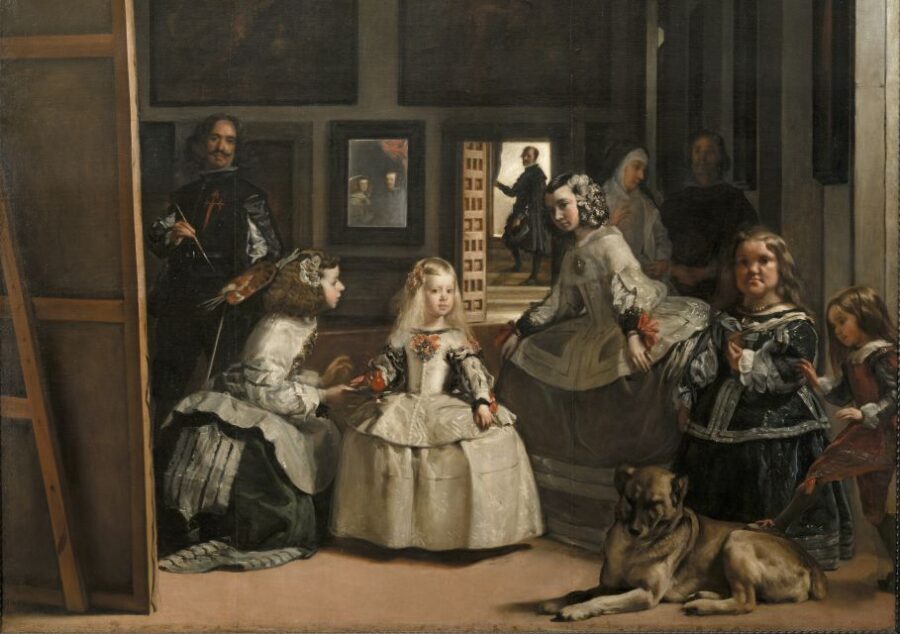
Go ready to move. Comfortable shoes are a must, since you’ll be standing and walking through galleries.
Bring a passport or ID card. Also expect a security step: all visitors must pass their belongings through an X-ray scanner.
A few other rules to plan around:
- No photography inside the museum
- No food or drinks
- No luggage or large bags
If you’re traveling light, this is easy. If you brought a bigger day bag, you’ll want to rethink what you carry so you’re not stuck deciding what to check or where to store things.
Also, since you’ll be listening through headsets, show up with a charged phone in case you want to look up extra context later. Not for the tour audio—just for after.
Who should book this Prado highlights tour
This tour fits best if you want structure and meaning at the same time.
It’s great for first-time Prado visitors who feel overwhelmed by the sheer size of the collection. You get a guided route that covers key periods without forcing you to study art history books before you go.
It also works well if your group includes someone who isn’t naturally drawn to museums. The tour is paced and explained in a way that keeps the experience approachable, and the small size helps keep everyone engaged.
If you’ve been to the Prado before, you might still like it. A chronological, context-first route can make a return visit feel fresh, because you’re building connections between periods instead of just re-seeing familiar rooms.
Should you book this Prado Museum Masterpieces Tour with entry ticket?
Yes, I’d book it if you want a guided highlights path through the Prado that’s built around real context—especially for the shift from the 15th to the 19th century and the Spanish links to the Hispanic Monarchy. The small group, the headsets, and the art-restorer perspective are practical advantages that make the museum feel more readable.
You might skip it if you prefer a long, independent stroll where you choose every stop and linger for hours on your own. And if photography inside is a must for you, this format won’t match that wish.
If you’re aiming for the best first visit—or the best “make the museum click” visit—this one is a strong bet.
FAQ
How long is the tour?
The tour lasts 3 hours.
Where do we meet the guide?
Meet your guide next to Monumento a Goya.
What language is the tour in?
The tour is in English.
What’s included in the price?
You get Prado Museum entry ticket, a live guide, and a small-group tour.
Is the group small?
Yes. The group is limited to 7 participants.
Is photography allowed inside the museum?
No. Photography inside is not allowed.
Do I need to bring ID?
Yes. You should bring passport or ID card.
Are large bags or luggage allowed?
No. Luggage or large bags are not allowed.
Is the tour wheelchair accessible?
Yes. It is wheelchair accessible.
Is there free cancellation?
Yes. Free cancellation is available up to 24 hours in advance for a full refund.
Is reserve & pay later available?
Yes. You can reserve now & pay later.