REVIEW · MADRID
Madrid Fun and Sightseeing Bike Tour
Book on Viator →Operated by Madrid Bike Tours · Bookable on Viator
Madrid is made for short, confident rides.
This tour is interesting because it mixes big landmarks with real local atmosphere, and the guide keeps the whole ride moving with clear commentary. I also like that you get a city map to keep using after the tour, so your afternoon and evening plans get easier. One thing to consider: Madrid traffic can be intense, and the ride may feel stressful if you’re not comfortable biking in busy areas (one review also noted some less-experienced riders struggled).
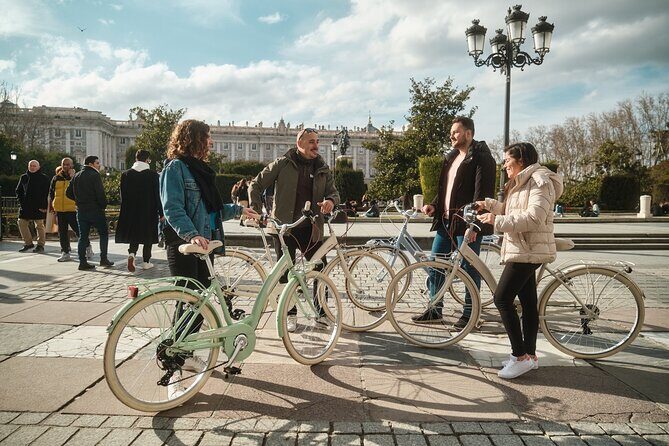
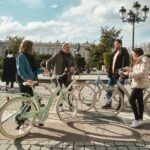
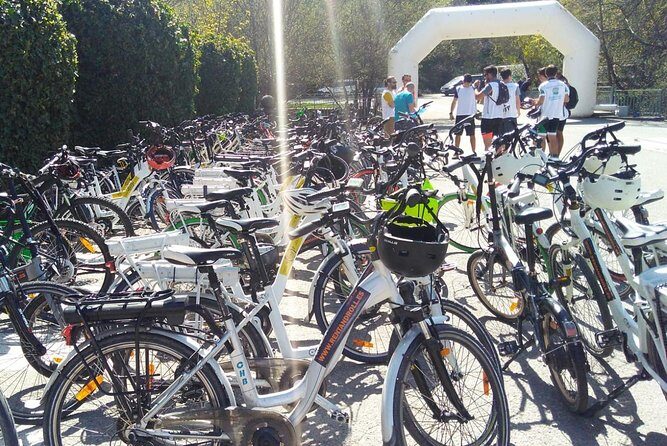
You’re on a rental bike with a helmet, rolling through central Madrid at a pace that covers a lot without feeling rushed. Expect a 3-hour tour with stops that mostly work as quick visits and photo moments, not long paid-entry excursions—so it’s a good way to see a wide slice of the city even if you only have one day.
In This Review
- Key Highlights You’ll Actually Feel During the Ride
- How This 3-Hour Bike Loop Helps You See Madrid Fast
- Getting Bikes, Helmets, and a Map That Actually Gets Used
- Riding Smart in a City Where Bike Lanes Share Space
- Modern Market in the Old City: Starting at the City’s Pulse
- Templo de Debod: Egypt Lands in Madrid (and It Works on a Bike)
- Parque del Oeste: A Peace Break Before the Big Monuments
- Royal Palace of Madrid: Stop Fast, Then Look Again Later
- Plaza de Cibeles and Puerta de Alcalá: Icon Photos With Context
- Parque del Retiro: Where the City Feels Like a City
- Who This Tour Fits Best (and Who Might Want to Think Twice)
- Price Value: What You’re Really Paying For at $54.06
- Practical Tips to Make the Ride Feel Effortless
- Should You Book This Madrid Bike Tour?
- FAQ
- How long is the Madrid Fun and Sightseeing Bike Tour?
- What language is the tour offered in?
- What’s included with the tour price?
- Do I need to pay for entry at the stops?
- What kind of fitness level do I need?
- Is this tour suitable for kids?
- How many people are in a group?
- What happens if the weather is bad?
- Can I cancel and get a full refund?
Key Highlights You’ll Actually Feel During the Ride
- Guided pacing with commentary so you don’t just pass buildings—you understand what you’re seeing.
- Bike + helmet rental included, which saves hassle and makes the tour practical on day one.
- A map for the rest of your trip, so you can extend the route at your own speed later.
- Temple of Debod: a surprising Egyptian shrine feel, placed right in Madrid.
- Retiro Park time: a calmer moment after the city-center monuments.
- Group capped at 25: big enough for variety, small enough to keep control of the ride.
How This 3-Hour Bike Loop Helps You See Madrid Fast
If you like your sightseeing to have motion, this is the kind of tour that fits. In about 3 hours, you’ll cover multiple districts without spending the whole day waiting for buses or walking between far-apart sights. You’re also getting a guided route built for seeing the “you’re-here” highlights, then closing with a realistic sense of where everything sits.
The biggest value for you is time. Madrid has plenty of must-sees, but trying to hit them all on foot can turn into a blizzard of stops and stairs. Here, the bike gives you a smoother connection between monuments, plazas, and parks. It’s also the best way to get spatial memory: once you’ve ridden past landmarks like Puerta de Alcalá and Plaza de Cibeles, the city map in your head locks into place.
One practical note: the ride works best when everyone can keep a steady rhythm. That’s why the tour is aimed at riders with at least moderate physical fitness and comfort in city cycling.
You can also read our reviews of more cycling tours in Madrid


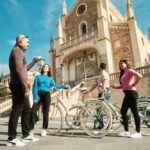
Getting Bikes, Helmets, and a Map That Actually Gets Used
You meet at Wonder Tours / Tour Operator at Calle de Santiago, 18 in Centro. From there, the “make it easy” part starts: bike rental and helmet are included, and you’re given a city map you can use after the ride.
That map detail matters more than it sounds. A tour can be a blur by the end—so having your own reference helps you keep planning instead of guessing. I like that this isn’t just a throwaway leaflet. It’s meant to help you continue your trip on foot later, especially if you’re heading toward museums, markets, or more central squares.
The tour runs in English, and guides are known for taking the time to explain what you’re looking at. In particular, guides such as Gloria are highlighted for clear, easy English explanations, and Javi is noted for adapting the route based on what your group has already seen.
Riding Smart in a City Where Bike Lanes Share Space
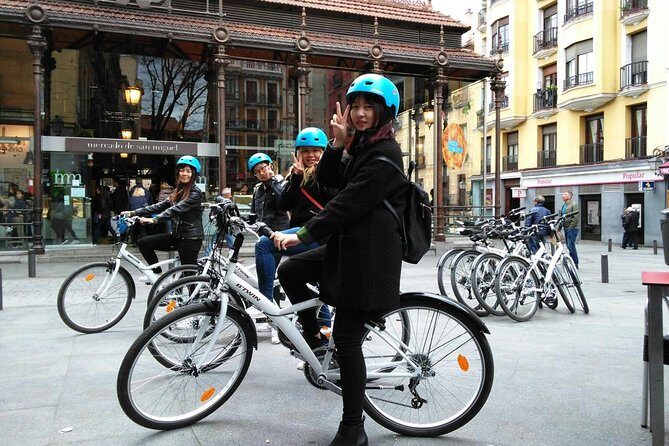
Madrid can be bike-friendly in patches, but the reality is that you’ll still be mixing with cars at times. That’s not a reason to avoid the tour—it’s a reason to ride with attention.
Helmets are provided, and the guide controls the pace and the stops. Still, keep your expectations realistic: this isn’t a closed-course cycling experience. If you wobble, hesitate, or can’t hold a line, you’ll feel it fast—especially around intersections and busier streets.
A key consideration from actual rider feedback: a few people on the tour weren’t as comfortable in traffic, and that created a stressful moment. If you’re a confident city rider, you’ll likely find the overall experience smooth and safe. If you’re brand-new to cycling in traffic, you might want a different first-bike option (or at least practice basic control before you go).
Modern Market in the Old City: Starting at the City’s Pulse
The first stop is a modern market sitting in the heart of the old city. This is a smart opener because it grounds the tour in day-to-day Madrid life, not just monuments. Markets create instant context: where locals shop, how streets feel at ground level, and what the surrounding neighborhood is about.
You don’t need an official ticket here. The goal is orientation. You’ll get commentary that connects the market area to the deeper “old Madrid” fabric around it, while your legs warm up for the longer connections ahead.
Even if your main goal is sightseeing, this start helps you shake off the tourist bubble. After you ride away from the market, you’ll notice how different the city looks when you’re moving through it rather than standing still and reading plaques.
Templo de Debod: Egypt Lands in Madrid (and It Works on a Bike)
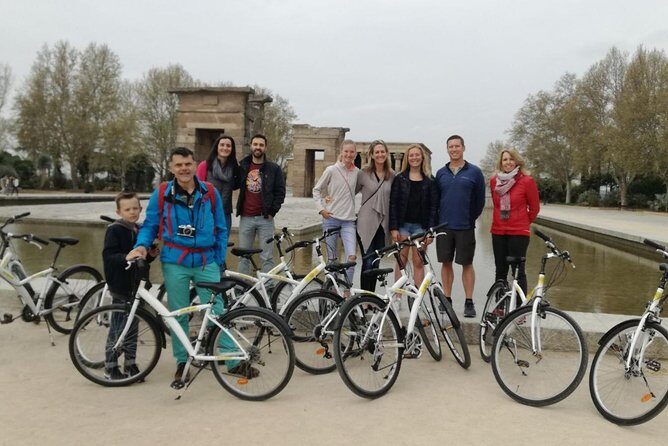
Next up is Templo de Debod, one of the stops that makes this tour memorable. The shrine has an Egyptian story: it was originally erected about 15 kilometers south of Aswan, near the first Nile cataract and close to the religious center dedicated to Isis. In the early 2nd century BC, construction began under the Kushite king Adikhalamani (Tabriqo), and the work honored Amun.
Here’s why this stop clicks for you on a bike tour. You get the shock factor and the explanation without needing a full day trip. You’re still in Madrid when you learn about Upper Egypt, and the ride gives you a moving “how did this get here” perspective.
Admission is free for the stop moment, and the timing is about 10 minutes. That’s enough to look, photograph, and absorb the main idea. If you’re the type who likes “unexpected tourism” that feels thoughtful rather than random, this is a highlight.




Parque del Oeste: A Peace Break Before the Big Monuments
Then you roll into Parque del Oeste (Western Park). It sits between major city corridors and Moncloa, and it has an interesting backstory: before the 20th century, this land served as the city’s main landfill. The park became part of an early 1900s push for walking and relaxation, requested by Mayor Alberto Aguilera with landscape artist Celedonio Rodrígáñez.
A stop here is valuable because it gives your body a reset. You’re also shifting from architecture-focused viewing to a softer city texture. This park stop is brief—around 10 minutes—but it’s long enough to notice details like the Rose tradition (an international roses tender held each year).
It’s also a useful “breather” between heavy hitters. If you’ve been walking all morning, you’ll appreciate how quickly a green pause helps you stay comfortable through the rest of the loop.
Royal Palace of Madrid: Stop Fast, Then Look Again Later
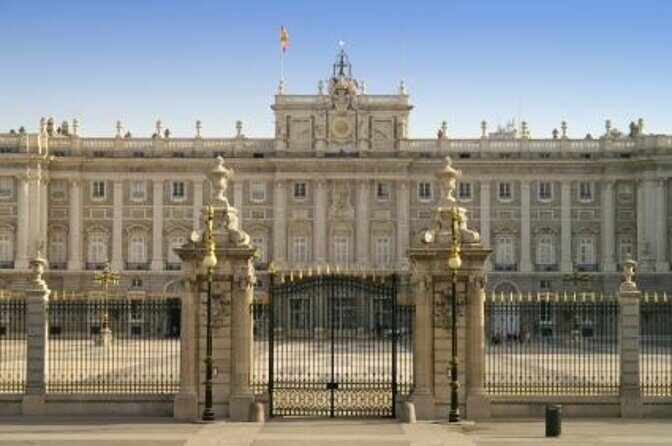
The Royal Palace of Madrid is the official residence of the Spanish Royal Family, though today it’s used mainly for state ceremonies. It’s huge—135,000 square meters and 3,418 rooms—and it’s one of the largest functioning royal palaces in Europe by floor area.
Your tour stop here is short (about 5 minutes), and admission is listed as free. That usually means you’re taking in the exterior and the “wow” scale rather than doing a long interior visit. That works well on a bike tour because you get the landmark recognition without spending the whole day tied to ticket lines.
What I think you’ll like: seeing the palace from a moving route changes how you interpret it. You catch angles and context that photos don’t show, and you start to understand the palace’s role inside Madrid’s layout.
Plaza de Cibeles and Puerta de Alcalá: Icon Photos With Context
Two of the most photogenic stops are Plaza de Cibeles and Puerta de Alcalá.
At Plaza de Cibeles, you’re at a neo-classical complex of marble sculptures and fountains that’s become a Madrid icon. The plaza’s name shifted over time, which is the kind of small historical detail that helps you read a city like a story: it started as Plaza de Madrid, became Plaza de Castelar in 1900, and eventually became what locals call it today.
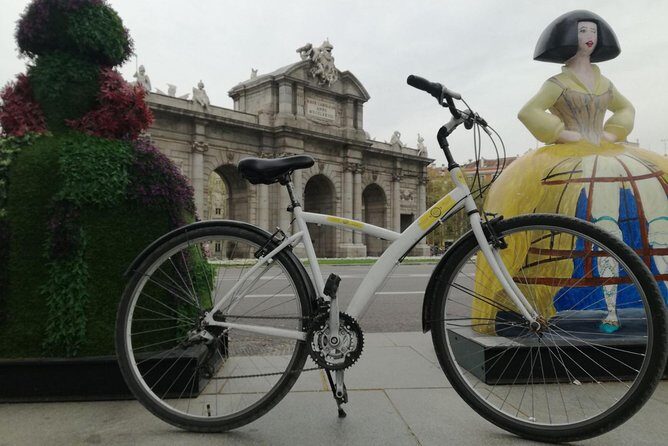
Then comes Puerta de Alcalá, a neo-classical triumphal arch in the Plaza de la Independencia. It’s described as one of the first modern post-Roman triumphal arches built in Europe, even older than monuments like the Arc de Triomphe in Paris and the Brandenburg Gate in Berlin. The name traces to Arabic roots connected to a citadel.
These stops are only about 5 minutes each, with free admission. Don’t let that trick you into thinking they’re minor. On a bike tour, quick moments can be powerful if the guide gives you the why behind the stone—how the monuments fit into Madrid’s story and why locals care.
Parque del Retiro: Where the City Feels Like a City
After palace and arch photos, you roll into Parque del Retiro (also called El Retiro). This is one of Madrid’s biggest parks, and it used to belong to the monarchy until the late 19th century, when it became public.
This stop is longer than the monument moments—around 20 minutes—and that extra time matters. You’re not just ticking a box. You get space to slow down, reset your legs, and absorb how Madrid breathes when you’re not staring at facades.
If you’re planning the rest of your day, this is also a great launch point. You can decide how you want to extend the park area on foot afterward, based on what you enjoyed most during the ride.
Who This Tour Fits Best (and Who Might Want to Think Twice)
This tour is geared toward riders with moderate physical fitness and comfort biking through a real city. It’s also not recommended for children aged 9 and under, which makes sense given the cycling environment.
Best match:
- You have limited time in Madrid and want a fast overview.
- You feel comfortable riding in traffic or at least on busy streets.
- You like guides who explain what you’re looking at, not just point at buildings.
Think twice if:
- You’re nervous about city cycling.
- You’re expecting a kid-friendly, slow, totally protected path ride.
- You’re especially tall or have fit concerns—one rider noted the bikes felt small, using the word puny. Getting the right bike size matters for control and comfort.
Price Value: What You’re Really Paying For at $54.06
At $54.06 per person for about 3 hours, the price is easiest to judge based on what’s included: local guide, bicycles, helmets, a city map, and fuel surcharge. You’re also getting free admission at the stop moments listed, meaning you’re not paying to enter a bunch of separate attractions on top of the tour.
That makes it good value if your main goal is an efficient route plus guidance. A bike tour is basically buying:
1) transportation energy (you don’t walk the distances),
2) navigation help (you don’t have to map the loop yourself),
3) interpretation (the stops come with context).
One practical advantage: you also reduce decision fatigue. Instead of trying to choose between monuments and parks, you follow a planned path and get a city snapshot.
If you already know Madrid well and prefer self-guided strolling, you might feel less need for this. But if you’re new and short on time, this is a strong buy for getting your bearings.
Practical Tips to Make the Ride Feel Effortless
A bike tour sounds simple. The comfort comes from small prep steps.
- Wear shoes you can push off with comfortably, since stops involve getting on and off.
- Bring water and a light layer. Even in pleasant weather, riding can cool you down.
- If you’re unsure about bike fit, speak up when you get the bike. Being cramped doesn’t help your control.
- Follow the guide’s rhythm. The biggest safety factor is predictable movement.
Also, remember you’ll get a map for later. Think of the tour as a guided pre-game for your own exploring: you’ll know where to go next, and you won’t waste time backtracking.
Should You Book This Madrid Bike Tour?
I’d book it if you want a quick, high-coverage Madrid overview with real explanations and a ready-to-use map after. The mix of Templo de Debod, royal-era monuments, and a proper green break in Retiro makes the route more interesting than a straight “big-sight only” run.
I’d hesitate if city cycling makes you anxious or if your group includes riders who aren’t comfortable in traffic. In that case, you could end up spending energy on stress instead of sightseeing.
If your goal is to see Madrid efficiently on day one, and you ride confidently, this tour is a practical choice.
FAQ
How long is the Madrid Fun and Sightseeing Bike Tour?
It lasts about 3 hours.
What language is the tour offered in?
The tour is offered in English.
What’s included with the tour price?
You get a local guide, bicycles, helmets, fuel surcharge, and a city map.
Do I need to pay for entry at the stops?
The stops listed are marked as free admission for the tour’s visit moments, so you shouldn’t need separate tickets for these quick stop experiences.
What kind of fitness level do I need?
It’s described as requiring moderate physical fitness.
Is this tour suitable for kids?
It is not recommended for child aged 9 and under.
How many people are in a group?
The tour has a maximum of 25 travelers.
What happens if the weather is bad?
The tour requires good weather. If canceled due to poor weather, you’ll be offered a different date or a full refund.
Can I cancel and get a full refund?
Yes. You can cancel up to 24 hours in advance for a full refund.