Madrid’s center has layers, and this walk shows them.
I love how this tour stitches big themes to specific streets, from Muslim-era Madrid to the Habsburg and Bourbon look of power. I also like that you get stops that feel practical and real, like a pause for nuns’ cookies and time around Mercado San Miguel for tapas culture. One drawback to plan for: the walk is listed as 2.5 hours, but it can run longer, so don’t book anything tight right after.
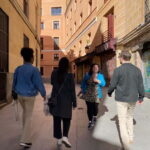
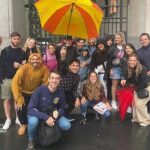
You’ll meet in Plaza Puerta Cerrada, near Plaza Mayor, and start moving through the historical core at a comfortable walking pace for a small group capped at 10 people. Your guide, Juan Sarda Frouchtmann, keeps the history readable and ties it to what you’re actually looking at: walls, churches, plazas, and the way Madrid reinvented itself over centuries.
In This Review
- Key highlights you’ll feel on the ground
- Getting bearings at Plaza Puerta Cerrada
- Medieval Madrid to Mudejar towers: Puerta Cerrada and San Pedro El Viejo
- La Latina and Plaza de la Villa: the city changes styles in front of you
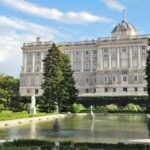
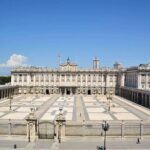
- Royal power on foot: Royal Palace and Plaza de Oriente
- Stopping for flavor: Monasterio del Corpus Christi and Mercado San Miguel
- Felipe IV and Galileo: when science meets politics
- Inquisition-era Plaza de la Cruz Verde and Almudena Cathedral
- Napoleon’s Madrid: Calle de Bailén, Plaza de Ramales, and Plaza de los Carros
- Old walls and mapped green space: Parque Emir Mohamed I and Jardín del Príncipe de Anglona
- Streets for food and oldest buildings: Calle de la Cava Baja, Plaza de la Paja, and St. Nicholas
- Timing and walking comfort: plan for 2.5 hours, but keep slack
- Is this tour worth the $31 price?
- Should you book this walking tour?
- FAQ
- Where do I meet the guide?
- How long is the walking tour?
- How big is the group?
- What language is the tour in?
- What’s included in the tour price?
- Is there a chance the tour ends where it started?
- What should I bring?
- Is the tour wheelchair accessible?
- Can I cancel for a refund?
Key highlights you’ll feel on the ground
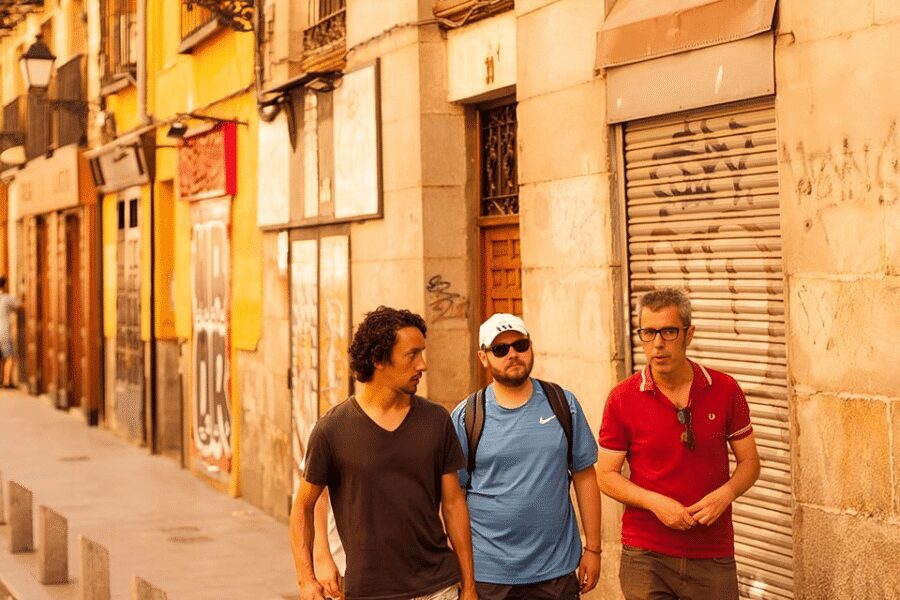
- Puerta Cerrada as your starting point: the medieval doorway vibe that helps the rest of the route make sense
- Culture in layers: Muslim influence, Habsburg austerity, and Bourbon glamour explained through what’s still standing
- Food breaks that fit the story: nuns’ cookies at Monasterio del Corpus Christi and tapas at Mercado San Miguel
- Monuments with real connections: learn how Galileo Galilei made the Felipe IV monument possible
- Napoleon’s mark on Madrid: streets and plazas tied to his redesign of the urban center
- Oldest building stops: visit sites like the Iglesia de San Nicolás of the Servitas and Mudejar towers
Getting bearings at Plaza Puerta Cerrada
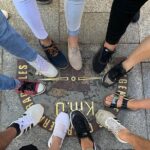
The tour starts in Plaza Puerta Cerrada, about a couple minutes from Plaza Mayor. Look for the big cross in the center of the little square, in front of Cafestic, right at the end of Cuchilleros between Lartoneros and Tintoreros. From the first steps, you get the point: Madrid didn’t become Madrid in one moment. It grew, got rebuilt, and changed names for the same ground.
I like that this “gate” location is not just a photo spot. Puerta Cerrada is an old entrance to the medieval city, so it gives you a mental map before you ever reach the grander sights. If you’ve ever felt Madrid’s center is a maze, this is the kind of start that helps you keep your direction while you walk.
This is also where the pacing starts to feel human. It’s a small group, limited to 10 participants, which matters on a walking tour. Fewer people means fewer bottlenecks at narrow corners, and you can actually hear the guide instead of guessing.
You can also read our reviews of more walking tours in Madrid
Medieval Madrid to Mudejar towers: Puerta Cerrada and San Pedro El Viejo
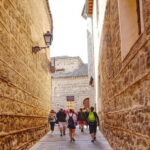
One of the strongest parts of this tour is the way it frames old Madrid through architectural details you might otherwise miss. You’ll walk along Calle de Codo and loop back toward Plaza de Puerta Cerrada—again—so it feels less like you’re passing through and more like you’re following the logic of the city.
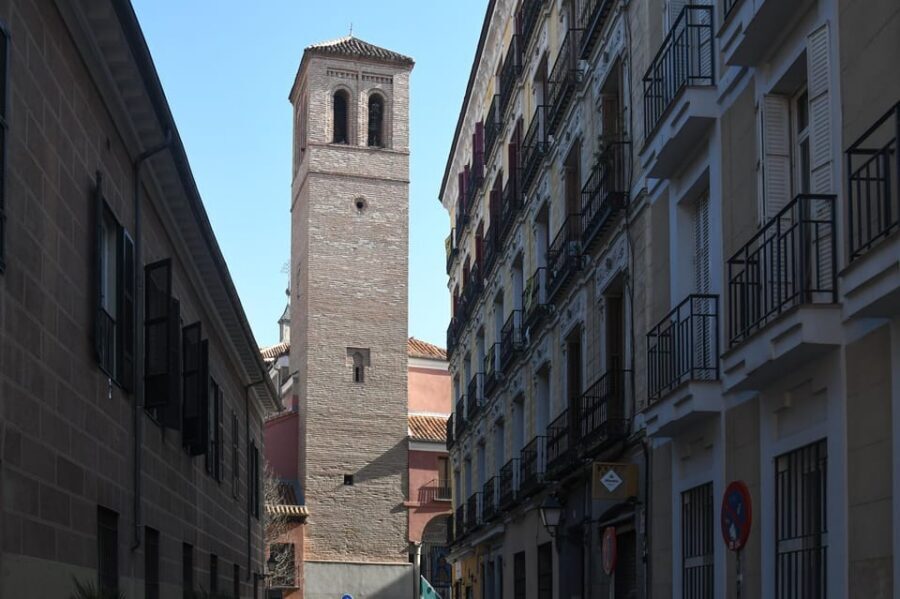
From there, you’ll visit Iglesia de San Pedro El Viejo, famous for its Mudejar tower from the XIV century. Mudejar style is one of those Madrid themes that shows up everywhere once you start paying attention, blending Christian-era forms with Islamic artistic influences. Seeing it in context makes it easier to recognize later when you’re wandering on your own.
If you’re the type who likes history that’s tied to physical shapes—towers, arches, walls—this portion will click. The guide’s job here is basically translation: turning stonework and street layout into stories you can carry.
La Latina and Plaza de la Villa: the city changes styles in front of you
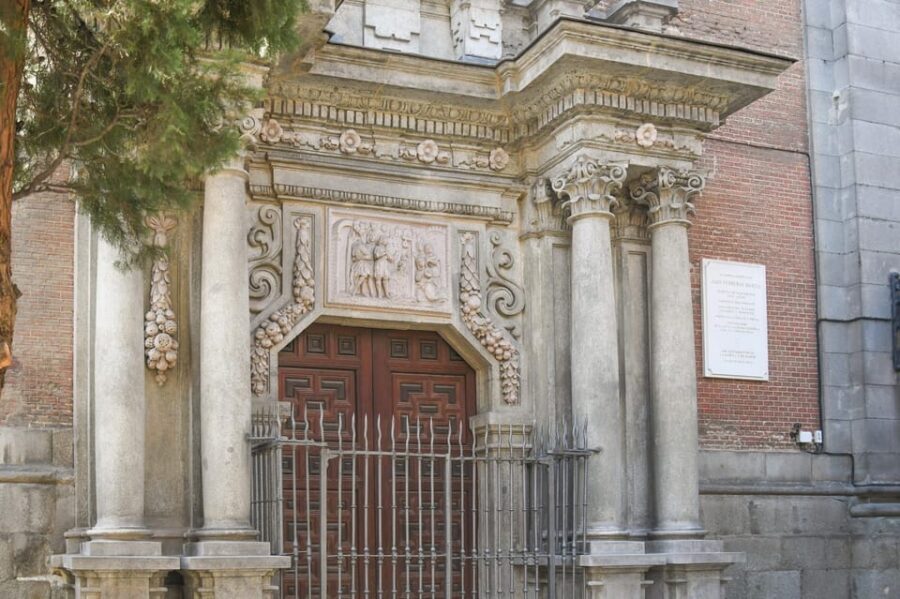
As the walk moves into the older lanes of the center, you spend time in La Latina and around Plaza de la Villa. This area matters because it shows Madrid’s evolution in layers, rather than just listing what you can photograph.
You’ll also hear about how different eras stamped their look onto the buildings. The route highlights Casa Lujanes (Mudejar), then points toward the Plateresco style seen in places like Palacio Cisneros, and it connects the story to the Habsburg era through stops near Casa de la Villa. It’s a quick education in how architectural labels are not academic fluff. They tell you what power wanted the city to look like.
A nice touch here is the “you’re standing in the right place” feeling. When the guide talks about these styles at the actual corners and facades, your eyes start to search for the same motifs: ornamentation level, material choices, and the character of the facades.
Royal power on foot: Royal Palace and Plaza de Oriente
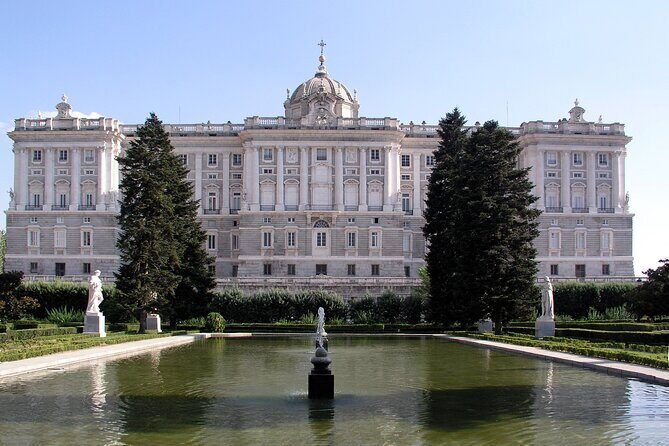
Even if you’re not a palace person, you’ll likely enjoy this part because it’s tied to the bigger question: how did a fort become the capital of an empire? The tour sets that up first, then brings you to one of the clearest proof points: the Royal Palace of Madrid, described here as Europe’s biggest royal palace with 3,418 rooms.
You won’t get palace interior time spelled out in the info you have, but you do get the context and the scale. When a guide says 3,418 rooms, it’s not trivia. It’s a reminder that power in Madrid wasn’t symbolic—it was logistical, expensive, and meant to impress.
Next comes Plaza de Oriente, connected to Napoleon’s urban changes and lined with statues of Spanish kings. If you’ve seen Madrid’s official grandeur before and wondered why it feels so planned, this stop helps you understand the “designed” part. It’s the kind of place where your brain starts to connect streets to politics.
Stopping for flavor: Monasterio del Corpus Christi and Mercado San Miguel
Food stops don’t automatically make a tour better, but the ones here fit the route. You’ll go to Monasterio del Corpus Christi and try the cookies of the nuns. That’s a very specific local tradition, and it gives you a break that doesn’t feel random or purely commercial.
Then you head toward Mercado San Miguel, a popular tapas area. The value here is not just snacking. A market stop helps you understand how Madrid eats in everyday life—without needing to research restaurants for hours.
Practical tip: bring water (you should anyway), and keep your camera ready but don’t try to photograph every stall. This is a walking tour with history built in. A market moment works best when you let it reset your senses and then return to the route.



Felipe IV and Galileo: when science meets politics
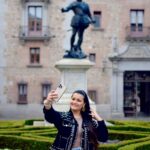
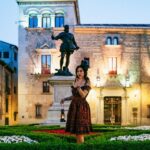
One of the more surprising moments on this walk involves the Monument to Felipe IV and how Galileo Galilei connects to it. The tour frames it as part of the broader story of empire—Madrid as the center of an enormous influence, not just a pretty capital.
It’s worth paying attention here because these monument stories are easy to skim past on your own. A guide can point out how a statue can be tied to people and ideas you wouldn’t expect in a square. Galileo isn’t a name you normally associate with street corners, so the connection tends to stick.
Even if you don’t spend long staring up at every statue detail, you’ll come away with a better sense of what these public spaces were built to communicate: legitimacy, reach, and authority.
Inquisition-era Plaza de la Cruz Verde and Almudena Cathedral
Madrid history can be dramatic, and this route doesn’t avoid it. You’ll stop at Plaza de la Cruz Verde, described as the old square where Inquisition trials took place. Standing in places tied to that kind of power is uncomfortable, but it’s also real history.
After that dark turn, you’ll visit Catedral de Santa María la Real de la Almudena. The cathedral is described as a more recent but meaningful part of Madrid’s religious identity. The contrast between the old square’s weight and the cathedral’s presence helps you see how Madrid’s story didn’t just repeat. It changed.
This section works best if you let yourself slow down for a minute at each stop. The guide’s descriptions make those pauses worth it. If you rush through, you’ll lose the emotional contrast the route is trying to show you.
Napoleon’s Madrid: Calle de Bailén, Plaza de Ramales, and Plaza de los Carros
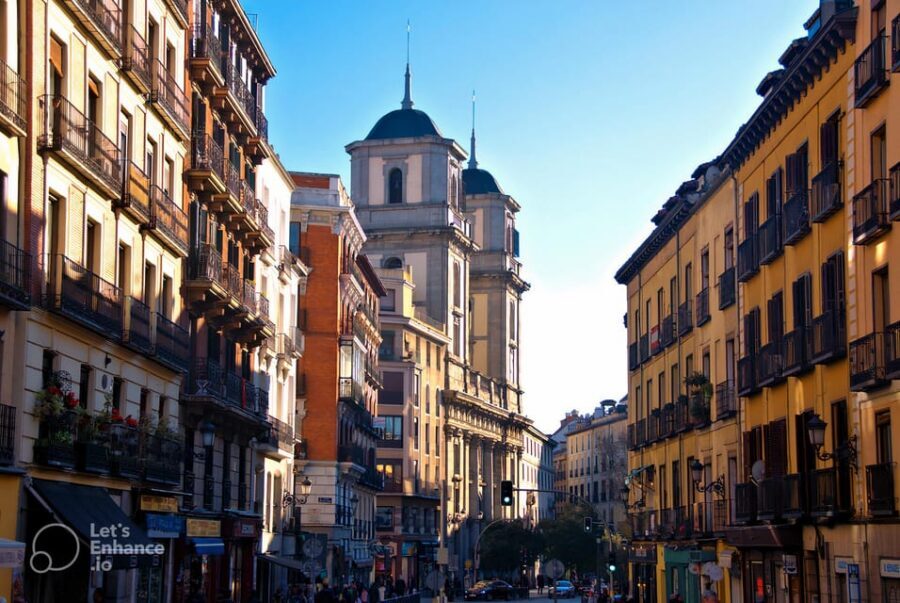
Napoleon’s influence shows up in a few places on this itinerary, and the guide ties it to the way Madrid’s urban center was redesigned. You’ll walk along Calle de Bailén, a beautiful viaduct with a tragic background. Even without the full story being spelled out in your notes, the key is that the structure has an emotional shadow, and the guide connects that to the history around it.
You’ll also see Plaza de Ramales, explained here as a place that helps you understand why Napoleon was the designer of the urban center of Madrid. That’s a big claim, but on the ground, it becomes easier to believe when the streets and squares feel organized the way a planned project would.
Then there’s Plaza de los Carros, described as the taxi area of the medieval city. It’s a neat way to translate old transportation space into something modern. You start picturing how people moved, waited, traded, and communicated—then you notice the street connections differently.
Old walls and mapped green space: Parque Emir Mohamed I and Jardín del Príncipe de Anglona
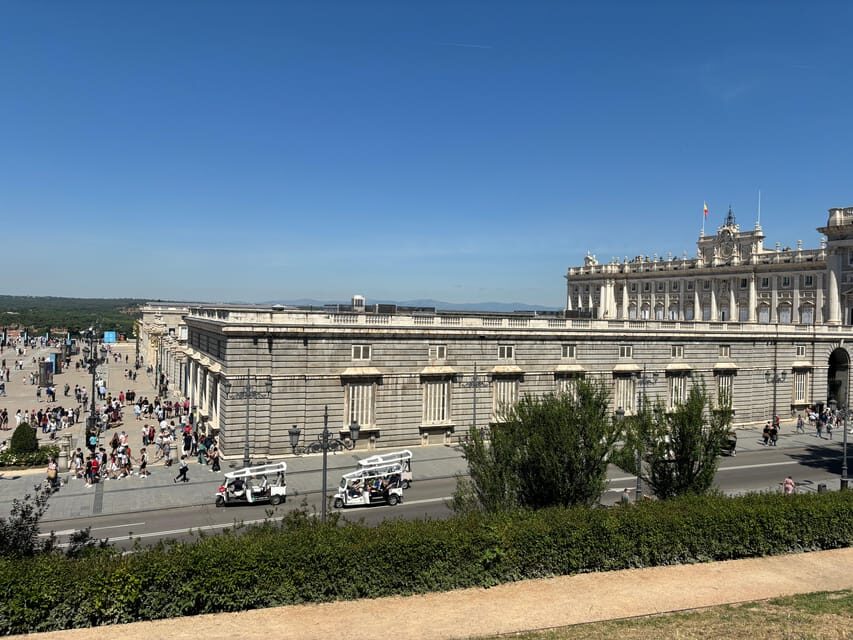
If you want a break from plazas and monuments, you’ll get it here through a couple of stops connected to walls and gardens. The route includes the old Muslim wall at Parque Emir Mohamed I, which helps complete the earlier story about Muslim influence. Seeing a remaining wall segment matters, because it makes the past tangible rather than just a timeline.
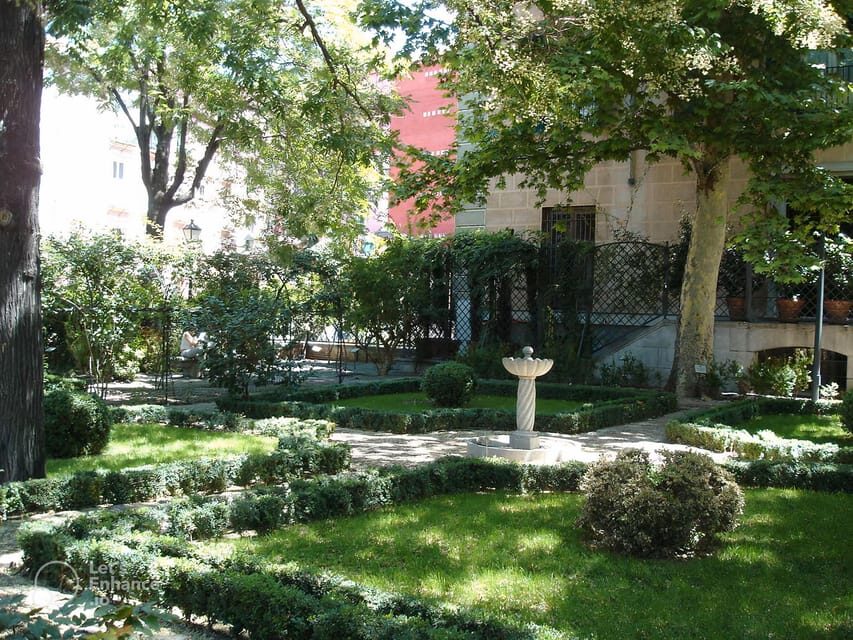
You’ll also visit Jardín del Príncipe de Anglona, described as a beautiful garden from the late 18th century. Even if you’re not a “gardens” person, this stop helps you reset. A garden gives your feet and your brain a breather after heavier architectural stops.
These are the moments that make the tour feel like a walk through a living city, not a checklist.
Streets for food and oldest buildings: Calle de la Cava Baja, Plaza de la Paja, and St. Nicholas
A big reason I enjoy walking tours in Madrid is how the city’s food streets often sit on top of older routes. This itinerary uses that idea well.
You’ll walk along Calle de la Cava Baja, described as the street with some of the best traditional restaurants in Madrid. Even if you don’t eat here during the tour, you’ll feel the pull of the place. It’s the kind of street that makes you want to return later.
Then you’ll reach Plaza de la Paja and the Church of St. Nicholas of the Servitas, described as the oldest building in Madrid. If you’re trying to connect Madrid to deep time, this is the kind of stop that gives you perspective fast. The guide frames it so the age isn’t just a number; it becomes a reason the city’s identity feels rooted.
You’ll end by returning toward Calle de Codo and the Iglesia de San Pedro El Viejo area, completing a loop that brings you back to your starting medieval gate theme.
Timing and walking comfort: plan for 2.5 hours, but keep slack
The tour is listed as 2.5 hours, and it’s designed as a focused loop through the historical center. It’s also a small group capped at 10, and the walk includes a few stops for photos and short explanations.
Here’s the practical consideration: one part of the tour experience is that it can run longer than expected. So if you have dinner reservations, a show, or a timed ticket right afterward, I’d give yourself buffer time. Walk tours can stretch when streets are crowded or when the guide spends extra minutes answering questions at a key stop.
Comfort-wise, bring comfortable shoes and water. This is a lot of street-level sightseeing, so your feet will make or break the experience.
Best fit: you’ll enjoy this most if you like city history that you can see in buildings and street layout, and you appreciate small, human moments—like cookies from a monastery and time in a market—not just big-name monuments.
Is this tour worth the $31 price?
At $31 per person, the value depends on what you want out of Madrid. If you’re the kind of traveler who likes to understand what you’re seeing (instead of just collecting photos), a guided walk like this can be a smart deal. You’re paying for an English-speaking guide, plus a route that covers a wide range of eras without you needing to plan every stop yourself.
You also get a couple of built-in “local life” moments: Monasterio del Corpus Christi cookies and time at Mercado San Miguel. Those breaks can easily cost as much—or more—than the tour if you add them on your own with no guidance.
For me, the best value is the way the guide connects Madrid’s big cultural shifts—Muslim influence, Habsburg austerity, Bourbon glamour—and ties them to what still stands. That kind of explanation is hard to recreate by reading a phone screen while you walk.
Should you book this walking tour?
I’d book it if you want an efficient way to understand Madrid’s center without feeling like you’re doing homework. The route covers a lot of ground—medieval gates, royal power, Napoleonic city design, Inquisition-era space, and market life—and it does it in a small group format that keeps things manageable.
Skip it or reconsider if you hate walking, have very tight timing later in the day, or you prefer deeper museum visits over street-level history. Also, because the provided info includes a note about wheelchair accessibility but also says it’s not suitable for wheelchair users, double-check your needs with the operator before you go.
If you want a guided loop that helps you look at Madrid like it has chapters—and not just landmarks—this one is a solid bet.
FAQ
Where do I meet the guide?
You meet in Plaza Puerta Cerrada, about 2 minutes from Plaza Mayor. Look for the big cross in the center of the little square, in front of Cafestic.
How long is the walking tour?
It lasts about 2.5 hours.
How big is the group?
It’s a small group limited to 10 participants.
What language is the tour in?
The live guide provides the tour in English.
What’s included in the tour price?
All fees and taxes are included.
Is there a chance the tour ends where it started?
Yes. The activity ends back at the meeting point.
What should I bring?
Bring comfortable shoes, a camera, and water.
Is the tour wheelchair accessible?
The info provided lists wheelchair accessible, but it also includes a note that it is not suitable for wheelchair users. If you use a wheelchair, it’s worth checking directly before booking.
Can I cancel for a refund?
Yes. Free cancellation is available up to 24 hours in advance for a full refund.