REVIEW · MADRID
Madrid: Museo del Prado Guided Tour
Book on GetYourGuide →Operated by The Guides You Need, S. L · Bookable on GetYourGuide
Prado crowds can be brutal. This guided tour turns the Museo del Prado from a giant building of paintings into a clear, human story you can actually follow. You meet at the Monument to Goya by the ticket office, then go in with an official guide for a mostly chronological route with room for you to steer toward what you care about most, from Velázquez and Goya to Bosch and the Venetian school.
I especially like two things: you get real interpretation of meaning and technique (not just dates), and the tour is designed for small groups so the guide can keep up with questions and pacing. The one drawback to plan around is simple: no photography inside because that’s the Prado’s policy, so bring your attention (and comfy shoes) instead of relying on your camera.
In This Review
- Key things that make this Prado tour worth your time
- Why the 1.5–2 hour Prado window works
- Finding your guide at the Monument to Goya
- Inside the Prado: skip the line, then go with a plan
- How the guide builds meaning: from technique to story
- The highlight route: Bosch to Goya without feeling lost
- Bosch: the strange, symbolic imagination
- Van der Weyden and Dürer: Northern precision and worldview
- Raphael, Titian, and Tintoretto: composition that pulls you in
- Greco: spirituality with an edge
- Murillo, Velázquez, and Goya: Spain’s big questions
- Why skip-the-line matters more at the Prado than anywhere else
- What happens after the tour: keep exploring with new eyes
- The guide quality: what you should expect from The Guides You Need
- Practical things to plan for (so you enjoy every minute)
- Who this tour suits best
- Price and value: getting $49 worth of seeing and understanding
- Should you book this Prado guided tour?
- FAQ
- Where do we meet for the Museo del Prado tour?
- How long is the guided tour?
- Does the price include Prado museum tickets?
- Is the ticket line skipped?
- Can I take photos inside the museum?
- What languages are available for the live guide?
- Is it a private tour or a group tour?
- Is the tour wheelchair accessible?
- Is there free cancellation, and can I reserve without paying right away?
Key things that make this Prado tour worth your time
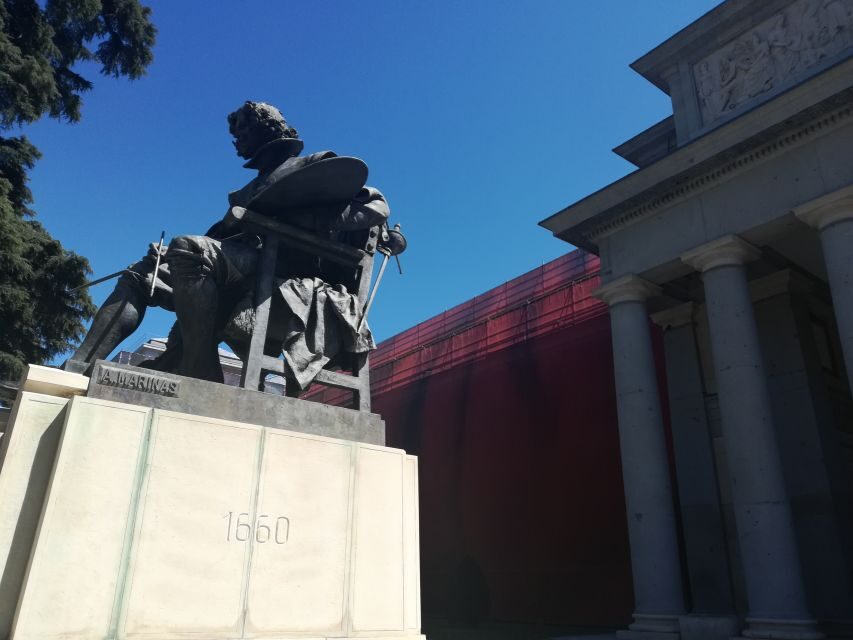
- Meet right at the ticket office: find the sign The guides you need in front of the Museo del Prado.
- Official guide + Prado ticket included: you’re paying for expertise and access, not just a walk-through.
- Skip the ticket line: you start faster, which matters in a museum with long queues.
- Small group feel: the experience is offered as private or small groups, so you’re not stuck listening from the back.
- Custom highlights, guided by a timeline: you can request what you want, but the guide generally keeps a chronological path for clarity.
- Focus on Prado heavy-hitters: expect major stops featuring Bosch, Van der Weyden, Dürer, Raphael, Titian, Tintoretto, Greco, Murillo, Velázquez, and Goya.
Why the 1.5–2 hour Prado window works
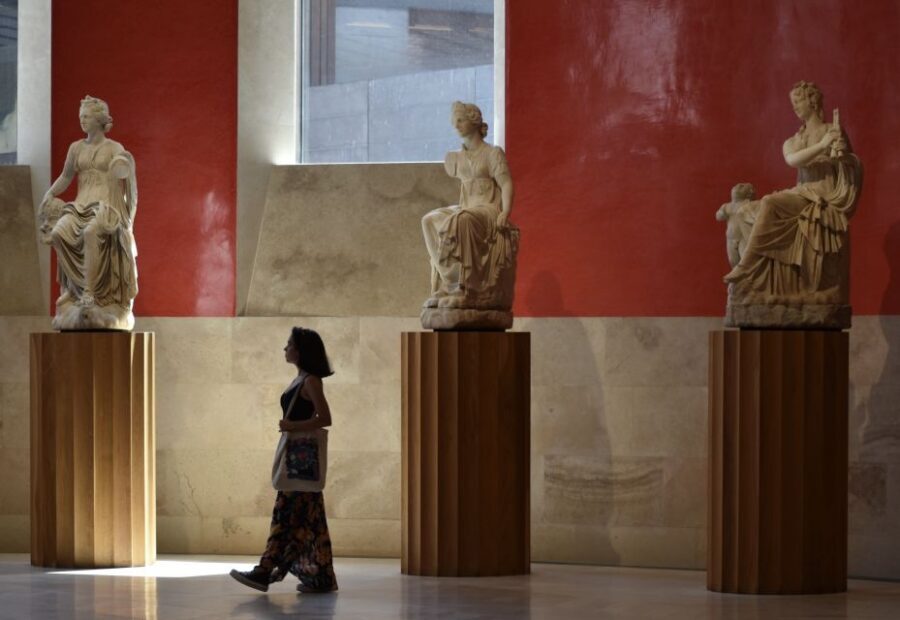
The Prado is one of the world’s great painting museums, but it’s also huge. If you go in alone and try to “see everything,” you’ll end up sprinting and forgetting half of it. This tour is built for the reality most of us face: you want the key works, plus the context that makes them click, without spending a full day.
At $49 per person for 1.5–2 hours, the value isn’t about buying a long list of highlights. It’s about buying comprehension and momentum. You’ll get guided explanations of the meanings and techniques behind major masterpieces, and you’ll leave with a framework for exploring the rest of the museum on your own.
You can also read our reviews of more guided tours in Madrid



Finding your guide at the Monument to Goya
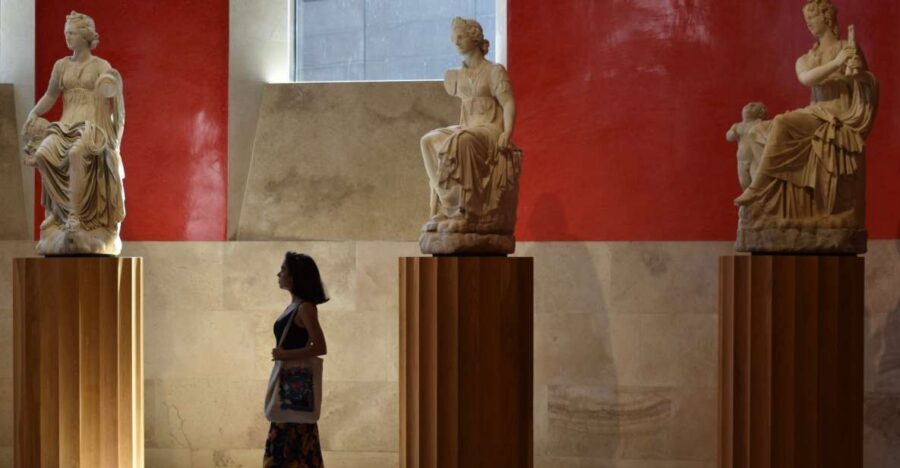
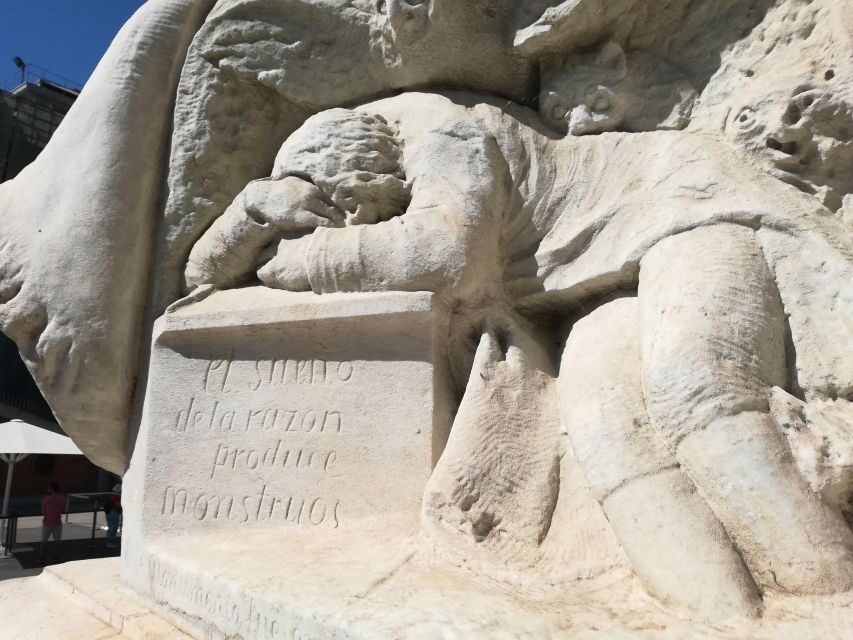
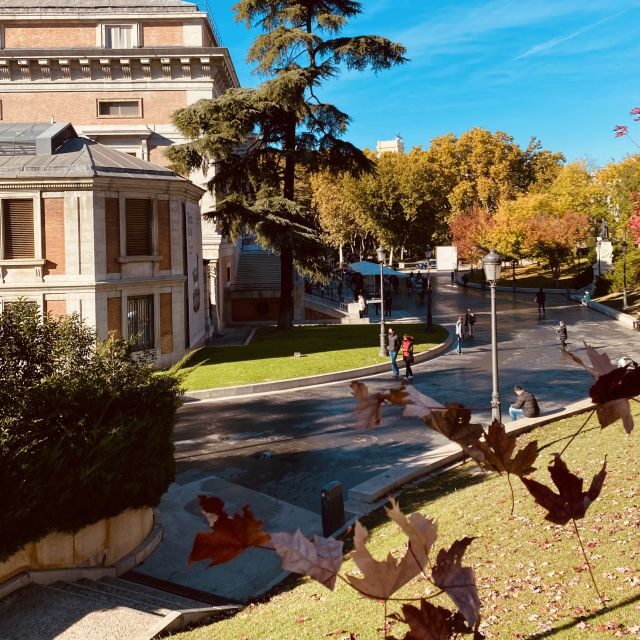
Your meeting spot is easy to miss if you’re not looking for the right cue. Meet at the Monument to Goya, right in front of the Prado’s ticket office, and watch for the guide holding a sign that says The guides you need. The operator also lists an alternate start at the Monument to Statue, but the same sign is your safest navigation tool.
Timing matters here. You want to arrive ready to walk in quickly, because skip-the-line entry only helps if you don’t lose time at the front door. This is also a good moment to confirm your language with your guide if you didn’t choose one already.
Inside the Prado: skip the line, then go with a plan
Once you meet your guide, you go straight inside. The tour includes your Prado ticket, and it’s set up so you can focus on what the guide brings to your attention rather than getting swallowed by the building layout.
A key detail is how the route works. The format is customizable, meaning you’ll tour what you want. In practice, the guide still recommends a chronological approach (with one or two exceptions) because the museum is so large. That chronological backbone is helpful: you start to see how styles, religious themes, and political realities shift over time.
If you’re the type who likes to ask why an artist painted something a certain way, you’ll likely enjoy the flow. One of the most common strengths of this tour format is that it turns the museum into a sequence of “why this looks like this” moments, not a random collection of impressive paintings.
How the guide builds meaning: from technique to story
The guide’s job here is interpretation. You’re not just getting titles. You’re learning meanings and techniques behind each masterpiece, which changes what you notice when you stand in front of the work.
In the best moments, the guide connects art to the human themes behind it. Some guides lean into cultural, religious, and humanitarian angles, and others make the art feel relevant to modern ideas through storytelling. That approach helps you move beyond “I like this” into “I understand what I’m seeing and why it was made.”
You’ll also benefit from a strong sense of pacing. Multiple guides have been praised for keeping tours flowing even during crowded periods and for explaining details without turning it into a lecture. That’s important at the Prado because the museum can feel like sensory overload if you’re trying to process everything alone.
The highlight route: Bosch to Goya without feeling lost
Even though the tour can be customized, you can expect a high-impact circuit of major names. The Prado’s strengths are on full display here, spanning the Spanish masters and major European influences that shaped Spanish painting.
Here’s what this usually means for your viewing experience:





Bosch: the strange, symbolic imagination
Bosch-type works are often visual puzzles—full of scenes that feel dreamlike or morally charged. With guidance, you’ll get more than surprise. You’ll learn how symbolism works in this kind of painting, and why the imagery was designed to communicate messages, not just to shock.
Van der Weyden and Dürer: Northern precision and worldview
Northern Renaissance painting has a different emotional texture from much of the Spanish tradition. Van der Weyden and Dürer stops (when included) are the kind of moments that teach you to look for careful detail, expressive faces, and a clear sense of how artists framed belief and humanity.
Raphael, Titian, and Tintoretto: composition that pulls you in
When the tour moves into Italian masters, you’ll likely notice composition taking over the story. Raphael tends to reward your eye for balance and clarity. Titian and Tintoretto can shift the mood with more dramatic handling of light, color, and movement.
Greco: spirituality with an edge
El Greco’s paintings often feel intense even when you can’t fully name what’s causing it. A good guide helps you connect that intensity to the painter’s choices—how figures are posed, how space behaves, and how emotion is built.
Murillo, Velázquez, and Goya: Spain’s big questions
This is where the Prado becomes unmistakably Spanish. Murillo can bring a tender, devotional tone. Velázquez is the “how did he do that” master, especially for realism, presence, and subtle psychological depth. Then Goya lands with force—his work can feel like commentary on the world as much as artwork for its own sake.
The tour’s value is that you’re not treating these names like a list. You’re seeing how the themes and techniques evolve as you move through time.
Why skip-the-line matters more at the Prado than anywhere else
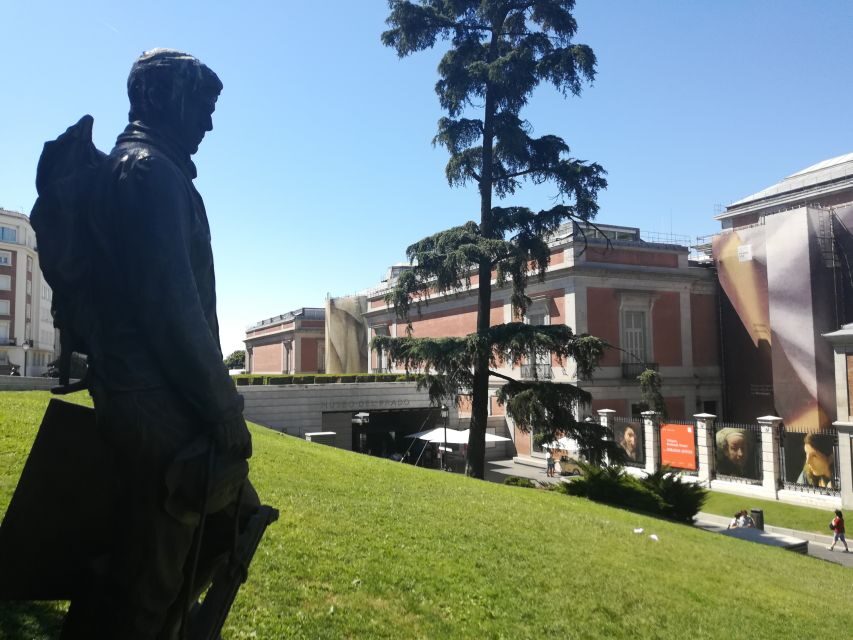
The Prado attracts art lovers from everywhere, and the entry process can eat into your visiting time fast. Skip-the-line entry included with this tour is one of those practical perks that feels small—until you’ve experienced a long queue.
With only 1.5–2 hours, every minute counts. Getting in quickly helps you spend that time standing close to the paintings, letting your guide explain what matters, and still having energy to continue your visit afterward.
What happens after the tour: keep exploring with new eyes
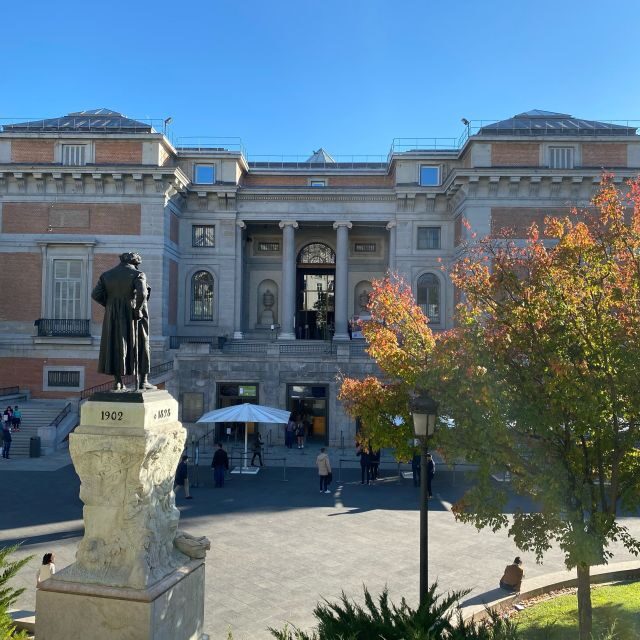
One practical advantage of this kind of guided introduction is that it sets you up to explore independently. A number of experiences like this end with you able to keep visiting inside the museum after the guided portion ends, as long as you don’t leave and re-enter.
That matters because the Prado rewards repeat looking. After you’ve learned a few “how to see” lessons from your guide, you’ll often notice brushwork choices, symbolism, and compositional strategies that you would have missed otherwise.
So think of the tour as your key to the museum’s language. You’re building reading skills for the rest of your visit.
The guide quality: what you should expect from The Guides You Need
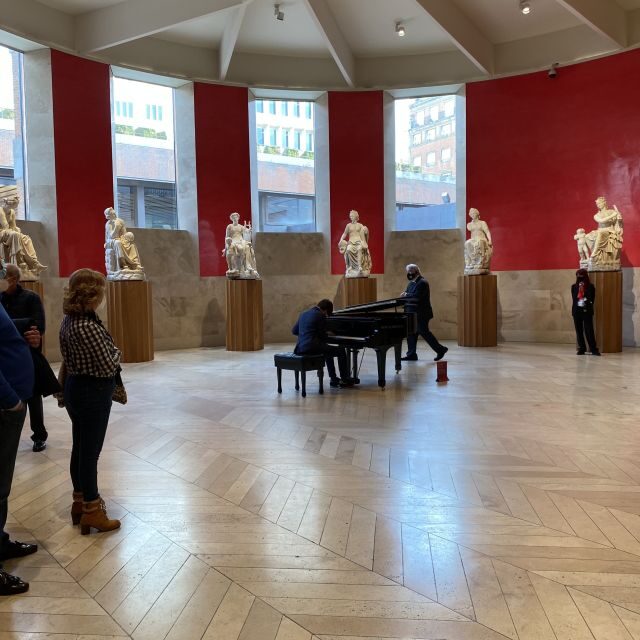
Guide names change based on your date and language, but the recurring strengths are consistent in the way guides work here. You’ll see praise for storytelling that stays engaging, for historical context that explains how art connects to the world around it, and for pacing that works even when the galleries are crowded.
Guides mentioned by name include Stephi, Clara, Maria, Paola, Macarena, Alex, Natalia, Belen, Paula, and others. The most useful common thread is that these guides don’t just recite. They explain details in a way that makes you want to keep standing there and looking.
If you care about art history but hate dry presentations, this is the right kind of tour. The guide becomes the translator between what you see on the wall and what the painting is doing under the surface.
Practical things to plan for (so you enjoy every minute)
A few details can make or break the experience.
- No photography inside: you won’t be taking photos in the galleries. Plan to rely on memory, and consider writing quick notes on your phone before you start.
- Wear comfortable shoes: Prado shoes matter. You’ll be moving through multiple rooms with short stops.
- Bring your own water and snacks plans: food and water aren’t included.
- Weather won’t run the schedule: the tour takes place whatever the weather is unless the Prado closes.
- Languages available: Spanish, English, Italian, and French.
Also, the tour is listed as wheelchair accessible, which is good news if you need mobility accommodations.
Who this tour suits best
This guided Prado tour is ideal if you want a top-tier introduction without turning your day into a marathon.
You’ll likely enjoy it if:
- You want to see major works and learn how to look at them.
- You like the idea of a guide helping you navigate the museum’s size.
- You’re visiting for a limited time in Madrid and want maximum value per hour.
- You prefer a small-group or private feel rather than a crowded lecture.
You might want to consider a different approach if:
- You want to spend most of your day at the Prado with no structure at all.
- You plan to photograph everything in detail (the museum won’t allow it inside, regardless of the tour).
Price and value: getting $49 worth of seeing and understanding
Let’s talk value honestly. $49 per person for a 1.5–2 hour tour includes a Prado ticket and an official guide. That means you’re paying for time, interpretation, and reduced friction at entry.
If you were to buy tickets and then wander, you’d save money but you’d likely spend that time lost in rooms and thinking “I know I’m seeing famous art, but what am I supposed to notice?” This tour answers that question.
On the other hand, if you only mildly care about art technique or historical context, you may feel you could spend that time at your own pace. The difference is whether you want the Prado to be a guided lesson or a self-directed stroll.
Should you book this Prado guided tour?
Book it if your goal is simple: see the Prado’s biggest masterpieces with context, not just impressions. The combination of official guidance, skip-the-line entry, and a route that can be both chronological and flexible makes this a strong fit for most first-timers.
Don’t book it if your top priority is photography inside (the Prado policy prevents it) or if you’re hoping for a full-day museum immersion without any structure.
If you’re even a little curious about why paintings look the way they do—symbolism, technique, and the shifting styles of European masters—you’ll get your money’s worth quickly. This is exactly the kind of tour that turns a world-famous collection into a story you can carry with you.
FAQ
Where do we meet for the Museo del Prado tour?
You meet by the Prado ticket office at the Monument to Goya, where the guide will be holding a sign that says The guides you need. An alternate start location is listed at the Monument to Statue, but the sign is your main reference point.
How long is the guided tour?
The tour runs for about 1.5 to 2 hours.
Does the price include Prado museum tickets?
Yes. The Prado Museum ticket is included in the tour price.
Is the ticket line skipped?
Yes. Skip the ticket line is included.
Can I take photos inside the museum?
No. Photography inside is not allowed due to the museum’s policy.
What languages are available for the live guide?
The live tour guide is available in Spanish, English, Italian, and French.
Is it a private tour or a group tour?
It’s offered as private or small groups available.
Is the tour wheelchair accessible?
Yes. The tour is listed as wheelchair accessible.
Is there free cancellation, and can I reserve without paying right away?
You can cancel up to 24 hours in advance for a full refund. You can also reserve now and pay later, meaning you can book and pay nothing today.