REVIEW · MADRID
Madrid Old City Guided Walking Tour Semi-Private 12ppl Max
Book on Viator →Operated by Babylon Tours Madrid · Bookable on Viator
Madrid’s old streets tell stories fast. This semi-private walking tour keeps things small (up to 12 people), so your guide can slow down when you ask questions and actually connect the landmarks instead of racing past them. It’s a great way to learn the center without map-stress.
I love the mix of landmarks packed into about 2 hours 30 minutes, from Almudena Cathedral and the Arab Wall to Madrid’s best-known squares and food stops. Guides such as Mich, Sergio, David, Michele, Alphonso, and Jaime are repeatedly praised for clear English, humor, and practical local recommendations.
One consideration: Royal Palace admission isn’t included, and many stops are viewed from the outside since security can limit interior access. Also, this isn’t a good fit for wheelchair users or anyone with walking disabilities.
In This Review
- Key highlights to know before you go
- Where This Tour Fits: Fast Bearings in Madrid’s Old Core
- Meeting at Plaza de la Armería, Ending at Puerta del Sol
- The Royal Palace Start: Big Power, State Ceremonies, No Ticket Included
- Almudena Cathedral and the Cathedral Museum: A Religious Site With a Date to Remember
- The Arab Wall: Madrid’s Oldest Surviving Clue
- Calle Mayor and Plaza de la Villa: The Main Street Story
- La Latina and the Market-Square Swing: Old Streets, Places to Pause
- Arco de Cuchilleros to Plaza Mayor: From an Old Arch to Madrid’s Big Stage
- Mercado San Miguel: A Food Stop That Helps You Eat Like a Local
- Real Casa de Postas to Puerta del Sol: Where Madrid’s Day Starts and Ends
- Price and Value: Is $56.55 a Good Deal?
- Getting More Out of Your Guide on This Walking Route
- Who Should Book This Madrid Old City Walk?
- Should You Book This Tour?
- FAQ
- How long is the Madrid Old City guided walking tour?
- What is the maximum group size?
- Is the tour offered in English?
- What does the tour include?
- What is not included?
- Where do the tour and meeting points start and end?
- Do I need to worry about weather or cancellations?
Key highlights to know before you go
- Max 12 travelers means a more personal pace than the big-bus style tours.
- Royal Palace to Puerta del Sol route covers the heart of old Madrid in one smooth loop.
- Historic layers in one walk: Almudena Cathedral, the Arab Wall, medieval streets, Habsburg-era plazas.
- Mercado San Miguel stop gives you a hands-on feel for Madrid food culture near Plaza Mayor.
- Guides bring more than facts—expect humor plus real restaurant and what-to-do-next tips.
Where This Tour Fits: Fast Bearings in Madrid’s Old Core
This is the kind of walking tour that helps you feel oriented on day one. You start at Plaza de la Armería and end at Puerta del Sol, two anchors that keep popping up when you explore Madrid on your own. If you’ve ever left a walking tour wishing you’d had a better route plan, this one is designed to fix that.
The semi-private format matters. With a small cap (the tour states a maximum of 12 travelers, and also notes a smaller cap of up to 8 per tour), you’re less likely to get stuck behind a crowd. Your guide can steer you, point out details quickly, and answer questions without turning the whole experience into a lecture.
The other thing I like: the tour doesn’t only hit monuments. It threads together squares, neighborhood lanes, and markets. That mix is what makes old Madrid feel like more than postcard scenery.
You can also read our reviews of more tours and experiences in Madrid.

Meeting at Plaza de la Armería, Ending at Puerta del Sol
The meeting point is Plaza de la Armería (Centro, 28013 Madrid) and the walk finishes at Puerta del Sol. It’s a clean start-to-finish route, which is helpful if you plan to continue your day afterward.
You’ll want to show up ready to move. This tour is built around walking between highlights, with short stops along the way. The stated stop time is about 10 minutes per main location, which keeps you moving while still giving you time to get the story and grab a few photos.
One practical tip: Madrid’s central streets can change character every few blocks. Bringing a bottle of water and wearing comfortable shoes makes the whole route easier to enjoy, not just survive.
The Royal Palace Start: Big Power, State Ceremonies, No Ticket Included
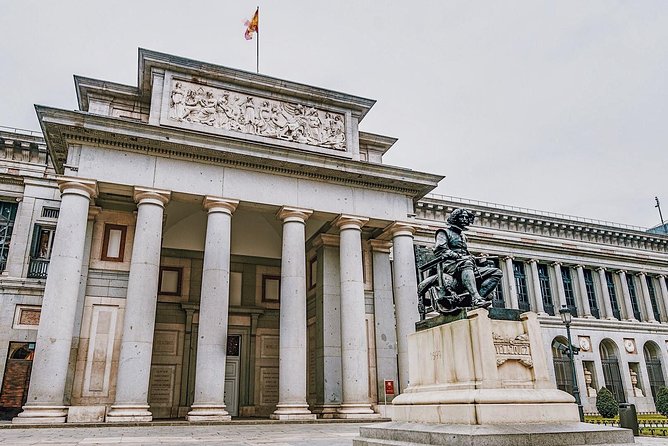
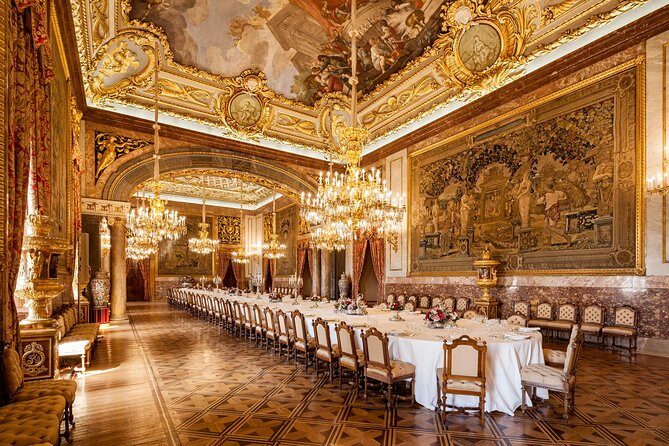
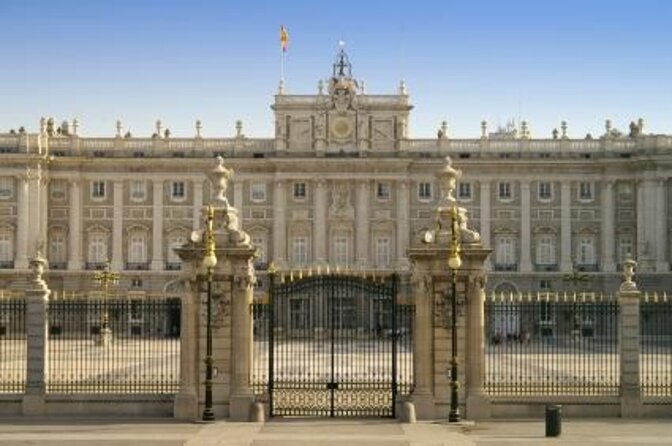
You begin at the Royal Palace of Madrid, the official residence of the Spanish royal family. Historically it was home to Spanish kings from Charles III to Alfonso XIII, but today it’s used mainly for state ceremonies. That shift is part of what makes the palace interesting on a short walk: it’s not just a museum-piece feeling. It’s still tied to the country’s public life.
The catch is simple: Royal Palace admission is not included. If you want to go inside, you’ll need to plan that separately. Many people choose to skip interior tickets on day one anyway, because a walking tour like this is about learning where things are and how they connect.
What I’d look for outside: the palace presence at the start of your route. Starting here sets the tone for everything that comes next—Madrid’s royal and political power, then the layers underneath it.
Almudena Cathedral and the Cathedral Museum: A Religious Site With a Date to Remember
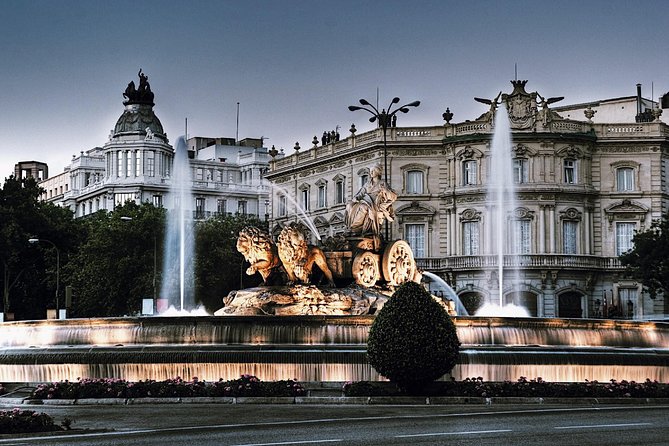
Next comes Museo de la Catedral de la Almudena (part of the Almudena Cathedral complex). This Catholic church was consecrated by Pope John Paul II in 1993. That modern date is a nice contrast to the medieval and early roots you’ll see later.
You’ll also see the museum associated with the cathedral. Since the museum stop is free, it’s a good moment to slow down. Even if you don’t go deep into every display, the setting alone helps you understand how Madrid’s religious landmarks aren’t just old ruins—they’re active institutions with their own story.
This stop also works as a tone reset. After the royal palace energy, Almudena brings you back to everyday Madrid culture through a major faith site.
The Arab Wall: Madrid’s Oldest Surviving Clue
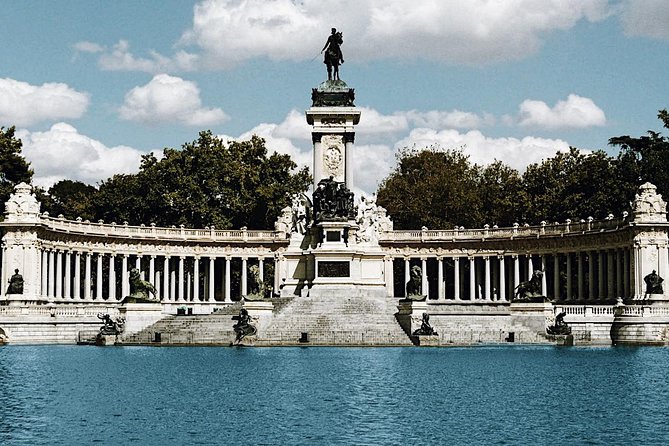
Then you move to the Arab Wall, also called the Muslim Walls of Madrid, located near Cuesta de la Vega. The tour frames this as likely the oldest surviving construction in the city, and it connects to Madrid’s earliest origins.
This is one of those stops where the most value comes from your guide’s framing. On a quick walk, it’s easy to see stone and forget why it matters. With a good explanation, you start to read the city’s timeline in layers: Islamic-era boundaries, later growth, and how the city reused and transformed spaces over centuries.
Since admission here is free, it’s also a low-cost, high-payoff stop. If you like historical grounding—dates, origins, and how places evolved—this one is worth paying attention to.




Calle Mayor and Plaza de la Villa: The Main Street Story
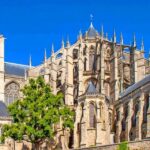
After the walls, you’ll walk along Calle Mayor. It’s described as a central street that runs from Puerta de Sol to Cuesta de la Vega. The tour’s key point here: created in the Middle Ages, it became the main thoroughfare of Madrid during the Early Modern Period.
That evolution matters. A street like Calle Mayor isn’t just a path—it’s a timeline you can walk. You’re literally moving through the city’s changing roles, from old-life street to power-and-traffic corridor.
You’ll also see Plaza de la Villa, a well-preserved monument in the historic zone next to the Puerta del Sol Gate. It’s tied to the city’s medieval centers, which makes it a natural companion to Calle Mayor. If you want one mini-rule for this whole section: watch for how plazas open up space where streets used to be compressed—Madrid’s urban “breathing” points.
Both of these stops are free, and they’re a great “Madrid orientation” moment. By now, you can start picturing where you’ll want to stroll later on your own.
La Latina and the Market-Square Swing: Old Streets, Places to Pause
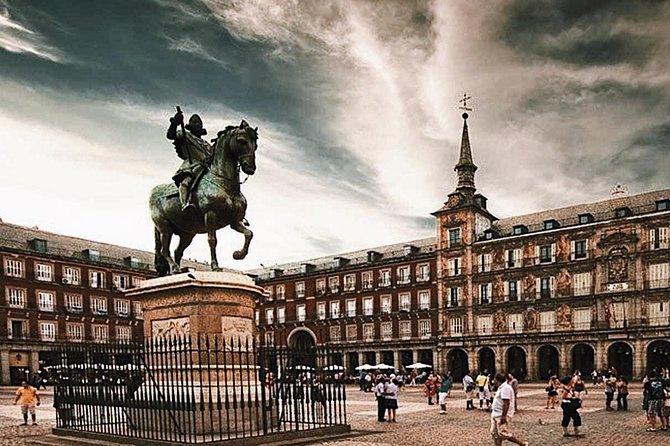
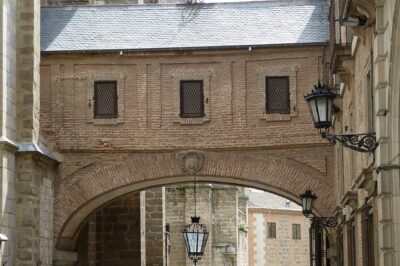
Then the tour shifts into La Latina, a historic neighborhood occupying much of the oldest part of central Madrid. Expect small, narrow streets—exactly the kind of layout that makes Madrid fun to wander after your guided walk ends.
Key square moments in this stretch:
- Plaza de la Paja: historically a major marketplace in the 13th and 14th centuries. The tour emphasizes its crowded, lively character, plus the idea that calm moments can appear even in busy zones.
- Plaza de los Carros: a smaller square with a fountain, where you can stop for a drink and take in the local atmosphere.
- Plaza de Puerta Cerrada: described as built on a medieval Islamic fort, tying this neighborhood back to the city’s earlier roots.
These are all free stops, and the value is in the variety. You’re not only seeing famous structures—you’re learning how Madrid lives at street level. If you like walking tours that feel like a guided stroll with context (not a checklist), this portion is where the “wow, I get it now” feeling often kicks in.
Arco de Cuchilleros to Plaza Mayor: From an Old Arch to Madrid’s Big Stage
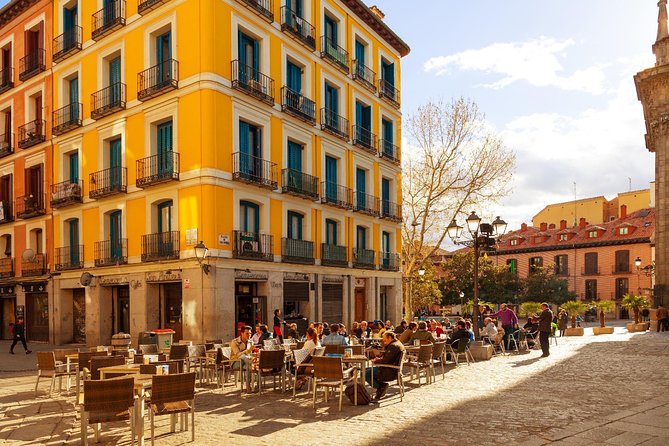
Next you’ll see Arco de Cuchilleros, a well-known historical archway. It includes stairs leading toward Plaza Mayor, which is arguably Madrid’s most famous square.
This is a smart transition. The archway gives you a sense of older urban movement—where people traveled through layers of the city—then the stairs act like a natural reveal toward the square’s larger space.
You’ll finish this phase at Plaza Mayor, an arcaded square in central Madrid. The tour notes it was first built during the Habsburg period during Philip III’s reign and that it was once the center of old Madrid. Today it’s still popular with locals and tourists alike.
Two practical notes:
- You’ll likely want time here to just look up and around. The arcades and scale are the point.
- Since this segment is still part of a walking schedule, don’t plan on deep museum-level exploring in Plaza Mayor itself. Save that for later if you want to go longer.
Mercado San Miguel: A Food Stop That Helps You Eat Like a Local
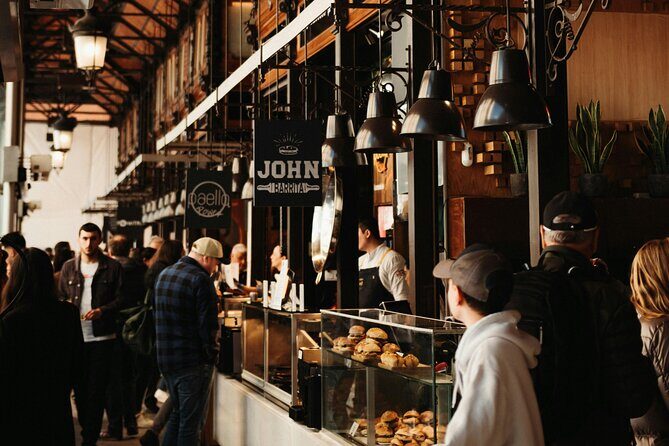
Right near Plaza Mayor, you’ll visit Mercado San Miguel. It’s described as beautiful and full of food from all around the country. This is one of those stops where the guide’s role is big: it’s easy to treat a market like a photo spot. With a good explanation, you start noticing what makes the market tick and what kind of bites make sense.
Admission for the market stop is listed as free on the tour’s schedule, so the main cost is whatever you choose to snack on. It’s also a helpful way to plan your next meals. After you’ve seen the market vibe up close, deciding where to go for lunch later feels less random.
If you’re the type who wants your sightseeing tour to connect to real life—food, neighborhoods, daily culture—this is a major reason the tour earns strong ratings.
Real Casa de Postas to Puerta del Sol: Where Madrid’s Day Starts and Ends
The tour continues to Real Casa de Postas, a neoclassical administrative building. The tour notes it was the home to telegraph service offices of the National Police until it was bought by Madrid’s regional government in 1985.
It’s a neat stop because it’s not just “pretty stone.” It shows how Madrid’s communications and public services shaped city life. Think of it as the behind-the-scenes kind of history: how cities manage themselves, not only how they pose for visitors.
Then you end at Puerta del Sol, one of Madrid’s most famous squares. The tour calls out two big references:
- It’s the center of the radial network of Spanish roads.
- It contains the famous clock whose bells mark the tradition of eating the Twelve Grapes at New Year.
This is a perfect finish. By the time you reach Puerta del Sol, your brain has the map pieces. You know which streets connect to which plazas. And you’re positioned in one of the easiest places to keep moving on your own.
Price and Value: Is $56.55 a Good Deal?
At $56.55 per person for about 2 hours 30 minutes, the price is less about entrance fees and more about what you’re buying: a professional guide and a small-group walking route through the center of Madrid.
Here’s how I’d judge the value:
- You get a guided route that covers a lot of major sights without you having to plan the order.
- You get short, frequent storytelling moments across palaces, churches, walls, plazas, and a market.
- You get a guide who can point out where to go next, including restaurant suggestions and local tips.
What you should account for: Royal Palace admission isn’t included. If you’re the type who wants to go inside, that could add cost. Also, the tour notes that some attractions can’t be visited from the inside due to security measures, so you should treat interior access as limited and focus on the guided view and explanation.
For most first-timers, the value is strong because you finish with bearings and a mental map. For seasoned Madrid returnees, it’s still useful if you want a clean route and a quick refresher on the city’s layers.
Getting More Out of Your Guide on This Walking Route
The tour’s reputation is tied to guides who do more than recite dates. You’ll feel it when the guide connects the places: why a wall matters, why a street became a main corridor, why a square changed roles, and how food markets fit into the bigger picture.
If you want to get the best results, come with a couple of questions ready:
- What area should I wander next if I have a half-day?
- Where do locals go for tapas that isn’t a tourist trap?
- What should I book now, and what can wait?
The tour also runs in all weather conditions, so come prepared. The essentials listed are:
- Comfortable shoes
- A bottle of water
- Umbrella for rain
- Hat in summer
Also note: no large bags or suitcases are allowed. If you’re traveling with luggage, keep it small or leave it handled before the tour.
One more thing: national celebrations can alter the route. The tour says it will still cover the highlights, using an alternative route, but in those cases refunds or discounts won’t apply.
Who Should Book This Madrid Old City Walk?
This fits you if you:
- Want a first-pass orientation to central Madrid
- Like historical context mixed with everyday street life
- Prefer small-group attention over big group logistics
- Want a food stop tied directly to the sights (Mercado San Miguel)
You might skip it if:
- You use a wheelchair or need an accessibility-friendly route, since the tour states it isn’t recommended for walking disabilities or wheelchair users.
- You only care about palace or cathedral interiors. This walk is built around seeing and understanding, and interior access can be limited by security.
The language is English, and the guide-driven format is a big part of the experience. If you want maximum value, show up ready to talk and ask.
Should You Book This Tour?
Yes, if you want the easiest way to connect Madrid’s top old-city landmarks into one logical story. The small-group size, the pace, and the mix of royal sites, Islamic-era remnants, medieval plazas, and a real market stop make it a strong start to your trip.
Book it especially if you care about practical takeaways—where to eat next, how neighborhoods connect, and how to navigate without stress. The main downside is the extra cost and planning if you want to go inside the Royal Palace, plus the fact that some sites may be outside-only.
If you’re aiming for a smart first day in Madrid, this is a very reasonable use of time.
FAQ
How long is the Madrid Old City guided walking tour?
It runs for about 2 hours 30 minutes.
What is the maximum group size?
The tour is capped at a maximum of 12 travelers, and it also notes a maximum of 8 people per tour.
Is the tour offered in English?
Yes, it is offered in English.
What does the tour include?
It includes a professional guide and a small-group tour.
What is not included?
Hotel pickup is not included, and the Royal Palace of Madrid admission fee is not included.
Where do the tour and meeting points start and end?
The tour starts at Plaza de la Armería and ends at Puerta del Sol.
Do I need to worry about weather or cancellations?
It operates in all weather conditions, so dress appropriately. Free cancellation is available up to 24 hours in advance for a full refund.